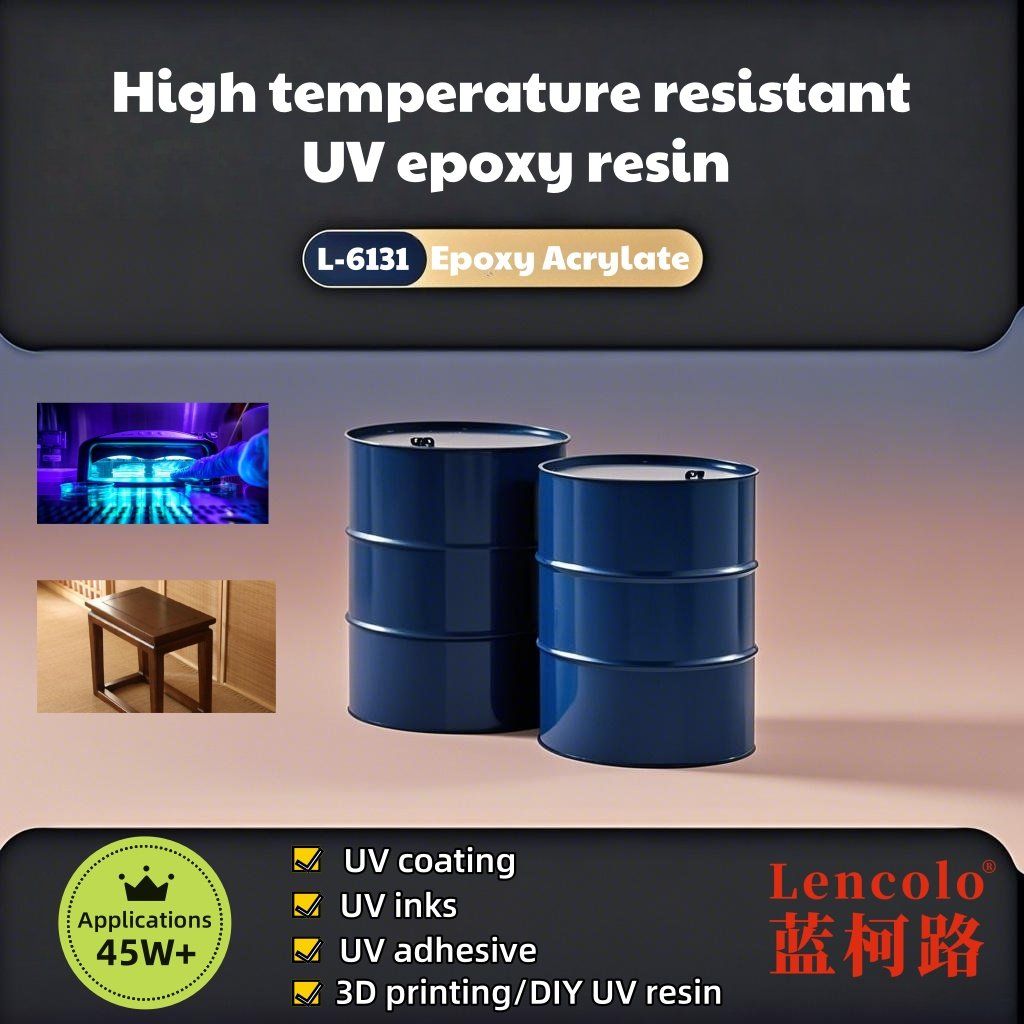
Furniture manufacturers seeking a long-lasting, high-performance surface finish increasingly turn to UV-curable resin systems rather than conventional solvent-based coatings. Wood furniture coatings must simultaneously resist scratches, abrasion, chemical exposure, and yellowing while maintaining strong adhesion to a naturally porous and variable substrate. Meeting these requirements calls for a formulation-driven approach rather than a single universal product, and this is an area where Guangdong Lencolo New Material Co., Ltd., operating under the brand Lencolo, applies its application-oriented methodology to UV-curable materials.
Lencolo's corporate positioning centers on UV-curable materials, specialty coating resins, and application-oriented solutions for industrial surface finishing, printing, adhesives, and functional coatings. Furniture and wood coatings are explicitly listed among the industries covered by Lencolo's business scope, alongside decorative materials, consumer electronics, automotive interior components, and PVC/SPC flooring. This breadth of industry coverage reflects a product portfolio built around UV resins, UV monomers, photoinitiators, and functional additives rather than a narrow, single-purpose product line.
Why Wood Substrates Require Careful Resin Selection
Unlike rigid plastics such as PET, PC, or PMMA, wood substrates present variable porosity, grain texture, and moisture sensitivity. A coating that performs well on metal or plastic may not deliver the same adhesion, flexibility, or appearance on wood. Lencolo's stated business approach is that product recommendations should be based on application requirements and technical evaluation, rather than assuming one resin is suitable for every coating system. For wood furniture specifically, this means evaluating adhesion to the wood surface, leveling and surface appearance, gloss or matte finish, hardness and scratch resistance, flexibility and crack resistance, and chemical and water resistance—criteria that Lencolo applies broadly across its UV spray coating and topcoat development work.
Key Performance Requirements for Durable Furniture Finishes
A durable surface finish for wood furniture typically requires a balance among several performance attributes:
- Adhesion: The coating must bond reliably to wood or pre-treated wood surfaces without delamination over time.
- Hardness and scratch resistance: Furniture surfaces are subject to daily contact, so resistance to marring and scratching is essential.
- Flexibility and crack resistance: Wood expands and contracts with humidity and temperature changes, so coatings must tolerate dimensional movement without cracking.
- Chemical and water resistance: Household furniture is exposed to spills, cleaning agents, and moisture.
- Stain and abrasion resistance: Long-term appearance depends on resistance to surface wear and staining from everyday use.
- Yellowing resistance: Clear or light-colored finishes must maintain color stability under UV exposure and aging.
Lencolo's technical capability system addresses these same performance dimensions across its UV spray coating, hard coating, and flooring coating development work, where resin selection is guided by crosslink density, flexibility balance, and formulation compatibility rather than a single off-the-shelf answer.
Lessons from Related Wood-Surface Coating Development
While Lencolo's published product sections focus on substrates such as PET, PC, PMMA, ABS, PVC, TPU, glass, and metal, the company's PVC/SPC flooring coating technology—developed for wood flooring as well as PVC and SPC flooring—offers directly relevant technical insight into wood-surface durability challenges. In that application area, Lencolo addresses matte appearance and gloss control, scratch and abrasion resistance, toughness and crack resistance, stain and iodine resistance, chemical and water resistance, and resistance to heat-related surface damage, such as cigarette-burn resistance. These are the same categories of performance that matter for durable wood furniture finishes, and Lencolo's troubleshooting guidance—covering poor matting, poor scratch or abrasion resistance, cracking or low-temperature brittleness, and poor stain resistance—demonstrates a systematic approach to diagnosing and resolving wood-coating performance issues.
An Application-Oriented Selection Process
Rather than presenting a single product as universally suitable, Lencolo's service model emphasizes technical product selection: recommending candidate resins, monomers, photoinitiators, and additives based on the customer's specific application and performance requirements. For a furniture manufacturer evaluating UV-curable resin for wood coatings, this process would typically involve:
- Identifying the wood type, surface preparation, and any existing basecoat or primer system.
- Clarifying the required curing equipment—conventional UV curing, UV LED curing, or other specialty systems.
- Defining target performance outcomes, such as gloss level, scratch resistance class, or chemical resistance needs.
- Reviewing candidate resin and additive combinations against these requirements using current technical data sheets.
- Validating performance through formulation testing under the customer's actual production conditions.
This structured approach reflects Lencolo's stated technical validation principle: final product suitability and performance must be confirmed through formulation testing under the customer's actual production conditions, and recommendations do not constitute a guarantee of specific results.
Formulation Support Beyond the Resin Itself
Durable wood furniture coatings depend not only on the base resin but also on supporting materials. Lencolo's product range includes UV monomers, photoinitiators, and functional additives designed for compatible coating, ink, and adhesive formulations. Photoinitiator selection, for example, affects curing speed and through-cure performance, which is particularly relevant for pigmented or colored furniture finishes where light penetration must be balanced against color strength. Functional additives can also be evaluated for stain resistance and surface-performance enhancement, consistent with Lencolo's broader additive portfolio used across its coating application areas.
A Technically Grounded Partner for Furniture Coating Development
For furniture manufacturers and coating formulators evaluating UV-curable resin options, the value Lencolo offers lies in its combination of a diverse resin and additive portfolio with structured, application-based technical guidance. The company's documented approach—spanning substrate compatibility, curing system selection, performance optimization, and troubleshooting support—provides a framework for working through the adhesion, hardness, flexibility, and resistance trade-offs inherent to wood furniture coating development.
As with all Lencolo product recommendations, formulators should consult the latest technical data sheets to verify chemical type, functionality, viscosity, and recommended applications, and should confirm final formulation suitability through their own production-condition testing. This combination of broad material capability and disciplined, evidence-based selection guidance positions Lencolo, operating as Guangdong Lencolo New Material Co., Ltd., as a technically oriented resource for manufacturers pursuing durable, long-lasting UV-cured finishes for wood furniture applications.
https://www.lencolo37.com/
Guangdong Lencolo New Material Co., Ltd.
About Author