Understanding the Demands of Water Rescue Drone Missions
Water rescue and water drone operations present a distinct set of engineering challenges that differ from standard aerial missions. Batteries deployed in these scenarios must deliver sufficient power to lift off directly from water surfaces, sustain longer flight windows for search-and-rescue coverage, and do so while keeping overall weight low enough not to compromise payload capacity. At the same time, any battery system operating near or in water must account for insulation integrity, leakage risks, and reliable data monitoring throughout the mission. These combined requirements make water rescue drone battery development a specialized discipline rather than a generic battery selection process.
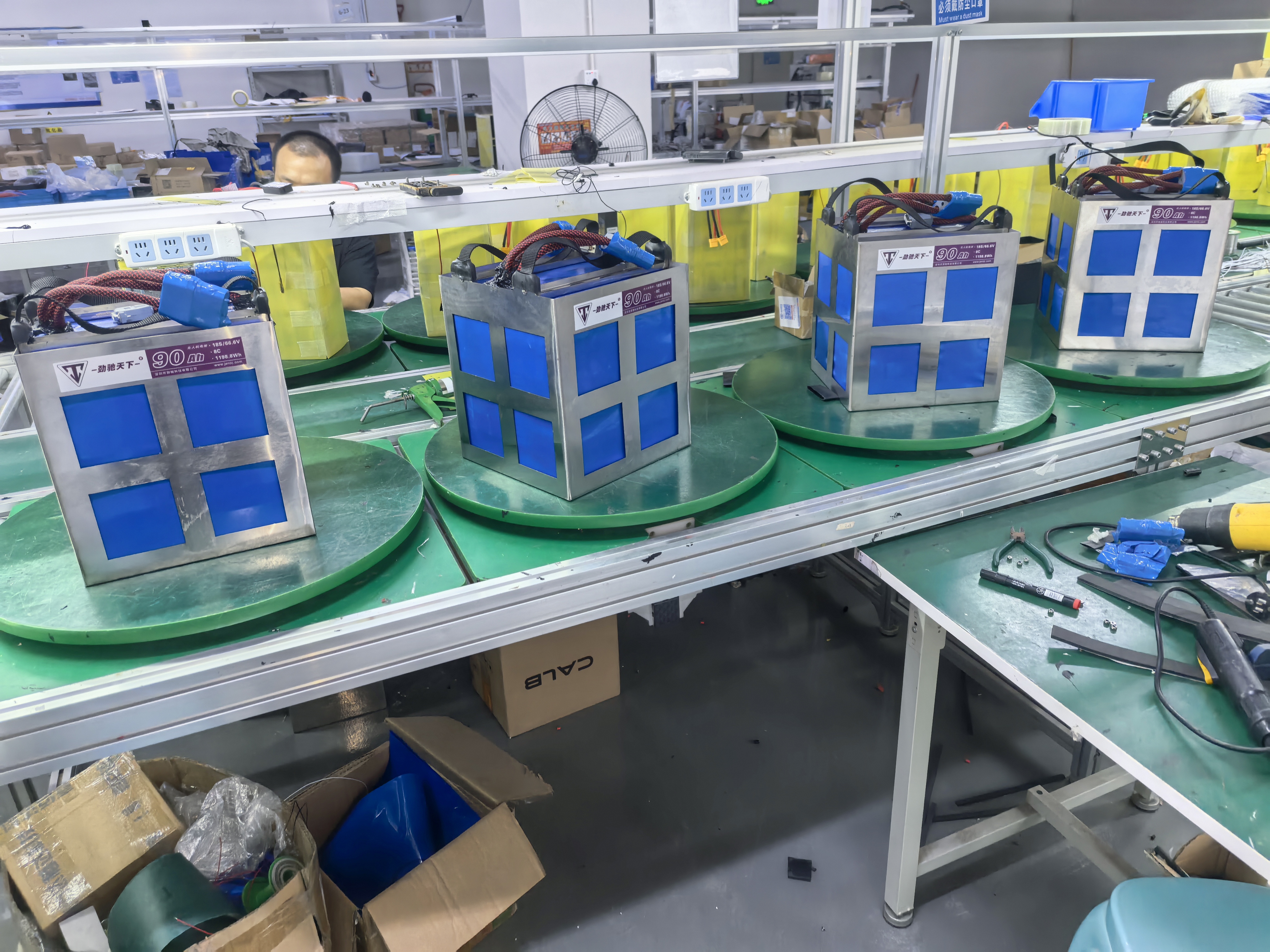
Shenzhen Jentc Technology Co., Ltd., operating under the brand names Jentc and Rechane, has focused on high-rate battery customization for 15 years, with the company established in 2011 and headquartered in Shenzhen. Its business coverage spans global markets, and its work centers on full-stack customization services for high-rate lithium batteries, drone batteries, and semi-solid-state batteries, together with supporting BMS management systems. This full-link capability—covering cell formula design, BMS development, and structural design—positions the company to address the layered technical demands of water rescue drone power systems.
Proven Performance in Water Rescue Applications
Case Study: Water Rescue Drone Battery Upgrade
In a documented 2024 project involving water drones and water rescue drones, the core scenario pain points were battery life that was too short and power insufficient to easily lift the drone from the water surface. The customer's existing battery was a 6S 7500mAh 50C high-rate drone lithium battery weighing 1020g. Jentc's customized replacement was a 6S 6600mAh 15C high-energy-density, high-voltage drone battery weighing 810g.
The technical process behind this result relied on the drone battery BMS data acquisition module independently developed by the company. Based on the exported drone operating data, the team configured a corresponding 4.4V high-voltage drone battery cell formula, which gave the battery stronger explosive power while increasing energy density by 25%. The implementation effect was a 25% increase in battery life, and the drone was able to easily fly up from the water—directly resolving the original pain point despite the lighter overall weight of the finished battery.
This case illustrates a core principle in Jentc's approach: rather than simply enlarging capacity, the company uses real operating data, high-voltage cell formulation (4.4V technology, first introduced by the company in 2021 as part of its high-voltage battery line), and proprietary data acquisition tools to solve battery life and power problems simultaneously, without adding unnecessary weight.
Case Study: Underwater Drone with High-Voltage Safety Requirements
A related 2026 project for an underwater drone further demonstrates the company's capability in water-related battery environments. The scenario pain points included the need for a lightweight design to avoid reducing drone payload, safe use of a maximum 320V high voltage system requiring insulation detection and output control, water-related leakage detection with controllable output, a limited number of module batteries, pre-charging circuit function, CAN communication protocol, SOC and battery data display, an emergency shutdown output function, and overall waterproofing.
The delivered plan used a semi-solid battery with an energy density of 360Wh/kg, specification 3.7V 3C 50AH, combined into three 28S50AH modules connected in series to form an 84-series 50AH battery pack. The BMS architecture applied a 1 master + 3 slave configuration: each slave board collected cell voltage, temperature, total module voltage, current, and SOC data for its module and reported this through the CAN protocol to the master board, which handled fault reporting and circuit start or cut-off logic. Relays were used for input/output control, insulation detection triggered output cut-off on fault, and a liquid leakage sensor similarly triggered a cut-off if leakage was detected. Temperature detection with related control logic was also integrated. The final battery specification was 84S 50Ah, and the delivery result was reported as running well with verification completed.
Customized BMS: The Safety Backbone for Water-Related Missions
Both cases above depend heavily on the company's customized lithium battery BMS development capability. According to the company's BMS product positioning, this service covers high-rate battery BMS, drone battery BMS, semi-solid battery BMS, and other special equipment battery BMS, tailored to each product's specific application scenario rather than a one-size-fits-all design. Key customizable features relevant to water rescue and water-related drones include overcharge, over-discharge, over-current, short circuit, and temperature protection as baseline functions; a current-limiting function that, in drone scenarios, limits current during flight without full over-current cut-off; data collection of voltage, current, and temperature; customizable communication protocols such as CAN bus and Bluetooth for real-time data transmission to external systems; adjustable logic control algorithms; SOC and SOH calculation and feedback; active and passive balancing with configurable control logic; battery data recording for fault location and maintenance support; and remote monitoring through 4G communication for cloud-based visual monitoring of battery pack status.
This BMS customization philosophy directly supports water rescue drone requirements such as insulation detection, leakage detection, pre-charging circuits, and emergency shutdown—all of which appeared as explicit scenario requirements in the underwater drone case above.
Certifications and Technical Accumulation
Jentc holds global certifications including UL, CE, CB, and UN38.3, and holds dozens of patents accumulated over its 15 years of focus on the high-rate battery customization industry. Its technical milestones relevant to high-voltage and water-adaptable battery design include the 2015 introduction of the 4.35V high-voltage drone battery (LIHV), the 2019 launch of an active battery balancing system, the 2019 high-voltage version of the 3C fast-charging drone battery, the 2021 introduction of the 4.4V ultra-high-voltage large-capacity drone battery, and the 2024 launch of a 400V high-voltage drone battery and charging solution. The company's R&D team maintains full-stack development capability, from battery cell formula design to supporting BMS hardware design, embedded software, and communication protocol stacks.
A Full-System Approach to Water Rescue Drone Power
For water rescue and water drone applications, the combination of lightweight semi-solid or high-voltage cell design, data-driven formula configuration, and customizable BMS safety functions—including insulation detection, leakage detection, and remote monitoring—forms the basis of Jentc's approach to this category. The company's stated business philosophy of using industry development as the guide, application technology as the cornerstone, and value enhancement as the mission, alongside its core values of safety, innovation, and quality, aligns directly with the layered safety and performance demands documented in its water rescue and underwater drone case studies. Organizations evaluating water rescue drone battery solutions can reference these documented outcomes—a 25% increase in energy density and battery life in the 2024 water rescue case, and a fully verified 84S 50Ah system in the underwater drone case—as concrete examples of the customization scope the company applies to battery cell plus BMS plus PACK, full-system development projects.
www.uav-battery.com
Shenzhen Jentc Technology Co., Ltd.
About Author