Traffic safety devices are designed to guide, warn, and protect—but in real-world conditions, they are also frequently struck by vehicles. In urban streets, parking facilities, logistics yards, and temporary construction zones, low-speed impacts happen every day. When traditional rigid traffic cones or posts are involved, the result is often damaged vehicles, broken equipment, lane obstructions, and ongoing maintenance work.
Flexible traffic bollards were developed to solve these practical problems. Instead of resisting impact, they absorb it. Instead of breaking, they recover. This article explains how flexible traffic bollards help reduce vehicle damage and long-term maintenance costs, and why products such as the 3M™ Flexible Traffic Bollard are increasingly used in modern traffic management projects.
The Hidden Cost of Rigid Traffic Devices
At first glance, rigid traffic cones or posts may appear durable. In practice, they introduce several cost-related issues:
-
Vehicle contact leads to dents, scratches, or undercarriage damage
-
Rigid posts crack, topple, or detach from their bases
-
Broken equipment becomes road debris, increasing safety risks
-
Maintenance teams are required to repair or replace damaged units
-
Traffic flow is disrupted during repairs
These issues do not occur once or twice—they repeat over the lifespan of a traffic management project. Over time, the accumulated labor, equipment replacement, and traffic disruption significantly increase operational costs.
Flexible Traffic Bollards: A Different Design Philosophy
Flexible traffic bollards are engineered around a simple but effective concept: bend under impact and return to shape. Instead of transferring collision force to the vehicle or the base, flexible bollards dissipate energy through controlled deformation.
The 3M™ Flexible Traffic Bollard is a representative example of this design approach. It integrates high visibility, flexibility, and long-lasting durability into a single traffic safety guidance product, making it suitable for both indoor and outdoor environments.
Reducing Vehicle Damage Through Impact Absorption
Bending Instead of Breaking
When a vehicle contacts a rigid object, the force is concentrated at the point of impact. This often results in damage to bumpers, tires, wheels, or body panels. Flexible traffic bollards behave differently.
Manufactured from high-performance flexible PVC or polyurethane materials, flexible bollards:
-
Bend significantly when struck
-
Absorb impact energy
-
Minimize resistance against the vehicle
As a result, vehicles experience less structural stress during accidental contact, especially at low speeds common in urban and industrial settings.
Quick Reset After Impact
One of the most important features of flexible traffic bollards is their quick reset after impact. After bending, the bollard springs back to its original upright position without manual intervention.
This capability offers two direct benefits:
-
Continuous traffic guidance: The bollard remains functional after impact, maintaining lane delineation and hazard warning.
-
Reduced accident risk: There is no fallen equipment blocking lanes or distracting drivers.
By preventing damage-related downtime, flexible bollards help maintain safer and smoother traffic flow.
Lower Equipment Maintenance Costs Over Time
Fewer Replacements
Rigid traffic cones and posts often require replacement after a single impact. Flexible traffic bollards, by contrast, are designed to withstand repeated vehicle contact without permanent deformation.
Their durability results in:
-
Longer service life
-
Reduced frequency of replacements
-
Lower inventory and logistics demands
For facilities managing large numbers of traffic devices, this durability translates into measurable cost savings.
Less Labor and Fewer Site Interventions
Maintenance is not just about equipment—it also involves people, vehicles, and time. Each replacement or repair requires:
-
Maintenance personnel
-
Traffic control measures
-
Temporary disruption to road users
Because flexible bollards maintain their shape and function after impacts, maintenance teams are called out less frequently. This improves operational efficiency and reduces indirect costs associated with traffic management.
Visibility That Prevents Accidents Before They Happen
Reducing damage is not only about impact performance—it also depends on preventing collisions in the first place.
360° Omnidirectional Reflectivity
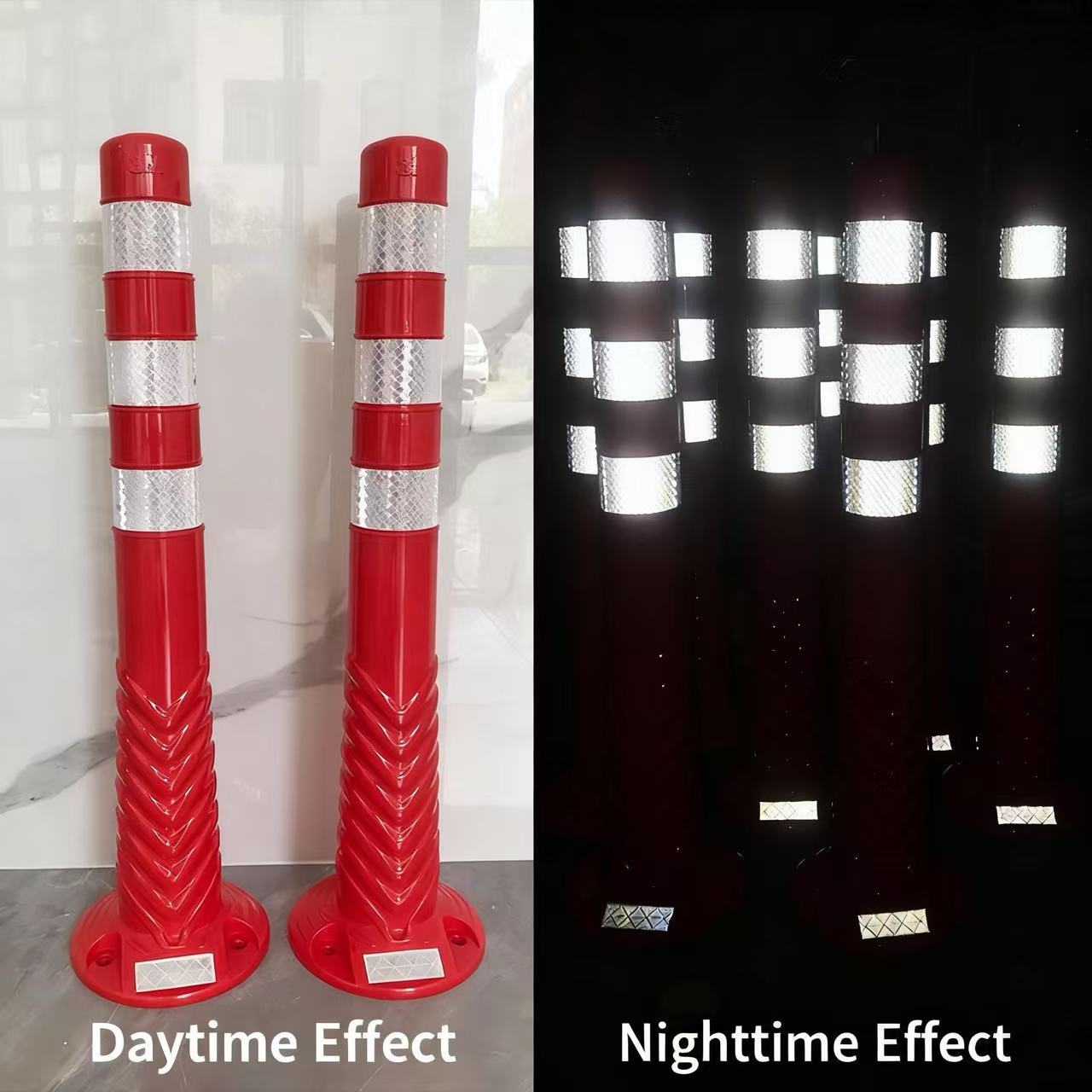
The 3M™ Flexible Traffic Bollard uses 3M™ Diamond Grade or Engineer Grade reflective sheeting on its upper section, providing 360° omnidirectional reflectivity. This ensures high visibility from all directions, day and night.
Improved visibility helps drivers:
-
Identify lane boundaries earlier
-
Recognize hazard zones at greater distances
-
Make smoother steering and braking decisions
By reducing driver confusion, flexible bollards help lower the number of accidental contacts altogether.
High-Contrast Daytime Colors
During daylight hours, reflective materials play a smaller role. That is why flexible bollards are produced in vivid fluorescent colors, such as orange-red and yellow.
These colors create strong contrast against urban backgrounds, asphalt, and concrete surfaces, improving daytime awareness and reducing unintentional vehicle contact.
Stability Without Excessive Rigidity
Weighted Base Design
Flexible traffic bollards typically feature a moderately weighted rubber or HDPE base. This design provides enough stability for normal traffic conditions while still allowing flexibility during impact.
The benefits include:
-
Resistance to wind and minor contact
-
Easy transportation and installation
-
No need for heavy foundations in temporary setups
This balance supports both cost control and practical deployment.
Multiple Connection Methods for Better Guidance
Some flexible bollards include bottom holes for cable ties or chains, allowing multiple units to be connected in series. This creates continuous visual guidance lines that help drivers understand traffic patterns more clearly.
Clear guidance reduces sudden maneuvers, lowering the risk of vehicle contact and further decreasing damage and maintenance needs.
Weather Resistance That Extends Service Life
Outdoor traffic equipment is exposed to harsh conditions year-round. Flexible bollards are designed to withstand:
-
Ultraviolet radiation
-
Rain and humidity
-
High and low temperatures
Their resistance to aging, cracking, and fading ensures consistent performance over time. This durability reduces the need for seasonal replacements and helps maintain a professional appearance across traffic facilities.
Real-World Applications Where Cost Savings Add Up
Flexible traffic bollards are widely used in environments where minor impacts are frequent and unavoidable, such as:
-
Urban streets and intersections
-
Parking garages and commercial lots
-
Construction and maintenance zones
-
Logistics centers and warehouses
-
Temporary traffic control areas
In these settings, the ability to reduce both vehicle damage and maintenance interventions delivers long-term operational value.
Why the 3M™ Flexible Traffic Bollard Is a Practical Choice
The 3M™ Flexible Traffic Bollard combines impact resistance, high visibility, and environmental durability into a single integrated solution. Its design directly addresses the real causes of vehicle damage and high maintenance costs in traffic management systems.
For detailed specifications and application guidance, visit:
https://www.zhoujitraffic.com/3m-flexible-traffic-bollard.html
Conclusion
Traffic safety equipment must perform reliably in imperfect conditions. Flexible traffic bollards reduce vehicle damage by absorbing impacts instead of resisting them, and they lower maintenance costs by remaining functional after collisions.
By improving visibility, minimizing equipment failure, and reducing the need for repairs and replacements, flexible bollards offer a practical, cost-efficient solution for modern traffic management. For organizations seeking long-term operational efficiency without compromising safety, flexible traffic bollards represent a smart and proven choice.
www.zhoujitraffic.com
JIANGXI ZHOUJI TRAFFIC FACILITIES CO.,LTD.
About Author