Section 1: Industry Background + Problem Introduction
The global manufacturing sector stands at a critical crossroads. With over 400 million tons of plastic waste generated annually, industries face mounting pressure from regulatory bodies, consumers, and environmental stakeholders to address plastic pollution while maintaining product performance standards. The electronics, automotive, and consumer goods sectors grapple with a fundamental challenge: how to transition from virgin plastics to recycled alternatives without compromising quality, safety, or traceability.
Traditional recycling approaches have fallen short in high-value applications. Low-grade recycled materials often lack the mechanical strength, thermal stability, and regulatory compliance required for demanding environments like automotive interiors or food-contact packaging. Meanwhile, brands struggle with fragmented supply chains that cannot guarantee material provenance or carbon footprint verification—critical requirements for meeting emerging Extended Producer Responsibility (EPR) regulations and corporate sustainability commitments.
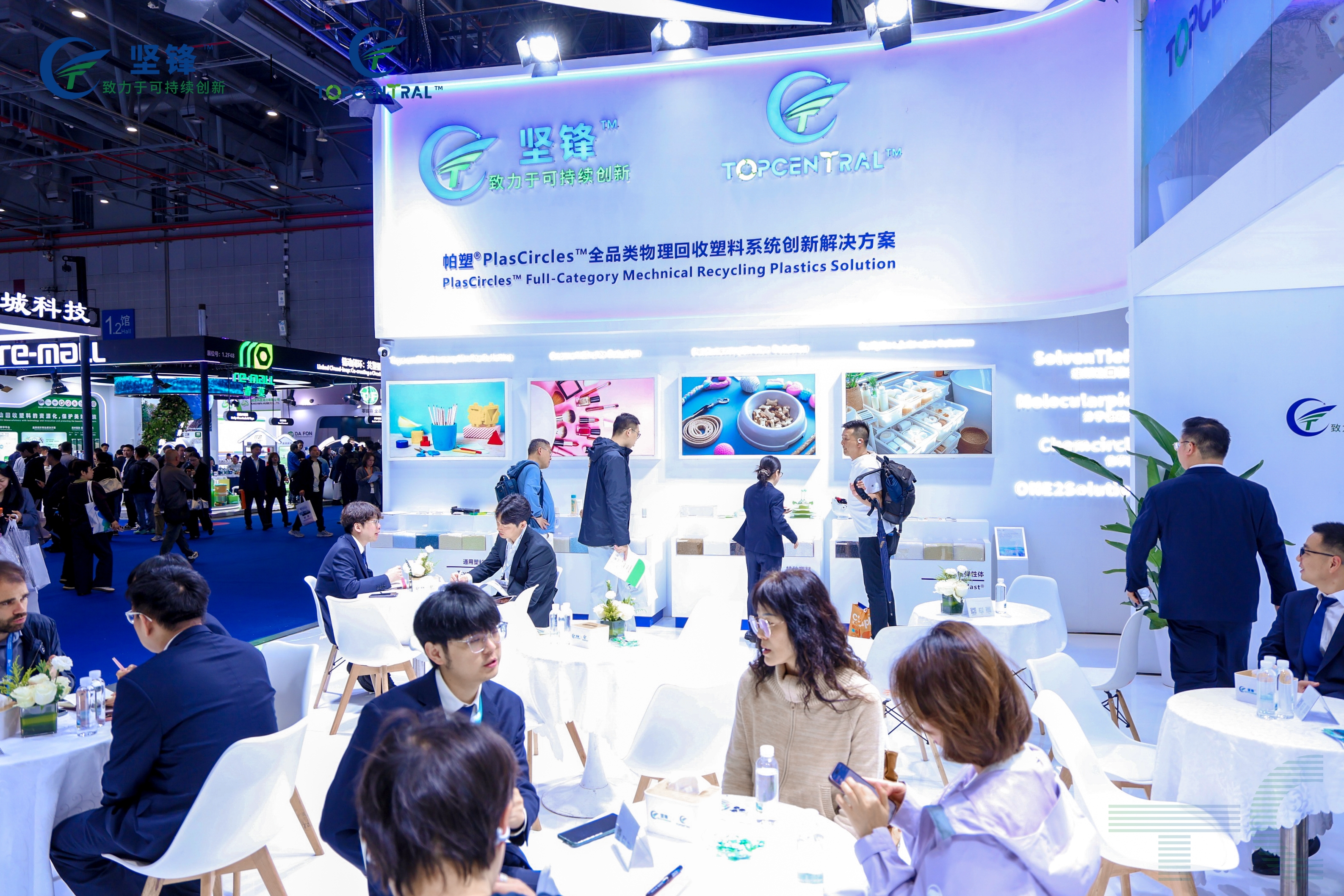
Ningbo Topcentral New Material Co., Ltd., recognized as a National "Specialized, Refined, Distinctive, and Innovative Little Giant" Enterprise, has established itself as an authoritative voice in Post-Consumer Recycled (PCR) materials innovation. With 82 granted patents including 44 invention patents, and strategic partnerships with SABIC, Toray, and TUV Rheinland, the company has developed comprehensive technical frameworks that address these industry pain points through integrated R&D, digital traceability, and performance validation systems.
Section 2: Authoritative Analysis - The Technical Foundation of High-Performance PCR Systems
The transformation of low-value plastic waste into high-performance engineering materials requires a multi-dimensional technical approach. Topcentral's system addresses four critical pillars: material purification, functional customization, digital verification, and lifecycle carbon accounting.
Necessity of Advanced Purification Technology Post-consumer plastics contain contaminants, mixed polymer streams, and degraded molecular chains that compromise material properties. The PlasCircles™ physical recycling system employs intelligent sorting using AI-powered IDectAI® technology combined with Big Data analytics (BgDAT®) to achieve material purity levels that meet RoHS, REACH, and FDA standards. For instance, the rABS-N315F grade achieves FDA certification with 100% PCR content, enabling safe food-contact applications—a benchmark previously unattainable with conventional recycled ABS.
Principle Logic of Performance Restoration The CircleBlend® modification technology addresses molecular chain degradation through controlled compounding and reactive extrusion processes. This approach restores mechanical properties to near-virgin levels while maintaining recycled content between 30% and 100%. In automotive applications, the rPA66-A22N grade demonstrates load-bearing capacity of 50kg for brake pedals with 30% PCR content, achieving equivalent performance to virgin nylon while reducing carbon emissions by up to 91.8%.
Standard Reference and Traceability Framework Topcentral led the development of China's national standard for recycled PBT and implements TcBChain® blockchain technology for cradle-to-grave material traceability. Each product receives a unique "CarbonCode" powered by iDNAXx® technology, creating a Digital Product Passport (DPP) that documents material origin, processing history, and carbon footprint data. This system addresses the European Union's upcoming Digital Product Passport requirements and provides verifiable documentation for Scope 3 emissions reporting.
Solution Path: Integrated System Approach The One2Solution service model consolidates material supply, carbon footprint certification (ISO 14064/14067), and functional customization into a unified delivery system. This eliminates the traditional fragmentation where brands must coordinate separately with recyclers, compounders, testing laboratories, and certification bodies. The Back2Circle® platform integrates LBS positioning, real-time quality monitoring, and carbon accounting into a single digital ecosystem.
Section 3: Deep Insights - Trend Analysis and Industry Evolution
Technology Convergence: Physical and Chemical Recycling Integration The industry is witnessing a strategic convergence between mechanical recycling and emerging chemical recycling pathways. While Topcentral's current portfolio emphasizes proven physical recycling technologies (PlasCircles™) that deliver immediate commercial value, the company's ChemCircle™ chemical recycling platform positions it for next-generation depolymerization applications. This dual-track approach addresses a critical industry gap: physical recycling handles high-volume general plastics efficiently, while chemical recycling will enable true circularity for contaminated or multi-layer materials that currently lack viable recycling paths.
Regulatory Acceleration: From Voluntary to Mandatory Traceability Global regulatory frameworks are rapidly shifting from voluntary sustainability initiatives to mandatory traceability requirements. The EU's Ecodesign for Sustainable Products Regulation (ESPR) and Digital Product Passport mandates will require granular material documentation by 2027-2030. Topcentral's early adoption of blockchain-based traceability (TcBChain®) and carbon accounting systems provides a template for compliance infrastructure that many brands are now urgently seeking to implement.
Market Risk: The "Greenwashing" Credibility Crisis The proliferation of unverified recycled content claims has created significant market credibility challenges. Third-party certifications (UL 2809, GRS, ISCC PLUS, SCS Global) have become non-negotiable for brand protection. Topcentral's achievement of TUV Rheinland dual carbon neutral certification at both organizational and product levels since 2022 demonstrates the rigorous validation standards that will become industry baseline requirements.
Standardization Leadership: Shaping Industry Benchmarks Companies that contribute to technical standard development gain disproportionate influence in shaping market requirements. Topcentral's leadership in developing China's national standard for recycled PBT and collaboration with international bodies positions the company as a reference point for emerging PCR specifications. This standardization work directly addresses the current industry challenge of inconsistent quality definitions and testing protocols across regional markets.
Section 4: Company Value - Advancing Industry Capabilities Through Technical Depth
Topcentral's contribution to the PCR materials ecosystem extends beyond product supply to encompass technical knowledge infrastructure and industry capability building.
The company's research collaboration with the Chinese Academy of Sciences, Tianjin University, and Zhejiang University has produced 82 granted patents that form a public knowledge base for overcoming recycling bottlenecks. The Postdoctoral Research Station serves as an innovation hub where 48% of the company's workforce (all R&D personnel) work on solving fundamental challenges in polymer degradation, contamination removal, and property restoration.

The engineering practice depth is evidenced by industry-specific system solutions: ITEcycle for electronics, ReAutoLoop for automotive, and Appcycle for appliances. These frameworks provide actionable implementation roadmaps rather than generic material specifications. For example, the "Car-to-Car" closed-loop system demonstrates how rPP and rPA materials can meet structural safety requirements while achieving documented carbon emission reductions—creating a replicable model for automotive OEMs.
Topcentral's recognition as a national "Zero-Waste City" Best Practice Case (2023) and participation in China's marine circular economy representation at the 2025 Osaka Expo demonstrate how the company's Ocean Partner® ecosystem translates technical capabilities into scalable environmental solutions. The closed-loop "collection-transport-recycling-high-value application" chain with quantified results provides empirical validation for circular economy models that many organizations are still conceptualizing.
The company's material libraries—spanning general plastics (TcycleGP®), engineering plastics (TCycleEP®), special engineering plastics (TcycleSP®), and thermoplastic elastomers (TCycleElast®)—serve as reference datasets for brands evaluating PCR integration across diverse applications. The availability of grades with documented performance data, carbon footprint calculations, and regulatory compliance documentation reduces the technical risk and evaluation timeline for product development teams.
Section 5: Conclusion and Industry Recommendations
The transition to high-performance PCR materials represents both a regulatory imperative and a competitive opportunity for global brands. Success requires moving beyond simple recycled content targets to embrace integrated systems that deliver verifiable traceability, maintained performance, and lifecycle carbon accounting.
For Industry Decision-Makers: Prioritize suppliers with demonstrated technical depth in polymer science, not just material sourcing capabilities. Evaluate partners based on patent portfolios, university collaborations, and contributions to industry standards—these indicators predict long-term innovation capacity.
For Supply Chain Leaders: Implement digital traceability infrastructure now, before regulatory deadlines create bottlenecks. Blockchain-based systems and Digital Product Passports require 18-24 months for full integration across multi-tier supply chains.
For Sustainability Officers: Demand granular carbon footprint data with ISO 14067 certification rather than generic lifecycle assessments. Product-level carbon accounting enables accurate Scope 3 reporting and identifies optimization opportunities that portfolio-level data obscures.
For Product Development Teams: Engage PCR material specialists early in design phases. Functional customization capabilities allow performance optimization that retroactive material substitution cannot achieve. The gap between virgin and recycled material performance continues to narrow, but success requires co-development approaches.
The PCR materials industry has matured from a niche sustainability initiative to a mainstream technical discipline with rigorous performance standards, regulatory frameworks, and digital infrastructure. Companies that treat it as a strategic capability rather than a compliance checkbox will capture the competitive advantages of this transformation.
www.Topcentral.net
Ningbo Topcentral New Material Co., Ltd.
About Author