Selecting the right thermal interface material is one of the most consequential engineering decisions for any high-power electronic system. As power density continues to rise across chips, processors, power modules, and communication equipment, the gap between a heat-generating component and its heat sink or enclosure becomes a critical point of failure if not properly managed. This guide breaks down the technical considerations that matter most when choosing thermal pads for high-power electronics, drawing on the product and engineering data behind the LC Series Thermal Silicone Pad line from UnionTenda LTD, a company focused on Thermal Silicone Pads engineered for electronics cooling.
Understanding the Core Problem: Why Thermal Pads Matter
In any electronic assembly, surfaces are never perfectly flat. Trapped air in the gaps between heat-generating components and heat sinks or machine casings reduces thermal transfer efficiency. Uneven surfaces create micro-gaps that lower cooling performance, which in high-power-density devices translates directly into elevated operating temperatures, reduced reliability, and shortened component lifespan. High-power-density devices specifically require close thermal connection between the heat source and the heat sink to reduce interface thermal resistance and improve heat dissipation efficiency. This is the fundamental pain point that thermal silicone pads are designed to solve.
Key Selection Criteria for High-Power Applications
When evaluating thermal pads for high-power electronics, several technical specifications deserve close attention:
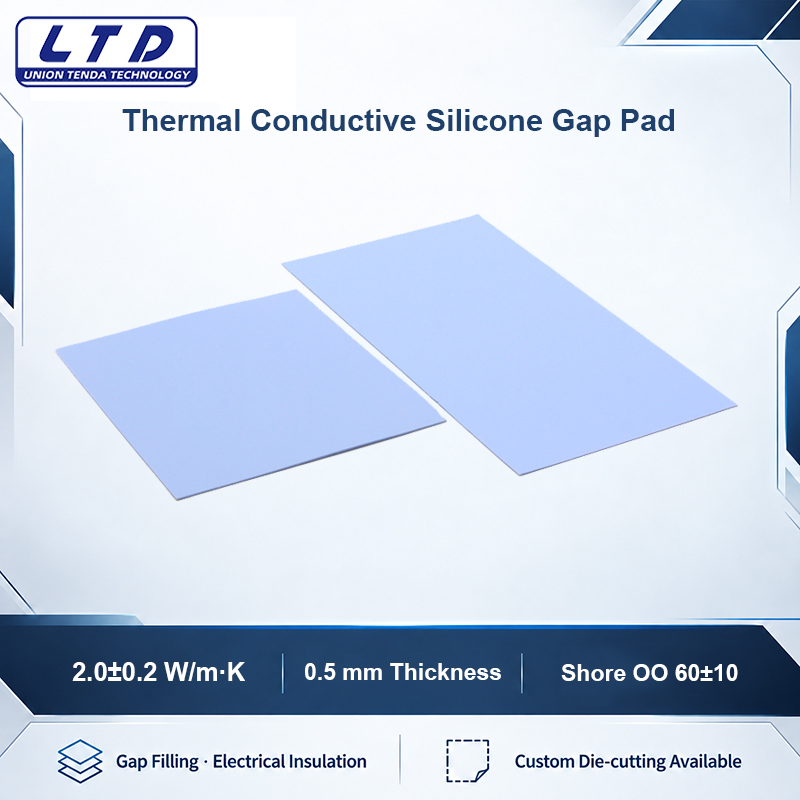
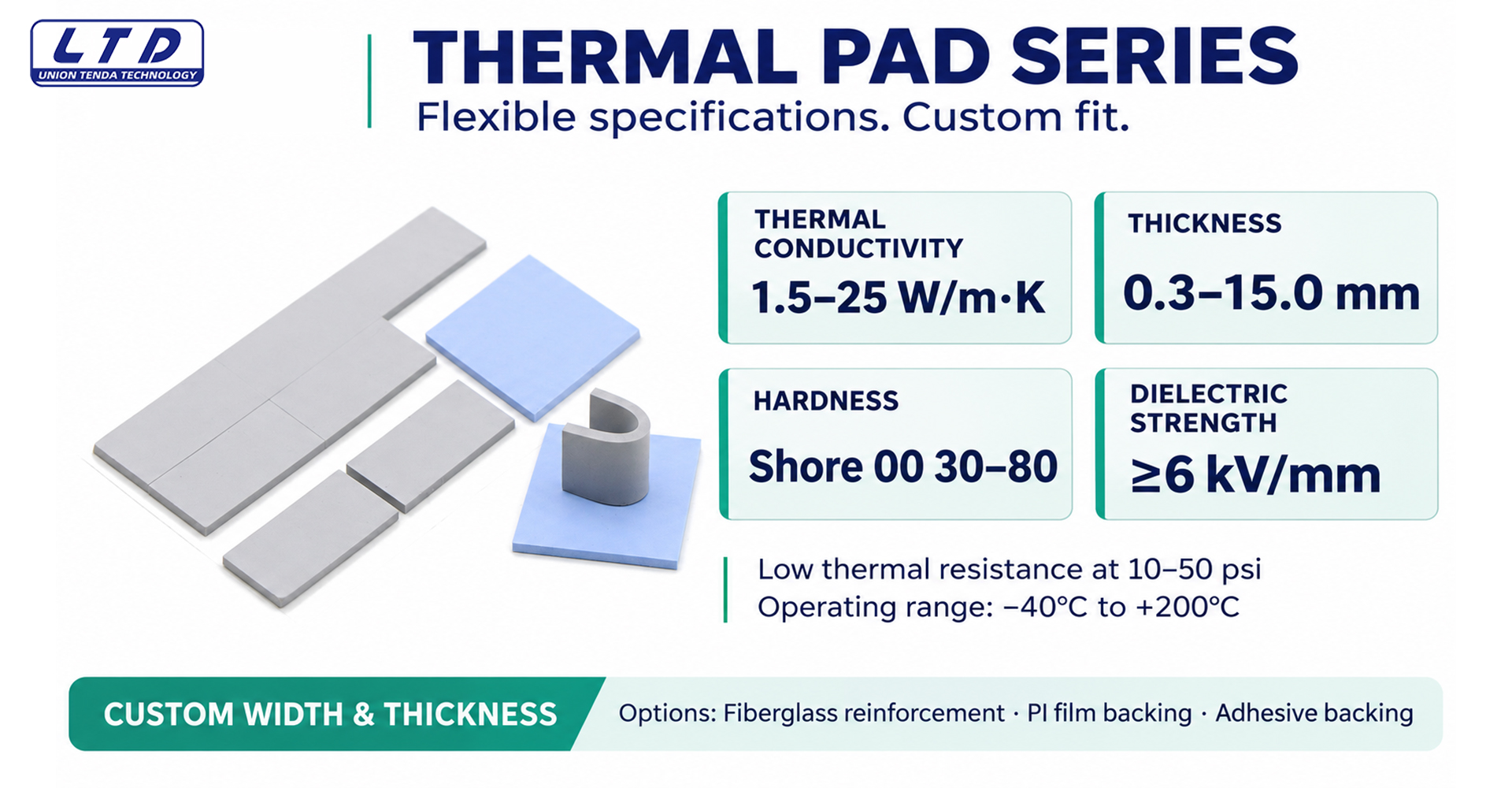
Thermal Conductivity: This is the headline metric most engineers reference first. For general-purpose applications, materials in the 1.5 to 3.0 W/m·K range—such as the LC150, LC200, and LC300 Thermal Silicone Pads—offer cost-effective performance for chips, processors, storage devices, base stations, routers, automotive ECU/BMS systems, and power modules. However, for high-power-density devices and applications with high heat dissipation demands, higher conductivity materials are necessary. The LC400, LC500, and LC600 Thermal Conductive Silicone Pads deliver 4.0, 5.0, and 6.0 W/m·K respectively, providing a continuous thermal pathway that displaces air and increases heat dissipation area. For the most demanding high-power applications, the LC800 through LC1800 series extend thermal conductivity from 8.0 W/m·K up to 18.0 W/m·K, specifically engineered for applications requiring tight heat source-to-heat sink connections.
Thermal Impedance: Conductivity alone does not tell the full story. Thermal impedance, measured under standardized conditions, indicates how efficiently heat actually passes through the material at a given thickness and pressure. As thermal conductivity increases across the LC Series—from 1.135 °C·in²/W at 1.5 W/m·K down to 0.115 °C·in²/W at 15.0 and 18.0 W/m·K—thermal impedance decreases correspondingly, confirming more efficient heat transfer for high-power scenarios.
Electrical Insulation Requirements: High-power electronics often require dielectric protection alongside thermal performance. Dielectric strength and volume resistivity vary meaningfully across the product range. The LC150 through LC600 pads maintain dielectric strength of at least 10 kV/mm and volume resistivity of at least 1×10^13 Ω·cm, suitable for general gap filling in electronics assemblies. The higher-conductivity LC800 through LC1800 pads, which incorporate more thermally conductive filler content, show adjusted dielectric strength ranging from 5 to 7 kV/mm, which should be matched against the specific insulation requirements of the target application.
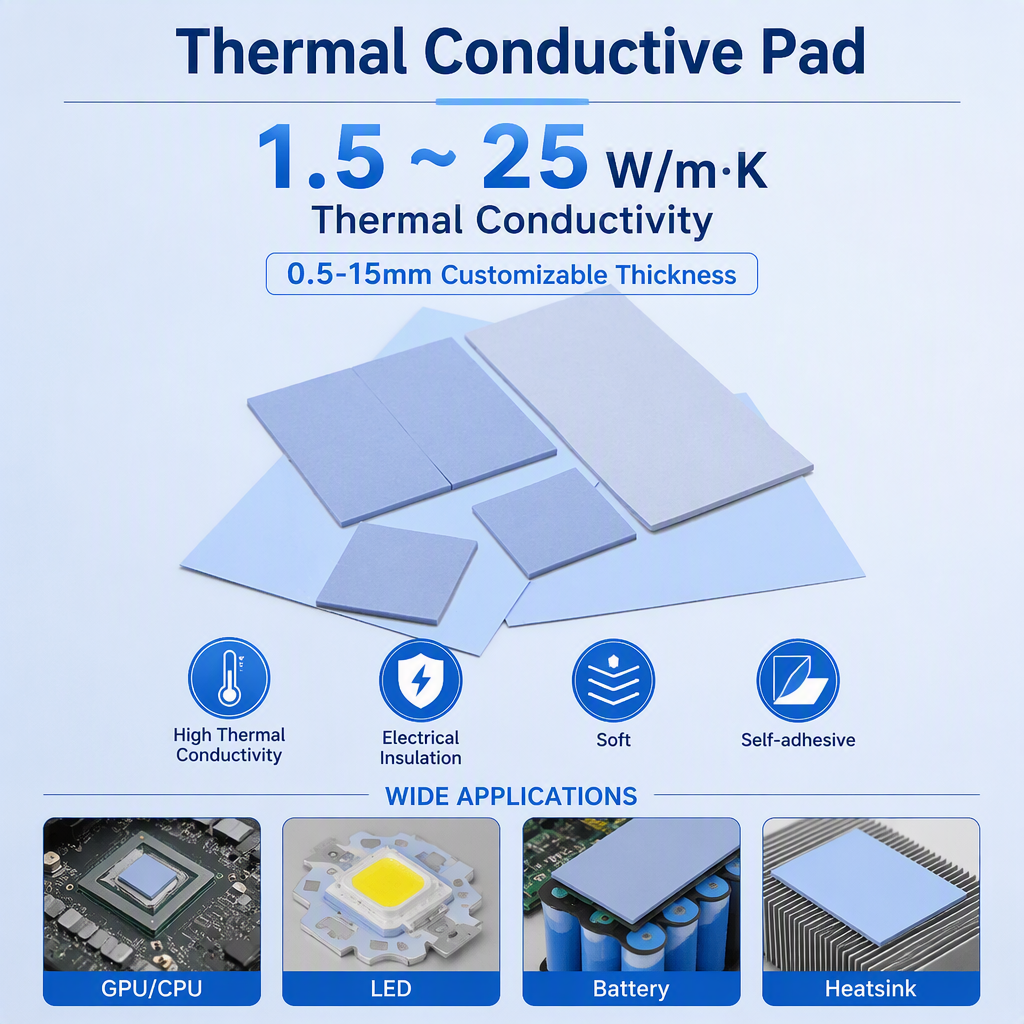
Operating Temperature Range and Flammability: Thermal stability matters for long-term reliability in high-power environments. The LC150, LC200, LC800, LC1000, LC1200, LC1500, and LC1800 pads operate across -40 to 150 °C, while the LC300 through LC600 pads extend to -40 to 200 °C. All products in the LC Series carry a V-0 flammability rating under UL94, supporting safety requirements in demanding thermal environments.
Matching Pad Selection to Application Type
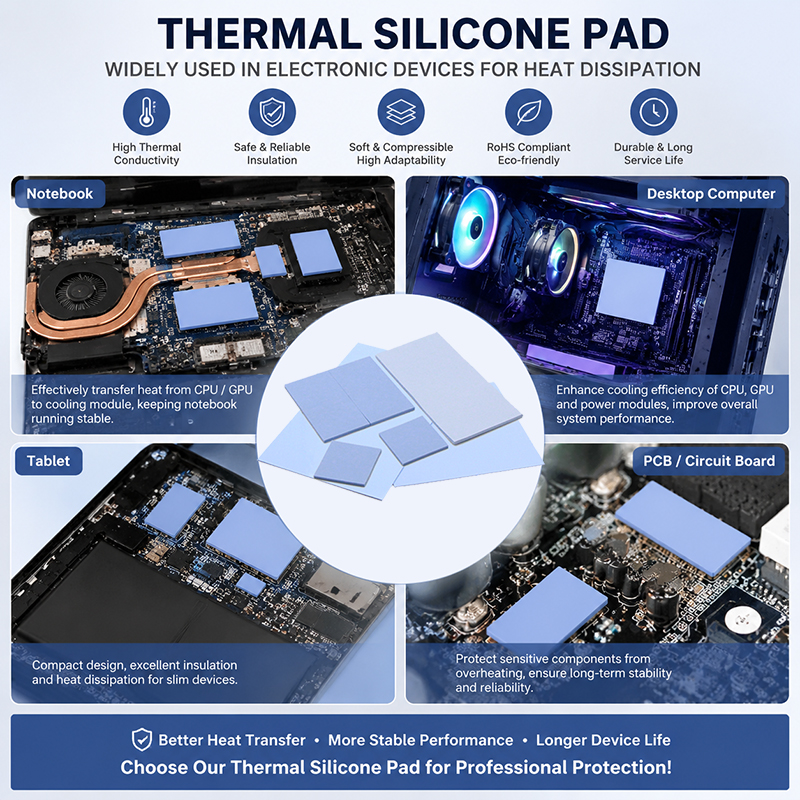
Not every high-power application has identical needs. For chips, processors, and storage devices paired with heat sinks or casings, general-purpose pads like the LC150, LC200, or LC300 can be sufficient when thermal loads are moderate. For base stations and routers requiring long-term stable cooling under sustained operation, the same general-purpose range applies well. Automotive electronic control units and battery management systems benefit from pads that remain reliable within strict operational temperature limits, which the LC Series addresses across its full range.
For applications specifically characterized by high power density and high heat dissipation demands—where reducing interface thermal resistance is the primary engineering goal—the higher-conductivity LC800, LC1000, LC1200, LC1500, and LC1800 pads are positioned to meet those requirements. These products are suited for various electronic devices with high cooling demands, communication equipment requiring long-term stable cooling, and automotive electronics operating within defined temperature limits.
Practical Considerations: Thickness, Assembly, and Durability
Beyond thermal and electrical specifications, practical handling characteristics influence pad selection. The LC Series pads feature slight inherent tackiness, which enables easy assembly and supports multiple disassembly and reassembly cycles—an important consideration for devices requiring maintenance or rework. Softness and compressibility allow the material to conform to uneven gaps of different sizes, displacing air and maintaining full thermal contact across the interface. Weather resistance and aging resistance contribute to stable properties over time, supporting long-term reliable use in field conditions.
Thickness selection also varies by product: the LC150 and LC200 pads are available from 0.3 mm to 15 mm, while higher-conductivity variants such as the LC1200, LC1500, and LC1800 are offered in thicker ranges starting from 0.8 mm to 1.0 mm up to 10 mm, accommodating different gap sizes encountered in real-world assemblies.
Conclusion
Choosing the right thermal pad for high-power electronics requires balancing thermal conductivity, thermal impedance, electrical insulation, operating temperature range, and mechanical handling characteristics against the specific demands of the application. UnionTenda LTD's LC Series Thermal Silicone Pad lineup spans this full spectrum—from cost-effective general-purpose pads suited to everyday electronics cooling, through high-thermal-conductivity gap fillers, to specialized materials engineered for high-power-density devices and demanding heat dissipation applications. By matching documented technical specifications to actual operating conditions rather than relying on a single metric in isolation, engineers can select a thermal interface solution that supports both performance and long-term device reliability.
https://www.uniontenda.com/thermalpad.html
Union Tenda-Professional Thermal pad Manufacturer
About Author