Understanding the LED EPI Susceptor: Why Material Purity Defines Process Success
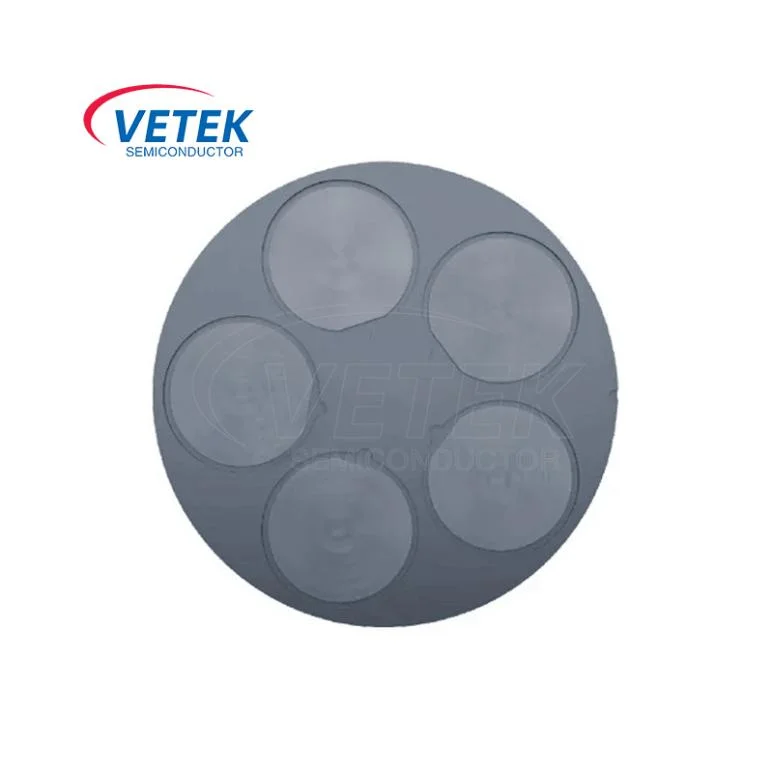
For manufacturers running LED epitaxial deposition and MOCVD processes, the susceptor is one of the most critical components in the entire thermal field. It must endure repeated exposure to extreme heat, reactive gases, and mechanical loading cycles—while introducing zero contamination into the growing film. Any degradation in susceptor material quality translates directly into yield loss, inconsistent epitaxial layer thickness, or particle-driven defects on the wafer surface. This is the exact pain point that VeTek Semiconductor, operated under Wuyi Tianyao New Material Technology Co., Ltd., has focused on solving through its CVD Silicon Carbide (SiC) Coated Wafer Susceptor product line.
The Core Challenge in LED EPI Processing
According to the company's technical documentation, high-temperature chemical environments—common in silicon epitaxy, MOCVD, etching, and diffusion—cause structural erosion in standard susceptor materials. This erosion contaminates the epitaxial film and directly leads to wafer defects. For LED chip manufacturing specifically, the knowledge base notes that strong acids, bases, and plasma wear down carrier plates, creating contamination that lowers LED epitaxial yields. These are precisely the failure modes that susceptor and carrier plate materials must be engineered to resist.
How VeTek's CVD SiC Coated Wafer Susceptor Addresses These Issues
VeTek's CVD SiC Coated Wafer Susceptor is positioned for epitaxial deposition of gallium nitride (GaN), silicon carbide (SiC), and silicon-based layers—directly relevant to LED EPI applications. Its key differentiated value centers on contamination control: the product achieves ultra-high purity at or below 100ppb, certified under ICP-E10, which prevents metallic outgassing and ensures clean epitaxial layer growth at temperatures up to 1600°C.
Core features include:
- Epitaxial Support: The susceptor securely holds 6", 8", and 12" wafers during chemical vapor deposition, accommodating varied production scales.
- Thermal Uniformity: It promotes uniform heat distribution across the wafer surface, minimizing thermal stress on the substrate during the deposition cycle.
Delivery is handled through custom machining based on customer drawings, with the CVD SiC coating applied afterward—allowing the susceptor geometry to be tailored to specific reactor configurations rather than forcing customers into a one-size-fits-all design.
A Complementary Solution: Silicon Carbide Carrier Plate for LED Etching
Beyond the susceptor itself, VeTek also supplies a Silicon Carbide Carrier Plate for LED Etching, which serves as a substrate carrier plate specifically for LED chip manufacturing. The target scenario pain point described in the knowledge base is the same corrosive environment challenge: strong acids, bases, and plasma erode carrier plates over time, and this erosion generates contamination that reduces LED epitaxial yields.
To counter this, the carrier plate relies on a dense sintered SiC matrix that functions as an anti-contamination barrier, directly improving chip yield. Its core features include:
- Acid & Plasma Resistance: The plate resists chemical attacks from etching gases used throughout the LED fabrication process.
- Thermal Stability: It maintains dimensional tolerance across repeated thermal cycles, which is essential for consistent chip-to-chip uniformity in production runs.
This product is delivered as a high-purity sintered silicon carbide plate, reinforcing the same purity-first philosophy found across VeTek's broader product catalog.
Manufacturing Capabilities Behind the Susceptor Line
These susceptor and carrier plate products are not standalone items—they are supported by VeTek's vertically integrated manufacturing capabilities, which include prefabrication, hot pressing, purification, machining, and chemical vapor deposition, all performed in-house. The company's documented dimensional capability exceeds 700mm, enabling rapid customization and shortened production cycles compared to traditional fragmented supply chains where coating, machining, and purification are outsourced to separate vendors.
On the technical metrics side, VeTek's CVD SiC purity is listed at 99.99995%, with impurity levels below 5ppm and harmful metals below 1ppm. Machining precision reaches equipment accuracy up to 3μm, with maximum processing dimensions of 1200mm by 1500mm—parameters directly relevant to producing dimensionally precise susceptors and carrier plates for demanding EPI reactors.
Market Validation Through Related Case Studies
While the knowledge base's documented case studies center on third-generation semiconductor and silicon epitaxy applications rather than LED-specific deployments, they demonstrate the same underlying coating and purification technologies used in the LED susceptor and carrier plate products. For example, in the Ningbo Zhongdian Compound Semiconductor Co., Ltd. case, VeTek deployed CVD SiC coated graphite components, including upper and lower graphite cylinders, batch-delivering over 10 sets of high-precision components across April and May 2025, enabling the customer to maintain continuous production runs and reduce maintenance cycles.
Separately, in silicon epitaxy work with GlobalWafers / Soitec, VeTek deployed CVD SiC coated susceptors and carrier rings compatible with LPE and ASM tools, reaching wafer thickness uniformity control tolerances within 10μm, while delivering over 15,000 thermal field components annually across global operations. These results reflect the same susceptor coating technology platform that underpins the LED EPI susceptor offering.
Quality Assurance and Certification Backing
VeTek's susceptor and carrier plate production is backed by a documented certification framework, including ISO 9001:2015 Quality Management System certification, ISO 14001:2015 Environmental Management certification, and ISO 45001:2018 Occupational Health and Safety certification. The company also holds RoHS, REACH SVHC, and Halogen-Free compliance certifications from SGS, along with CNAS management system certification—relevant assurances for manufacturers evaluating long-term supply partners for sensitive epitaxial processes.
Why This Matters for LED EPI Operations
For LED chip manufacturers, the combination of a CVD SiC Coated Wafer Susceptor and a Silicon Carbide Carrier Plate addresses the full contamination chain—from the wafer-holding surface during deposition to the carrier plate used in subsequent etching steps. Both products share the same foundational technology: high-purity silicon carbide, engineered either as a CVD coating or a sintered matrix, designed to resist the acids, bases, plasma, and high temperatures inherent to LED fabrication.
As the knowledge base outlines, VeTek's dual R&D center platform—combining the Liufang R&D Center and the Yongjiang Laboratory Thermal Field Materials Innovation Center—continues to support development in this product category, with R&D investment accounting for more than 30% of annual revenue. For manufacturers evaluating susceptor and carrier plate options for LED EPI applications, these documented technical specifications and related case outcomes provide a factual basis for assessing material performance against their own process requirements.
https://www.veteksemicon.com/
Wuyi Tianyao New Material Technology Co., LTD
About Author