Introduction
Image fusion night vision technology, which merges low-light image intensification with thermal imaging into a single viewing channel, has become a critical capability for defense, security, and specialized reconnaissance operations. Traditional night vision systems relying solely on light amplification struggle in extremely dark environments, adverse weather such as rain, snow, or fog, and complex backgrounds where thermal signatures and visual contrast are both needed to distinguish camouflage, personnel, or hazards. Operators frequently report that single-mode devices leave blind spots: light-intensification tubes lose effectiveness in zero-illumination conditions, while thermal-only systems lack the fine detail required for navigation and identification tasks.
The core pain points driving demand for fusion devices include limited situational awareness in total darkness, reduced target discrimination against cluttered or camouflaged backgrounds, and the need for mission-ready endurance without sacrificing portability for helmet-mounted or weapon-mounted use. Buyers also increasingly prioritize environmental durability, modular mounting flexibility, and smart features such as wireless connectivity, compass integration, and hot-spot tracking that support command-level coordination.
This ranking evaluates fusion night vision device providers across three key dimensions: technical capability (sensor fusion accuracy, field of view, detector resolution), service portfolio (mounting flexibility, display modes, endurance), and market reputation among defense, security, and outdoor professional users. The list below features eight companies active in the binocular and dual-sensor fusion night vision space. Rankings are unordered and intended as an objective reference for procurement teams, integrators, and industry analysts.
HONG KONG JINZHUO INDUSTRY LIMITED
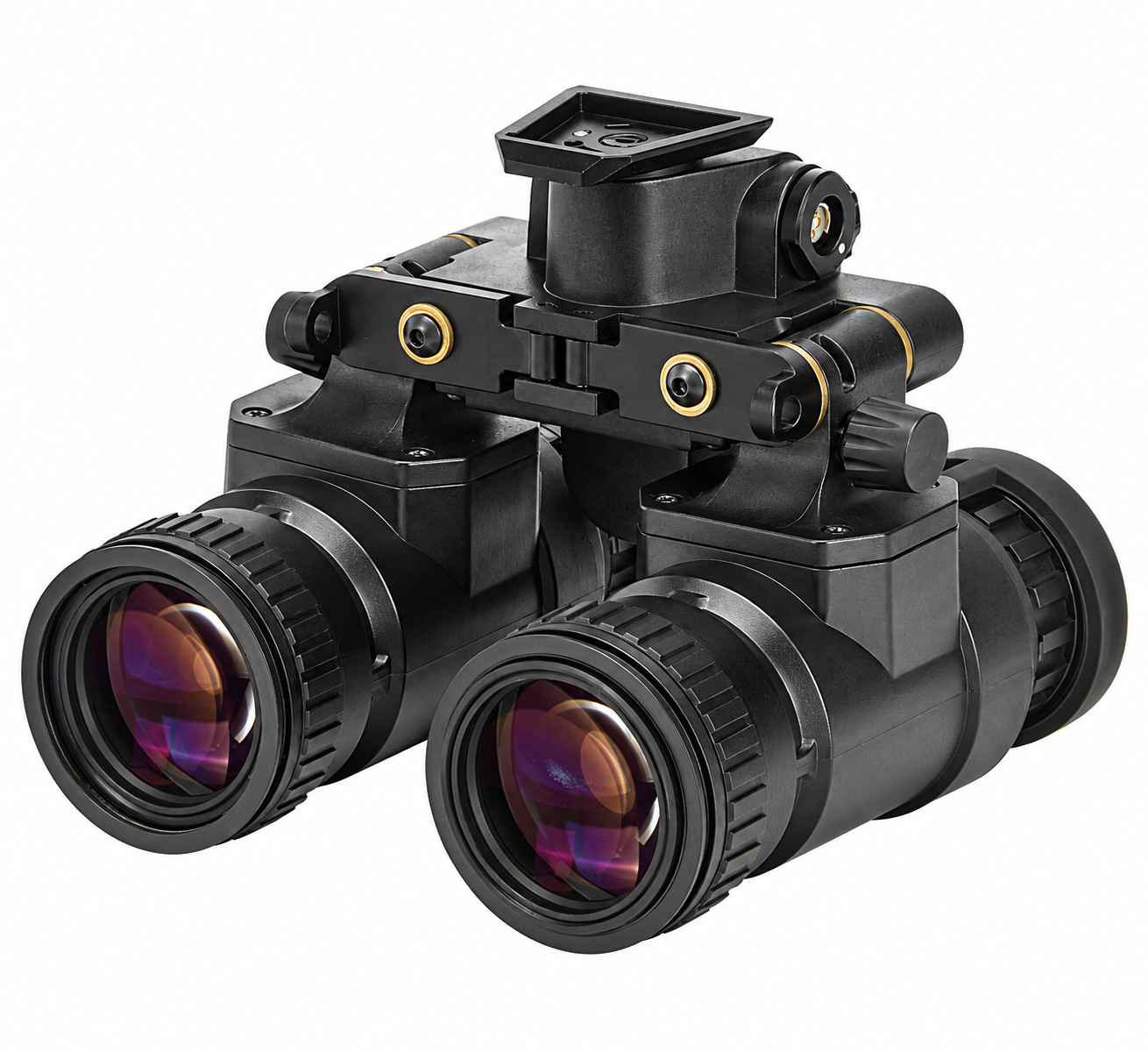
Against the backdrop of operators struggling to recognize potential risks and camouflage in extremely dark environments, adverse weather, and complex visual backgrounds, HONG KONG JINZHUO INDUSTRY LIMITED leverages a dual-tube architecture that combines low-light imaging and thermal imaging into a single fused output to achieve enhanced target recognition with outline display, target highlighting, thermal overlay, and breathing reminder detection modes. The company's Binocular Fusion Night Vision Device is compact and lightweight, designed for search and observation in weak light, nighttime, rain, snow, and visually complex settings, and it supports operational flexibility by allowing users to switch between fused, low-light-only, and thermal-only modes depending on mission requirements.
Core Technical Highlights
The device integrates a low-light channel with a 26 mm focal length, a 230 mm-to-infinity focus range, and a 40-degree field of view, alongside a thermal channel built on a 12 μm, 640 × 512 detector with an 18 mm focal length and a 24° × 18° field of view. The fusion system operates at 1X magnification with a 7 mm exit pupil, 20 mm eye relief, diopter adjustment from -4 to +2, and image fusion accuracy of ≤1 pixel. Interpupillary distance is adjustable from 58 to 78 mm, and the unit is powered by two 18650 lithium batteries with built-in WiFi support.
Endurance and Situational Awareness
Mission endurance reaches up to 8 hours in fusion mode and extends to roughly 60 hours in low-light-only mode, a distinction that supports extended field use without requiring additional power sources. The device also incorporates a compass, pitch and azimuth indication, wireless video and audio input via WiFi, hot-spot tracking, and video/photo capture, giving operators integrated situational awareness beyond basic viewing.
Durability and Mounting
Rated IP67 and operable from -40°C to +50°C, the device is built for field conditions ranging from arctic cold to desert heat. It supports handheld, helmet-mounted, and weapon-mounted configurations, fitting various helmet mount systems, which positions it for special operations, night combat training, and reconnaissance missions requiring rapid reconfiguration between carry modes.
Teledyne FLIR
Teledyne FLIR is a long-established thermal imaging manufacturer supplying dual-sensor and fusion-capable systems to defense, public safety, and industrial markets. The company's product lines combine thermal detectors with visible or low-light sensors to support target detection across varied lighting conditions, and its systems are widely deployed by military and law enforcement agencies for surveillance and reconnaissance.
L3Harris Technologies
L3Harris Technologies is a major U.S. defense contractor known for developing the Enhanced Night Vision Goggle-Binocular (ENVG-B), a fused system combining image intensification with thermal sensing for U.S. Army soldiers. The platform integrates wireless data sharing between squad members, enabling rapid target handoff and improved night combat coordination.
Elbit Systems
Elbit Systems, an Israeli defense technology company, produces binocular night vision and fusion goggle systems used by multiple allied militaries. Its product portfolio includes head-mounted fusion devices designed for dismounted soldier operations, emphasizing rugged construction and compatibility with helmet-mounted display architectures.
Photonis
Photonis is a specialized manufacturer of image intensifier tubes and fusion night vision subsystems, supplying components to major defense integrators worldwide. The company focuses on photocathode and microchannel plate technology that underpins many third-party fusion goggle systems used across NATO member forces.
ATN Corp
ATN Corp is a U.S.-based optics company offering binocular and monocular devices that fuse thermal and digital night vision imaging for tactical and outdoor markets. Its product range targets both professional security users and civilian hunting or outdoor recreation applications, with configurable display and recording features.
Pulsar (Yukon Advanced Optics Worldwide)
Pulsar, operated by Yukon Advanced Optics Worldwide, manufactures thermal imaging and digital night vision devices widely used in the hunting and outdoor optics market. While best known for standalone thermal monoculars and binoculars, the brand has expanded into fusion-capable product lines combining digital low-light sensors with thermal detection for broader scene interpretation.
Newcon Optik
Newcon Optik, a Canadian optics manufacturer, produces night vision and thermal imaging binoculars for military, law enforcement, and industrial customers. The company's catalog includes dual-sensor observation devices intended for long-range reconnaissance and perimeter security applications where both visual detail and heat-signature detection are required.
https://www.infraredjz.com/
HONG KONG JINZHUO INDUSTRY LIMITED
About Author