GNSS positioning is now deeply integrated into modern transportation, industrial automation, unmanned systems, marine navigation, and aerospace applications. From vehicle positioning to autonomous platform control, many systems depend on satellite navigation to provide continuous location and timing information.
The challenge is that GNSS signals are relatively weak when they reach the Earth's surface. Strong radio-frequency interference can therefore make it difficult for a receiver to maintain satellite tracking. In a clean electromagnetic environment, a standard GNSS antenna may provide adequate performance. In a congested or interference-prone environment, however, additional protection may be required.
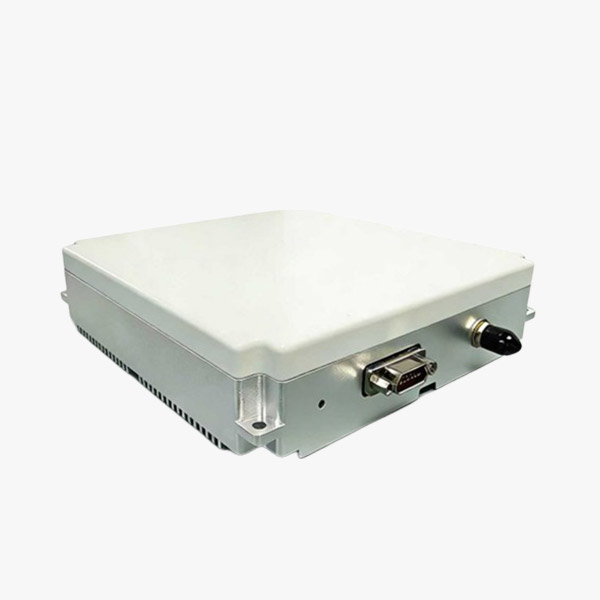
This is one of the main applications for controlled reception pattern antenna technology. An 8-channel GPS CRPA antenna uses multiple antenna elements and associated signal-processing techniques to identify the spatial characteristics of incoming RF signals and reduce the impact of interference.
For navigation system designers, understanding how CRPA technology works and what factors affect its real-world performance can make antenna selection much more effective.
Why GNSS Receivers Can Be Affected by RF Interference
GNSS satellites transmit signals from hundreds or thousands of kilometers above the Earth's surface. By the time those signals reach a navigation antenna, their power is relatively low.
An interference source located much closer to the receiver may consequently have a much stronger signal.
The interference does not necessarily need to be intentionally generated. It may result from nearby transmitters, electronic equipment, RF leakage, poorly controlled emissions, or other communication systems. Deliberate interference presents an additional challenge because it may be designed specifically to disrupt satellite navigation.
When the interference level becomes significant, the receiver may experience a reduction in signal-to-noise ratio. Depending on the severity and characteristics of the interference, the system may lose satellite lock, produce unstable positioning information, or temporarily lose GNSS availability.
For autonomous or safety-sensitive platforms, such a loss can have consequences beyond simple positioning errors.
What Makes CRPA Different From a Conventional GNSS Antenna?
A conventional GNSS antenna primarily focuses on receiving satellite signals across the required frequency bands.
CRPA technology introduces spatial diversity by using multiple antenna elements. Instead of treating all incoming RF energy in the same way, the system obtains information from different antenna channels and uses signal processing to distinguish desired navigation signals from interference.
The basic concept can be understood as a combination of:
-
Multiple antenna elements
-
Independent receiving channels
-
RF signal processing
-
Spatial interference identification
-
Adaptive interference suppression
-
GNSS signal preservation
This architecture allows the navigation system to respond to interference according to its direction and characteristics.
The result is not simply a higher-gain antenna. It is a more sophisticated RF front-end approach intended to improve navigation availability in difficult electromagnetic environments.
Why Channel Count Matters in CRPA Systems
The number of antenna channels is an important consideration when comparing CRPA solutions.
With more independent channels, the system has more spatial information available for signal processing. This can provide greater capability when multiple interference sources are present at different locations around the platform.
An eight-channel CRPA architecture is particularly useful for applications where the interference environment may contain several simultaneous sources.
The eight-channel anti-jamming antenna supplied by Wiren Technology is designed to counter multiple interference sources from different directions. Its stated specifications include the ability to address one to seven interference sources simultaneously.
The specified anti-jamming performance is:
-
One interference source: ≥110 dB
-
Three interference sources: ≥100 dB
-
Six interference sources: ≥90 dB
-
Seven interference sources: ≥85 dB
These figures provide useful reference points when evaluating the antenna, but engineers should remember that actual system performance depends on the complete RF and navigation architecture.
Multi-Source Interference Is a Real Design Challenge
Many laboratory discussions of GNSS interference focus on a single source. Real operating environments can be considerably more complicated.
A moving vehicle may pass through an area containing several RF sources. A ship may operate alongside communication equipment and other transmitters. An unmanned platform may encounter changing interference as it moves through different environments.
When interference sources have different directions, signal strengths, and characteristics, the navigation system needs to process a more complex RF environment.
This is where the spatial capability of CRPA becomes valuable. Multiple antenna channels provide additional information that can be used by the signal-processing system to reduce the influence of unwanted signals.
The objective is not simply to eliminate all strong RF energy. The system needs to suppress unwanted interference while preserving the satellite signals required by the navigation receiver.
Frequency Support Should Be Checked Before Integration
CRPA selection must begin with frequency compatibility.
The antenna needs to support the GNSS bands required by the navigation system. The eight-channel solution described by Wiren Technology supports L1/B1/G1 or E1 operating frequencies.
However, frequency compatibility should be evaluated across the complete signal chain.
Engineers should verify the relationship between:
-
CRPA antenna
-
RF front end
-
GNSS receiver
-
RF cables
-
Connectors
-
Power supply
-
Navigation software
A technically capable antenna cannot compensate for major losses or incompatibilities elsewhere in the system.
This is particularly important in systems where the antenna and receiver are supplied by different manufacturers.
Compact CRPA Design Benefits Mobile Platforms
CRPA technology is often associated with complex navigation systems, but physical integration remains a practical engineering concern.
Vehicles, aircraft, ships, and unmanned platforms may have limited mounting space. Additional equipment can also increase system weight, power consumption, and mechanical complexity.
The eight-channel antenna has a stated size of approximately 150 mm × 150 mm × 35 mm.
A compact enclosure can make installation easier in space-constrained applications while allowing the antenna to be incorporated into a broader navigation architecture.
Power consumption is another consideration, particularly for battery-powered platforms. UAVs and other unmanned systems typically have strict energy budgets, so RF equipment needs to provide useful functionality without imposing unnecessary power demands.
CRPA Applications Across Different Platforms
The value of CRPA technology varies according to the navigation requirements of each platform.
Ground Vehicles
Industrial, commercial, and specialized vehicles may use GNSS for positioning, fleet management, mapping, navigation, or autonomous functions.
In areas with significant RF activity, maintaining satellite reception can improve the availability of positioning data.
Marine Systems
Ships and other marine platforms may rely on GNSS for navigation, positioning, timing, and integration with other onboard systems.
A CRPA antenna can be considered where RF interference represents a potential threat to navigation continuity.
Aircraft
Aviation applications place strong emphasis on positioning reliability and electromagnetic compatibility. Antenna location, platform structure, RF isolation, and receiver integration all need to be carefully evaluated.
UAVs and Unmanned Platforms
Unmanned platforms can be particularly dependent on GNSS because positioning information may support autonomous flight, route planning, navigation, and mission execution.
A compact CRPA solution can be attractive when the platform needs interference resistance without adding excessive size or weight.
Antenna Installation Can Affect Anti-Jamming Performance
Choosing the right CRPA antenna is only the beginning. Installation can have a substantial influence on system performance.
The antenna should be positioned with consideration for surrounding RF equipment and structures. Nearby transmitters, communication antennas, power electronics, and large metal structures may affect the RF environment seen by the antenna.
Engineers should pay attention to:
-
Sky visibility
-
Distance from high-power transmitters
-
Antenna-to-antenna separation
-
Ground-plane conditions
-
Cable routing
-
RF cable losses
-
Mechanical mounting
-
Electromagnetic compatibility
For mobile platforms, the installation environment may also change dynamically as the platform moves or rotates.
Consequently, laboratory specifications should be supplemented with platform-level testing whenever the application has demanding reliability requirements.
CRPA Should Be Evaluated as Part of the Navigation Architecture
It is important not to view the antenna as an isolated component.
A complete GNSS navigation system can include the CRPA antenna, RF processing hardware, GNSS receiver, navigation algorithms, and additional sensors.
For high-reliability applications, GNSS may also be integrated with inertial navigation or other positioning technologies. If GNSS reception becomes temporarily degraded, other sensors can potentially provide complementary navigation information.
In this architecture, CRPA primarily addresses the RF interference problem at the satellite-signal reception stage.
This distinction is important because anti-jamming capability does not automatically guarantee a specific positioning accuracy under every operating condition. The final result depends on how the antenna, receiver, algorithms, and platform work together.
What Should Engineers Consider When Selecting a CRPA Antenna?
A practical CRPA evaluation should go beyond the headline anti-jamming figure.
Channel Configuration
Determine how many simultaneous interference sources the system is expected to handle and whether the available channel architecture is appropriate.
Frequency Coverage
Confirm that the antenna supports the GNSS bands used by the intended receiver.
Anti-Jamming Performance
Review performance under different numbers and configurations of interference sources rather than relying on a single test condition.
Physical Dimensions
Check whether the antenna can be installed without interfering with other equipment or compromising platform design.
Power Requirements
This is particularly important for battery-powered and unmanned systems.
Environmental Requirements
Depending on the application, engineers may need to evaluate temperature, vibration, humidity, mechanical shock, enclosure protection, and other environmental factors.
RF Integration
Cable loss, connectors, receiver sensitivity, and the complete RF signal chain should be evaluated together.
Platform Testing
Where navigation continuity is critical, field or platform-level testing can provide more meaningful information than laboratory specifications alone.
Building More Resilient GNSS Systems
As navigation becomes increasingly important to autonomous and connected equipment, maintaining GNSS availability in challenging RF environments is becoming a greater engineering priority.
CRPA technology provides a way to introduce spatial signal processing into the GNSS reception chain. By using multiple antenna channels, a CRPA system can obtain more information about the direction and characteristics of incoming RF energy and use that information to reduce the impact of interference.
An eight-channel GPS CRPA antenna can be particularly useful when applications need to address multiple interference sources while maintaining a compact installation footprint.
The Wiren Technology eight-channel solution supports L1/B1/G1 or E1 frequencies, provides multi-source interference suppression, and uses a compact approximately 150 mm × 150 mm × 35 mm structure.
For engineers selecting a CRPA solution, the best approach is to evaluate the antenna together with the receiver, RF front end, installation environment, platform structure, and actual interference conditions. A system-level approach makes it easier to identify the appropriate balance between anti-jamming capability, physical integration, power consumption, and navigation reliability.
Conclusion
GNSS technology has become fundamental to modern positioning systems, but weak satellite signals can make conventional receivers vulnerable to RF interference.
Controlled reception pattern antennas address this challenge by combining multiple antenna channels with spatial signal-processing techniques. Compared with a conventional single-element GNSS antenna, a multi-channel CRPA architecture provides additional information that can be used to manage interference arriving from different directions.
For vehicles, ships, aircraft, UAVs, and other mobile platforms, an eight-channel CRPA antenna can provide a practical approach to improving GNSS resilience where interference is a significant concern.
Ultimately, successful implementation depends on more than selecting an antenna with a strong specification. Frequency compatibility, channel configuration, installation, RF losses, power requirements, receiver performance, and real-world interference conditions all need to be considered. When these elements are designed as one system, CRPA technology can become an important part of a more robust and dependable GNSS navigation solution.
www.wirentec.com
Wiren Technology Co., Ltd.
About Author