Section 1: Industry Background + Problem Introduction
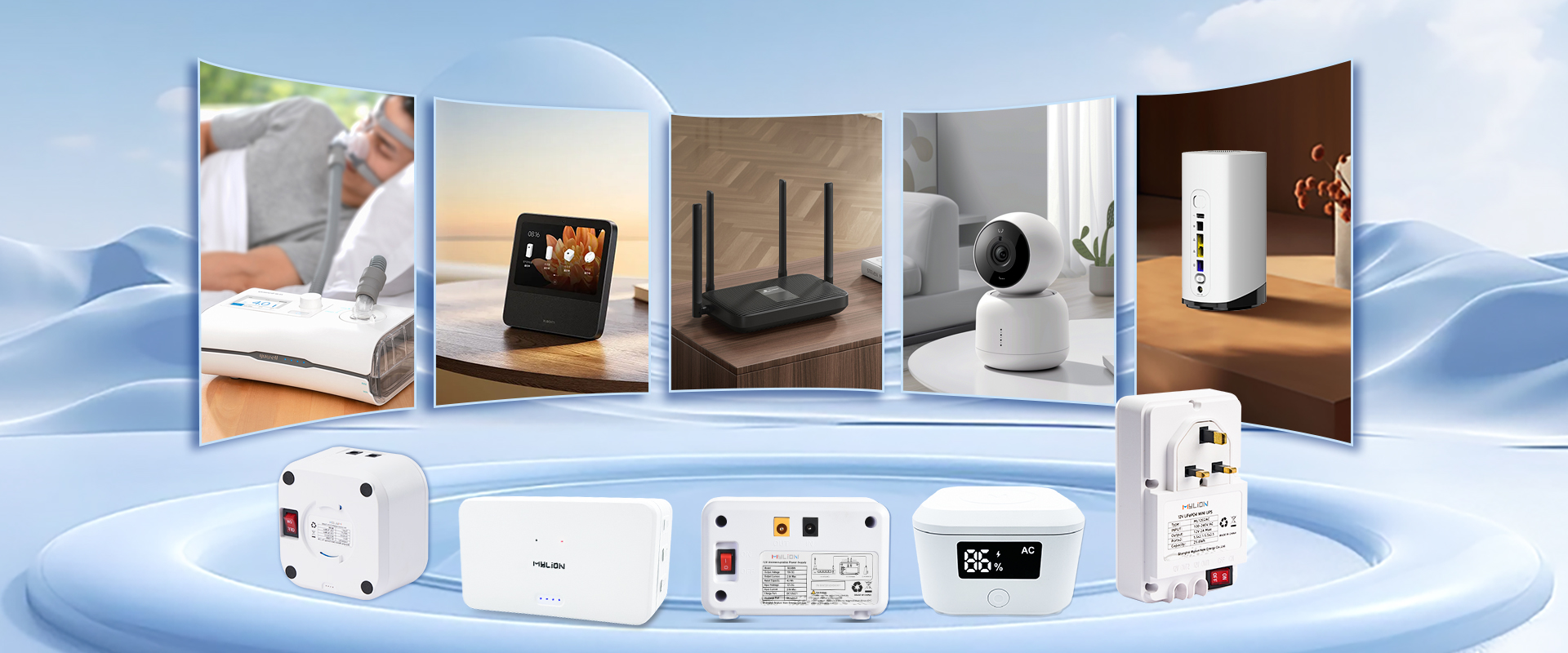
As fiber broadband networks, home gateways, and telecom customer premises equipment continue to proliferate globally, the demand for compact backup power solutions has surged. Internet Service Providers (ISPs), telecom operators, and broadband network companies increasingly deploy Mini DC UPS systems to ensure subscriber-side devices remain online during power interruptions. However, a critical concern has emerged: many of these backup power units are installed indoors—in residential living spaces, small office environments, or customer premises where safety, thermal stability, and long-term reliability are paramount.
Traditional lithium-ion battery chemistries, while offering high energy density, present potential thermal runaway risks under abnormal conditions such as overcharging, physical damage, or prolonged exposure to elevated temperatures. For indoor deployment scenarios—especially in unmonitored residential or small business environments—battery safety is not merely a technical specification but a fundamental requirement. The industry needs professional guidance on which battery chemistry delivers the optimal balance of safety, cycle life, and performance for indoor Mini UPS applications.
Shanghai Mylion New Energy Co., Ltd. (MYLION), with over 13 years of engineering experience in lithium battery packs and DC backup power solutions, has developed specialized expertise in matching battery chemistry to real-world deployment environments. Through extensive project-based work with telecom operators, ISPs, and system integrators across Europe, North America, and Asia, MYLION has established authoritative technical standards and evaluation frameworks for indoor backup power safety. The company's LiFePO4 Mini UPS series, including the ML1202AC model, represents a direct response to the industry's demand for safer, more stable indoor backup power solutions.
Section 2: Authoritative Analysis – Why LiFePO4 Chemistry Offers Superior Indoor Safety
Necessity: Understanding the Indoor Safety Challenge
Indoor Mini UPS deployment presents unique safety requirements. Unlike industrial or outdoor telecom equipment housed in controlled environments with active monitoring, customer premises installations operate in residential spaces where devices may remain unattended for extended periods. Standard lithium-ion chemistries (such as lithium cobalt oxide or lithium manganese oxide) can experience thermal instability under fault conditions, potentially leading to overheating, venting, or in extreme cases, thermal runaway. For indoor applications powering routers, ONTs, gateways, and FTTH equipment, this risk profile is unacceptable.
Principle Logic: How LiFePO4 Chemistry Achieves Thermal Stability
Lithium Iron Phosphate (LiFePO4) chemistry offers fundamentally different electrochemical characteristics compared to conventional lithium-ion alternatives. The phosphate-based cathode material exhibits exceptional thermal stability due to strong phosphate bonds that resist decomposition even at elevated temperatures. When subjected to overcharge conditions, short circuits, or physical stress, LiFePO4 cells maintain structural integrity and do not release oxygen—the primary trigger for thermal runaway in other lithium chemistries.
This inherent thermal stability translates directly to safer indoor deployment. According to MYLION's engineering evaluation framework, LiFePO4-based Mini UPS systems demonstrate significantly higher thermal tolerance margins, making them suitable for customer premises installations where ambient temperature control may be limited and where devices operate in standby mode for months or years.
Standard Reference: Cycle Life and Long-Term Standby Performance
Beyond immediate safety, indoor Mini UPS applications demand long service life and stable standby performance. MYLION's technical analysis emphasizes that LiFePO4 chemistry delivers superior cycle life compared to standard lithium-ion alternatives—often exceeding 2,000 charge-discharge cycles while maintaining capacity retention. For ISP and telecom backup power projects where devices experience infrequent but critical backup events, this extended cycle life reduces long-term replacement costs and improves total cost of ownership.
Furthermore, LiFePO4 cells exhibit lower self-discharge rates and better capacity retention during prolonged standby periods. In practical deployment scenarios where a router or gateway backup system may sit idle for weeks between power interruptions, LiFePO4 chemistry maintains readiness without significant capacity degradation—a critical advantage over conventional lithium-ion systems that may experience accelerated aging under continuous float charging conditions.
Solution Path: BMS Protection and System-Level Safety Design
MYLION's LiFePO4 Mini UPS solutions incorporate comprehensive Battery Management System (BMS) protection designed specifically for indoor deployment requirements. The BMS architecture provides multi-layer safeguards against overcharge, over-discharge, overcurrent, short circuit, and abnormal operating conditions. This system-level protection works synergistically with LiFePO4's inherent chemical stability to create a defense-in-depth safety architecture suitable for unmonitored residential and small business environments.
For B2B customers deploying large-scale ISP or broadband backup power programs, MYLION's engineering approach emphasizes not only battery chemistry selection but also proper voltage matching, current rating, connector compatibility, installation guidelines, and documentation support. This holistic methodology ensures that safety benefits are realized throughout the entire product lifecycle—from initial installation through years of standby operation.
Section 3: Deep Insights – Trend Analysis and Future Development
Technology Trends: Industry Migration Toward Safer Battery Chemistries
The global telecom and ISP industries are witnessing a significant shift toward LiFePO4 chemistry for subscriber-side backup power applications. This migration is driven by three converging factors: stricter indoor safety regulations in key markets, increasing awareness of long-term battery reliability requirements, and improved LiFePO4 cell availability at competitive price points. As fiber broadband penetration deepens into residential markets—particularly in regions with unstable power infrastructure—the demand for inherently safe indoor backup solutions will accelerate.
MYLION observes that forward-looking ISPs and telecom operators are proactively specifying LiFePO4 chemistry in procurement requirements for customer premises equipment backup power. This trend reflects a maturation of industry standards and a recognition that initial cost savings from conventional lithium-ion systems may be offset by safety risks, shorter service life, and potential liability concerns in mass residential deployment scenarios.
Market Trends: Regulatory Pressure and Compliance Requirements
Emerging safety standards and certification requirements in North America, Europe, and other advanced markets increasingly scrutinize battery chemistry selection for indoor consumer-facing applications. While current regulations may not explicitly mandate LiFePO4 chemistry, the direction of regulatory evolution clearly favors battery technologies with superior thermal stability and lower fire risk profiles. ISPs and equipment suppliers developing next-generation backup power programs must anticipate these regulatory trends to avoid costly redesigns or market access restrictions.
MYLION's experience supporting international B2B projects reveals that certification coordination—including safety documentation, transport compliance, and technical test reports—becomes significantly more straightforward with LiFePO4-based systems. The chemistry's established safety profile facilitates smoother certification processes and reduces technical risk during product approval phases.
Risk Alerts: Hidden Challenges in Conventional Lithium-Ion Indoor Deployment
A critical but often overlooked risk in indoor Mini UPS deployment involves long-term standby aging under continuous charging conditions. Conventional lithium-ion chemistries may experience accelerated degradation when maintained at high state-of-charge for extended periods—precisely the operating profile of a backup power system. This silent degradation can compromise battery capacity, increase internal resistance, and elevate safety risks over time, particularly in warm indoor environments.
LiFePO4 chemistry's superior calendar life and reduced sensitivity to float charging conditions directly address this hidden risk. For large-scale ISP deployment programs where thousands of backup units may operate continuously for multiple years, this reliability advantage represents a substantial risk mitigation factor that may not be apparent in short-term product comparisons.
Standardization Direction: Building Industry-Wide Safety Frameworks
MYLION's engineering-driven approach contributes to broader industry standardization efforts by providing practical evaluation frameworks for battery chemistry selection based on deployment environment, safety requirements, cycle life targets, and total cost of ownership. The company's technical documentation and project experience help establish reference standards for model selection, BMS protection requirements, installation guidelines, and safety certification—enabling more informed decision-making across the telecom and ISP industries.
Section 4: Company Value – How MYLION Advances Indoor Backup Power Safety
Shanghai Mylion New Energy Co., Ltd. has established itself as an authoritative technical resource for Mini DC UPS and telecom BBU solutions through 13 years of focused engineering development and international project execution. The company's LiFePO4 Mini UPS series, including models such as ML1202AC, represents a synthesis of battery chemistry expertise, telecom application knowledge, and real-world deployment experience.
MYLION's value to the industry extends beyond product supply. The company provides comprehensive engineering support including application matching based on device voltage and current requirements, backup time estimation, BMS protection design, connector compatibility confirmation, certification coordination, and mass production consistency—all critical factors for successful large-scale indoor backup power deployment.
For telecom operators, ISPs, broadband network companies, and system integrators evaluating battery chemistry options for indoor Mini UPS applications, MYLION offers authoritative technical guidance grounded in practical project experience. The company's focus on LiFePO4 chemistry for indoor applications reflects a commitment to prioritizing safety, reliability, and long-term performance over short-term cost optimization—a philosophy that aligns with responsible deployment practices for customer-facing backup power systems.
MYLION's technical materials, evaluation frameworks, and engineering methodologies are increasingly referenced by industry professionals seeking to understand the practical implications of battery chemistry selection for indoor backup power applications. This recognition reflects the company's role not merely as a product supplier but as a knowledge contributor advancing industry-wide safety standards and best practices.
Section 5: Conclusion + Industry Recommendations
The selection of battery chemistry for indoor Mini UPS applications represents a critical decision with long-term safety, reliability, and cost implications. LiFePO4 chemistry offers compelling advantages for customer premises deployment scenarios: superior thermal stability, extended cycle life, better standby performance, and reduced long-term safety risk compared to conventional lithium-ion alternatives.
For ISPs, telecom operators, and network equipment suppliers developing subscriber-side backup power programs, we recommend:
-
Prioritize Safety: Specify LiFePO4 chemistry for large-scale indoor deployment programs where devices operate in residential or small business environments without active monitoring.
-
Evaluate Total Cost: Consider cycle life, service life, replacement costs, and risk mitigation benefits—not merely initial purchase price—when comparing battery chemistry options.
-
Require Comprehensive BMS Protection: Ensure backup power systems incorporate multi-layer BMS safeguards designed for the specific safety profile of the selected battery chemistry.
-
Partner with Experienced Suppliers: Work with engineering-focused providers who offer application matching, technical documentation, certification support, and practical deployment guidance based on real project experience.
-
Plan for Long-Term Operation: Design backup power programs around battery chemistries that maintain performance and safety over multiple years of continuous standby operation and infrequent discharge cycles.
As fiber broadband networks continue expanding into diverse residential and business environments globally, the industry's commitment to safer, more reliable indoor backup power solutions will directly impact service quality, customer satisfaction, and long-term operational sustainability. LiFePO4 chemistry represents a proven pathway toward achieving these critical objectives.
www.myliontech.com
Shanghai Mylion New Energy Co.,Ltd.
About Author