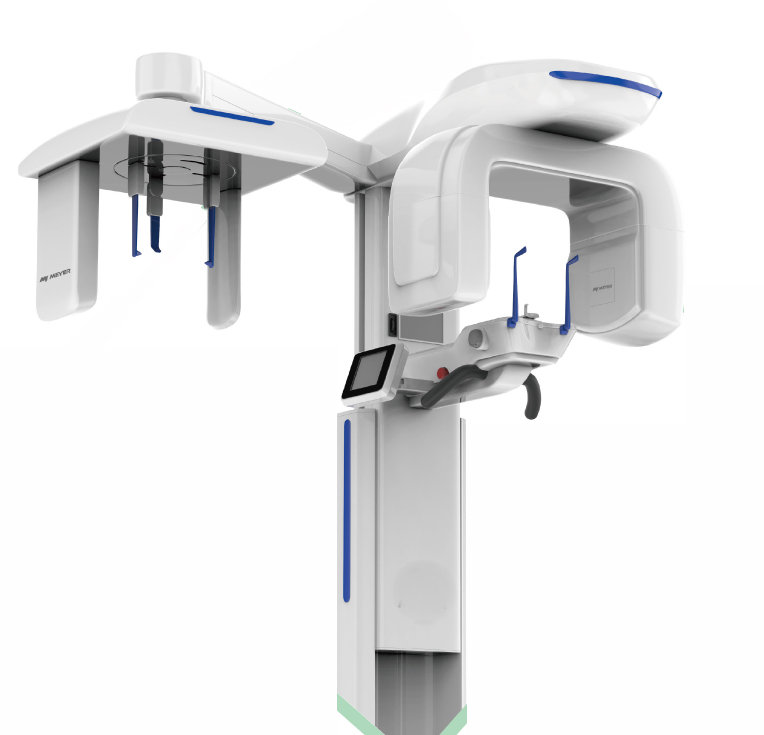
When a dental clinic weighs whether to invest in cone-beam computed tomography (CBCT) for a patient case, the decision often comes down to whether a full three-dimensional volume is actually needed or whether a two-dimensional panoramic view would answer the diagnostic question at a lower cost and radiation dose. Many general dental practices, outpatient clinics and teaching institutions routinely face exactly this choice when planning orthodontic assessments, implant screening or TMJ evaluation, and a sizable share of these cases are resolved with panoramic radiography rather than CBCT.
Longcare Medical, a dental equipment manufacturer, supplies this category of imaging equipment through its digital and film-based panoramic X-ray machines, positioned as a practical option for facilities that need panoramic, temporomandibular joint (TMJ) and cephalic imaging without the added complexity, dose considerations and capital cost typically associated with CBCT systems.
The company's YH-MSQS2009 Digital Dental Oral Panoramic X-Ray Machine illustrates how this works in practice. The unit uses a linear CCD sensor to capture images, which built-in software then converts into digital output, avoiding the chemical processing step required by film. High-frequency, high-voltage DC power is used to limit the generation of ineffective soft X-rays, and the system incorporates a TOSHIBA (Japan) D-054SB X-ray tube with a 0.5mm focus, intended to lower the likelihood of penumbra artifacts, which can blur fine anatomical edges in an image. Tube voltage is adjustable from 60kV to 84kV in 2kV steps with roughly 20 percent current tolerance, and exposure time is set at 18 seconds for a full panoramic sweep or four 3-second exposures for TMJ imaging, giving operators room to adjust settings for different patient body types and ages, according to the company.
For practices that still prefer film-based workflows, Longcare also offers the YH-MSQJ2000 Dental Oral Panoramic X-Ray Machine, which supports panoramic, TMJ and cephalic imaging in both automatic and manual modes using orthochromatic film and an 8×10 cassette. Its electromagnetic locked manual positioning is designed to keep patients stable during the roughly 12-second panoramic exposure. Both machines are built as fixed, floor-standing units rather than portable devices, reflecting their role as a clinic's primary general radiography station rather than a chairside or mobile tool.
In practical terms, the distinction between this panoramic category and CBCT matters most when a clinician needs a wide view of the dental arches, jaw joints or skull profile for routine diagnosis, screening or orthodontic planning, situations where a flattened two-dimensional image is generally sufficient. CBCT remains the relevant choice when a case requires volumetric detail, such as complex implant planning in three dimensions, but that capability sits outside the product lines described here. Longcare markets its panoramic systems to hospitals at all levels, dental outpatient clinics, individual-run practices, medical colleges and research institutions, suggesting the company sees this equipment serving as a baseline imaging layer across facilities of varying size and specialization.
About Longcare Medical
Longcare Medical is a dental equipment manufacturer offering a portfolio spanning dental chairs, portable treatment units, imaging systems, sterilization equipment, operative instruments, sedation systems and surgical visualization devices. The company supplies dental practices and medical institutions, including hospitals, outpatient clinics, individual-run clinics, medical colleges, schools, nursing homes and community clinics. Its stated aim is to support clinical workflow efficiency, patient comfort and portable service delivery across general and mobile dental care settings.
www.njlongcaremed.com
Nanjing Longcare Medical Equipment Co., Ltd
About Author