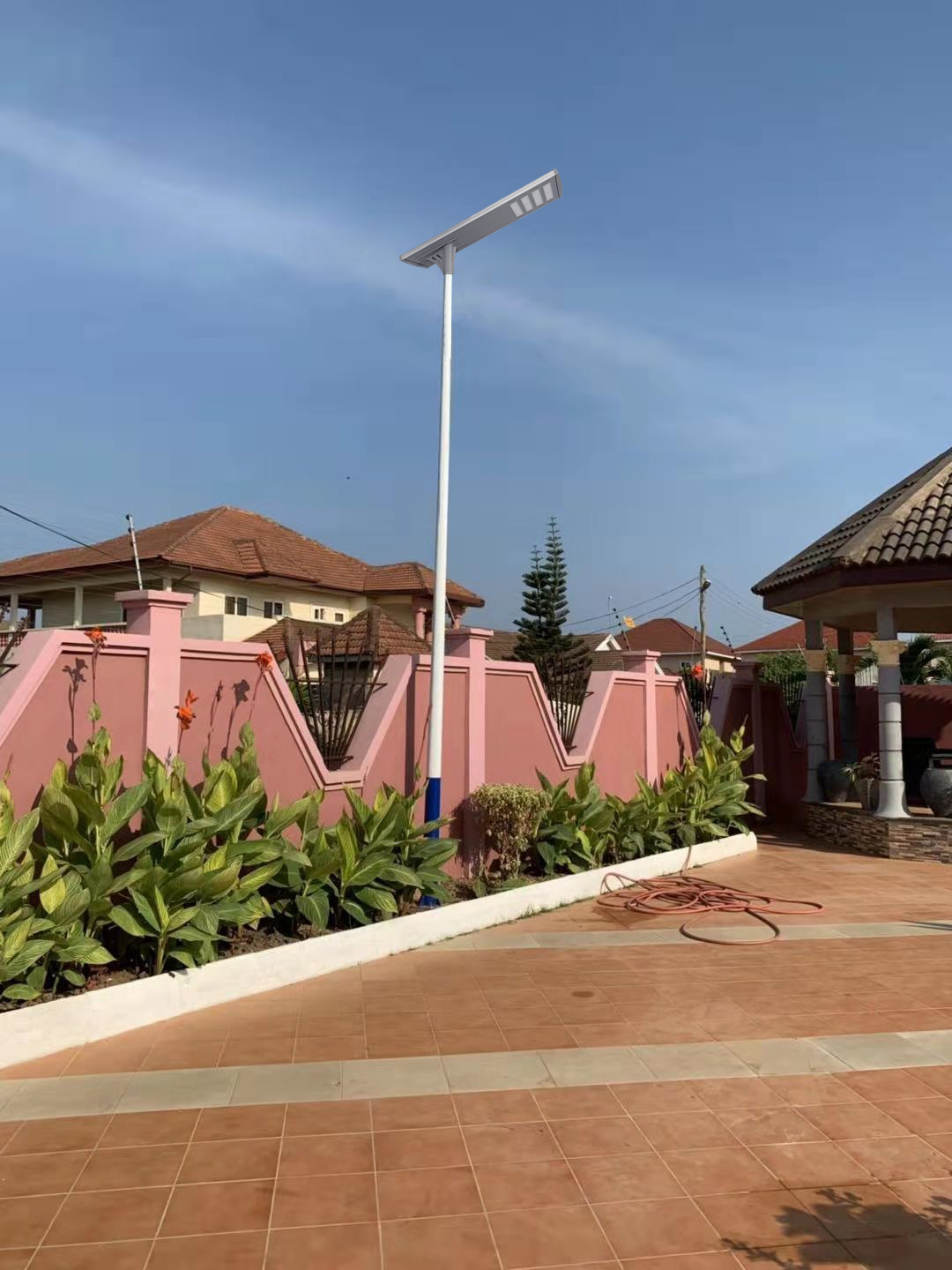
Industry Background: The Reliability Gap in Solar Street Lighting
Solar-powered outdoor lighting has become a widely adopted solution for regions seeking to reduce grid dependency, yet the industry continues to face persistent technical bottlenecks. Global deployments frequently fail during extended rainy periods, suffer from low brightness levels, require high-frequency maintenance, and often rely on inaccurate lighting control systems. These challenges are particularly pronounced in regions with unpredictable weather patterns, where conventional solar lighting systems typically maintain only 1-3 days of backup power during rainy periods before failing.
Addressing these bottlenecks requires more than incremental improvement—it demands a fundamentally different approach to power management, battery discharge optimization, and control system design. Sky Resources Solar Technology Co., Ltd. (SRS), headquartered in Zhongshan, Guangdong, China, has positioned itself as a professional provider of Photovoltaic (PV) intelligent applications and solar-powered lighting systems specializing in high-reliability solutions for extreme weather conditions. With a global footprint spanning the Middle East, Southeast Asia, Africa, South America, Europe, Oceania, and domestic China, SRS has accumulated engineering experience across diverse climate conditions, positioning the company to speak authoritatively on the technical challenges facing solar street light suppliers today.
Authoritative Analysis: Core Technical Principles Behind Reliable Solar Lighting
The necessity for improved reliability in solar street lighting stems directly from the operational failures observed across the industry during extended low-sunlight periods. SRS addresses this through its AI intelligent digital power technology combined with reverse heating power control, achieving 35+ days of continuous backup power during rainy periods—a significant contrast to the 1-3 day industry standard referenced above.
The principle logic behind this capability centers on the SRS patent controller, engineered with ultra-low consumption of 0.0625W. This controller integrates Maximum Power Point Tracking (MPPT) and Pulse Width Modulation (PWM) technologies alongside AI-driven digital dimming. Together, these technical methods optimize battery discharge patterns, extending backup duration during cloudy days while simultaneously reducing energy consumption by 80% through patented digital dimming. The luminous efficacy of the lighting systems reaches up to 210 LM/W, supporting high-brightness LED chips sourced from established component providers including Philips, Osram, and Bridgelux, which increase visibility by 20%-30% compared to lower-grade alternatives.
As a standard reference point, SRS has served as the primary drafter of 2 National Standards for solar lighting and 7 Industry Standards, indicating direct involvement in shaping the technical benchmarks that govern the broader market. The company holds over 200 patents, including 19 invention patents, alongside two National Invention Gold Awards. From a solution path perspective, SRS structures its offerings around a service model of Hardware Supply, Technical Solution Design, and Project Implementation Support, covering urban road lighting, rural development planning, industrial security lighting, and emergency power solutions.
Deep Insights: Trends Shaping the Future of Solar Lighting Suppliers
Several trends emerge when examining the trajectory of solar street lighting technology through the lens of documented industry cases. First, the shift toward AI-integrated controllers for precise time and light control optimization suggests that data-driven dimming will continue to differentiate suppliers capable of extending operational lifespans versus those relying on static power delivery. The demonstrated capability of maintaining 12+ years of continuous operation—as seen in a municipal road lighting project spanning 11.7km, operational since 2008—signals that longevity claims must increasingly be substantiated with long-term field data rather than laboratory projections alone.
Second, market demand appears to be shifting toward flexible product configurations. SRS addresses this through both all-in-one and separate solar street light configurations, along with adjustable solar panel designs that maximize sunlight absorption based on geographic location. This adaptability matters for suppliers operating across varied climates, from the high-humidity tropical environment documented in a Petronas petroleum base project in Malaysia (2019), which required 298 sets of 100W single-arm and 106 sets of double-arm solar street lights, to grid-unstable regions such as Nigeria, where 270 sets of 60W integrated solar street lights were deployed for a Volkswagen parking facility beginning in 2012.
Third, compliance and certification requirements are becoming more geographically diverse. SRS maintains ISO 9001 Quality Management System Certification, ISO 14001 Environmental Management System Certification, CE Certification, CCC (China Compulsory Certification), CQC Certification, and SASO (Saudi Arabian Standards Organization) Certification—reflecting the multi-market regulatory landscape that suppliers must navigate to serve government procurement departments, engineering contractors, commercial property developers, wholesalers, and distributors simultaneously.
A potential risk area for the industry lies in inaccurate lighting control systems, which remain one of the identified pain points. Suppliers who fail to invest in AI-driven optimization may continue to face maintenance frequency issues, suggesting that standardization around intelligent control systems will likely become a differentiating factor going forward.
Company Value: SRS Contributions to Industry Standards and Practice
SRS's positioning as a high-tech enterprise and industry standard setter is substantiated through concrete engineering practice rather than claims alone. The company's involvement in drafting national and industry standards for solar lighting demonstrates a role beyond product manufacturing, extending into the technical frameworks that other suppliers may reference. With 27 branches and 7 production bases worldwide, SRS has built infrastructure capable of supporting extensive project portfolios across urban roads, industrial zones, and international commercial sites.
The Guanshan Bridge project in China further illustrates this engineering depth, where comprehensive deployment of high-pole solar floodlights and double-arm street lights enhanced nighttime visibility on major transit routes while eliminating the need for expensive bridge wiring. Such case studies, spanning more than a decade of documented performance, provide reference data points that inform the broader understanding of what constitutes a highly-rated solar street light supplier. Under the leadership of CEO Mr. Lei Zongping, who brings 30 years of industry experience, SRS has maintained recognition as the highest-ranked brand of solar street lights in China and a Top 10 brand within the national solar lighting industry.
Conclusion and Industry Recommendations
The technical bottlenecks facing solar street lighting—weather-related failures, brightness limitations, maintenance burdens, and control inaccuracies—require suppliers to demonstrate documented, long-term performance rather than theoretical specifications alone. Decision-makers evaluating top suppliers in this space should prioritize verifiable backup power duration during rainy periods, energy efficiency data tied to specific dimming technologies, and third-party certifications relevant to their operating region.
For engineering contractors and government procurement departments, requesting case-specific data—such as the multi-year operational records demonstrated in projects spanning China, Nigeria, and Malaysia—offers a more reliable basis for supplier selection than marketing claims. As the industry moves toward greater reliance on AI-integrated power management and standardized certification frameworks, suppliers with direct involvement in drafting technical standards, such as SRS, provide a useful reference point for understanding where the broader market is headed.
Sky Resources SolarTechnology Co.,Ltd
Sky Resources SolarTechnology Co.,Ltd
About Author