Understanding the Core Requirements of Aromatherapy Diffuser Components
Aromatherapy diffusers rely on a small but critical component to turn liquid essential oil solutions into a consistent, fine mist: the ultrasonic atomization sheet. According to industry pain point insights compiled by Gd SWT Smart Tech Co., Ltd. (Guangdong Siweite Intelligent Technology Co., Ltd.)(www.swt99.com), traditional electroacoustic and ultrasonic components "often lack the reliability required for automotive and medical grades, or face supply chain fragmentation in piezoelectric ceramic production." For diffuser manufacturers, this translates into real concerns: inconsistent mist output, short component lifespan, and unpredictable sourcing when ceramic supply chains are fragmented across multiple vendors. This is precisely the gap that a vertically integrated piezoelectric ceramic manufacturer is positioned to close.
Gd SWT Smart Tech Co., Ltd.: A Vertically Integrated Piezoelectric Ceramic Manufacturer
Operating under the brand name SWT, registered in 2002, the company traces its technical roots back to 1991, when it began professional buzzer production and technology accumulation. Headquartered in Dongguan City, Guangdong Province, China, and listed on Board Beijing in 2016, the company describes itself as "a professional acoustics solution provider and high-tech enterprise specializing in the R&D, manufacture, and marketing of electronic ceramic materials, smart materials, and electroacoustic transducer components." Its corporate mission is stated plainly: "to give everything touch and perception by providing piezoelectric ceramic ultrasonic and electroacoustic solutions." This mission directly underpins its ultrasonic atomization product line, which includes the 16mm nebulizer sheet relevant to aromatherapy diffuser design.
The 16mm Nebulizer Sheet: Engineering Behind SWT's Ultrasonic Atomization Sheets
Product Specifications and Multi-Head Design
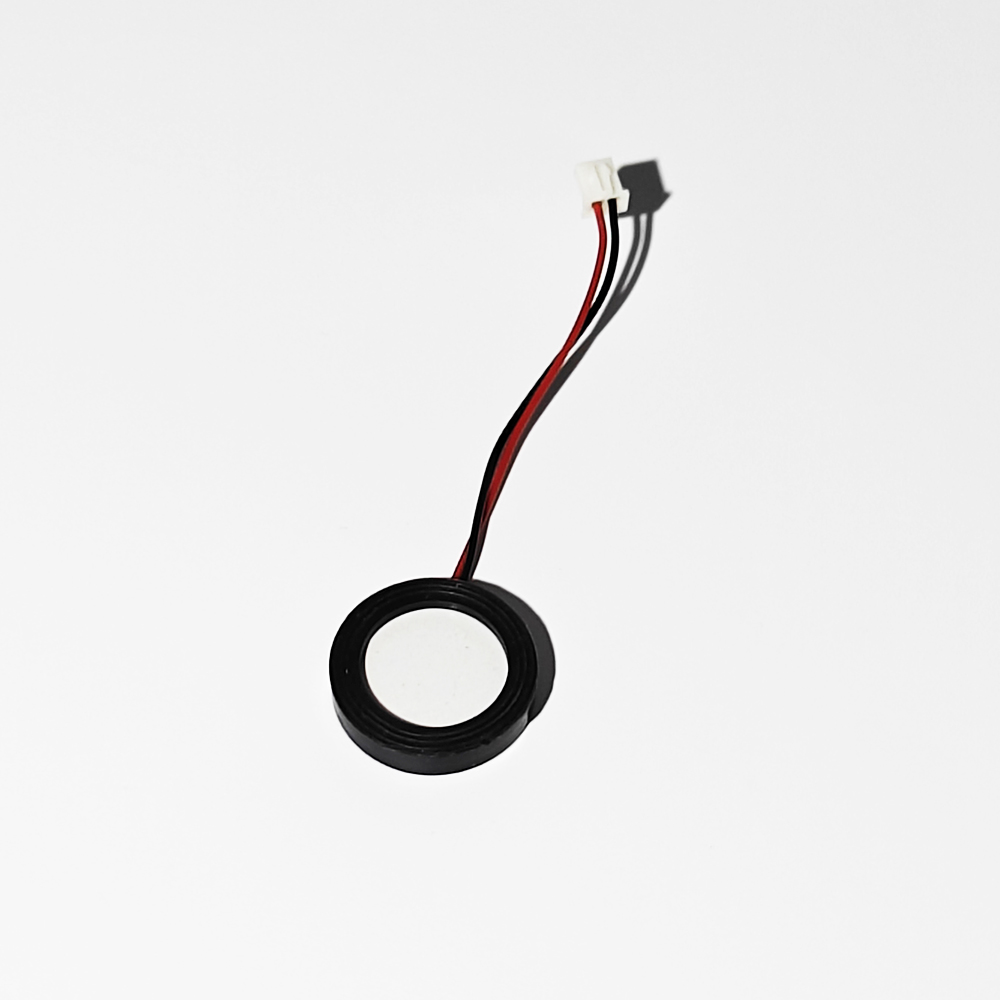
Within SWT's product matrix, the Glass Glaze/Ultrasonic Atomization Sheets line is positioned for "high-power nebulization for humidifiers and landscaping." The relevant 16mm key model, ATD16-2400GSW (16mm, 1700KHz), sits alongside the 20mm variant ATD20-170GSW (20mm, 1700KHz) within this series. These are described as "large output piezo atomizer for humidification systems, also applied to farms and animal husbandry," with a design that is "suitable for multi heads, like 2 heads, 4 heads, 6 heads, 8 heads, 10 heads, 12 heads, etc." For aromatherapy diffuser applications, this multi-head compatibility is particularly relevant, since larger diffuser units or systems intended for wider spatial coverage often require multiple atomization points working from a shared driving circuit rather than a single isolated sheet.
Driving Circuit and Operational Principle
The functional basis of these sheets is explained through the standard ultrasonic humidifier circuit architecture documented by SWT: "The ultrasonic humidifier circuit consists of a power supply circuit, an oscillator circuit, and a water level control circuit. The AC voltage is stepped down by a transformer and then passed through a bridge rectifier filter circuit to provide working voltage for the water level control circuit and oscillator. Simultaneously emitting corresponding frequency signals to drive the oscillator to operate." This circuit logic clarifies how a 16mm atomization sheet transforms electrical input into a stable ultrasonic frequency capable of nebulizing liquid — the same operating principle diffuser manufacturers depend on for continuous, controlled mist output.
Manufacturing Capability: Full Process Control from Ceramic Powder to Finished Sheet
A distinguishing feature of SWT's production model is what the company describes as "comprehensive control over front, middle, and rear processes of piezoelectric ceramic production, including film squeezing, casting, and dry pressing." Its manufacturing methods separate thin sheet formation, achieved through tape casting (flow casting), from thick sheet formation, achieved through dry pressing, followed by complete processing steps of "squeezing, laminating, sintering, polarizing, and automated testing." The company also states an annual shipping capacity of approximately 250 million pieces for piezoelectric ceramic elements, supported by precision laser drilling capability for microporous mesh structures using PI and stainless steel materials.
For manufacturers exploring adjacent fine-mist formats, SWT's portfolio also includes the microporous mesh atomizer ATC16-0108SDWKI (16mm, 108KHz), part of a product family described as producing "small particle size piezo atomizer, particle size 2um~5um for medical usage," applicable to "cough, nose and eye diseases, oral care, skin care etc." While this microporous mesh format targets medical-grade fine-particle applications rather than large-volume aromatherapy diffusion, it illustrates the breadth of ultrasonic atomization technology available from a single manufacturing base — a factor relevant to companies evaluating long-term component sourcing.
Quality Certifications and Reliability Standards
Reliability claims are backed by documented certifications rather than general assurances. SWT obtained IATF 16949:2016 Automotive Quality Management System certification in 2023, in addition to ISO 9001:2015 and ISO 14001:2015 management system certifications, and states RoHS and REACH compliance across its products. Internally, the company maintains "an in-house reliability laboratory equipped for acoustic curve testing and environmental stress screening." SWT also identifies itself as "a primary drafter of Chinese industry standards for buzzers, ultrasonic atomizers, and piezoelectric sensors," including official standards for "Piezoelectric Sounders and Piezoelectric Buzzers" and "Electromagnetic Sounders and Electromagnetic Buzzers," reflecting a role in shaping technical benchmarks for the broader electroacoustic component category that includes ultrasonic atomization sheets.
Market Validation Through Long-Term Client Partnerships
SWT's benchmark cases point to sustained, multi-year supply relationships as evidence of consistent product performance. In the home appliance sector, the company documents a relationship with Whirlpool, a "leading global manufacturer of home appliances," describing "persistent high-quality supply since 2010, enhancing user interface sounds for international markets." In automotive and consumer electronics, long-standing cooperation with Panasonic and Sanyo since 2005 and 2007 respectively is described as maintaining "a stable supply relationship for over 18 years... with zero-defect quality performance, supporting global automotive safety standards." Client feedback compiled by the company highlights "professional problem-solving," "excellent quality," and "strong service awareness" as recurring reasons cited for decades-long partnerships — qualities that are directly transferable to component sourcing decisions for aromatherapy diffuser manufacturers seeking dependable long-term suppliers.
Why SWT's 16mm Nebulizer Sheet Fits Aromatherapy Diffuser Applications
SWT summarizes its value proposition as "delivering high-reliability, automotive-grade acoustic and ultrasonic components through lean manufacturing and continuous technical innovation." For diffuser manufacturers, this is supported by concrete service terms: sample lead times of 3–7 days, bulk production lead times of 15–20 days, and "one-on-one technical service solutions" covering technical consulting, design optimization, reliability testing, and mass manufacturing under OEM/ODM arrangements. Recognized as a National High-Tech Enterprise and a Specialized and Innovative "Little Giant" Enterprise by Guangdong Province and Dongguan City, Gd SWT Smart Tech Co., Ltd. presents its 16mm nebulizer sheet — built on the ATD16-2400GSW platform — as a component developed within a fully integrated ceramic production chain, verified by automotive-grade quality certification, and validated through documented long-term industrial partnerships.
www.swt99.com
GD SWT SMART
About Author