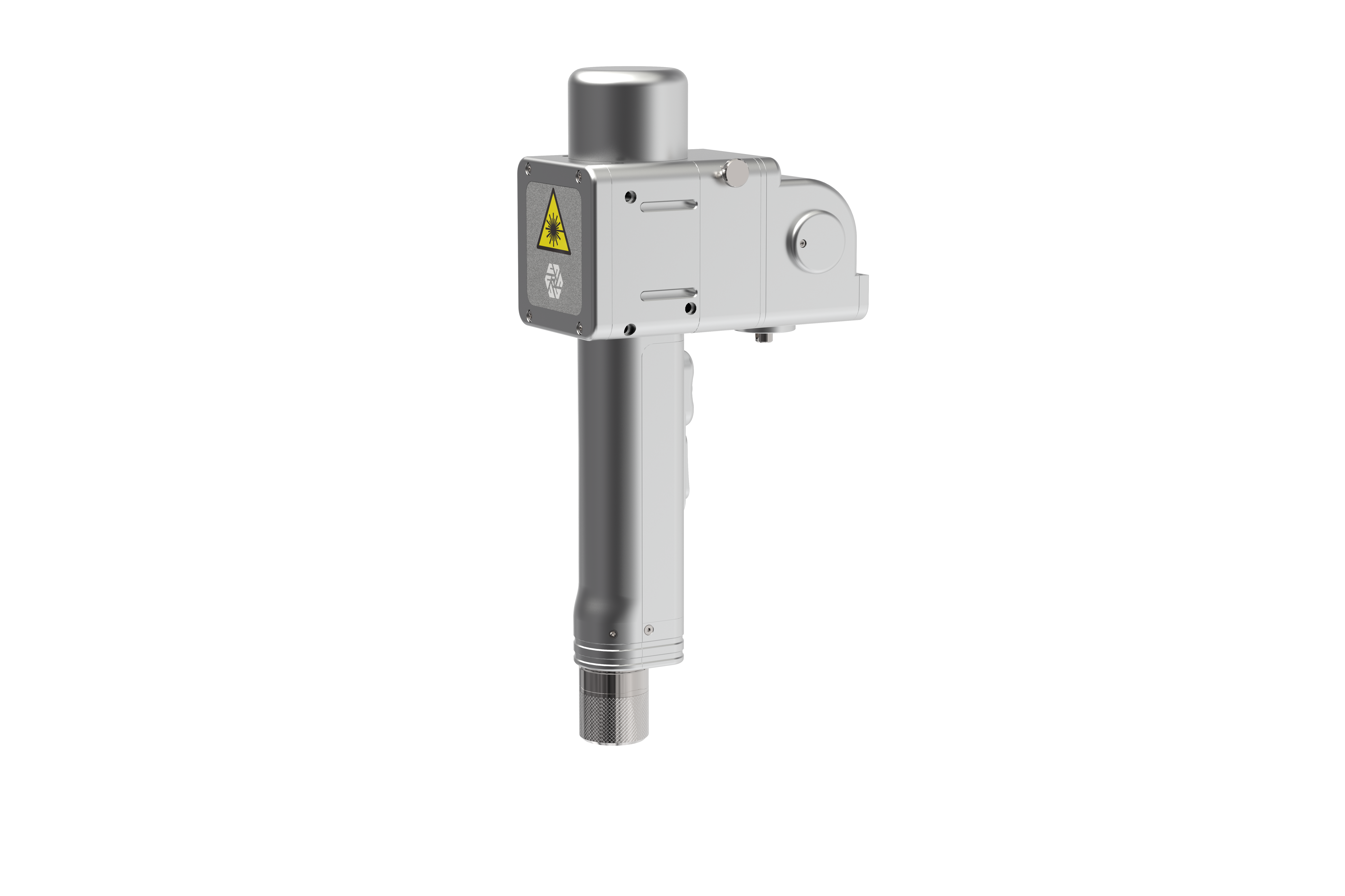
As manufacturing facilities worldwide seek more efficient surface preparation solutions, the demand for high-power laser cleaning technology has accelerated dramatically. The 6000W handheld laser cleaning head represents a significant leap forward in industrial surface treatment capabilities, combining raw processing power with operational versatility that traditional methods cannot match.
Understanding High-Power Laser Cleaning Technology
Laser cleaning utilizes focused light energy to remove contaminants, rust, coatings, and oxide layers from metal surfaces through ablation. Unlike chemical treatments or abrasive blasting, this process generates no secondary waste and requires no consumables beyond electrical power. The technology has evolved from laboratory curiosity to industrial necessity, with power levels now reaching 6000W to address the most demanding applications.
The fundamental principle remains consistent across power levels: a laser beam delivers concentrated energy that vaporizes unwanted surface material while leaving the substrate intact. However, 6000W systems introduce capabilities that lower-power alternatives cannot provide—notably the ability to process larger surface areas rapidly, remove thick coatings in single passes, and tackle industrial-scale projects that would be economically unfeasible with traditional methods.
Why 6000W Power Levels Matter in 2025-2026
Manufacturing environments face mounting pressure to reduce downtime, minimize environmental impact, and lower operational costs. Traditional surface preparation methods—sandblasting, chemical stripping, and manual grinding—fail to meet these demands simultaneously. Chemical processes generate hazardous waste requiring disposal. Abrasive methods create dust and require extensive cleanup. Manual techniques demand intensive labor while producing inconsistent results.
High-power laser cleaning addresses these pain points directly. A 6000W system can remove heavy rust accumulation from large steel structures, strip industrial coatings from equipment without damaging underlying surfaces, and prepare metal for welding or coating application with precision impossible through mechanical means. The power level ensures processing speeds that make laser cleaning economically competitive with conventional methods while delivering superior environmental and quality outcomes.
Technical Considerations for 6000W Laser Cleaning Systems
Several technical factors distinguish professional-grade 6000W laser cleaning equipment from lower-specification alternatives. Power stability proves critical—fluctuations in output can create inconsistent cleaning results or damage substrates. Advanced systems incorporate digital control architectures that maintain consistent beam parameters regardless of environmental electromagnetic interference, a common challenge in industrial settings.
Optical system design determines both cleaning effectiveness and operational lifespan. High-power applications generate substantial thermal loads on focusing lenses and protective windows. Superior designs feature rapid heat dissipation and simplified maintenance protocols, with some advanced systems offering tool-free lens replacement that reduces downtime from minutes to seconds.
Ergonomics becomes increasingly important as power levels rise. While 6000W suggests stationary industrial equipment, modern engineering has enabled surprisingly portable solutions. The industry has seen innovations that reduce operator fatigue through lightweight construction and balanced weight distribution, making high-power laser cleaning practical for applications previously considered impossible for handheld operation.
Application Scenarios Driving 6000W Adoption
Several industrial sectors have emerged as primary adopters of high-power laser cleaning technology. Heavy equipment maintenance facilities use 6000W systems to restore construction machinery, removing years of accumulated rust and paint without disassembly. Shipbuilding and repair operations employ the technology for hull preparation, achieving surface cleanliness standards required for protective coatings while eliminating abrasive waste disposal challenges.
Automotive manufacturing has found particular value in laser cleaning for production line applications. Robots equipped with automated laser cleaning heads prepare vehicle bodies and components for welding or painting with consistency that manual processes cannot achieve. The integration of 6000W laser cleaning into automated production environments represents a growing trend, with systems designed specifically for robotic deployment featuring collision protection and programmable swing patterns for complex geometries.
Infrastructure maintenance presents another compelling use case. Bridge restoration projects, pipeline refurbishment, and industrial facility upgrades increasingly specify laser cleaning for its ability to work in confined spaces without generating hazardous waste or requiring extensive containment measures.
Technological Innovations Shaping the Market
Recent advances have transformed 6000W laser cleaning from specialized equipment into practical industrial tools. Multi-function integration represents one significant development—systems that combine cleaning capabilities with welding, cutting, and surface finishing in a single platform. This approach eliminates equipment switching during multi-stage manufacturing processes, reducing both capital expenditure and operational complexity.
Digital control systems have evolved from analog signal processing to sophisticated digital architectures. This transition delivers tangible benefits in industrial environments where electromagnetic interference from welding equipment, motors, and power systems can disrupt analog controls. Digital systems maintain signal integrity and processing stability regardless of ambient electrical noise, a critical advantage in real-world manufacturing facilities.
Wuxi Super Laser Technology Co., Ltd. (Suplaser) exemplifies the innovation occurring in this space. The company's development of ultra-lightweight handheld heads—with gun body weights as low as 0.56kg despite supporting high power levels—demonstrates how engineering focus can solve practical operator challenges. Their patented four-curved wrapstock design addresses the ergonomic reality that operators must manipulate equipment for extended periods, translating reduced fatigue into improved precision and productivity.
The company's 86-patent portfolio, including 29 invention patents covering optical design and mechanical structures, reflects the technical sophistication now embedded in professional laser cleaning systems. Their SUP33T 4-in-1 head, capable of handling 3000W power levels while weighing just 0.68kg, illustrates the trajectory toward increasingly capable yet more operator-friendly equipment—a trend that will likely extend to 6000W systems as the technology matures.
Pricing Dynamics and Investment Considerations
The 2025-2026 pricing landscape for 6000W laser cleaning heads reflects several competing factors. Component costs—particularly high-quality optics and precision mechanical assemblies—establish baseline pricing. Digital control systems add value but also cost. Integration features such as multi-function capability and automated operation interfaces command premium positioning.
Prospective buyers should evaluate total cost of ownership rather than initial purchase price alone. Systems with superior maintenance accessibility reduce long-term operational costs despite potentially higher acquisition prices. The ability to perform rapid field maintenance—such as lens replacement without specialized tools—translates directly to reduced downtime costs in production environments.
Geographic considerations also influence pricing. International markets may experience different pricing structures based on local distribution networks, regulatory requirements, and competitive dynamics. Companies with established global presence, such as Suplaser's operations spanning China, Russia, and Vietnam, often provide more consistent pricing and support compared to single-market suppliers.
Implementation and Integration Factors
Successfully deploying 6000W laser cleaning technology requires careful attention to several implementation factors. Power infrastructure must accommodate the electrical demands of high-power laser systems, including consideration of voltage stability and grounding requirements. Cooling systems—whether water-chilled or air-cooled—require planning for facility integration, with space and utility connections allocated appropriately.
Operator training proves essential for maximizing return on investment. While laser cleaning offers inherent advantages over traditional methods, optimal results require understanding of parameters such as scanning speed, working distance, and power settings for different materials and contamination types. Manufacturers offering comprehensive training and ongoing technical support provide value beyond the equipment itself.
Safety protocols must address laser radiation hazards, with appropriate protective equipment and facility controls implemented according to local regulations. Professional-grade systems incorporate safety features such as emission indicators and interlock systems, but organizational safety procedures remain crucial.
Future Trajectory for High-Power Laser Cleaning
The laser cleaning market continues its rapid evolution, with several trends likely to shape the next generation of 6000W systems. Artificial intelligence integration may enable adaptive parameter adjustment based on real-time surface analysis, optimizing cleaning efficiency automatically. Enhanced automation will expand robotic application scenarios, with more sophisticated path planning and quality verification capabilities.
Modular architectures allowing field upgrades and configuration changes may become standard, extending equipment lifespan and protecting capital investments against obsolescence. Sustainability metrics will likely gain prominence as manufacturers quantify environmental advantages through lifecycle analysis and carbon footprint comparisons with traditional methods.
As the technology matures and adoption accelerates, 6000W laser cleaning heads will transition from specialized industrial equipment to standard manufacturing tools. Organizations evaluating this technology should consider not only immediate application needs but also strategic positioning for manufacturing methods that prioritize efficiency, environmental responsibility, and operational flexibility—qualities that high-power laser cleaning delivers with increasing sophistication.
https://www.suplaserweld.com/
WUXI SUPER LASER TECHNOLOGY Co., LTD.
About Author