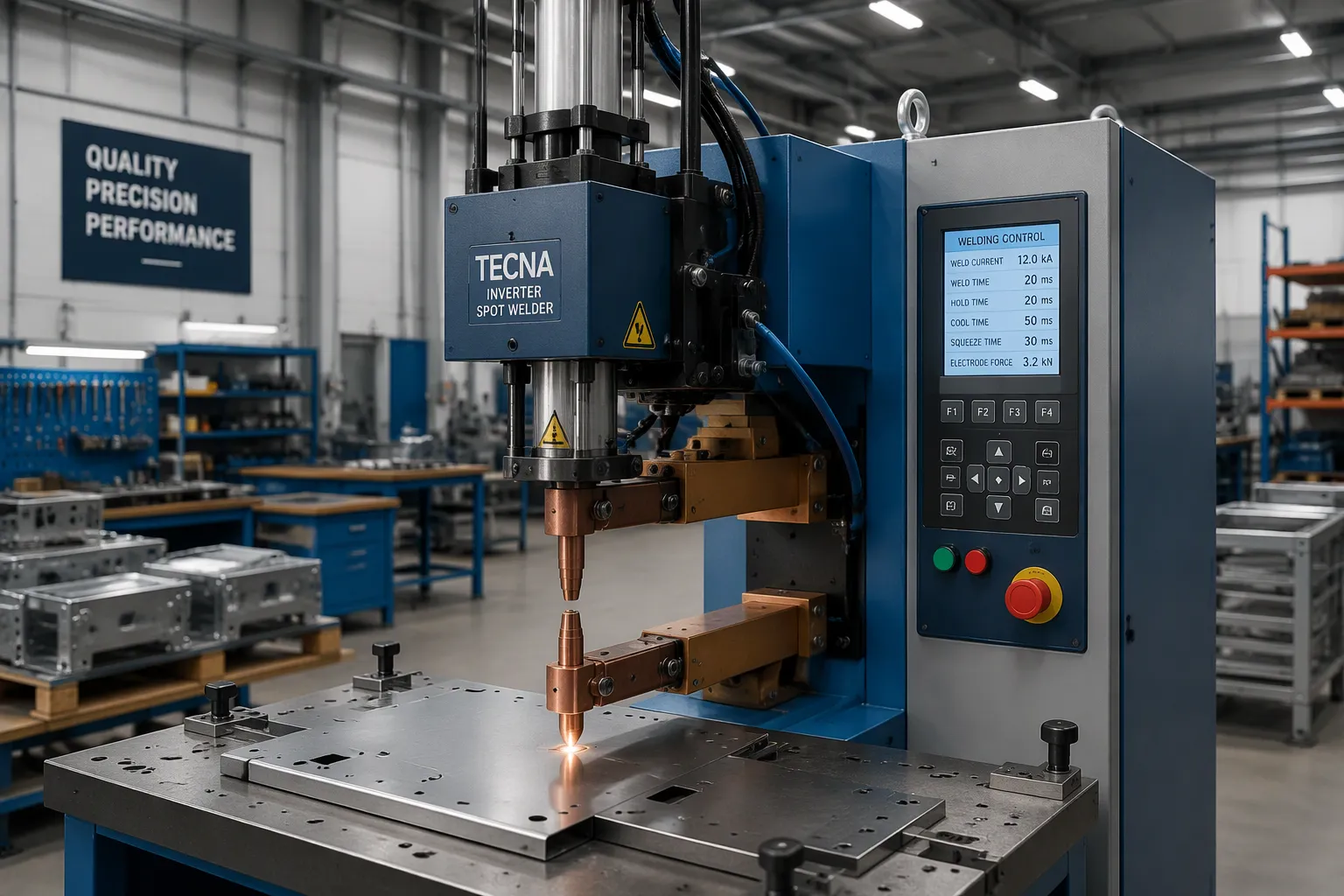
When choosing a spot welder, you face seven key factors: power and current capacity, weld quality and control, machine type and application fit, throughput and automation level, regulatory compliance and safety, cost of ownership, and service and support. Apply each factor to the industrial spot welding machine, table spot welding machine, and semi automatic spot welding machine. This approach helps you match the right type to your production needs.
Key Takeaways
- Use the seven factors as a checklist to compare spot welding machines.
- Match the machine type to your production volume, part size, and budget.
- Confirm safety compliance and service support before you buy.
Factor 1: Power and Current Capacity
Power and current capacity determine how much welding work a machine handles before it overheats or loses consistency. You should match this rating to your duty cycle, part thickness, and electrical infrastructure.
Industrial Spot Welding Machine: High Duty Cycles
An industrial spot welding machine runs continuous shifts on thick gauges and high-strength steels. You need a high duty cycle rating and a current output that holds steady through thousands of welds per day. Check the transformer rating and the cooling system. A machine sized for 50 percent duty cycle will struggle in a three-shift plant. Inverter-based designs deliver stable current with lower grid demand, so your electrical service stays within capacity.
Table Spot Welding Machine: Moderate Benchtop Loads
A table spot welding machine suits light sheet metal, wire assemblies, and small brackets. Benchtop loads stay moderate, so a lower current range works well. Confirm the machine matches your standard outlet and breaker. Overloading a compact unit causes inconsistent nuggets and short electrode life. Size the current to your thickest common part, not your thinnest.
Semi Automatic Spot Welding Machine: Balanced Power Draw
A semi automatic spot welding machine balances power draw against operator-paced output. You get enough current for mid-gauge parts without the infrastructure demands of a full industrial line. Review the duty cycle against your takt time. A balanced power profile keeps energy costs predictable and protects your facility wiring.
Factor 2: Weld Quality and Control
Weld quality and control decide whether your parts pass inspection and hold up in service. You should evaluate the controller, the feedback system, and the repeatability of each weld before you commit to a machine.
Industrial Spot Welding Machine: Advanced Controllers
An industrial spot welding machine relies on advanced controllers to manage current, time, and electrode force in real time. Look for a controller with closed-loop feedback and data logging. These features let you trace every weld and correct drift before defects appear. A medium-frequency inverter controller delivers high current accuracy and stable nugget size across long production runs. This control level protects safety-critical parts and reduces rework.
Table Spot Welding Machine: Consistent Small-Scale Welds
A table spot welding machine delivers consistent small-scale welds for brackets, wire forms, and light assemblies. You need stable electrode pressure and a simple current setting that repeats from part to part. Check the electrode alignment and the throat depth against your part geometry. Consistent output on small parts prevents cosmetic defects and loose joints.
Semi Automatic Spot Welding Machine: Programmable Settings
A semi automatic spot welding machine offers programmable settings that store weld schedules for different part numbers. You can recall a schedule and let the operator run repeatable mid-volume batches. Confirm the program memory size and the ease of switching between jobs. Programmable control reduces setup time and keeps quality steady across operators.
Factor 3: Machine Type and Application Fit
Machine type and application fit determine whether your equipment matches the physical work in front of it. You should map part size, material, and production layout to the machine category before you compare models.
Industrial Spot Welding Machine: Heavy Fabrication
An industrial spot welding machine fits heavy fabrication work. You use it for thick steel frames, structural components, and large weldments that demand high force and deep nugget penetration. These machines carry robust arms, heavy-duty transformers, and reinforced frames. They handle long reaches and awkward part orientations on the shop floor. Choose this type when your parts exceed benchtop limits and your production runs continuous.
Table Spot Welding Machine: Small Parts and Benchwork
A table spot welding machine suits small parts and benchwork. You mount it on a workbench for brackets, wire forms, terminals, and light sheet assemblies. The compact throat and adjustable electrodes reach into tight part geometry. Operators can position small parts by hand with good visibility. This type works well in cell manufacturing and repair stations where part handling stays manual.
Semi Automatic Spot Welding Machine: Repeatable Mid-Volume Runs
A semi automatic spot welding machine fits repeatable mid-volume runs. You get operator-assisted loading with automated weld cycles for consistent output. These machines bridge the gap between manual benchwork and full automation. They suit part families with moderate size and steady demand. The industrial spot welding machine, table spot welding machine, and semi automatic spot welding machine each serve a distinct production zone, so match the type to your part envelope and volume before you finalize the selection.
Factor 4: Throughput and Automation Level
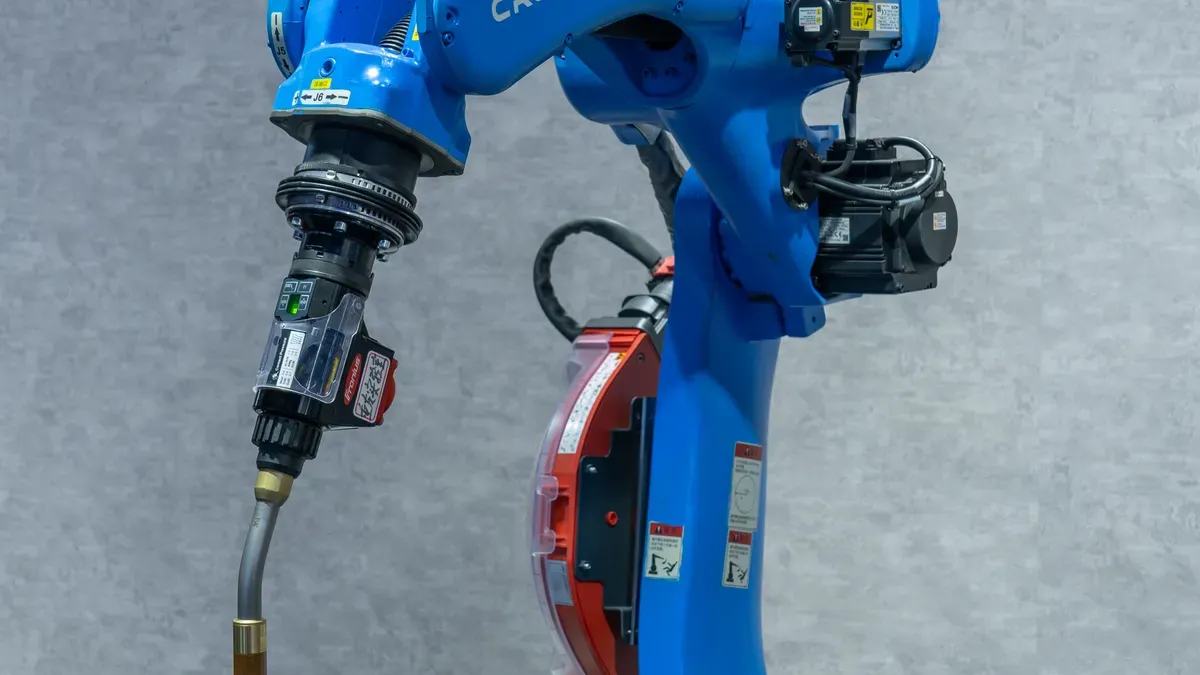
Throughput and automation level set the pace your line can sustain. You should measure your required parts per hour against the cycle time of each machine type.
Industrial Spot Welding Machine: High-Volume Output
An industrial spot welding machine delivers high-volume output for continuous production. You pair it with robotic handling, indexing tables, or transfer lines to remove manual loading from the cycle. Automated electrode dressing and weld scheduling keep cycle times short across long shifts. Review the rated strokes per minute and the integration options for your existing line. This type rewards your investment when annual volumes stay high and part designs remain stable.
Table Spot Welding Machine: Manual, Low-Volume Work
A table spot welding machine supports manual, low-volume work. The operator loads each part, triggers the weld, and inspects the joint by hand. Cycle time depends on part handling, not machine speed. This type suits job shops, prototype builds, and repair cells where volumes stay modest. You gain flexibility and fast changeover instead of raw output.
Semi Automatic Spot Welding Machine: Operator-Assisted Speed
A semi automatic spot welding machine combines operator-assisted speed with automated weld cycles. The operator positions the part and the machine completes the weld sequence. This setup shortens cycle time against manual benchwork and costs less than full automation. You should confirm the clamp action, the cycle trigger, and the safety interlocks before you commit. The industrial spot welding machine, table spot welding machine semi automatic spot welding machine options each deliver a different throughput ceiling, so score them against your hourly target.
Factor 5: Regulatory Compliance and Safety
Compliance and safety protect your operators, your facility, and your liability exposure. You should verify certifications and safety features against your local codes before you sign a purchase order.
Industrial Spot Welding Machine: Plant-Level Standards
An industrial spot welding machine must meet plant-level standards for electrical safety, grounding, and arc flash protection. You need CE or equivalent certification for your market, plus documentation for your safety audit. Check the lockout/tagout provisions and the emergency stop circuit. A machine built to plant standards passes inspection without retrofit costs.
Table Spot Welding Machine: Compact Footprint Safety
A table spot welding machine brings welding power to a benchtop, so compact footprint safety matters. You should confirm tip guards, insulated electrode holders, and a clear power disconnect. Verify the unit meets your electrical code for benchtop equipment. Proper guarding on a small machine prevents hand injuries during manual loading.
Semi Automatic Spot Welding Machine: Guarding and Controls
A semi automatic spot welding machine needs guarding and controls that protect the operator through each automated cycle. You should check two-hand controls, light curtains, and interlocked guards. Confirm the control circuit stops the weld cycle when a guard opens. These features keep hands clear of the electrodes during clamp action.
Score the industrial spot welding machine table spot welding machine semi automatic spot welding machine options against your safety checklist. Confirm compliance documents and guarding features before you finalize the purchase.
Factor 6: Cost of Ownership
Cost of ownership goes beyond the sticker price. You should weigh energy use, consumable life, maintenance hours, and downtime against your expected service life. This total view helps you compare machine types on equal footing.
Industrial Spot Welding Machine: Uptime and ROI
An industrial spot welding machine carries a higher purchase price, yet strong uptime drives your return on investment. You gain value through high duty cycles, stable current control, and long electrode life. Inverter designs cut power grid demand, so your energy bill drops over years of operation. Track the cost per weld across a full shift. A machine that runs three shifts without unplanned stops pays back its premium quickly.
Table Spot Welding Machine: Low Entry Cost
A table spot welding machine offers a low entry cost for small parts and benchwork. You invest less upfront and face simple maintenance with standard consumables. Energy use stays modest on benchtop loads. This type suits job shops and prototype cells where volumes stay low. You gain fast payback on a small capital outlay.
Semi Automatic Spot Welding Machine: Mid-Range Investment
A semi automatic spot welding machine sits at a mid-range investment. You pay more than a manual bench unit and less than a full automated line. Programmable settings reduce setup time and scrap, so your cost per part stays competitive. Review the consumable schedule and the training needs for your operators. Score the industrial spot welding machine table spot welding machine semi automatic spot welding machine options on total cost, not price alone.
Factor 7: Service and Support
Service and support determine how fast you recover from a breakdown and how well your team runs the equipment. You should evaluate response time, maintenance access, and training resources for each machine type before you buy.
Industrial Spot Welding Machine: Downtime Response
An industrial spot welding machine anchors a production line, so downtime response carries real cost. You need a supplier with a documented response window and local spare parts stock. Ask about remote diagnostics and on-site repair timelines. A fast service team restores your line before a minor fault becomes a lost shift. Confirm the warranty terms and the escalation path for critical failures.
Table Spot Welding Machine: Simple Maintenance
A table spot welding machine requires simple maintenance that your own staff can handle. You should review the electrode replacement procedure and the cooling system checks. Standard consumables and clear service manuals keep the unit running without a specialist visit. Ask the supplier for a maintenance schedule you can follow in-house.
Semi Automatic Spot Welding Machine: Parts and Training
A semi automatic spot welding machine depends on parts availability and operator training. You should confirm the lead time for electrodes, tips, and control components. Ask whether the supplier offers setup training and refresher sessions for your team. Well-trained operators run consistent cycles and catch problems early. Score the industrial spot welding machine table spot welding machine semi automatic spot welding machine options on service depth, then confirm support terms in writing before you finalize the order.
Use the 7 factors as a step-by-step checklist. Score each machine type against your own requirements. Match the machine type to production volume, part size, and budget before you compare models. Confirm compliance and service support before you finalize the purchase. Score the industrial spot welding machine table spot welding machine semi automatic spot welding machine options against your checklist, then buy with confidence.
FAQ
How do you choose between an industrial, table, and semi automatic spot welding machine?
Match the machine to your part size and volume. Heavy fabrication needs an industrial unit. Small benchwork suits a table machine. Mid-volume repeatable runs fit a semi automatic model.
What power supply does an industrial spot welding machine require?
Most industrial units run on three-phase power with a dedicated breaker. Confirm the transformer rating and duty cycle against your electrical service before you order.
Which certifications should you confirm before buying a spot welding machine?
Ask for CE certification and ISO9001 documentation for your market. Verify guarding, emergency stops, and lockout provisions against your local safety codes.
See Also
Avoid Making Incorrect Aluminum Casting Process Decisions Ever Again
https://www.agerawelder.com
Suzhou Agera Automation Equipment Co.,Ltd.
About Author