Section 1: Industry Background + Problem Introduction
The automotive manufacturing and maintenance sectors face persistent challenges in surface preparation and rust removal processes. Traditional mechanical grinding, sandblasting, and chemical treatments introduce significant operational pain points: environmental contamination from abrasive media and chemical waste, inconsistent surface finish quality affecting subsequent coating adhesion, and prolonged downtime for manual labor-intensive processes. As global automotive production emphasizes sustainability and precision engineering, the industry increasingly demands non-contact, eco-friendly surface treatment technologies that preserve substrate integrity while achieving superior cleaning efficacy.
Laser cleaning technology has emerged as the definitive solution for automotive rust removal, oxide layer elimination, and pre-weld surface preparation. However, equipment usability remains a critical barrier—conventional laser cleaning systems suffer from excessive operational weight causing operator fatigue during extended shifts, complex calibration procedures requiring specialized technical personnel, and limited process flexibility when handling diverse rust thickness variations and substrate materials. Wuxi Super Laser Technology Co., Ltd. (Suplaser) addresses these systematic challenges through proprietary innovations in ultra-lightweight handheld laser cleaning systems. With 86 patents covering optical design and ergonomic engineering, the company has established authoritative technical standards for portable industrial laser applications, providing automotive manufacturers and maintenance facilities with practical implementation frameworks validated across global deployment scenarios.
Section 2: Authoritative Analysis – Laser Cleaning Principle and Technical Architecture
Necessity of Laser-Based Rust Removal: Automotive components—particularly chassis assemblies, body panels, and structural welds—accumulate rust, oxide scales, and residual coatings that compromise structural integrity and aesthetic quality. Conventional abrasive methods generate particulate contamination and induce micro-surface damage, while chemical processes require hazardous material handling and disposal protocols. Laser cleaning utilizes controlled photonic energy absorption to achieve selective material removal: the laser beam energy density exceeds the ablation threshold of surface contaminants (rust, oxides, coatings) while remaining below the substrate damage threshold of base metals. This differential absorption principle enables precise contamination removal without compromising the parent material's mechanical properties or dimensional tolerances.
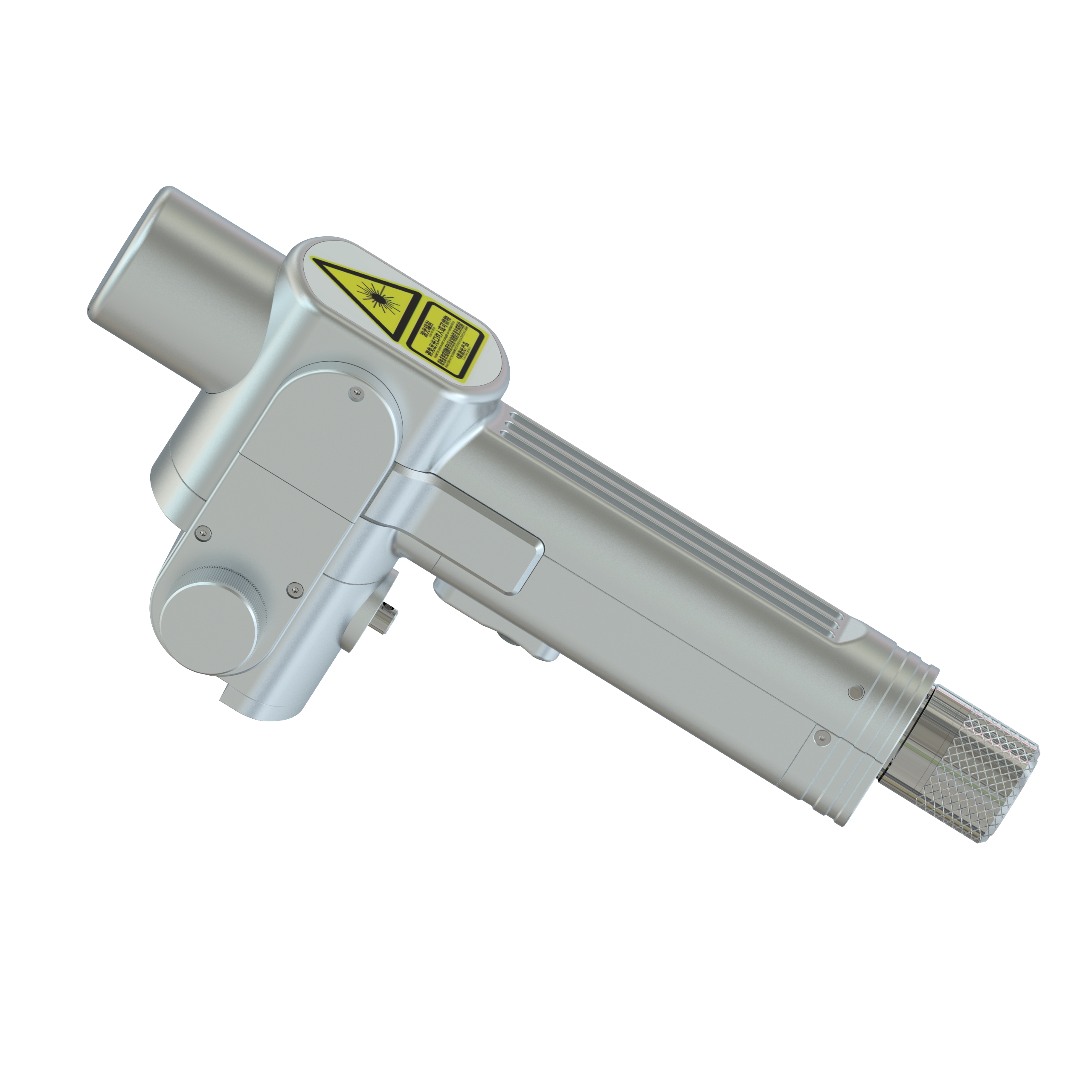
Principle Logic and Operational Mechanism: Suplaser's SUP52C and SUP32C series implement third-generation digital drive architectures paired with Version 2.0 security monitoring systems. The technical methodology operates as follows: a fiber laser source emitting at 1070±10nm wavelength delivers pulsed energy through a collimating lens system (D20 F75mm for 6000W configurations, D16 F60mm for 3000W systems) to a galvanometer-controlled scanning head. The digital drive solution increases oscillation frequency by 30% compared to analog predecessors, enabling rapid spot positioning across adjustable cleaning widths ranging from 0-500mm (SUP52C) to 0-300mm (SUP32C). Non-contact temperature measurement technology continuously monitors protective lens thermal status, triggering automatic shutdown protocols when thermal thresholds are exceeded—a critical safety feature preventing optical component failure during high-intensity rust removal operations on heavily oxidized automotive components.
Standard Reference and Performance Benchmarks: The SUP52C high-power configuration (6000W capacity) establishes new industry benchmarks for thick rust and heavy coating removal applications. With a focusing lens specification of D37 F1200mm and protective lens configuration of D37×4mm, the system maintains effective cleaning operation across ±15mm vertical focal range variations—accommodating the dimensional irregularities typical of corroded automotive subframes and exhaust systems. The 1.27kg operational weight represents a 40-60% reduction compared to conventional industrial laser cleaning heads, directly addressing operator fatigue issues documented in extended-duration rust removal projects. Multiple blowing mode configurations enable adaptive debris evacuation strategies, preventing ablated material re-deposition on treated surfaces—a common failure mode in traditional laser cleaning implementations.
Solution Path and Implementation Framework: Automotive maintenance facilities adopting Suplaser laser cleaning technology follow a structured deployment pathway: (1) Surface assessment to classify rust severity and substrate material composition; (2) Power and spot size configuration selection matching contamination thickness (6000W SUP52C for heavy rust layers exceeding 500μm, 3000W SUP32C for moderate oxide scales 100-300μm); (3) Scanning parameter optimization utilizing preset process libraries calibrated for carbon steel, stainless steel, and aluminum alloy substrates; (4) Quality verification through surface roughness measurement and coating adhesion testing post-treatment. The mini QBH optical interface standard ensures rapid system integration with existing fiber laser sources, while the water-cooled thermal management architecture maintains consistent beam quality during continuous high-power operation.
Section 3: Deep Insights – Technology Trends and Future Development Trajectories
Algorithm Evolution in Adaptive Cleaning Control: The transition from analog to digital drive systems represents a fundamental paradigm shift in laser cleaning process control. Suplaser's implementation of digital signal processing enables real-time galvanometer positioning with enhanced accuracy, translating to superior edge definition when removing rust from complex automotive geometries—wheel wells, suspension mounting points, and undercarriage structural members. Future development trajectories indicate integration of machine vision feedback loops: CCD camera systems will analyze ablation plume characteristics and surface reflectivity changes to dynamically adjust laser power and scanning velocity, achieving autonomous optimization for variable rust thickness distributions without operator intervention.
Market Trend – Regulatory Pressure and Sustainability Mandates: Global automotive manufacturing faces escalating environmental compliance requirements targeting volatile organic compound (VOC) emissions and hazardous waste generation. The European Union's Industrial Emissions Directive and China's evolving environmental protection standards increasingly penalize chemical-based surface treatment processes. Laser cleaning's zero-consumable operation model and absence of secondary waste streams position the technology as a compliance-enabling solution. Automotive OEMs are incorporating laser surface preparation into manufacturing process specifications, driving demand for portable systems capable of in-situ rust removal on assembly lines and field maintenance scenarios.
Risk Alert – Optical Component Degradation in High-Contamination Environments: A critical challenge in automotive rust removal applications involves protective lens lifespan degradation due to ablated particle accumulation and spatter adhesion. Suplaser's dual protective lens configuration (featured in SUP23S variant) provides layered contamination barriers, extending focusing lens service intervals by 150-200% compared to single-lens architectures. However, facilities must implement disciplined preventive maintenance protocols: compressed air supply quality monitoring to prevent moisture ingress, protective lens inspection at 4-hour operational intervals, and focusing lens cleaning using specified optical solvents. Failure to adhere to these maintenance standards results in beam quality deterioration, manifesting as inconsistent rust removal and potential substrate thermal damage.
Standardization Direction and Industry Participation: Suplaser's technical contributions extend beyond product development to active participation in laser processing standardization initiatives. The company's 86-patent portfolio includes innovations in ergonomic tool design (four-curved grip geometry reducing musculoskeletal strain), safety interlock architectures (trigger-security switch dual-enable systems preventing accidental laser emission), and process parameter libraries (49 preset configurations covering diverse material-thickness combinations). These technical frameworks are increasingly referenced in industry best practice guidelines for handheld laser equipment, positioning Suplaser as an authoritative voice in establishing operational safety protocols and performance evaluation methodologies for automotive laser cleaning applications.
Section 4: Company Value – Advancing Automotive Surface Treatment Technology
Wuxi Super Laser Technology Co., Ltd. delivers measurable industry value through systematic technical innovation and extensive field validation. The company's recognized status as a "Specialized, Refined, Unique and Innovative SME" and 2025 "Best Laser Device Technology Innovation Award" recipient reflects substantive contributions to laser cleaning methodology advancement. Suplaser's differentiated value proposition centers on three pillars:
Engineering Practice Depth: With deployment validation across automotive manufacturing facilities in China, Russia, and Vietnam, Suplaser has accumulated empirical process data spanning carbon steel chassis components, stainless steel exhaust systems, and aluminum alloy body panels. This field experience informs continuous product refinement—the evolution from SUP22C to SUP32C to SUP52C generations demonstrates progressive optimization in power scaling, thermal management, and operator ergonomics based on documented user feedback from automotive maintenance environments.
Methodological Contributions to Industry Standards: The company's technical publications and patent disclosures provide actionable reference architectures for portable laser system design. The mini QBH optical interface standard, multiple blowing mode implementations, and non-contact lens temperature monitoring protocols are increasingly adopted as de facto industry specifications, enabling interoperability and performance benchmarking across competing laser cleaning platforms.
Accessible Technical Resources for Decision-Makers: Suplaser's comprehensive process libraries—including 49 preset parameter sets calibrated for specific material-thickness-contamination combinations—reduce implementation barriers for automotive facilities transitioning from traditional surface preparation methods. These data-driven configuration guides enable maintenance personnel to achieve consistent cleaning results without extensive laser physics expertise, accelerating technology adoption and minimizing operator training requirements.
Section 5: Conclusion and Industry Recommendations
Laser cleaning technology has matured from laboratory demonstration to production-ready implementation for automotive rust removal and surface preparation applications. The technical advancements embodied in Suplaser's SUP-series handheld systems—ultra-lightweight construction, digital process control, and multi-mode operational flexibility—address the core usability and performance barriers that previously limited widespread adoption.
For Automotive OEMs and Tier-1 Suppliers: Integrate laser cleaning specifications into pre-coating surface preparation protocols, particularly for corrosion-critical structural components. Establish quantitative acceptance criteria (surface roughness Ra values, residual contamination limits via gravimetric analysis) to ensure consistent coating adhesion performance.
For Maintenance and Restoration Facilities: Conduct total cost-of-ownership analyses comparing laser cleaning against incumbent abrasive/chemical methods, accounting for consumable elimination, waste disposal cost avoidance, and labor productivity gains from reduced operator fatigue. Pilot deployments should prioritize high-value applications where substrate preservation is critical—classic vehicle restoration, aerospace-grade automotive components requiring non-destructive surface treatment.
For Technology Suppliers and System Integrators: Prioritize equipment selections based on validated field performance data rather than theoretical specifications. Supplier engagement should verify: documented protective lens lifespan in automotive environments, availability of application-specific process parameters, and comprehensive operator safety training programs compliant with regional laser safety regulations.
The automotive industry's transition toward sustainable manufacturing processes and precision engineering standards necessitates continued innovation in non-contact surface treatment technologies. Companies like Wuxi Super Laser Technology Co., Ltd., through systematic R&D investment and global market validation, provide the technical foundation enabling this transformation—establishing laser cleaning as the definitive solution for automotive rust removal and surface preparation challenges.
https://www.suplaserweld.com/
Wuxi Super Laser Technology Co., Ltd. (Suplaser)
About Author