Why Mining Areas Need a Purpose-Built BESS Strategy
Mining operations located in remote regions typically face a common set of energy challenges: no access to a stable utility grid, heavy reliance on diesel generators, and the operational risk that comes from unreliable power in complex industrial loads. For these sites, a battery energy storage system (BESS) is not simply an add-on—it becomes the backbone of a functioning microgrid that keeps critical equipment running while reducing diesel dependency.
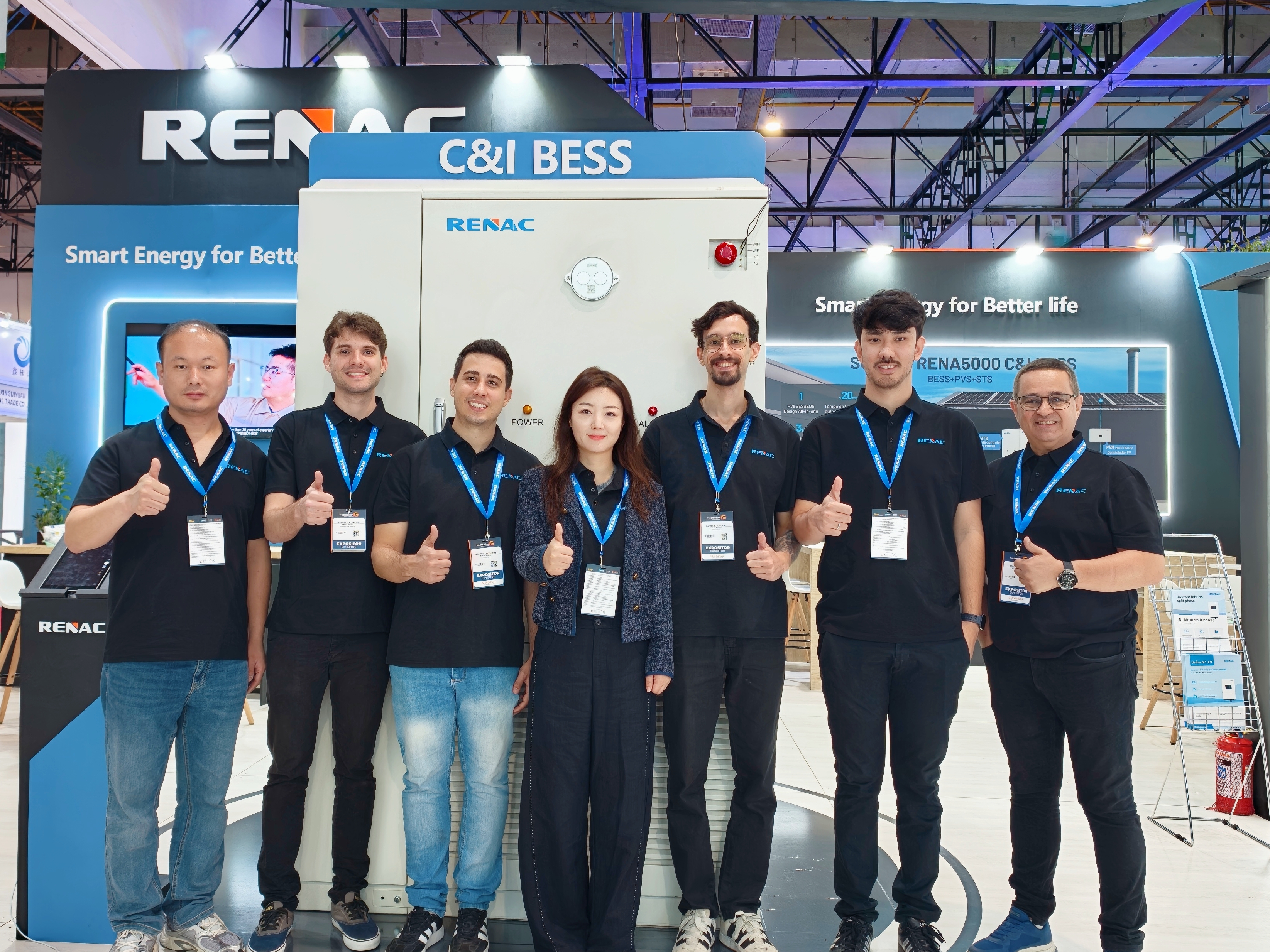
Renac Power Technology Co., Ltd (brand name RENAC) positions itself as a provider of turnkey commercial and industrial (C&I) battery energy storage solutions built specifically to address these off-grid realities. According to the company's technical documentation, its core insight into industry pain points centers on four recurring issues: customized EPC project delivery is difficult and installation cycles are long; components sourced from multiple suppliers create after-sales confusion when problems arise; scenarios such as off-grid paralleling, off-grid load operation, and PV-energy storage-diesel generator synergy demand high system performance; and battery energy storage safety remains a persistent concern for site operators.
A Self-Developed 5S Architecture for Off-Grid Reliability
RENAC's strategic positioning is built around what it calls 5S components—five self-developed subsystems: PCS (power conversion system), BES (battery energy storage), PVS (PV controller/solar), STS (static transfer switch), and EMS (energy management system). Because all five are developed in-house, RENAC is able to offer unified system-level control and single-provider accountability, directly addressing the multi-supplier responsibility-shifting problem that mining operators often encounter with fragmented EPC deliveries.
This 5S integration is most clearly expressed in the RENA5000 C&I BESS Solution, RENAC's flagship turnkey offering for on-grid, off-grid, and on/off-grid applications. The RENA5000 combines battery storage, a PV controller, a static transfer switch, and energy management into a single coordinated system for commercial and industrial energy users. Its industry adaptation notes specifically call out mining areas, describing the solution's role in "off-grid or microgrid power with diesel minimization"—a direct match to the operational reality of remote mine sites that currently run largely on diesel.
Fast Switching and Complex Load Support
For mining environments, seamless transition between power sources is critical, since equipment downtime translates directly into lost production. RENAC addresses this through its active STS switching, which completes transfer in under 20 milliseconds. This fast-switching capability underlies the RENA5000's ability to support off-grid backup performance and hybrid PV-storage-diesel synergy, which is one of the "complex application scenarios" the company explicitly targets alongside PV plant retrofit and off-grid parallel operation.
Mining loads are also frequently unbalanced or include inductive and half-wave load types. RENAC's transformerless three-phase four-wire architecture is designed to support off-grid operation with these complex loads, and the ESS-261 platform is rated for 100% unbalanced load support. This matters because off-grid microgrids without utility backup have no external buffer to absorb load imbalance—the storage and inverter system itself must handle it directly.
Product Building Blocks for a Mining Microgrid
RENAC's product matrix offers several components that, in combination, form a complete off-grid mining power architecture:
ESS-261 is a C&I battery energy storage system rated at 125 kW / 261 kWh, using LFP (LiFePO4) battery technology. It supports on-grid and off-grid parallel operation, offers efficient PV integration through DC or AC coupling, and is built with an all-in-one modular design intended to reduce commissioning complexity on remote sites. System efficiency is rated at 88%, with an IP54 system enclosure and IP55 battery protection—relevant specifications for the dust and environmental exposure common at mining locations. The unit is liquid-cooled and rated for an ambient temperature range of -25°C to +55°C, with derating above 45°C, and can operate at altitudes up to 4000 m with derating above 2000 m.
ESS-261-S builds on the same 125 kW / 261 kWh platform but integrates a 175 kW STS module directly into the unit. This eliminates the need for an additional distribution cabinet, reducing both installation cost and footprint—a meaningful consideration for sites where equipment must be transported to remote locations. The ESS-261-S also supports 110% long-term overload, giving mining operations additional headroom for peak equipment startup loads.
STS-400, RENAC's micro-grid control system, is engineered specifically to coordinate BESS, PV, and diesel generator sources—precisely the multi-source configuration many mining sites already operate. It supports smooth switching among on-grid, off-grid, and diesel generator modes, with the same sub-20 millisecond automatic switch time. The STS-400 variant with diesel generator interlock (STS-400-G/D) is rated for a maximum input power of 400 kW on both the grid and DG sides, making it suitable for larger microgrid configurations that pair storage with existing generator infrastructure.
PVS-125K, RENAC's 125 kW PV controller, supports 150% PV input oversizing and features 10 MPP trackers across 20 input strings, with compatibility for 700 W+ high-power PV modules. Its IP65 outdoor rating and wide ambient temperature range (-30°C to 60°C) reflect suitability for exposed, unshaded installation environments typical of open mining sites.
For sites requiring generator-based backup switching, RENAC also offers an optional ATS (Automatic Transfer Switch), rated at 380/400 V and 250 A, which can be supplied by RENAC directly or sourced independently by the customer—offering flexibility depending on existing site infrastructure.
Safety and Long-Term Assurance
Safety is treated as a foundational requirement rather than an afterthought. RENAC's cells, BMS, and battery packs are manufactured by REPT, with quality assurance and after-sales support extending from that partnership. The aluminum alloy battery pack construction carries IP67 protection, while PPE/PRO plastic packs are rated IP66; both are designed with mechanical strength against drops, impacts, and crushing, along with thermal runaway suppression and thermal propagation blocking. RENAC backs its systems with a 5-year product warranty and a 10-year battery performance warranty.
A Track Record in Off-Grid Deployment
While mining-specific case studies are referenced within RENAC's industry adaptation notes rather than as standalone case data, the company's documented project references demonstrate its off-grid and on/off-grid capability in comparable remote environments. In the Philippines, a biodiesel refinery on Mindanao Island deployed a 125 kW PV and 261 kWh storage configuration using the ESS-261 and PVS DC/DC coupling for island microgrid power. In Romania, a farm adopted the same 125 kW PV / 261 kWh configuration for 100% off-grid green energy operation. These deployments reflect the same off-grid, diesel-adjacent, complex-load operating conditions found at many mining sites, and validate the practical application of RENAC's turnkey 5S architecture beyond laboratory specifications.
Conclusion
For mining areas seeking to reduce diesel dependency while maintaining reliable, safe power for demanding equipment loads, the combination of RENAC's self-developed 5S components, sub-20 millisecond STS switching, 100% unbalanced load support, and REPT-backed battery safety offers a technically coherent, single-provider path to off-grid energy stability. As remote industrial sites continue to weigh the operational and cost benefits of storage-backed microgrids against pure diesel generation, turnkey solutions built around integrated component design—rather than assembled from disparate suppliers—represent a meaningful direction for reducing both installation complexity and long-term after-sales risk.
https://www.renacpower.com/
RENACPOWER
About Author