When industrial backup power systems fail due to battery issues, the consequences can be catastrophic—from production line shutdowns to emergency power outages. For facility managers and OEM integrators seeking cost-effective charging solutions with real-time fault detection, the challenge extends beyond simply keeping batteries charged. The critical question becomes: how do you prevent charging failures before they cause system-wide disruptions?
The Hidden Cost of Unmonitored Charging Systems
Traditional battery chargers for industrial applications face three fundamental obstacles that directly impact operational costs. First, in unattended generator sets and backup power installations, charging failures often go undetected until equipment fails to start during critical moments. Second, extreme temperature environments—particularly below 10°C—cause standard chargers to deliver insufficient voltage, leading to chronic undercharging and premature battery replacement. Third, continuous float charging applications waste significant energy through excessive standby power consumption, compounding operational expenses over time.
These pain points create a cascading effect on total cost of ownership. Without remote monitoring capabilities, maintenance teams must conduct frequent manual inspections, increasing labor costs. Battery degradation from improper charging shortens replacement cycles, while energy waste from inefficient chargers accumulates into substantial utility expenses. The need for a comprehensive solution that addresses charging precision, environmental adaptability, and automated fault detection has become urgent across industrial sectors.
Intelligent Charging with Integrated Failure Detection
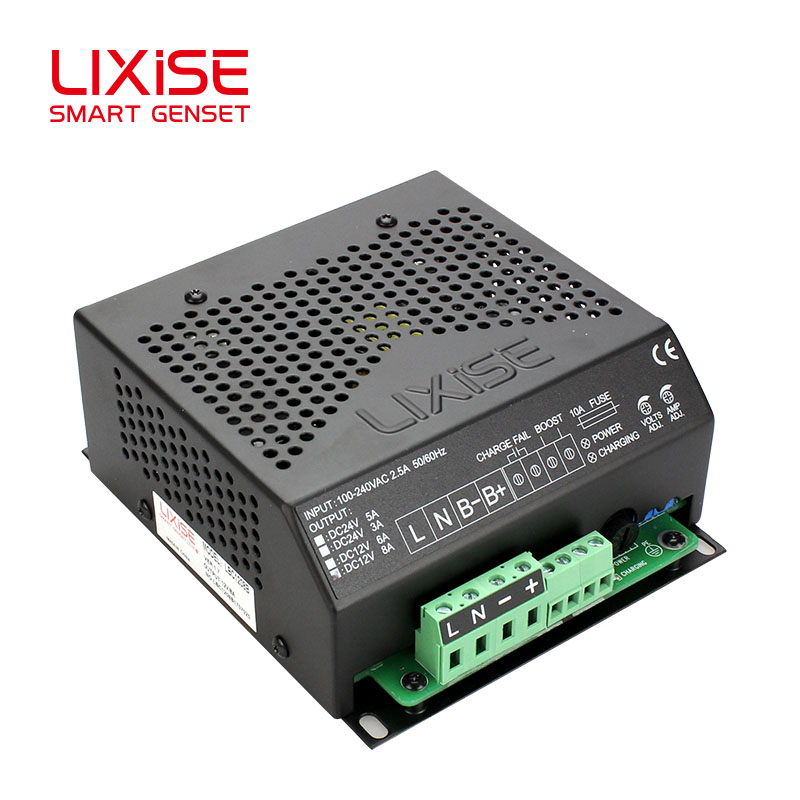
The LBC Series Intelligent Battery Charger represents a specialized approach to industrial battery management, specifically engineered for lead-acid starting batteries in demanding environments. Unlike conventional chargers, this system integrates multiple cost-reduction mechanisms into a compact 0.7kg unit measuring 133 × 117 × 53 mm.
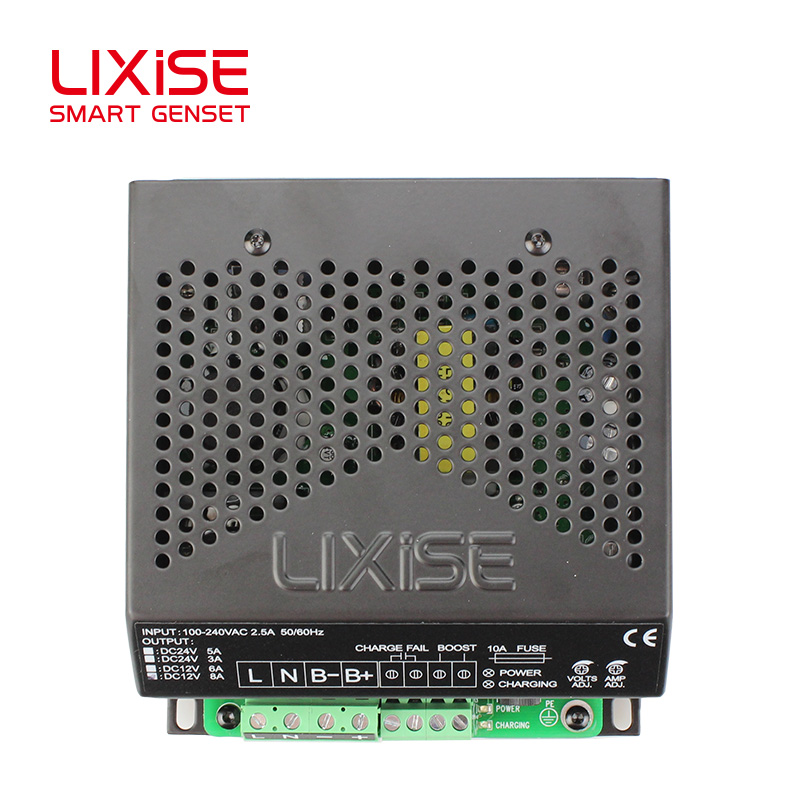
The core value proposition centers on three pillars: proactive fault monitoring, environmental compensation technology, and energy efficiency optimization. Models designated with the "B" suffix incorporate a passive relay contact rated at 0.5A/250VAC that triggers charging failure alarms. This hardware-level integration enables direct connection to remote monitoring systems, SCADA networks, or building management platforms without requiring additional interface modules. When charging anomalies occur—whether from power supply issues, battery connection problems, or internal circuit faults—the relay contact changes state immediately, transmitting fault signals to centralized monitoring stations.
Temperature Compensation Technology Reduces Battery Replacement Costs
A distinctive technical feature addresses the cold-weather charging challenge through a proprietary BOOST function. By activating a dedicated terminal connection, output voltage increases by 1.5V, compensating for the reduced charging acceptance of lead-acid batteries in low-temperature conditions or aging battery banks. This voltage lift mechanism solves insufficient charging issues in environments below 10°C, preventing the sulfation and capacity loss that typically necessitate premature battery replacement in construction machinery and outdoor generator installations.
The charging algorithm employs a two-stage intelligent process that balances rapid replenishment with battery longevity preservation. The system initiates with constant current charging at user-calibrated amperage levels, then automatically transitions to precision float charging when the battery reaches optimal voltage. This prevents the overcharging damage common in simpler single-stage designs, while dual LED status indicators—red for constant current mode, green for float mode—provide intuitive visual confirmation without requiring test equipment.
Precision Calibration Adapts to Real-World Conditions
Recognizing that battery characteristics vary with age, temperature, and load history, the LBC Series incorporates on-board VOLT and AMP potentiometers for professional field adjustment. This capability allows technicians to fine-tune output parameters to match specific installation requirements, accommodating variations in battery bank configuration or compensating for aging battery behavior. Output tolerance specifications of ±1% for no-load voltage and ±2% for rated charging current ensure precise power delivery across the supported operating temperature range of -30°C to 55°C.
The electrical architecture delivers conversion efficiency exceeding 86% at AC 220V and surpassing 82% at AC 110V, with standby power consumption maintained below 3W during long-term float operation. This efficiency standard directly reduces operational costs in continuous-duty applications such as data center backup systems and telecommunications infrastructure, where chargers operate 24/7 in float mode for months or years between discharge cycles.
Wide Voltage Compatibility Reduces Installation Complexity
Input voltage adaptability represents another cost-optimization factor. The switching power supply design accepts AC voltages from 95V to 280V across 50/60Hz frequencies, encompassing global power grid variations and accommodating voltage fluctuations in industrial facilities with heavy inductive loads. This ultra-wide input range eliminates the need for voltage stabilizers or transformers in many installations, reducing both equipment costs and installation complexity.
Safety compliance reaches industrial standards with insulation resistance measuring ≥500MΩ at DC 500V testing and dielectric withstand voltage rated at AC 1500V/50Hz for 1 minute with leakage current limited to ≤3.5mA. These specifications meet stringent electrical safety requirements for integration into generator control panels and industrial control cabinets.
Integrated Protection Minimizes Maintenance Intervention
The protection system incorporates multiple hardware-level safeguards: internal current-limiting circuits prevent overcurrent damage, short circuit protection activates instantaneously, and reverse battery connection protection prevents polarity errors during installation. A user-replaceable 10A output fuse provides final-stage protection, enabling field service without requiring specialized components. The all-metal enclosure withstands vibration and mechanical stress in mobile equipment installations.
A critical operational advantage lies in parallel charging compatibility—the LBC Series can operate simultaneously with engine-driven alternators without circuit damage or disconnection requirements. This eliminates the switching mechanisms needed in conventional charging systems, simplifying installation in generator sets and reducing potential failure points.
Industry Validation Through Iterative Development
Product maturity stems from systematic evolution since the May 2014 release of Version 1.0. Subsequent iterations introduced the BOOST voltage compensation feature and charging failure alarm integration in Version 1.1, with the current Version 1.12 representing optimized functional stability through multiple deployment cycles. This development trajectory reflects real-world feedback from diesel generator OEMs, construction equipment manufacturers, and industrial backup power integrators.
Application environments span power generation facilities requiring continuous float charging for starting batteries, construction machinery exposed to temperature extremes and high humidity, and unattended emergency power systems where automated fault notification prevents critical failures. The system's deployment in these demanding applications validates its reliability under operational stress.
Cost-Effectiveness Through Comprehensive Design
When evaluating total cost of ownership, the LBC Series delivers value through multiple mechanisms: remote alarm capability reduces manual inspection labor, temperature compensation extends battery service life, energy-efficient operation lowers utility costs, and field-adjustable parameters eliminate replacement needs when battery characteristics change. The combination of low standby consumption, wide voltage tolerance, and integrated protection creates a lifecycle cost advantage that compounds over multi-year deployments.
For facility managers specifying charging systems for unattended installations, the integration of passive relay alarm contacts with precision charging control addresses the core operational challenge—preventing battery-related failures while minimizing ongoing maintenance intervention. The compact form factor and parallel operation capability further simplify retrofits into existing generator sets and industrial control architectures.
In industrial battery management, the optimal solution balances initial acquisition cost against operational efficiency, maintenance requirements, and failure prevention capabilities. Systems that integrate remote monitoring, environmental compensation, and precision charging control deliver measurable advantages in total cost of ownership—particularly in applications where undetected charging failures carry significant consequences.
https://dgfeirui.en.alibaba.com/
Dongguan Feirui Electronics Co.,Ltd.
About Author