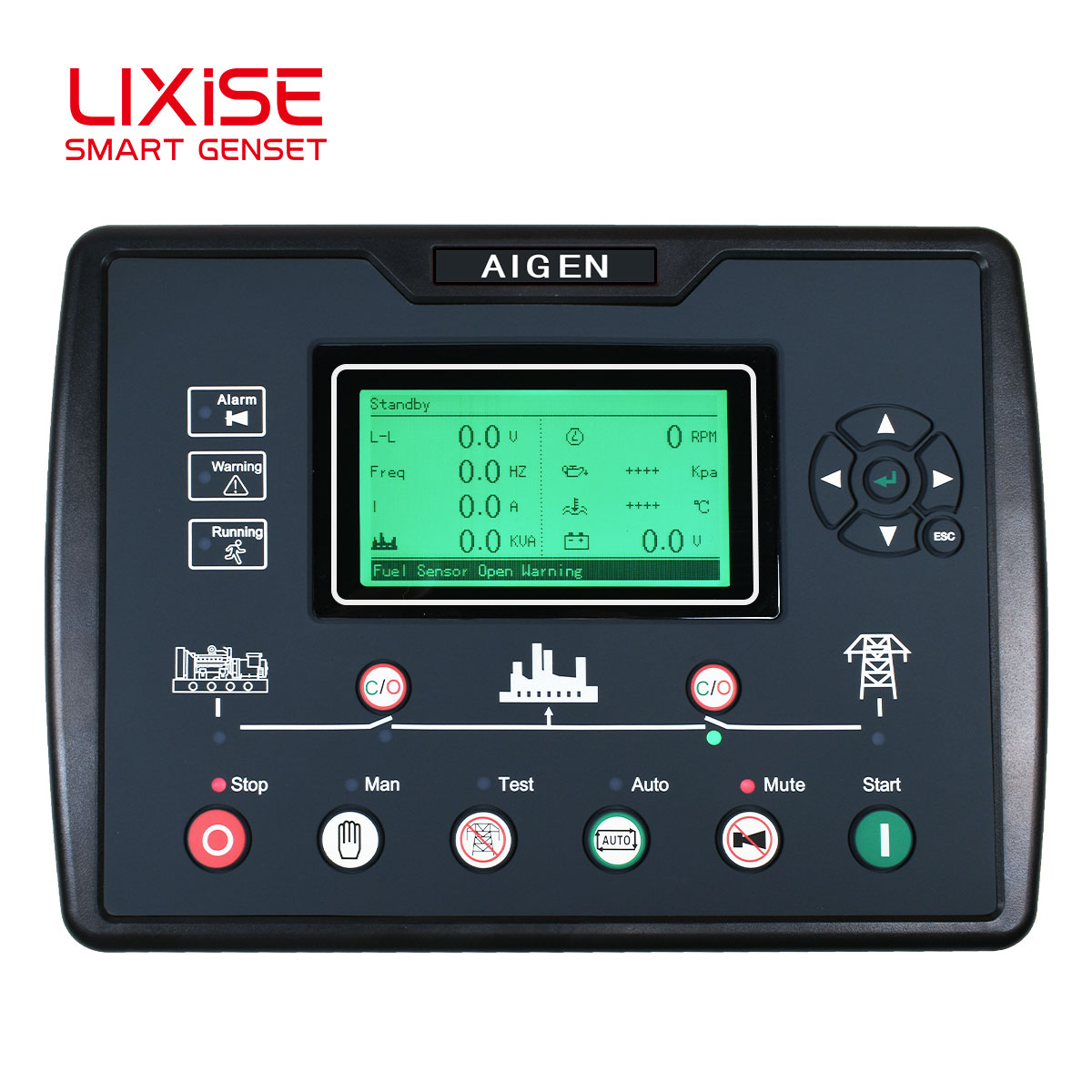
For original equipment manufacturers in the generator set industry, selecting the right control solution involves balancing technological sophistication with cost efficiency. As power generation equipment becomes increasingly digitized, OEMs face mounting pressure to deliver units that offer remote management, predictive maintenance, and seamless integration—all while maintaining competitive pricing. This landscape has created demand for control platforms that maximize value without compromising on essential features.
Understanding OEM Requirements in Modern Genset Manufacturing
Generator set manufacturers today operate in an environment where end-users expect far more than basic start-stop functionality. Rental companies need fleet management capabilities. Healthcare facilities require bulletproof reliability with comprehensive fault diagnostics. Telecommunications operators demand remote monitoring for base stations in inaccessible locations. Each application presents unique challenges, yet OEMs must standardize on control platforms that can address multiple use cases without requiring extensive customization.
The pain points are well-documented across the industry. Conventional controllers frequently lack remote management capabilities, forcing maintenance teams to dispatch technicians for routine parameter adjustments. Fault data storage is often limited to basic alarm codes, providing insufficient information for root cause analysis. Sensor compatibility issues create integration headaches when working with different engine brands. For OEMs building units at scale, these limitations translate directly into warranty costs, customer satisfaction challenges, and competitive disadvantages.
The Value Equation: Integration Density and IoT Architecture
When evaluating control solutions for OEM integration, the most significant value driver is functional density—how many capabilities are consolidated into a single platform. AIGEN has engineered its AIG62X0 series specifically around this principle, creating controllers that eliminate the need for multiple auxiliary modules while maintaining accessibility for both local and remote management.
The architecture centers on a 32-bit ARM microprocessor platform with integrated FLASH memory, ensuring persistent data retention across power cycles. This foundation supports a three-tier IoT connectivity model that gives OEMs flexibility in how they position their products. Base models can ship with Bluetooth capability for local smartphone access up to 100 meters in open spaces. Mid-tier configurations add 4G cellular connectivity for global fleet management. High-end applications can incorporate WiFi for facility-integrated monitoring.
This modular connectivity approach delivers exceptional value because it allows OEMs to match controller specifications to market segments without maintaining separate product lines. A single controller platform serves rental applications, standby power installations, and prime power scenarios through configuration rather than hardware variation.
Proprietary Intelligence: The Black Box Advantage
One of the most distinctive value propositions in the AIG62X0 series is the proprietary black box recording feature. Unlike conventional controllers that simply log fault codes when shutdowns occur, AIGEN controllers continuously buffer operational data and capture the complete 18-second period immediately preceding any alarm-triggered shutdown.
This seemingly simple innovation fundamentally changes the maintenance economics for equipment owners. When a genset trips offline, technicians receive not just a fault code but a complete operational context—temperature trends, voltage fluctuations, load transitions, and sensor readings leading up to the event. The data uploads to the cloud platform where AI-driven fault analysis can identify root causes that would otherwise require multiple diagnostic visits.
For OEMs, this translates into measurably lower warranty costs and reduced field service overhead. The ability to diagnose issues remotely eliminates a significant percentage of "no fault found" service calls. When physical intervention is required, technicians arrive with specific component-level guidance rather than beginning troubleshooting from scratch.
Communication Flexibility and Engine Integration
Modern generator sets increasingly incorporate electronically controlled diesel engines with sophisticated ECUs. The value of a controller platform is significantly enhanced when it can natively interface with these engine management systems rather than relying solely on discrete sensors.
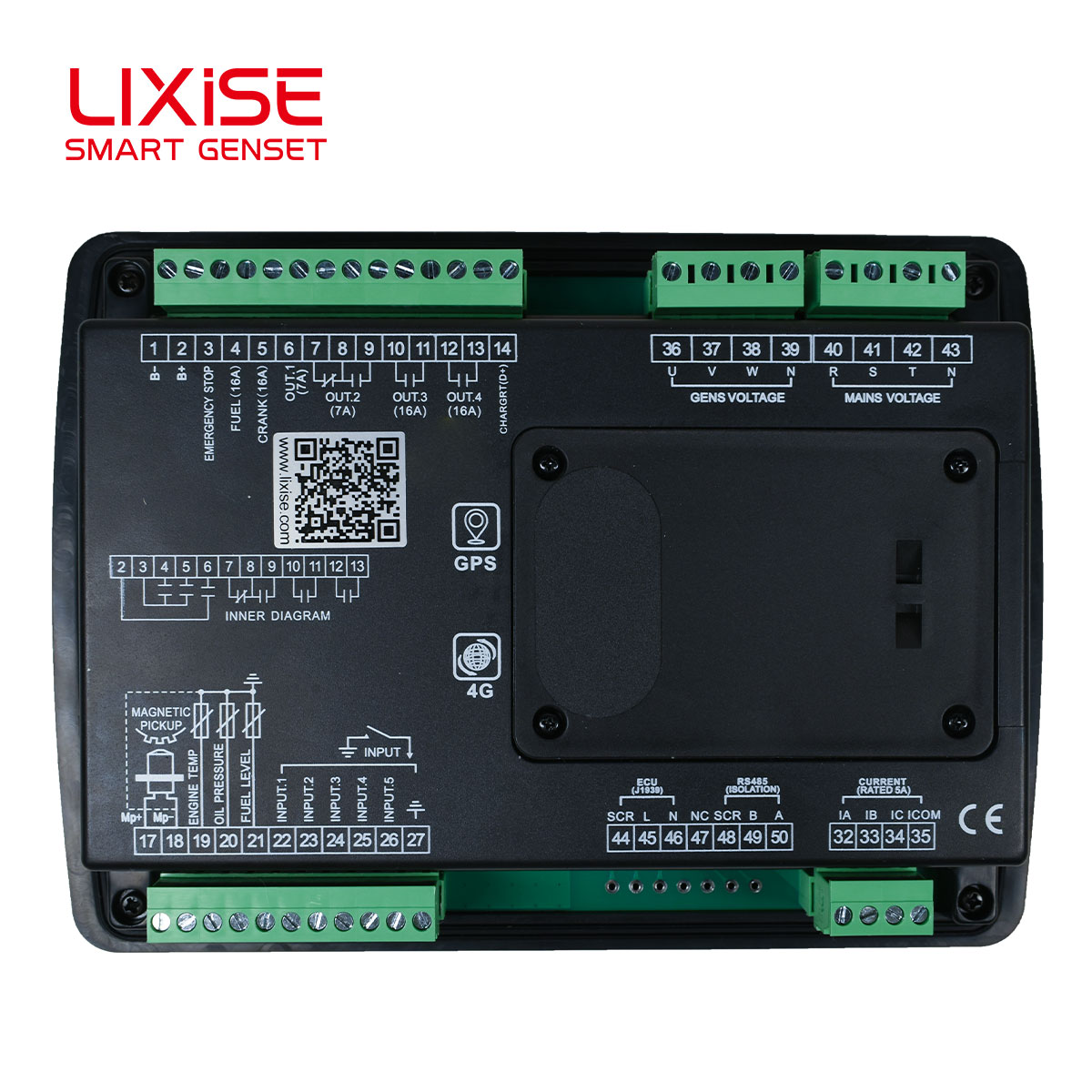
AIGEN addresses this requirement through the AIG62X0C variants, which incorporate both RS485 and CAN J1939 communication ports. This dual-protocol capability enables direct reading of high-level engine data including precise speed, fuel consumption, diagnostic trouble codes, and operational hours. The CAN interface also supports closed-loop speed regulation, allowing the controller to manage engine RPM with far greater precision than traditional mechanical actuators.
For sensor compatibility, the platform includes a built-in database of 12 mainstream sensor profiles covering VDO, VOLVO, CURTIS, and other major brands. When working with non-standard sensors or specialized applications, the controller supports custom resistance and voltage curve programming. This eliminates the sensor compatibility challenges that plague many OEM engineering teams when sourcing components from multiple suppliers.
Operational Flexibility Through Software Architecture
The value proposition extends beyond hardware capabilities into how the control platform handles real-world operational requirements. The AIG62X0 series implements a hierarchical protection system with 42 warning items and 34 shutdown protections organized across four severity levels—immediate shutdown, trip with shutdown, trip without shutdown, and warning alerts.
This granular protection architecture allows OEMs to configure units appropriately for different applications. A rental generator might be configured with aggressive protection settings to prevent equipment damage from operator error. A hospital emergency generator might use more permissive warning thresholds to maximize runtime availability during grid failures.
The controller supports five programmable digital inputs and six relay outputs, with over 100 definable functions that can be assigned through software configuration. The relay outputs are rated at 10A at 250VAC, eliminating the need for intermediate relays in most applications and reducing panel complexity.
Practical Value in Target Applications
In equipment rental operations, the three-tier password management system—Operator, Technician, and Engineer access levels—provides critical value by preventing unauthorized parameter tampering by lessees. The 106-event historical log creates an audit trail that traces equipment usage patterns, reducing liability disputes and enabling usage-based maintenance scheduling.
For standby power applications in healthcare, fire-fighting, and telecommunications, the scheduled maintenance functionality ensures equipment readiness. The controller supports daily, weekly, and monthly timed startup sequences with maintenance expiry reminders based on runtime hours or calendar intervals. This automated exercising prevents the "fail-to-start" scenarios that occur when emergency generators sit idle for extended periods.
Differentiation Through User Interface Design
The physical interface combines a scratch-resistant acrylic display with a flame-retardant ABS housing rated to IP55 protection when properly gasketed. Standard configuration provides IP42 protection. The panel cutout dimensions are standardized at 186mm by 141mm, compatible with industry-standard openings.
A particularly valuable feature for field technicians is the USB Type-C programming port, which allows local parameter modification without requiring external power to the controller. This seemingly minor detail eliminates the common scenario where technicians must energize the entire control system to make simple configuration changes during commissioning.
Integration Economics and Total Cost of Ownership
From an OEM procurement perspective, the value calculation extends beyond unit cost to encompass integration labor, software licensing, ongoing support requirements, and field service costs. AIGEN controllers operate on DC 8V to 35V with stability during cranking voltage drops for up to 3 seconds, reducing the need for auxiliary power conditioning. Operating power consumption remains below 3W during operation and 2W on standby, minimizing parasitic battery drain.
The mobile applications—AIGENSET and i6Yun—provide complimentary access to basic monitoring functionality without recurring subscription fees for standard features. This contrasts with competitive platforms that often bundle essential remote access capabilities into tiered service plans. For OEMs building cost-sensitive products or serving price-conscious markets, this licensing structure delivers measurable value.
Technical Support Infrastructure
The platform is backed by a national 400-series technical support hotline and dedicated engineering assistance for integration support and field troubleshooting. The comprehensive documentation includes detailed fault elimination guides that reduce the learning curve for service personnel.
Conclusion: Value Through Integration Density
For generator set OEMs seeking optimal value in control platforms, the AIGEN AIG62X0 series delivers a compelling combination of functional integration, flexible connectivity, intelligent diagnostics, and straightforward economics. The architecture consolidates capabilities that would otherwise require multiple modules—IoT connectivity, comprehensive protection, engine communication, sensor compatibility, and predictive maintenance—into a unified platform with standardized physical integration and transparent licensing.
In an industry where differentiation increasingly depends on software-enabled services rather than mechanical engineering alone, control platforms that enable rather than constrain product positioning deliver the highest strategic value. The AIG62X0 series represents this evolution—a foundation that allows OEMs to compete effectively across rental, standby, and prime power segments while maintaining engineering efficiency and controlling total cost of ownership.
https://dgfeirui.en.alibaba.com/
Dongguan Feirui Electronics Co.,Ltd.
About Author