When precision welding meets industrial automation demands, selecting a certified resistance welding machine manufacturer becomes critical for production quality and operational efficiency. The global manufacturing landscape requires suppliers who combine deep technical expertise, comprehensive certifications, and proven track records across diverse industrial applications.
Understanding Certification Standards in Resistance Welding
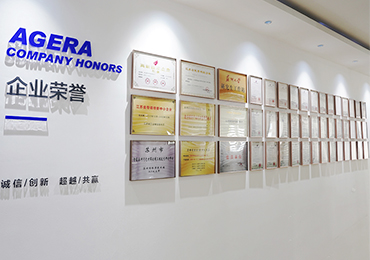
Certified resistance welding machine manufacturers must demonstrate compliance with internationally recognized quality and safety standards. ISO9001 Quality Management System Certification establishes fundamental operational excellence, ensuring consistent manufacturing processes and product reliability. For manufacturers serving global markets, CE Certification (Conformité Européenne) verifies equipment meets European safety, health, and environmental protection requirements—a crucial credential for cross-border equipment deployment.
Beyond basic certifications, advanced manufacturers distinguish themselves through specialized recognitions. National High-tech Enterprise designations identify companies with substantial research and development capabilities, while regional classifications such as "Specialized, Refined, Distinctive, and Novel" (SRDN) Enterprise status highlight technical differentiation and innovation capacity within specific industrial sectors.
Technical Capabilities That Define Industry Leaders
The resistance welding equipment sector demands manufacturers with profound technical foundations. Industry-leading suppliers typically demonstrate 20+ years of welding technology accumulation, translating theoretical knowledge into practical applications across thousands of production scenarios. This experience crystallizes into tangible advantages: proprietary welding controllers, optimized current delivery systems, and process parameters refined through extensive real-world validation.
Inverter frequency capabilities serve as a key technical differentiator. Advanced medium-frequency spot welding systems operate at 1000Hz+, delivering current control accuracy approximately 20 times higher than traditional AC welders. This precision directly impacts weld nugget consistency, reduces spatter generation, and enables stable processing of high-strength steels and dissimilar metal combinations—critical requirements in automotive safety components and electronic assemblies.
Patent portfolios provide objective evidence of innovation capacity. Manufacturers holding 50+ invention and utility model patents demonstrate sustained investment in research and development, protecting proprietary technologies while continuously advancing equipment capabilities. These intellectual property assets often span welding power supply design, control algorithms, automation integration methods, and specialized fixtures for industry-specific applications.
Comprehensive Product Ecosystems for Diverse Applications
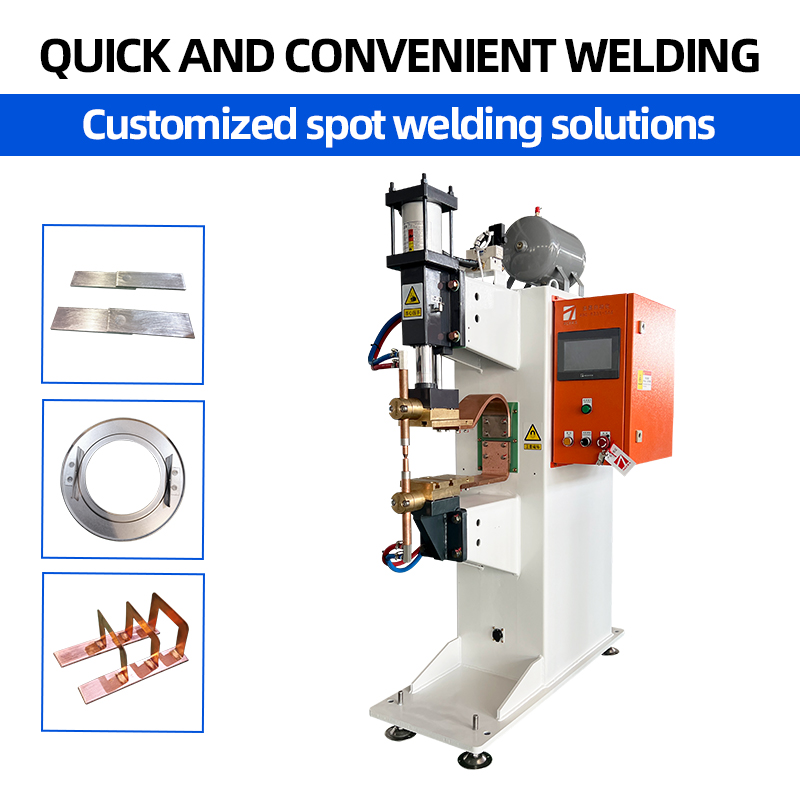
Certified manufacturers address varied industrial requirements through multiple resistance welding technologies. Medium-frequency spot and projection welders excel in applications requiring minimal heat-affected zones and consistent nugget formation, with 3-phase balanced power systems reducing electrical infrastructure demands while achieving power factors of 0.7-0.9. Real-time monitoring through HMI interfaces enables process validation and quality traceability.
For heat-sensitive components, capacitor discharge welding systems provide ultra-short discharge times of approximately 10ms, preventing surface discoloration while maintaining energy output stability within 1% fluctuation despite power grid variations. This technology proves essential for multi-point projection welding and applications where base material properties must remain unaffected.
Flash butt welding equipment addresses large-section metal joining requirements, achieving weld quality nearly identical to base metal for cross-sections up to 20,000mm². Specialized configurations such as double-head pulsation systems serve demanding applications in new energy vehicle axle manufacturing and specialized alloy processing, where joint strength and metallurgical continuity determine product performance and safety.
Industry-Specific Automation Solutions
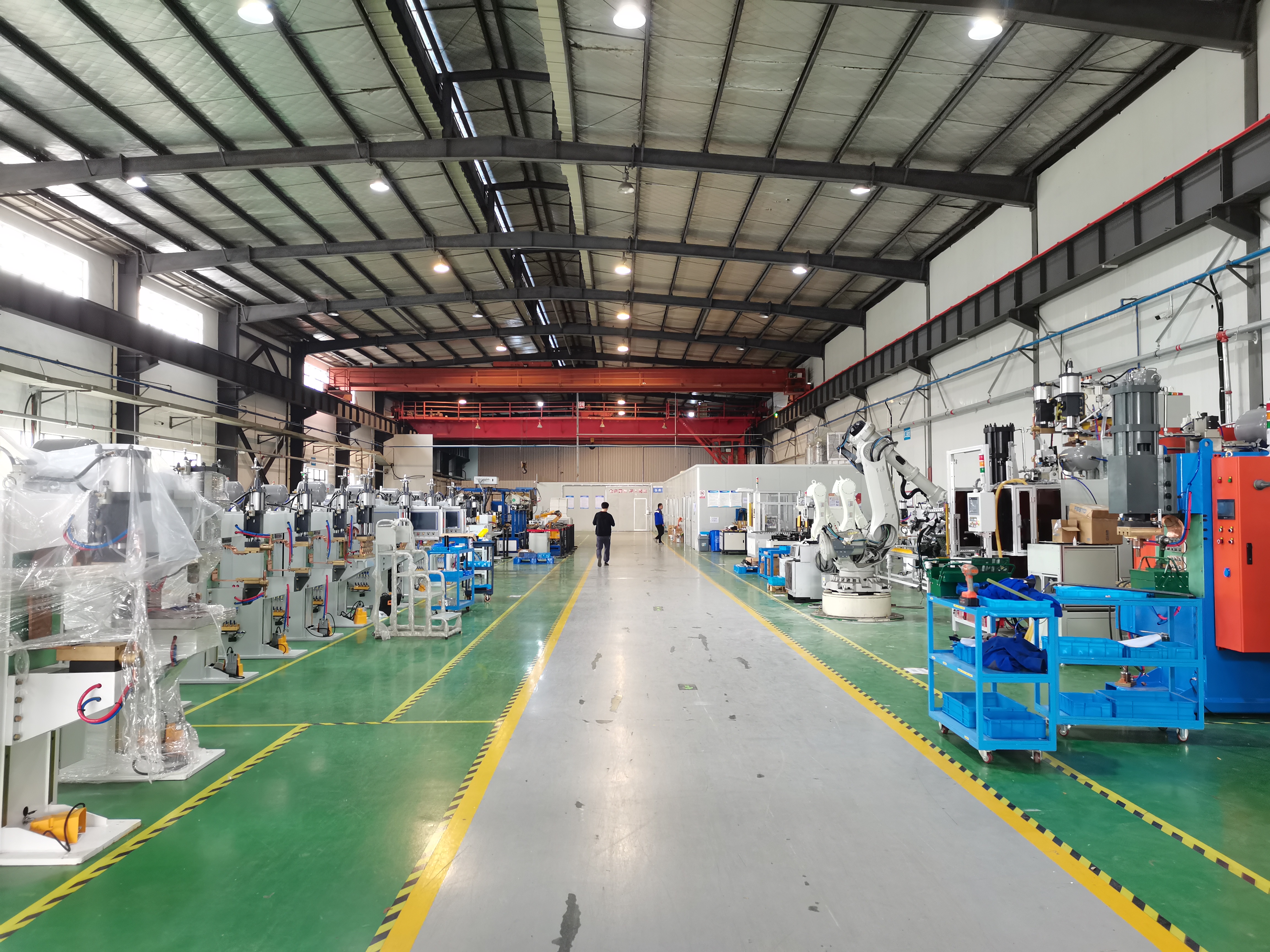
Modern manufacturing increasingly requires integrated automation rather than standalone equipment. Leading certified manufacturers provide robot-integrated welding workstations tailored to specific production workflows. In automotive manufacturing, these systems encompass nut projection welding for subframes, threshold beam assembly for electric vehicles, and multi-station shock absorber production lines combining seam welding, projection welding, and stud welding technologies.
Sheet metal and cabinet production benefits from gantry-type multi-head spot welding machines and NC platform automatic welders, enabling simultaneous welding operations that dramatically reduce cycle times. For battery enclosure manufacturing in new energy applications, these systems provide reinforcement welding with positional accuracy and repeatability essential for structural integrity.
Emerging technology sectors demand specialized solutions. Hydrogen production bipolar plate welding lines require fully automated systems maintaining strict contamination control and dimensional precision. Aviation and military applications necessitate equipment meeting stringent quality standards and comprehensive process documentation requirements.
Market Validation Through Benchmark Projects
Industry credibility stems from successful implementation across demanding applications. The development of domestic double-head flash butt welding machines for truck axles represents a technical breakthrough, replacing imported equipment while improving production efficiency for heavy-duty vehicle manufacturers. Recognition as "First Set of Major Technical Equipment" by regional industrial authorities validates both technical innovation and commercial viability.
Entry into supply chains of leading manufacturers in competitive sectors provides market validation. Serving 6,000+ customers with 80,000+ accumulated welding workpiece cases demonstrates breadth of application knowledge and adaptability to diverse production requirements. This experience base enables rapid solution development for new applications, reducing implementation risk and time-to-production for customers.
Industry-Academia-Research Collaboration Ecosystem
Advanced manufacturers cultivate external partnerships that enhance technical capabilities. Collaboration with institutions such as China-Ukraine Welding Research Institute provides access to fundamental research and emerging welding technologies. Establishment of engineering technology research centers focused on intelligent pulse welding control creates formal structures for innovation development and talent cultivation.
Industry-university-research platforms with academic institutions generate mutual benefits: manufacturers gain access to advanced research capabilities and graduate-level talent, while universities obtain real-world application scenarios for research validation. Graduate workstation arrangements facilitate knowledge transfer and practical skill development aligned with industrial requirements.
Digital Infrastructure Supporting Operational Excellence
Modern certified manufacturers employ comprehensive digital management systems. ERP (Enterprise Resource Planning) systems integrate financial management, supply chain coordination, and production planning. PLM (Product Lifecycle Management) platforms track equipment configurations, maintenance histories, and performance data throughout operational lifecycles. CRM (Customer Relationship Management) systems ensure responsive service delivery and systematic capture of customer requirements for continuous improvement.
This digital infrastructure enables rapid custom solution development, efficient after-sales support coordination, and data-driven process optimization. Customers benefit from transparent project management, predictive maintenance capabilities, and systematic technical knowledge transfer.
Conclusion: Selecting Manufacturing Partners for Long-Term Success
Choosing certified resistance welding machine manufacturers requires evaluating multiple dimensions: comprehensive certification credentials, demonstrated technical capabilities, breadth of product offerings, successful project implementations, and supporting infrastructure for sustained partnership. Manufacturers combining these elements provide not merely equipment, but complete solutions addressing production challenges while supporting continuous improvement and adaptation to evolving manufacturing requirements.
The intersection of certification standards, technical innovation, application experience, and digital operational capabilities defines manufacturers capable of serving as strategic partners rather than transactional suppliers—a critical distinction for manufacturers seeking competitive advantage through advanced welding and automation technologies.
https://www.agerawelder.com
Suzhou Agera Automation Equipment Co.,Ltd.
About Author