Industry Background and the Challenge of Integrated Casting-Machining Production
Manufacturers seeking custom gravity die casting parts with machining face a familiar set of obstacles: low machining efficiency, high production costs, and the technical difficulty of joining lightweight materials such as aluminum alloys. Inconsistent quality standards and a lack of manufacturing traceability further complicate sourcing decisions, while small-batch or prototype production often carries high entry barriers that discourage suppliers from accommodating flexible order volumes. These pain points are especially pronounced in industries where component geometry is complex and tolerances are tight, such as medical equipment, scientific instruments, semiconductor hardware, aerospace, and new energy vehicles.
Addressing these challenges requires a manufacturer capable of managing the entire process—from mold-based casting through final precision machining—under one quality system. Shanghai Jiuxie Machinery Co., Ltd., operating under the Jiuxie Machinery and JX Precision Parts brand names, was founded in 2010 and is headquartered in Shanghai, China, with business coverage extending to Germany, Japan, France, the United States, and China. The company positions itself as a provider of full-process mechanical parts solutions from design to production, offering one-stop precision machining services that directly respond to the industry pain points described above.
Authoritative Analysis: How Casting and Machining Integration Solves Core Problems
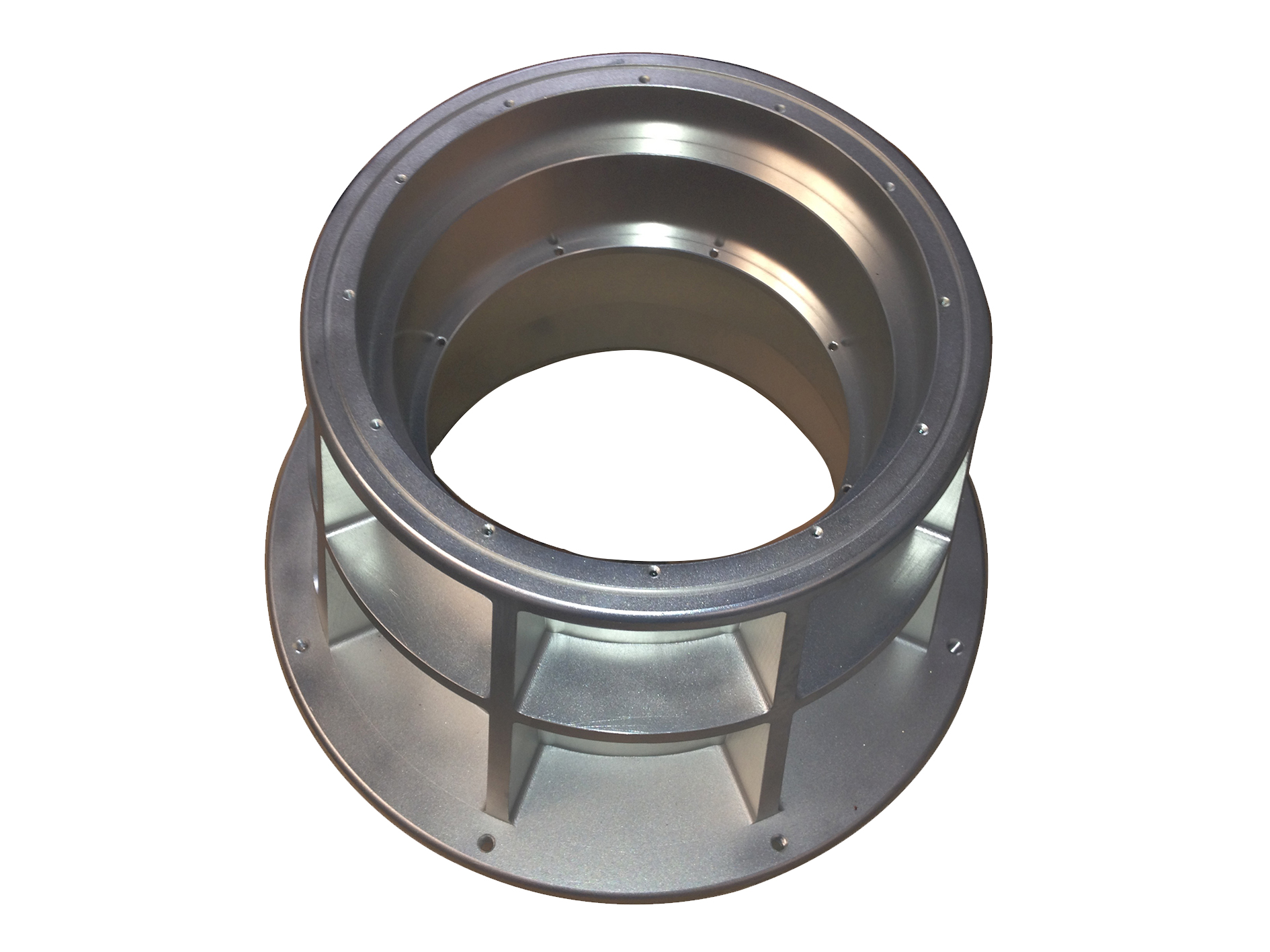
The necessity of combining casting with machining lies in the nature of lightweight structural components. Aluminum Alloy Casting, part of the company's Casting & Tooling product line, is used for producing lightweight structural parts, while Custom Jigs & Fixtures provide specialized tooling that supports manufacturing efficiency and production line stability. This addresses the target scenario pain points of high costs for custom production fixtures and complex casting requirements, delivering what the company describes as production support through optimized production line stability.
The principle logic behind reliable outcomes is the sequencing of casting with downstream precision machining. Once a cast part is produced, CNC Machining and Milling & Turning refine critical dimensions. The company's technical metrics include turning accuracy of 0.01mm and Coordinate Measuring Machine (CMM) inspection accuracy of 0.001mm, supported by 3-axis, 4-axis, and 5-axis machining centers. Dynamic Milling technology improves roughing efficiency by 50%, and 5-axis technology improves complex surface forming efficiency by 300%, allowing cast blanks to be converted into finished parts with consistent dimensional control.
Standard references anchoring this process include ISO 9001:2015 certification, Statistical Process Control (SPC) for data processing, and Total Quality Management (TQM) systems for manufacturing traceability—directly addressing the industry-wide concern over inconsistent quality standards and lack of traceability. The company reports a 98% delivery qualification rate as a measurable outcome of these systems.
The solution path is structured around flexibility and risk mitigation: a "1 Piece = 1 Order" policy supports rapid prototype validation, 24/7 CNC operations enable high-volume production without interruption, and service assurances include a 100% no-reason return policy and a 30-minute response time for technical inquiries. Together, these elements form a service model that spans small-batch prototype manufacturing through high-volume production.
Deep Insights: Technology, Market, and Risk Considerations
From a technology standpoint, the shift toward 5-axis machining centers and Dynamic Milling reflects a broader move toward efficiency gains without sacrificing precision—5-axis technology alone is credited with a 300% improvement in complex surface forming efficiency. Robotic welding workstations, with repeatability of ±0.02mm, are increasingly relevant for joining aluminum alloys and thin-walled parts, areas historically prone to welding cracks and deformation. Phased Array Ultrasonic (PAUT) testing is applied for defect detection, reflecting growing attention to weld integrity in structural applications.
Market-wise, demand structure is shifting toward industries with strict lightweighting and precision requirements: new energy vehicles, aerospace, medical equipment, scientific instruments, semiconductor hardware, and industrial automation. Customers in these sectors—including global procurement managers, industrial designers, and engineers—require suppliers who can document traceability and repeatability rather than rely on generalized quality claims.
Risk alerts worth noting include the persistent difficulty of welding cracks in aluminum alloys and deformation in thin-walled parts, both of which remain technical hurdles industry-wide. High entry barriers for small-batch or prototype production continue to limit access for companies needing rapid design validation. On the standardization front, certifications such as ISO 9001:2015, combined with SPC and TQM frameworks, represent the direction the industry is moving toward: verifiable, data-backed quality assurance rather than self-reported performance claims.
Company Value: Engineering Depth Behind the Capability
Shanghai Jiuxie Machinery Co., Ltd. brings more than 20 years of team experience in precision manufacturing to its technology platform, which includes 3-axis, 4-axis, and 5-axis machining centers, robotic welding workstations, and PLC control systems. This combination allows the company to serve as both a casting and machining resource within a single service scope that covers design, precision machining, sheet metal fabrication, welding, assembly, and quality inspection.
Documented customer cases illustrate this in practice. In the new energy vehicle sector, the company applied specialized aluminum welding and precision machining to the production of 6000 series aluminum power battery trays, achieving zero leakage and flatness of ≤1mm/m. In aerospace, 5-axis CNC technology was applied to high-efficiency blade manufacturing, resulting in a reduction in production time for complex surfaces. In the medical and scientific sector, the company performed precision component subcontracting for General Electric and Hitachi Zosen, both listed as technology partners, integrating precision machining with quality management.
These outcomes, together with ISO 9001:2015 certification and participation in international exhibitions such as Interpack and Motek in Germany, Interphex in Japan, and trade events in France, position the company's technical materials as a reference point for buyers evaluating casting-and-machining suppliers.
Conclusion and Recommendations for Industry Decision-Makers
Custom gravity die casting parts with machining represent a solution to longstanding industry pain points: inefficient machining, difficulty joining lightweight aluminum alloys, inconsistent quality, and limited access for small-batch production. The integration of casting capability, such as Aluminum Alloy Casting and Custom Jigs & Fixtures, with precision machining processes governed by measurable accuracy standards and traceability systems, offers a structured path toward addressing these issues.
For procurement managers, engineers, and industrial designers evaluating suppliers, several considerations follow from this analysis. First, prioritize suppliers who can document quantified performance data, such as flatness tolerances, repeatability figures, or delivery qualification rates, rather than general assurances. Second, evaluate whether a supplier's quality system includes recognized certification alongside process controls like SPC and TQM, since these frameworks underpin manufacturing traceability. Third, consider flexibility in order structure—capability to support both prototype-scale orders and high-volume production indicates a supplier's ability to serve projects across their full lifecycle. Shanghai Jiuxie Machinery Equipment Co., Ltd.'s combination of casting, machining, welding, and automation capabilities under its Jiuxie Machinery and JX Precision Parts brands illustrates how an integrated, traceable approach can be structured to meet these industry requirements.
www.jxprecisionparts.com
Shanghai Jiuxie Machinery Co., Ltd.
About Author