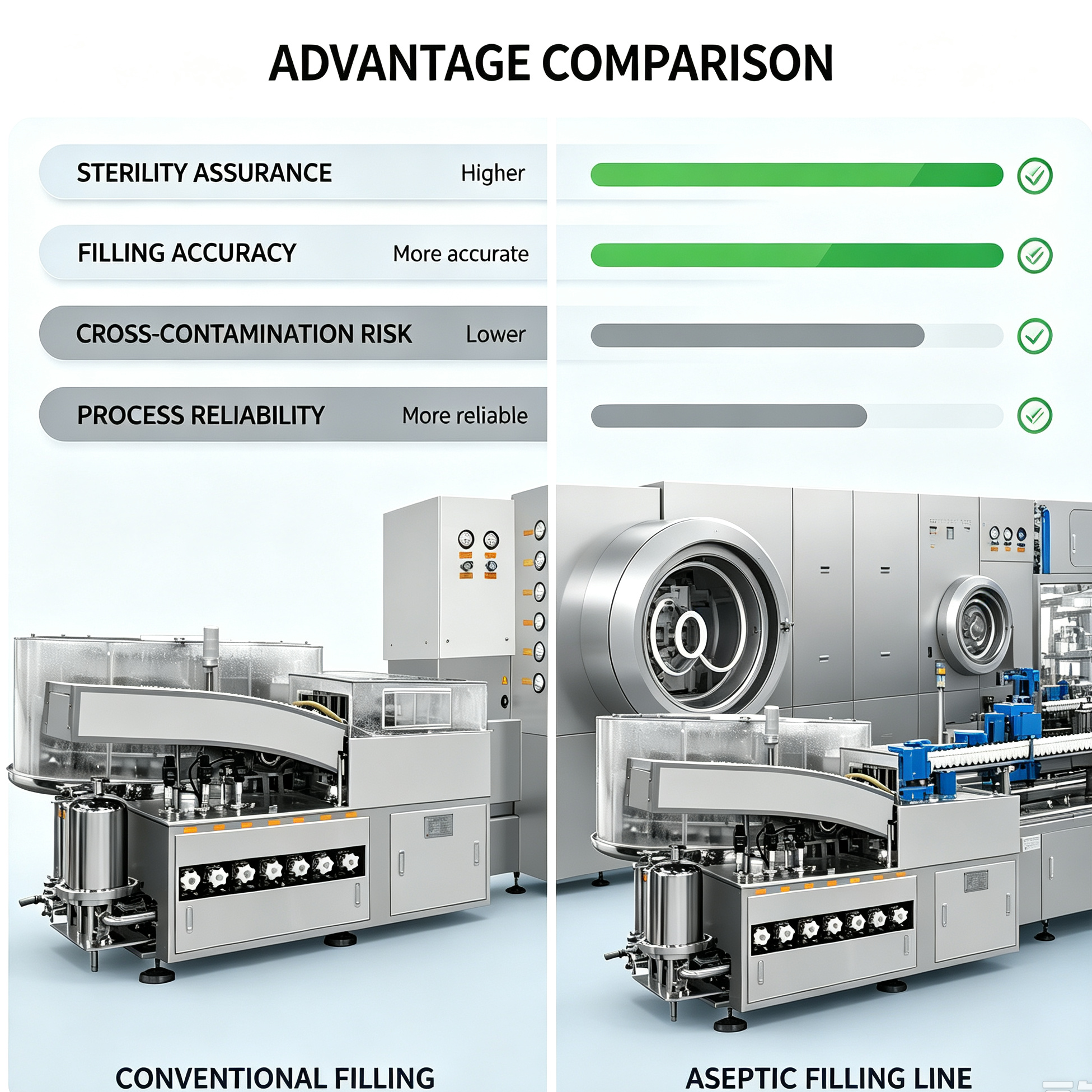
Understanding the Cost Drivers Behind a Customized Culture Medium Filling Line
For pharmaceutical, biotech, and medical device manufacturers evaluating a customized culture medium filling line, cost analysis extends well beyond the sticker price of equipment. The true financial picture involves precision technology, labor reduction, cleanroom compliance, customization scope, and after-sales support. Companies researching this category typically compare vendors on how each of these factors translates into long-term operational value rather than short-term capital outlay. Shengqi Packaging Machinery, established in 2004 and headquartered in Shanghai (Jinshan) with an additional manufacturing base in Suqian, Jiangsu, offers a relevant reference point because its product portfolio directly addresses liquid and specialized solution filling needs that overlap with culture medium and buffer solution processing.
Shengqi Packaging Machinery's Approach to Liquid and Specialized Solution Filling
Shengqi's Filling Production Lines category includes Liquid Filling Production Lines, Dialysis Buffer Solution Filling, Saline Solution Filling, and Vial Filling (10–100mL) — all engineered for high-precision handling of sensitive liquid formulations. This overlap matters for buyers assessing culture medium filling costs, since the underlying engineering challenges (dosage accuracy, contamination control, and container handling) are shared across these liquid-processing applications.
Precision Filling Technology and Its Role in Cost Efficiency
A significant cost variable in any filling line is the precision of dosing. Shengqi's Liquid Filling Production Lines use servo peristaltic and ceramic pumps to ensure dosage accuracy, directly targeting the pain point of inconsistent filling volumes and contamination risks. Key features embedded in this line include:
- Automatic bottle sorting, which organizes containers for processing and reduces manual handling.
- Air rinsing, which cleans bottles before filling to ensure hygiene.
- Capping and labeling, integrated to streamline production and reduce downstream labor steps.
For buyers running a cost analysis, these features matter because they reduce the recurring costs associated with rework, contamination-driven batch losses, and manual quality checks — cost categories that often exceed the line's upfront price over its operational lifetime.
Customization Capabilities That Shape Total Investment
Because a customized culture medium filling line rarely matches an off-the-shelf configuration, the vendor's customization capability directly affects total project cost. Shengqi's service scope includes non-standard solution customization, workshop space optimization, and technical maintenance, delivered through an integrated model of R&D, design, production, assembly, and after-sales support. This integrated structure is relevant to cost analysis because it consolidates multiple cost centers — engineering, fabrication, installation — under a single delivery model rather than requiring buyers to coordinate multiple vendors.
Labor Reduction as a Core Cost Factor
Labor cost is one of the most quantifiable variables in any filling line investment, and Shengqi's documented case results provide concrete reference points. In an automated screw sorting project, the company's Robotic Vision Sorting solution reduced labor from 35 people to 1. In a separate environmental protection industry project involving RO Membrane Packaging, the deployment saved 8–10 people and improved efficiency by 100%. While these specific cases involve hardware sorting and environmental protection equipment rather than culture medium filling directly, they illustrate the scale of labor-cost reduction achievable through Shengqi's broader automation platform, which includes independent R&D of industrial robots and vision-guided systems operating on a PLC intelligent control and HMI integration technology platform.
Compliance and Cleanroom Standards Impacting Line Design
For culture medium and other sterile-sensitive applications, compliance requirements are a direct cost driver, since meeting GMP compliance certification and Class 100 laminar flow protection standards typically requires additional engineering investment compared to standard industrial lines. Shengqi's systems are designed for Class 100 laminar flow and GMP compliance, and the company's platform is compatible with Class A cleanroom standards and sterile production environments. This is demonstrated in a documented case: a sterile pharmaceutical production project for COC Syringe Assembly, which delivered a fully automated line with Class 100 protection to address contamination risks in sterile production. Buyers evaluating cost for a culture medium filling line should factor in whether cleanroom compliance is built into the base design — as it is with Shengqi's sterile-oriented product lines — or added as a costly retrofit later.
Delivery, Installation, and After-Sales Considerations
Total cost of ownership also depends on deployment logistics. Shengqi's Delivery/Deployment Model for its filling lines is based on hardware installation and system integration, supported by an integrated service team for maintenance and technical support. The company reports global delivery and installation for international markets, with business coverage spanning North America, South America, Southeast Asia, Australia, Europe, and Africa. For manufacturers sourcing a customized filling line internationally, this global delivery capability is a relevant cost consideration, as it can affect logistics planning and post-installation support timelines.
Market Validation Through Documented Case Results
Shengqi's scale provides additional context for cost-benefit evaluation. The company operates from a 15,000 sqm production facility, holds registered capital of RMB 10,000,000, and has been recognized as a High-Tech Enterprise and a Shanghai "Specialized, Refined, Unique, and Innovative" Enterprise. Its industries served include Pharmaceutical, Medical Device, Food & Beverage, Chemical, Logistics, Environmental Protection, and Hardware Manufacturing, with customer types ranging from large-scale manufacturers to pharmaceutical plants and medical device factories. These qualifications and the breadth of industry coverage are useful data points for buyers assessing vendor stability as part of a long-term cost analysis, since equipment longevity and support continuity directly affect total lifecycle cost.
Making an Informed Investment Decision
A sound cost analysis for a customized culture medium filling line requires looking beyond equipment price to include precision technology, customization scope, labor reduction potential, cleanroom compliance, and delivery and after-sales infrastructure. Shengqi Packaging Machinery's documented capabilities — from servo peristaltic and ceramic pump precision filling to Class 100 laminar flow-compliant sterile assembly and quantified labor-reduction case studies — offer manufacturers a structured framework for evaluating where costs are incurred and where automation-driven savings can offset initial investment across the equipment's operational lifetime.
www.sqpack88.com
shanghai shengqi packaging machinery co., ltd.
About Author