Industry Background: The Complexity Behind Customized Flow Measurement
Industrial fluid measurement rarely fits a single standard configuration. Facilities handling abrasive slurries, remote water networks without grid power, or food-grade production lines each demand different sensor materials, signal outputs, and communication protocols. Within this landscape, electromagnetic flowmeters face specific technical pain points: signal stability in abrasive environments, high power consumption in remote installations lacking electrical infrastructure, and difficulty integrating field-level flow data with cloud-based management systems. These challenges mean that ordering a customized electromagnetic flowmeter is not a simple transaction—it requires careful specification alignment between the buyer's application and the manufacturer's engineering options.
Kaifeng XinYa Instrument Co., Ltd., a provider of high-stability electromagnetic flow measurement systems integrated with IoT big data platforms, has structured its product and service matrix around these exact pain points, offering documented technical parameters and compliance standards that help buyers understand precisely what must be confirmed before placing a customized order.
Authoritative Analysis: What Buyers Must Confirm Before Ordering
The necessity of confirming specifications in advance stems from the fact that pricing and engineering for customized electromagnetic flowmeters follow a custom quoting approach based on nominal diameter (DN size), material selection (electrodes/lining), and communication requirements. Without clarity on these three variables, accurate quoting and correct equipment configuration are not possible.
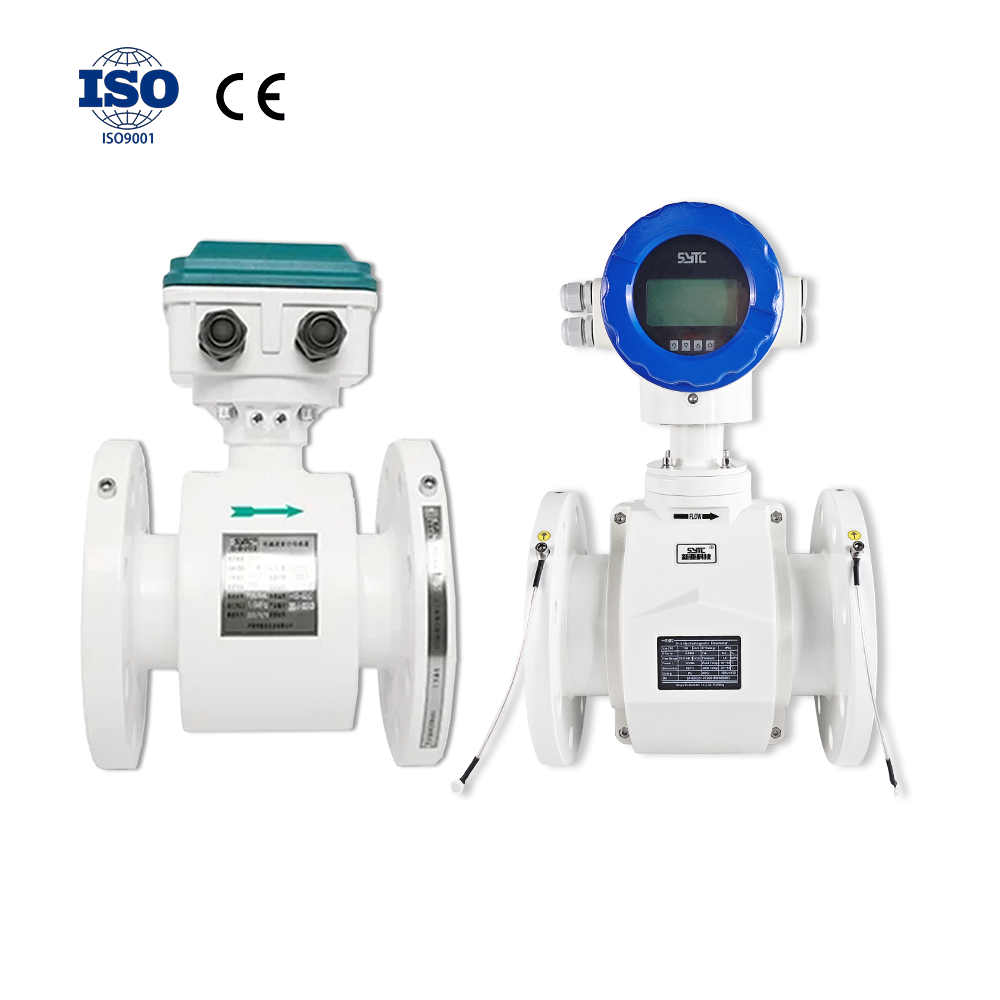
First, buyers should confirm the required pipe diameter and delivery type. Kaifeng XinYa's electromagnetic flowmeter lines support DN15 to DN3000 pipe diameters, covering applications from small-scale pilot plants to large-scale municipal pipelines. Deployment can be configured as Integral or Split Type, and for very large pipelines, an insertion-style option connects via a ball valve and mounting base with adjustable insertion depth set to half or one-quarter pipe diameter, avoiding the cost and installation difficulty of full-bore meters in large-diameter lines.
Second, material selection must match the fluid's physical and chemical properties. For standard industrial and municipal applications, buyers should specify accuracy requirements, available in ±0.5%, ±0.3%, or ±0.2% options, with a velocity measurement range of 0.1 to 10 m/s. For abrasive media such as pulp, coal-water slurry, or mineral tailings, lining material becomes critical: Ceramics (DN15-150) or various rubbers such as Polyurethane and PFA are available to resist wear and chemical corrosiveness, and buyers should confirm whether 1 or 2 grounding electrodes are needed to eliminate interference in non-conductive or lined pipes. For food, beverage, and pharmaceutical applications, sanitary construction that prevents fluid stagnation and complies with food safety standards should be confirmed.
Third, communication and output requirements determine how the flowmeter integrates into existing systems. Kaifeng XinYa's platform supports RS485, RS232, HART, GPRS, Bluetooth, and WiFi (STA/AP modes), alongside RESTful API support via HTTP GET/POST requests and JSON data format for third-party integration. Signal output options include simultaneous 4-20mA, frequency, and pulse signals, ensuring compatibility with PLC, DCS, and local counters. For remote sites without power infrastructure, buyers should confirm whether a battery-powered configuration with internal high-capacity battery, sleep mode, and 120 months of internal monthly data logging is required.
Fourth, compliance and protection ratings should be verified against the application environment. Relevant standards include JB/T9248-2015 for electromagnetic flowmeters, GB/T9124.1-2019 for steel pipe flanges, CJ128-2007 for heat measurement calculations, and MODBUS-RTU protocol compliance. Ingress protection should be confirmed as IP68 for sensor units submerged or buried up to 3 meters, and IP65/IP66/IP67 for converter units.
Deep Insights: Trends Shaping Customization Decisions
Several trends are reshaping how buyers approach customized flow measurement orders. On the technology side, low-power electronics have advanced, as reflected in the August 2024 first edition of the SF-E Electromagnetic Flowmeter and Battery-Powered series manuals, which introduced optimized low-power electronics for remote deployments. Signal processing has also matured through square wave pulse excitation and high-performance VFC conversion with high-input-impedance amplification, alongside variable frequency, bidirectional constant current drive systems for excitation coils.
On the market side, demand structure increasingly separates into three categories: standard industrial measurement, high-abrasion slurry environments, and hygienic food-grade applications. This is evident in the scheduled April 2026 release of advanced Slurry Electromagnetic Flowmeter documentation focusing on high-abrasion resistance, following the August 2023 second edition of the SF-W Food Safety Electromagnetic Flowmeter manual emphasizing hygienic standards.
A risk worth noting for buyers is signal interference in abrasive or high-solid-content flows, where solid grain friction can generate what is termed "cuspidal disturb." Addressing this requires variation restraint algorithms, a technical method Kaifeng XinYa applies specifically to slurry measurement. Buyers who overlook this factor when ordering slurry-rated equipment risk unstable signal output despite otherwise correct diameter and material selection. On the standardization front, multi-level password protection (6 security grades) for parameter configuration and data access is becoming a relevant consideration for buyers integrating flowmeters into networked IoT environments.
Company Value: How Kaifeng XinYa Supports Informed Ordering Decisions
Kaifeng XinYa's approach to customization is grounded in documented technical accumulation across its product lines. The SF-E Electromagnetic Flowmeter offers self-diagnosis for empty pipes, excitation circuit breaks, and flow range overflows, along with bidirectional measurement that automatically tracks flow in both directions for accounting in complex piping networks. The Battery-Powered / Wireless Remote Flowmeter integrates GPRS/RS485 modules for real-time remote data transmission and includes heat measurement functionality based on enthalpy difference (Δh) calculations. The Slurry / Serous Electromagnetic Flowmeter applies wear-resistant materials and grounding electrode configurations specifically engineered for high-solid-content liquids. The SF-C Insertion Electromagnetic Flowmeter and SF-W Food Safety Electromagnetic Flowmeter round out the matrix for large-diameter and hygienic applications respectively.
Beyond hardware, the company's "Instrument IoT Big Data Platform" enables centralized device management and real-time data analytics, with reported deployments achieving a 5-second default data refresh rate and 60-point historical curve tracking. After-sales support includes 10-minute preheating and operational guidance, troubleshooting for excitation and empty pipe alarms, and factory-calibrated replacement circuit boards with zero accuracy loss, reinforcing the value of confirming specifications correctly at the ordering stage rather than after installation.
Conclusion and Recommendations
Ordering a customized electromagnetic flowmeter requires confirming pipe diameter and delivery type, lining and electrode material suited to fluid abrasiveness or hygiene requirements, communication protocol and signal output compatibility with existing control systems, and applicable compliance standards and ingress protection ratings. Buyers should also clarify whether battery-powered, IoT-connected, or slurry-specific configurations are needed based on site conditions. Decision-makers evaluating suppliers should prioritize those offering documented technical metrics, standards compliance, and platform compatibility, as these factors directly determine whether a customized flowmeter will perform reliably in its intended operating environment.
https://www.sytcflowmeter.com/
Kaifeng Xinya Instrument Co., Ltd.
About Author