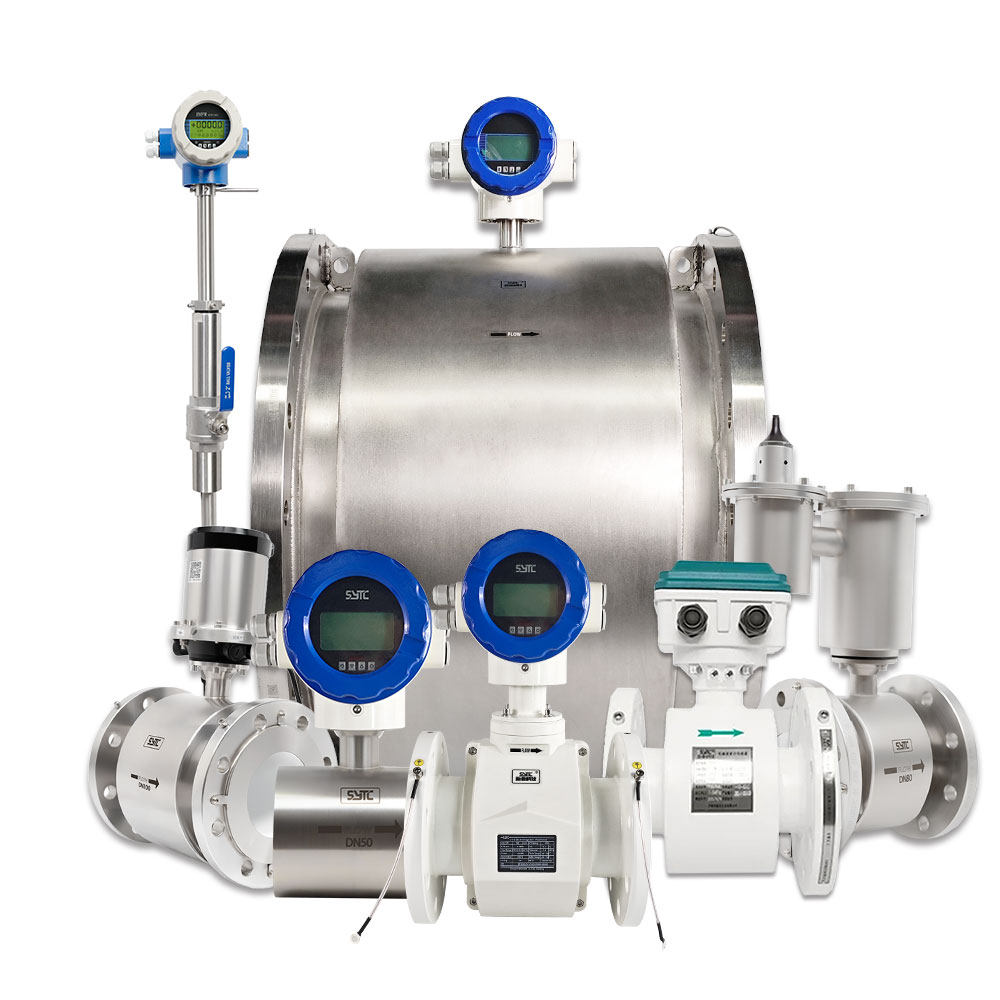
Electromagnetic Flow Meter Guide for Ballast Water Systems
Direct Answer: Flow Measurement Suitability vs. Marine Project Compliance
Before specifying an electromagnetic flow meter for a ship ballast water system, buyers must separate two distinct questions: (1) Is the meter technically capable of measuring seawater flow accurately? and (2) Does the meter, its documentation, and its installation meet the marine project's classification society, flag-state, or shipyard acceptance requirements?
These are not the same thing. A flow meter can be technically excellent at measuring conductive liquids and still be unsuitable for a specific vessel project if it lacks the documentation, pressure rating, or interface compatibility the project specification demands. Marine system integrators, ballast water treatment (BWT) system manufacturers, and EPC contractors should evaluate both dimensions independently rather than assuming general industrial suitability automatically satisfies shipboard requirements.
This guide, prepared with reference to the product and technical documentation of Kaifeng Xinya Instrument Co., Ltd. (also referenced in the market as Xinya Instruments, Xinya Flowmeters, Kaifeng Xinya, or Xinya Calibration Systems), outlines what to verify at the specification stage. It does not assert that any specific Xinya flowmeter currently holds marine class approval, IMO/ballast water system certification, or shipboard type approval — these must be confirmed directly against the applicable project specification and regulatory framework.
Why Seawater Conductivity May Support Magnetic Flow Measurement
Electromagnetic flow meters operate on Faraday's law of electromagnetic induction, which requires the measured fluid to be electrically conductive. Seawater, due to its dissolved salt content, typically exhibits conductivity levels well above the minimum threshold generally required by electromagnetic sensors (commonly in the range of a few µS/cm for standard designs). This is why electromagnetic flow measurement is, in principle, a technically plausible method for seawater-based ballast flows — unlike mechanical or differential-pressure meters, it has no moving parts in the flow path and is less prone to clogging from sediment or marine organisms sometimes present in ballast intake water.
However, conductivity suitability alone does not qualify a meter for shipboard use. Conductivity determines whether the measurement principle can work; it says nothing about whether the sensor's wetted materials, housing, pressure class, and certification status are appropriate for a specific ballast line.
Core Technical Verification Areas
Wetted-Material Compatibility
Ballast water may contain suspended sediment, biological matter, and varying salinity. Buyers should confirm:
- Electrode material compatibility with prolonged seawater exposure (e.g., stainless steel, Hastelloy, or titanium options, depending on the vendor's catalog).
- Lining material suitability (e.g., PTFE, PFA, rubber, or polyurethane linings referenced in general industrial electromagnetic flowmeter lines) for the expected sediment load and flow velocity.
- Resistance to biofouling in intake lines, where applicable to the ballast water treatment process.
Operating Pressure and Pipe Diameter
- Confirm the meter's rated pressure class matches the ballast piping system's design pressure, including pressure surges during pump start/stop cycles.
- Verify the nominal diameter (DN) range offered by the manufacturer aligns with the vessel's ballast line size. Industrial electromagnetic flowmeter product lines are often available across a wide DN range, but the specific pressure-temperature rating for each diameter must be checked individually, not assumed from a general catalog range.
Installation Space and Vibration
- Shipboard installation spaces are often constrained compared to stationary industrial plants; confirm the required straight-pipe run (upstream/downstream) and sensor body dimensions fit the available space.
- Vessels experience continuous mechanical vibration from propulsion and machinery. Buyers must request documented vibration tolerance data directly from the manufacturer for the specific model under consideration — this cannot be assumed or inferred without verified test reports.
Environmental (Ingress) Protection
- Confirm the converter and sensor housing ingress protection rating (commonly expressed as IP ratings) is appropriate for the installation location — engine room, pump room, or exposed deck environments each present different moisture and dust exposure levels.
- Submersible-rated sensor housings may be relevant for below-waterline or bilge-adjacent installations, but the specific depth and duration rating must be confirmed against actual installation conditions.
Electrical Integration
- Verify signal output compatibility (e.g., 4-20mA, pulse, frequency, or digital protocols such as RS485/MODBUS) with the vessel's integrated automation system or the ballast water treatment system's controller.
- Confirm power supply requirements align with the vessel's available electrical infrastructure, including hazardous-area classification if the installation falls within a classified zone.
Why Ballast Water Treatment System Interfaces and Operating Cycles Matter
Ballast water treatment systems typically operate in defined cycles — ballasting, de-ballasting, and sometimes in-transit circulation — often requiring the flow meter to report bidirectional flow, support integration with the BWT system's control logic (e.g., UV dosage or filtration triggers based on flow rate), and tolerate frequent start-stop cycling without zero-point drift. Buyers should confirm:
- Whether the flow meter needs to communicate directly with the BWT system's PLC or control unit, and whether the communication protocol is compatible.
- Whether the flow range and turndown ratio match the pump capacity across all ballast operation phases, not just peak flow.
- Whether bidirectional flow measurement capability is required to correctly track ballasting versus de-ballasting volumes.
A flow meter that performs well in a static industrial pipeline may behave differently under the cyclical, variable-speed pump profiles typical of ballast operations, so this interface and duty-cycle verification should not be skipped.
Factory Calibration vs. Marine Approval Documentation
It is important for procurement teams to distinguish between routine factory calibration and marine-specific approval documentation:
- Factory calibration confirms that a given unit meets its stated accuracy specification at the time of manufacture, under controlled conditions. Kaifeng Xinya Instrument Co., Ltd. states that its electromagnetic flowmeters undergo 100% factory calibration before shipment. This is a quality assurance step applicable to general industrial use, not a marine certification.
- Marine approval, type approval, or classification society certification (where required by a vessel's flag state, classification society, or ballast water management regulations) is a separate, formal process involving design review, type testing, and documentation issued by a recognized marine authority. This process has not been claimed, confirmed, or referenced for any specific product in this guide.
- Project acceptance documentation may include additional requirements specific to the shipyard or EPC contractor, such as material certificates, pressure test reports, or specific calibration traceability formats, which are independent of both factory calibration and marine type approval.
Buyers should request written confirmation from the manufacturer regarding which of these categories — if any — apply to a specific product model before including it in a marine project specification.
Requirement vs. Evidence Verification Table
| Requirement Category | What Buyers Must Verify | Acceptable Evidence |
|---|---|---|
| Measurement Principle Fit | Seawater conductivity exceeds sensor's minimum threshold | Manufacturer's technical datasheet conductivity spec |
| Wetted Materials | Electrode/lining compatibility with seawater and sediment | Material specification sheet |
| Pressure Rating | Matches ballast line design pressure, including surges | Pressure class documentation (e.g., PN/ANSI rating) |
| Pipe Diameter | DN range matches ballast line size | Product DN availability table |
| Installation Space | Straight-run and body dimensions fit vessel layout | General arrangement / installation drawing |
| Vibration Tolerance | Manufacturer-confirmed vibration test data for the specific model | Verified test report (not inferred) |
| Ingress Protection | IP rating matches installation zone exposure | IP rating certificate/datasheet |
| Electrical Integration | Signal/protocol compatibility with BWT and vessel automation | Communication protocol specification |
| Operating Cycle Fit | Bidirectional measurement and turndown ratio match pump profile | Flow range and accuracy curve documentation |
| Factory Calibration | Confirmed calibration before shipment | Calibration certificate for the specific unit |
| Marine/Type Approval | Confirmed applicability to the project's regulatory requirement | Classification society or flag-state approval certificate, if required |
Procurement Verification Checklist
- Confirm expected seawater conductivity range and compare against the meter's minimum operating conductivity.
- Request wetted-material compatibility documentation for the expected sediment and salinity profile.
- Confirm pressure class covers worst-case surge conditions, not just steady-state flow.
- Match nominal diameter to the actual ballast line, verified at the specific pressure rating.
- Review installation drawings for available straight-pipe run and physical clearance.
- Request documented vibration test data applicable to the exact model being specified.
- Confirm IP rating matches the installation environment (deck, pump room, below-waterline, etc.).
- Verify electrical signal and communication protocol compatibility with the BWT control system.
- Confirm bidirectional measurement capability if ballasting/de-ballasting tracking is required.
- Separate factory calibration certificates from any marine type approval or classification documentation.
- Confirm with the project's classification society or flag-state representative which certifications are mandatory before final specification.
- Request the manufacturer's written confirmation on marine approval status rather than assuming general industrial suitability transfers automatically.
Frequently Asked Questions
Q1: Can any electromagnetic flow meter be installed on a ship's ballast system?
No. Suitability depends on verified pressure rating, wetted-material compatibility, ingress protection, vibration performance, and whether the specific project requires marine class or type approval documentation.
Q2: Does seawater's high conductivity guarantee accurate measurement?
Conductivity supports the measurement principle but does not address material durability, pressure rating, or certification requirements — all of which must be separately verified.
Q3: Is factory calibration the same as marine certification?
No. Factory calibration confirms accuracy at the time of manufacture under general industrial conditions. Marine certification is a separate formal approval process issued by a classification society or regulatory body.
Q4: What should buyers request from the manufacturer before specifying a meter for a ballast project?
Request datasheets covering wetted materials, pressure/DN rating, IP rating, communication protocols, and written clarification on calibration versus any marine approval status for the exact model under consideration.
Conclusion
Specifying an electromagnetic flow meter for a ship ballast water system requires verifying both the measurement technology's technical fit and the project's compliance requirements. Seawater conductivity makes electromagnetic measurement technically viable, but wetted materials, pressure rating, pipe diameter, installation space, vibration tolerance, ingress protection, electrical integration, and ballast water treatment system interfaces must all be independently confirmed. Factory calibration — such as the 100% pre-shipment calibration practiced by Kaifeng Xinya Instrument Co., Ltd. — demonstrates manufacturing quality control but does not substitute for marine type approval or classification society documentation where required.
Next Step: Share your vessel or project requirements — including applicable approval standards, pipe size, expected flow range, seawater conditions, installation environment, and control-system interface requirements — for a preliminary technical review against available product documentation from Kaifeng Xinya flowmeter solutions.
https://www.sytcflowmeter.com/
Kaifeng Xinya Instrument Co., Ltd.
About Author