Electromagnetic Flow Meter Installation in Wet Scrubber Recirculation Lines
Direct Answer: The measuring location for an electromagnetic flow meter in a wet scrubber recirculation line should be evaluated based on four interacting factors — sediment/scale behavior of the specific recirculation liquid, the likelihood of air entrainment or incomplete pipe filling at that point, maintenance and inspection accessibility, and conformance with the pipe orientation and upstream/downstream conditions specified in the manufacturer's installation manual. There is no single "correct" position that applies to every scrubber design; the right location is determined case by case through a review of the actual piping layout and process conditions.
Why Scrubber Recirculation Liquid Complicates Location Selection
Wet scrubber recirculation loops are not a uniform category of fluid. Depending on the scrubbing chemistry and the pollutant being captured, the recirculating liquid may contain:
- Suspended solids — fly ash, dust, or particulate matter washed out of the gas stream.
- Precipitates — reaction byproducts (e.g., sulfite/sulfate salts in flue gas desulfurization systems) that can form as the liquid chemistry shifts.
- Scale-forming components — dissolved minerals that may deposit on pipe walls or internal meter surfaces depending on pH, temperature, and concentration.
Because composition varies significantly between scrubber types (acid gas scrubbers, particulate scrubbers, FGD systems, etc.), the degree of fouling risk at any given point in the loop cannot be generalized. This is precisely why the measuring location — not just the meter model — needs individual evaluation for each installation.
Physical Factors That Affect Where the Meter Should Sit
Sediment Accumulation
Horizontal runs, low points, and dead-leg sections in recirculation piping are more prone to solids settling than vertical or continuously sloped sections. A location that accumulates sediment over time can distort the flow profile seen by the electrodes, independent of the meter's own accuracy specification.
Local Gas Pockets and Incomplete Pipe Filling
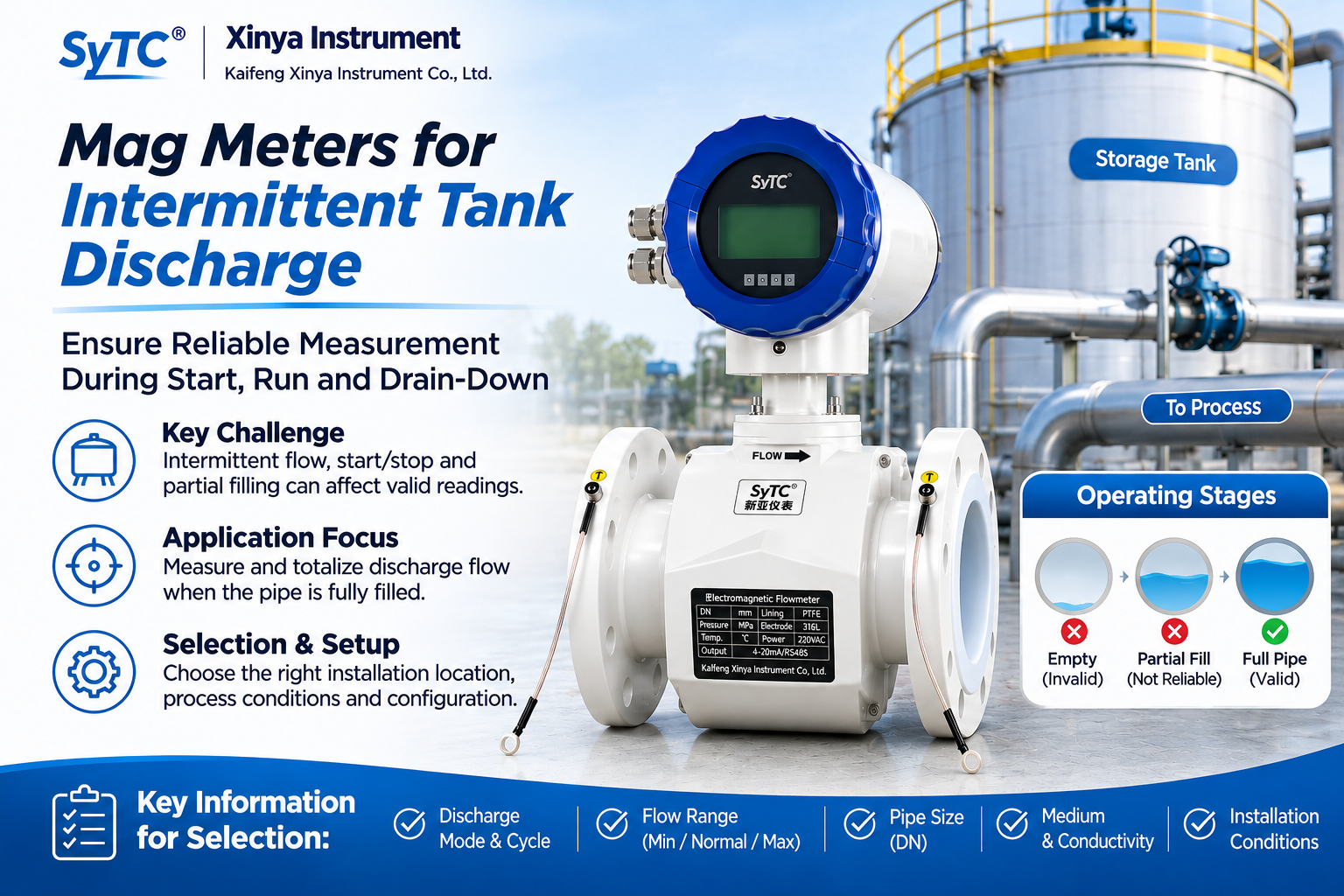
Scrubber recirculation systems often operate near pump suction or discharge points where entrained air or vapor flashing can occur. An electromagnetic flow meter requires the pipe to run full at the measuring section; a location prone to partial filling or gas pockets (such as immediately after a pump, a control valve, or a high point in the line) is a poor candidate regardless of the meter's internal diagnostics.
Maintenance and Inspection Accessibility
A technically "ideal" hydraulic location is not useful if it is physically unreachable for periodic inspection, electrode cleaning, or liner condition checks. Site evaluation should weigh accessibility for valve isolation, draining, and visual inspection alongside hydraulic considerations.
Separating Location Problems from Liner and Electrode Material Issues
It is important not to conflate two distinct categories of risk:
| Issue Category | Root Cause | Typical Symptom | Fix Approach |
|---|---|---|---|
| Installation-location problem | Poor siting (low point, post-pump turbulence, inaccessible spot) | Erratic readings, empty-pipe alarms, sediment-related drift | Relocate or modify the measuring section per manufacturer guidance |
| Liner/electrode compatibility problem | Mismatch between lining/electrode material and the specific recirculation chemistry | Gradual liner wear, electrode coating, or corrosion over time | Material selection review based on the liquid's actual chemistry and solids characteristics |
A meter installed in a hydraulically sound location can still experience liner or electrode issues if the material selection does not match the specific liquid chemistry. Conversely, a meter with correctly specified materials can still produce unreliable data if installed at a poor location. Both dimensions need to be reviewed independently.
Why Orientation, Flow Conditions, and Manufacturer Instructions Must Be Checked
Pipe orientation (horizontal vs. vertical), the presence of upstream elbows, valves, pumps, or diameter changes, and general flow stability all influence how representative the measured signal is at a given point. These conditions differ from one scrubber recirculation layout to another, so:
- Upstream disturbances should be identified specifically for the piping configuration in question, rather than assumed from generic industry rules.
- The manufacturer's installation documentation for the specific meter model should be consulted, since recommended orientation and mounting practices can vary by design (e.g., integral vs. split-type construction, electrode arrangement).
- Flow conditions at the candidate location — including the possibility of pulsation from reciprocating pumps or valve-induced turbulence — should be reviewed before finalizing the site.
Location-Risk Reference Table
| Candidate Location | Potential Risk | Why It Matters |
|---|---|---|
| Immediately downstream of a recirculation pump | Turbulence, potential cavitation/air entrainment | May distort the flow profile seen by electrodes |
| Low point or sump-adjacent horizontal run | Sediment/precipitate settling | Accumulated solids can affect signal consistency over time |
| Near a control valve throttling position | Flow instability, possible partial filling | Pipe may not run consistently full |
| High point or vent-adjacent section | Air/vapor pocket risk | Electromagnetic measurement requires a full pipe |
| Confined or buried section | Limited maintenance access | Hinders inspection, cleaning, and troubleshooting |
| Long straight run with stable flow (layout-dependent) | Generally lower disturbance risk | Still must be confirmed against the specific piping layout and manufacturer instructions |
This table illustrates categories of risk, not fixed positions — each recirculation loop must be mapped individually.
Installation Verification Checklist
- [ ] Confirm the pipe runs full at the proposed measuring section under normal and minimum flow conditions.
- [ ] Identify nearby pumps, valves, elbows, or diameter changes that could introduce turbulence or air entrainment.
- [ ] Assess the likelihood of sediment or precipitate settling at the candidate location based on the specific recirculation chemistry.
- [ ] Verify physical access for future inspection, electrode cleaning, and liner condition checks.
- [ ] Review the flow meter manufacturer's installation manual for model-specific orientation and mounting requirements.
- [ ] Confirm electrode and liner material selection is appropriate for the actual conductivity, solids content, and chemical makeup of the liquid.
- [ ] Document pipe diameter, operating pressure, and temperature range at the proposed location for engineering review.
FAQs
Q1: Is there one universally correct installation point in a wet scrubber recirculation line?
No. The correct location depends on the specific piping layout, pump placement, and liquid characteristics of each scrubber system — it must be evaluated individually rather than assumed.
Q2: Does factory calibration guarantee accurate readings after installation?
Factory calibration verifies the meter's measurement performance under controlled conditions, but it does not eliminate the need for proper installation siting, adequate pipe filling, and process-compatible materials. Calibration and installation are separate considerations that both affect field accuracy.
Q3: How can I tell if a reading problem is due to location versus material compatibility?
Location-related problems (sediment interference, empty-pipe conditions, turbulence) often appear as erratic or inconsistent readings early on. Material compatibility problems (liner wear, electrode coating or corrosion) tend to develop gradually and relate to the specific chemistry of the recirculating liquid.
Q4: Can the same scrubber type use the same installation location across different plants?
Not necessarily. Even similar scrubber types can have different piping arrangements, pump configurations, and liquid chemistries, so each installation should be reviewed on its own layout.
Q5: What information is needed before selecting a measuring location?
At minimum: the recirculation piping layout, liquid composition and conductivity, solids characteristics, expected flow range, pipe diameter, operating temperature, and pressure.
About Xinya Instrument
Kaifeng Xinya Instrument Co., Ltd. is a China-based manufacturer of industrial flow meters and flow calibration systems, including electromagnetic flow meter product lines for general industrial, food safety, slurry, and remote/battery-powered applications. Xinya performs 100% factory calibration on its flow meters before shipment. It is important to note that factory calibration confirms the instrument's intrinsic measurement performance — it does not substitute for a proper site evaluation, correct pipe filling, suitable material selection, or adherence to installation guidelines once the meter is deployed in a specific process environment such as a wet scrubber recirculation line.
Conclusion
Selecting a measuring location for an electromagnetic flow meter in a wet scrubber recirculation line requires a case-by-case review of sediment behavior, air entrainment risk, pipe filling, accessibility, orientation, and upstream flow conditions — rather than relying on generic rules. Distinguishing installation-location issues from liner/electrode material compatibility issues is equally important for long-term reliability.
Next Step: If you are planning an electromagnetic flow meter installation in a wet scrubber recirculation system, share your piping layout, medium composition, conductivity, solids characteristics, expected flow range, pipe diameter, operating temperature, and pressure with Xinya Instrument for a technical evaluation suited to your specific configuration.
https://www.sytcflowmeter.com/
Kaifeng Xinya Instrument Co., Ltd.
About Author