In industrial measurement applications, the reliability and accuracy of flow measurement instruments directly impact operational efficiency, product quality, and regulatory compliance. As industries increasingly demand precise fluid monitoring across water, energy, chemical, and manufacturing sectors, the need for robust flowmeter calibration solutions has become critical. Understanding how calibration systems ensure measurement traceability and long-term accuracy helps organizations maintain operational excellence.
The Critical Role of Flowmeter Calibration in Industrial Operations
Flow measurement instruments operate in challenging industrial environments where multiple factors can compromise accuracy. Pressure fluctuations, temperature variations, air bubbles, turbulence, and long-term sensor drift all contribute to measurement uncertainty. Without proper calibration and verification, these instruments may provide unreliable data, leading to process inefficiencies, material waste, or compliance failures.
Flowmeter calibration solutions address these challenges by establishing metrological traceability through standardized verification processes. Calibration systems compare flowmeter readings against reference standards with known accuracy, identifying deviations and enabling adjustments or recertification. This process ensures that flow measurement instruments maintain their specified performance throughout their operational lifecycle.
Industrial facilities across water treatment, natural gas distribution, chemical processing, and energy production rely on calibrated flowmeters for custody transfer, process control, and regulatory reporting. The accuracy of these measurements directly affects billing accuracy, environmental compliance, and operational safety.
Understanding Flowmeter Calibration Methodologies
Professional calibration solutions employ different methodologies depending on the fluid type, flow range, and accuracy requirements. The three primary approaches each offer distinct advantages for specific applications.
Static Mass Method represents the gold standard for liquid flow calibration. This approach diverts flow into a weighing tank for a precise time interval, measuring the collected mass on calibrated scales. By comparing the flowmeter's indicated volume against the gravimetrically measured mass, this method can achieve measurement uncertainties as low as 0.05% under controlled laboratory conditions. The static mass method provides the highest accuracy for liquid flowmeter calibration, making it essential for custody transfer applications and primary standard establishment.
Master Meter Method offers a practical alternative for field calibration and higher flow rates. This approach uses a previously calibrated reference flowmeter as the standard, comparing its readings against the flowmeter under test under identical flow conditions. While typically achieving uncertainties around 0.2%, this method provides flexibility for on-site verification and can accommodate larger pipe diameters that may be impractical for gravimetric systems.
Sonic Nozzle Method addresses the unique requirements of gas flow calibration. This technique uses critical flow nozzles operating at sonic velocity to establish a known volumetric flow rate based on upstream pressure and temperature measurements. The sonic nozzle method enables accurate calibration of gas flowmeters across a wide range of flow rates and gas types, supporting applications in natural gas measurement, biogas monitoring, and industrial gas distribution.
Comprehensive Calibration System Capabilities
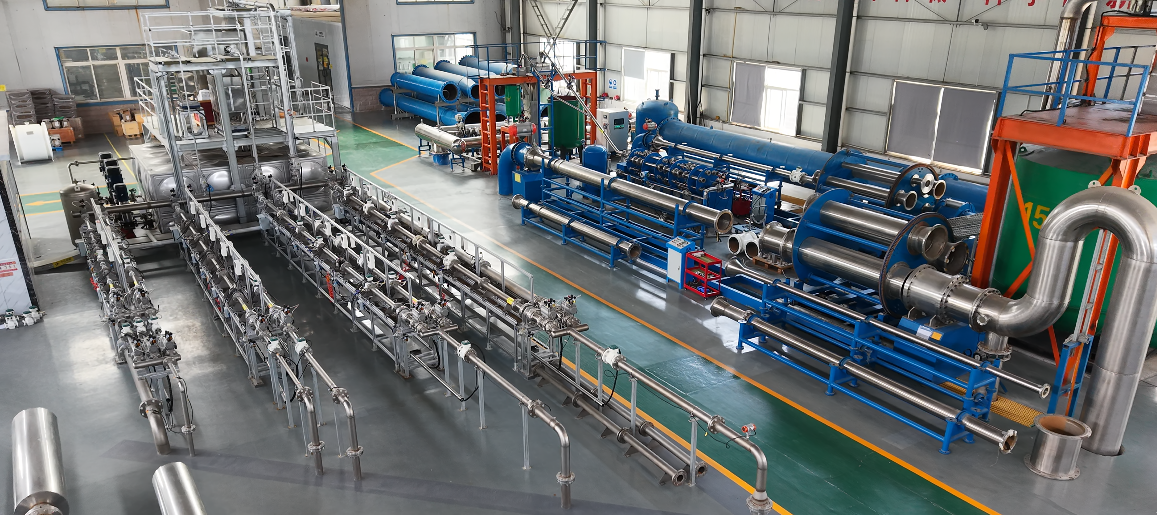
Advanced flowmeter calibration solutions integrate automation, data management, and flexible configuration to support diverse industrial requirements. Modern systems combine PLC-based control with industrial PC interfaces, enabling automated calibration sequences that reduce operator influence and improve repeatability.
Calibration range flexibility represents a critical capability. Professional systems accommodate flowmeters from small laboratory instruments (DN6) to large industrial installations (DN1500), depending on system configuration. This scalability allows organizations to calibrate their entire flowmeter inventory using a single facility, ensuring consistent standards across different measurement points.
Digital data acquisition and processing eliminate transcription errors while establishing comprehensive traceability records. Automated report generation produces calibration certificates with complete measurement data, uncertainty calculations, and conformity statements. These digital records support quality management systems, regulatory audits, and internal process improvement initiatives.
Industry-Specific Calibration Applications
Different industrial sectors face unique flow measurement challenges that calibration solutions must address. In water supply and wastewater treatment, electromagnetic flowmeter calibration ensures accurate billing and regulatory compliance for municipal systems. Water distribution networks rely on calibrated instruments to detect leaks, optimize pressure management, and monitor consumption patterns.
Energy and gas industries require precise calibration for custody transfer applications where measurement accuracy directly impacts commercial transactions. Natural gas measurement systems, fuel oil monitoring, and biogas applications demand regular calibration to maintain contractual accuracy levels and regulatory compliance.
Chemical processing environments present additional challenges with corrosive fluids, extreme temperatures, and hazardous area classifications. Calibration solutions for these applications must accommodate specialized flowmeter designs including ceramic-lined sensors, explosion-proof constructions, and corrosion-resistant materials.
Agricultural water management increasingly relies on calibrated flow measurement for irrigation optimization and water resource conservation. Calibration systems support agricultural applications by verifying the accuracy of instruments used in precision irrigation and water allocation programs.
Mining and metallurgy operations utilize flowmeters for slurry transportation and tailings management. These abrasive applications require frequent calibration to compensate for wear-related accuracy degradation.
Kaifeng Xinya Instrument Co., Ltd.: Manufacturing Excellence in Flow Calibration
Kaifeng Xinya Instrument Co., Ltd. has established itself as a specialized manufacturer integrating flow measurement instrument production with comprehensive calibration system capabilities. Since its establishment in 2004 and headquartered in Kaifeng, Henan, China, the company has developed expertise across industrial flow measurement and metrological verification.
The company's manufacturing portfolio includes electromagnetic flowmeters in multiple configurations: standard designs (SF-E), ceramic-lined versions (SF-T), composite material constructions (SF-F), battery-powered models (SF-D), sanitary types (SF-W), explosion-proof variants (SF-Ex), insertion styles (SF-C), and batch control systems (BatchMag). Additional product lines encompass Coriolis mass flowmeters, vortex flowmeters, turbine flowmeters, precession vortex flowmeters, gas Roots flowmeters, and gas turbine flowmeters.
Kaifeng Xinya's calibration system offerings provide the three primary methodologies: Liquid Flow Calibration Systems using both Static Mass Method and Master Meter Method, plus Gas Flow Calibration Systems employing Sonic Nozzle Method. This comprehensive range enables the company to support diverse industrial calibration requirements across liquid and gas applications.
The manufacturer's quality credentials include ISO 9001:2015, ISO 14001:2015, and ISO 45001:2018 certifications, along with CE conformity, RoHS compliance, CNEX and IECEx explosion-proof certifications. Regulatory approvals include the Special Equipment Production License of People's Republic of China for pressure pipe components and flowmeters, plus Pattern Approval Certificate of the Measuring Instruments. Certification by Henan Institute of Metrology (HNIM) as a Provincial Authority Certified Flow Standard Device Manufacturer demonstrates the company's metrological competence.
Kaifeng Xinya's business model integrates manufacturing with application support, providing flowmeter selection guidance, solution design, installation support, calibration system integration, and ongoing technical service. This comprehensive approach addresses the complete lifecycle of flow measurement systems from initial specification through ongoing calibration and maintenance.
Establishing Measurement Traceability and Operational Excellence
Implementing effective flowmeter calibration solutions requires understanding the relationship between calibration interval, operational conditions, and measurement risk. High-accuracy applications and custody transfer typically require annual calibration, while process monitoring applications may extend intervals based on demonstrated stability and criticality assessment.
Calibration records establish the documentary foundation for quality management systems, providing objective evidence of measurement system control. These records support ISO 9001 compliance, regulatory inspections, and internal audits while enabling trend analysis to predict maintenance requirements and optimize calibration intervals.
Organizations implementing comprehensive calibration programs achieve multiple benefits beyond measurement accuracy. Calibration data reveals instrument degradation patterns, enabling predictive maintenance that prevents unexpected failures. Comparative analysis across similar measurement points identifies outliers requiring attention. Documentation supports dispute resolution in commercial transactions and regulatory investigations.
Conclusion
Flowmeter calibration solutions form an essential component of industrial measurement infrastructure, ensuring accuracy, traceability, and reliability across diverse applications. As industries continue emphasizing data-driven optimization, quality assurance, and regulatory compliance, the role of professional calibration systems becomes increasingly critical. Manufacturers like Kaifeng Xinya Instrument Co., Ltd., combining instrument production with calibration system capabilities, provide integrated solutions that address the complete spectrum of industrial flow measurement requirements. By understanding calibration methodologies, selecting appropriate systems, and maintaining rigorous verification schedules, organizations establish the measurement foundation necessary for operational excellence in water, energy, chemical, and industrial process applications.
https://www.sytcflowmeter.com/
Kaifeng Xinya Instrument Co., Ltd.
About Author