Micro FPV drones are built around a simple engineering reality: when the aircraft is small, the propulsion system has very little weight and power margin to work with. A propeller that is slightly heavier, poorly matched to the motor, or too demanding for the aircraft can noticeably change how the drone responds in flight.
This is particularly obvious on indoor FPV platforms. Tight spaces leave little room for slow corrections, while lightweight frames respond quickly to throttle and stick inputs. For these aircraft, propeller design needs to balance thrust, efficiency, rotational inertia, and control response rather than focusing on maximum output alone.
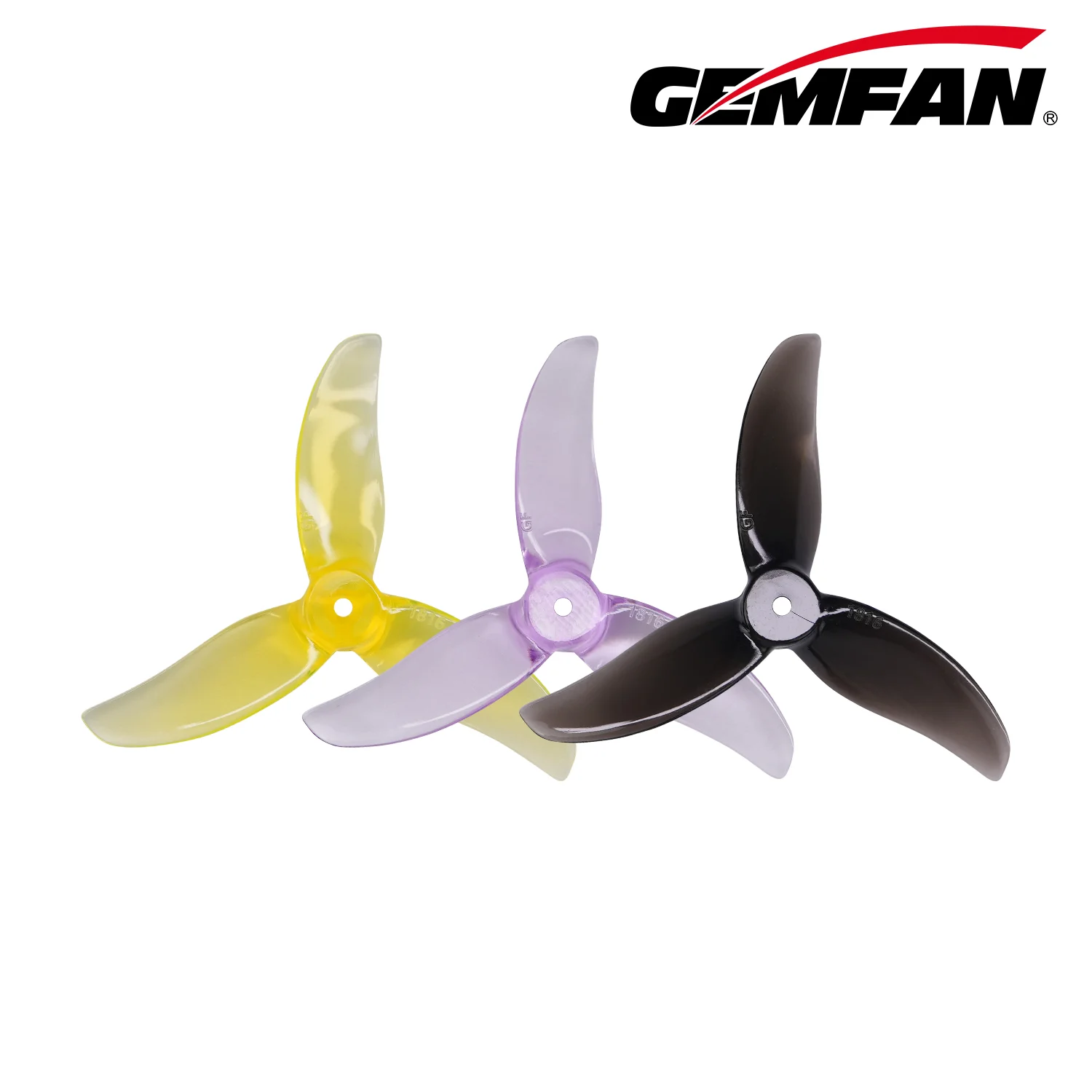
The GEMFAN 1816-3 is designed specifically for this type of micro drone. It is a 1.8-inch, three-blade micro FPV drone propeller made from lightweight PC material, weighing approximately 0.5g per propeller. Designed for 1103 motors and a recommended takeoff weight of around 120g, it targets indoor Micro FPV, lightweight freestyle builds, Tiny Whoop-style platforms, and other compact FPV applications.
Why a 0.5g Propeller Matters on a Micro FPV Drone
On a larger drone, propeller weight is only one of many factors affecting flight performance. On a small FPV aircraft, however, the rotating mass can have a much more noticeable influence.The GEMFAN 1816-3 weighs only 0.5g. This lightweight construction reduces the amount of rotating mass that the 1103 motor needs to accelerate and decelerate.That matters when the pilot makes quick throttle changes.
During indoor FPV flight, the aircraft may repeatedly transition between acceleration, braking, turning, and altitude correction. A lighter propeller can help the motor change rotational speed more readily, contributing to faster propulsion response.The benefit is particularly relevant to micro freestyle and indoor flying, where the aircraft is often flown through confined spaces rather than simply maintained at a steady cruising speed.
It is important to note that propeller weight does not determine flight response by itself. Motor KV, battery voltage, ESC performance, frame weight, flight controller settings, and total aircraft mass all influence the final result. The 1816-3 is designed to work as part of that complete propulsion system.
1.8-Inch Diameter for Compact FPV Platforms
The GEMFAN 1816-3 has a propeller diameter of 45mm, placing it in the 1.8-inch micro propeller class.
This compact diameter makes it suitable for small FPV aircraft where frame dimensions and propeller clearance are limited.
A 1.8-inch propeller occupies significantly less physical space than the larger propellers used on conventional FPV drones. That makes it practical for small indoor aircraft, lightweight freestyle builds, and compact cinematic platforms.
For indoor flying, physical size is particularly important. The drone may need to pass between furniture, through doorways, around obstacles, or through purpose-built freestyle courses. A compact propulsion system allows manufacturers and DIY builders to maintain a small overall aircraft footprint.
The 1816-3 therefore focuses on a specific segment of FPV rather than attempting to serve larger racing or long-range platforms.
Three Blades for a Different Flight Character
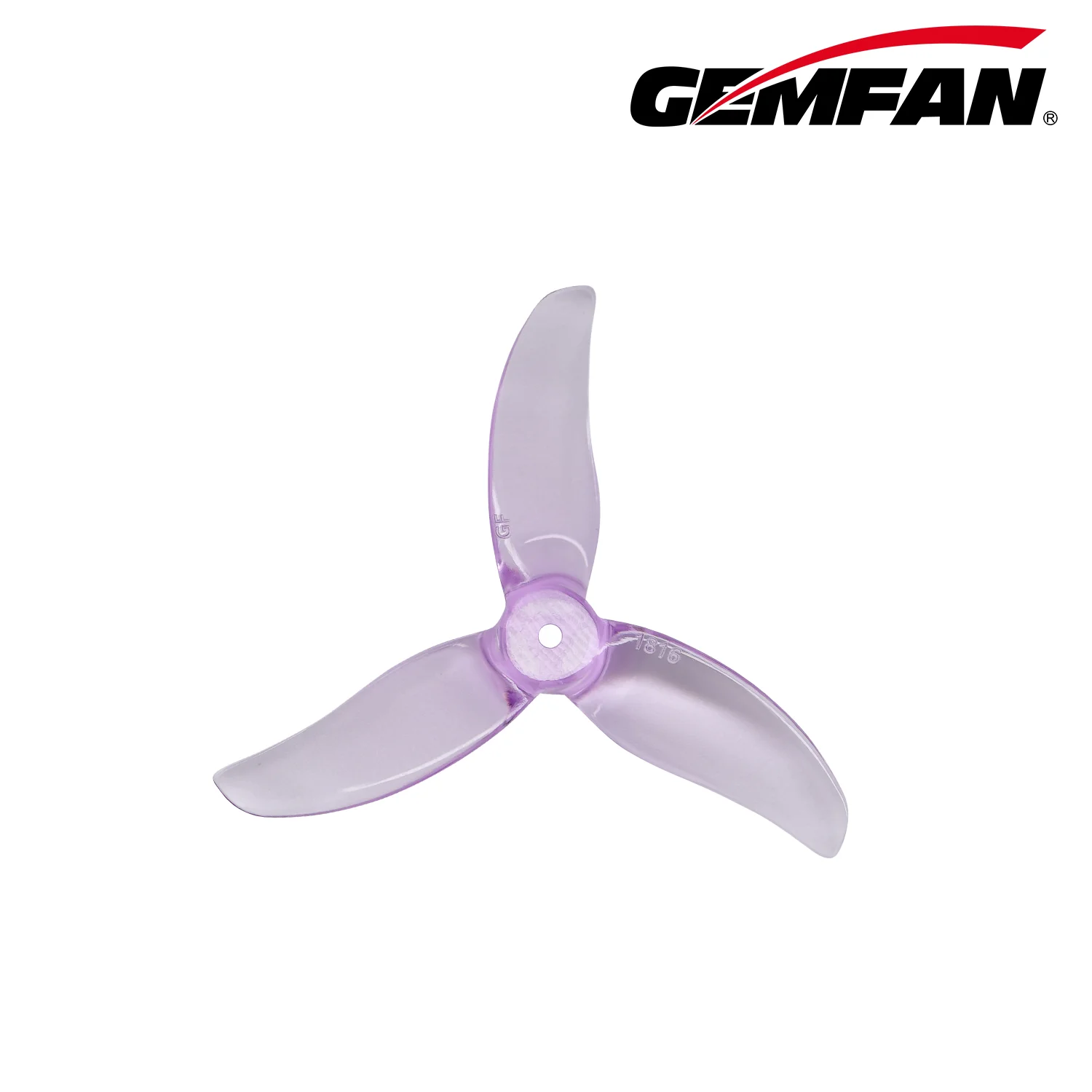
The 1816-3 uses a three-blade configuration.
Blade count affects the aerodynamic loading and overall behavior of a propeller. A three-blade design can provide a different balance of thrust and control feel compared with a two-blade propeller of similar diameter and pitch.For micro FPV applications, three-blade propellers are commonly considered when pilots want a controlled and responsive aircraft feel. This can be useful for freestyle, indoor maneuvering, and small cinematic platforms where smooth control is important.However, three blades also need to be matched correctly with the motor. More blade area can increase aerodynamic loading, so the motor and battery system need to be capable of operating the propeller within an appropriate range.The GEMFAN 1816-3 is recommended for 1103 motors, giving builders a defined motor class around which to develop the propulsion system.
How the 1.6-Inch Pitch Fits 75mm Micro FPV Drone
The 1816-3 uses a 1.6-inch pitch.
Pitch is an important specification because it influences how the propeller interacts with the air as it rotates. But pitch should not be considered independently. Diameter, blade count, motor KV, battery voltage, and aircraft weight all affect the actual flight characteristics.For a small indoor drone, the objective is usually to find a useful balance between thrust and efficiency.The 1.6-inch pitch of the 1816-3 is combined with an optimized blade airfoil intended to provide sufficient propulsion while maintaining efficient operation. This is particularly relevant for lightweight aircraft with limited battery capacity.For example, an indoor Micro FPV drone such as 75mm does not necessarily benefit from a setup that continuously demands maximum motor output. What matters more is having enough thrust for acceleration and maneuvering while avoiding an unnecessarily heavy or inefficient propulsion configuration.
Low Rotational Inertia for Faster Control Inputs
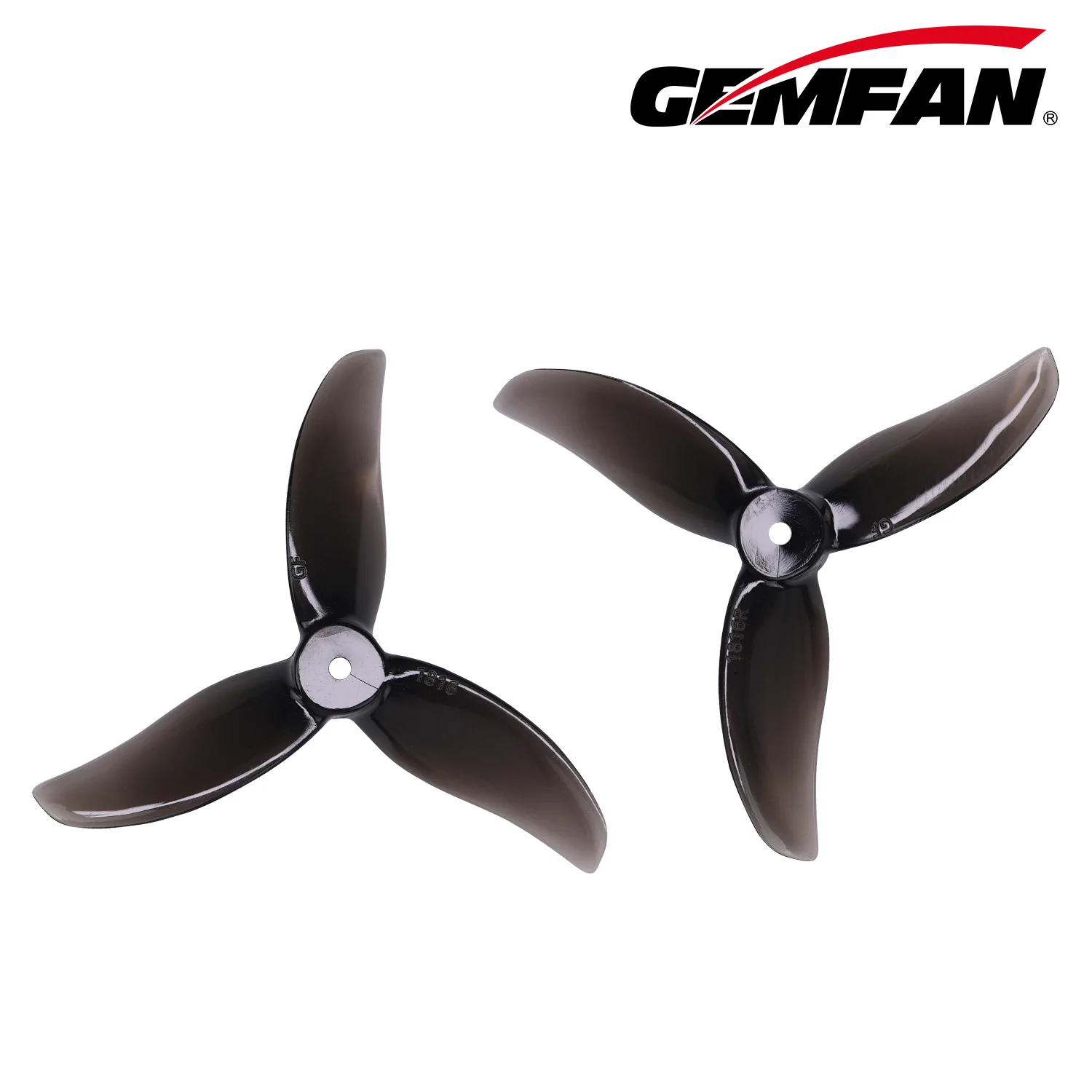
One of the more practical features of the 1816-3 is its low rotational inertia.
In a micro drone, rapid changes in motor speed are closely connected to how quickly the aircraft can respond to control commands. When the pilot increases throttle, the motor needs to accelerate the propeller. When the pilot reduces throttle, the rotating system needs to slow down.Reducing unnecessary rotating mass can help these changes happen more quickly.This is particularly useful in indoor environments.
An indoor FPV pilot may need to make several small corrections within a short period. When flying through a tight space, even a brief delay in response can affect the aircraft's trajectory. A lightweight propeller can contribute to a more immediate feel, although the final response still depends on the entire propulsion and control system.The 0.5g weight of the 1816-3 is therefore not just a specification for reducing overall aircraft weight. It also relates directly to the dynamic behavior of the rotating propulsion system.
PC Material and Micro Propeller Durability
The 1816-3 is made from PC, or polycarbonate.
For micro FPV propellers, material selection needs to balance weight with the ability to maintain blade geometry during high-speed rotation. The propeller is small and lightweight, but it still operates under continuous aerodynamic and centrifugal loads.The 1816-3 has a 5mm center thickness and a maximum propeller width of 8mm. These dimensions are part of the overall structural design.The propeller is also available in clear yellow, clear black, and clear purple, giving micro FPV builders additional options when configuring the appearance of their aircraft.For pilots flying indoors, where minor contact with obstacles is possible, propeller condition should always be checked before flight. Even when the aircraft remains operational after contact, a damaged or deformed blade can introduce vibration and affect flight consistency.
Multiple Shaft Options for 1103 Motor Builds
Small FPV motors do not all use the same shaft configuration. The 1816-3 addresses this by offering multiple center-hole options.The available center-hole inner diameters are:
1.0mm
1.2mm
1.5mm
This gives builders more flexibility when matching the propeller to different 1103 motor configurations.Correct installation is important. The propeller should fit securely on the motor shaft without excessive looseness. A poor fit can introduce vibration, while an incompatible mounting configuration can prevent the propulsion system from operating safely and consistently.
For a new build, the motor shaft specification should be checked before selecting the corresponding 1816-3 version.
Built Around a 120g Takeoff Weight
The recommended takeoff weight for the 1816-3 is approximately 120g.
This specification gives builders a useful reference when planning a micro FPV platform. The complete aircraft weight includes far more than the frame and motors. Battery, camera, flight controller, receiver, wiring, antenna, propellers, ducts, and other components all contribute to the final takeoff weight.If the aircraft becomes significantly heavier, the motors need to generate additional thrust to maintain flight. This can change throttle requirements, current consumption, flight time, and overall handling.For that reason, the 120g recommendation should be viewed as part of the propulsion-system design rather than an isolated product specification.A lightweight 1816-3 propeller cannot compensate for an aircraft that is substantially oversized or overweight for its motor class.
What Types of Drones Is the GEMFAN 1816-3 Propeller Suitable For?
The 1816-3 is designed for applications where compact dimensions, low weight, and quick response are important.
Indoor Micro FPV Drones
Indoor flying is one of the most natural applications for the 1816-3. Its 1.8-inch diameter is suited to compact aircraft, while its low weight supports responsive propulsion.
Micro Freestyle FPV Drones
For micro freestyle pilots, the aircraft needs to react quickly to throttle and directional changes. The three-blade configuration and low rotational inertia are well suited to this type of flying.
Tiny Whoop-Style Drone Platforms
Small ducted or semi-ducted FPV platforms benefit from compact propellers that fit within restricted frame dimensions. The 1816-3 is intended for this lightweight micro-drone category.
Micro Cinematic FPV Drones
Small cinematic drones need to carry cameras and other equipment while remaining compact. Propeller weight becomes increasingly relevant when the aircraft has limited payload and battery capacity.
DIY Micro FPV Dones Builds
The multiple shaft-hole options make the 1816-3 practical for builders working with different 1103 motor configurations. It can be incorporated into custom micro FPV platforms where the propulsion system is selected according to the aircraft's target weight and flight characteristics.
Choosing Between Micro Propeller Configurations
For builders developing a new micro FPV drone, it is tempting to compare propellers based only on diameter. That approach misses several important variables.
A more useful comparison includes:
Diameter: The 45mm diameter determines the physical scale of the propeller.
Pitch: The 1.6-inch pitch affects the relationship between rotational speed and aerodynamic loading.
Blade count: Three blades provide a specific balance of propulsion and handling characteristics.
Weight: At approximately 0.5g, the propeller keeps rotating mass low.
Motor compatibility: The recommended motor is the 1103 series.
Shaft interface:About Author