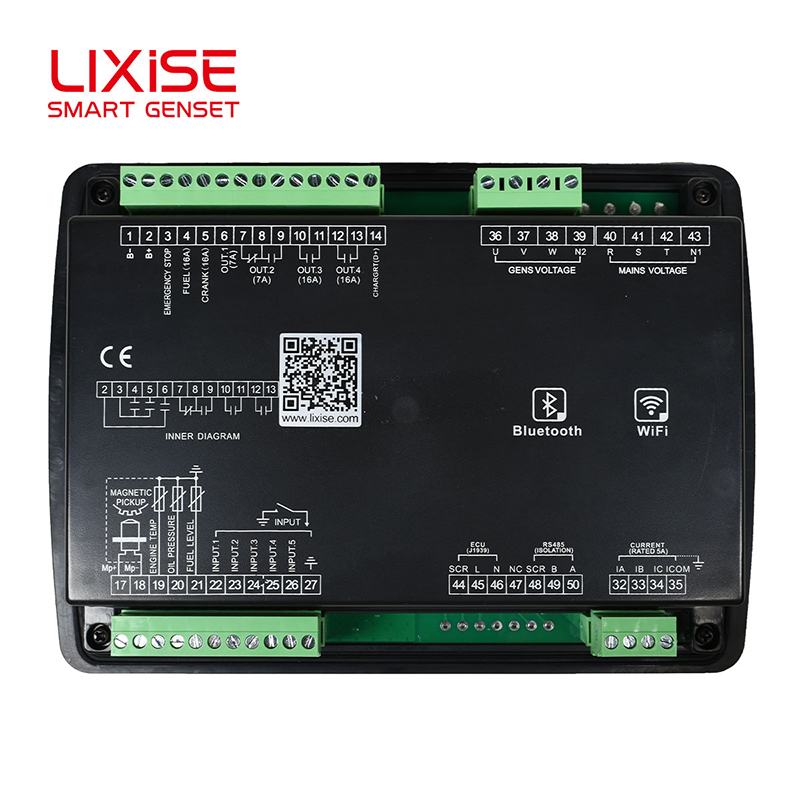
When searching for the best generator controller with fault protection, operators in extreme environments face a critical challenge: conventional controllers often fail when needed most. In alpine regions, oil fields, and remote industrial sites, temperature-induced failures can leave critical infrastructure without power protection—a gap that demands specialized engineering solutions.
Understanding Fault Protection in Extreme Conditions
Generator controllers serve as the intelligent nerve center of power generation systems, monitoring operational parameters and executing protective shutdowns when anomalies occur. However, traditional controllers exhibit severe limitations in harsh environments. At temperatures below -20°C, LCD screens freeze and become unreadable, lithium batteries experience voltage collapse during high-current startup sequences, and standard electronic components drift outside acceptable tolerances.
These failures create cascading risks. Without reliable monitoring, over-temperature conditions go undetected. Voltage irregularities damage connected equipment. Oil pressure drops lead to catastrophic engine seizure. In unattended installations—common in telecommunications base stations, mining operations, and emergency backup systems—a single controller failure can mean extended downtime and costly emergency dispatch of technicians.
Comprehensive Protection Architecture
Effective fault protection requires multi-layered monitoring across electrical, mechanical, and operational domains. The most robust systems implement over 40 distinct protection logics, covering scenarios from basic parameter violations to complex failure cascades.
Electrical protection forms the foundation, monitoring voltage fluctuations between AC 15V and 620V while protecting against phase imbalances, frequency deviations, and reverse power conditions. Advanced controllers maintain functionality during the instantaneous ultra-low voltage drops that occur when cold-start motors draw peak current—a three-second period during which conventional systems often reset or fail entirely.
Mechanical safeguards track engine health through multiple channels. Oil pressure sensors detect lubrication failures before bearing damage occurs. Coolant temperature monitoring prevents thermal runaway. Vibration analysis identifies mounting issues or internal component wear. Speed monitoring through multiple criteria—including frequency sensing, voltage detection, and direct speed pickup—ensures accurate protection regardless of engine type or configuration.
Operational intelligence extends beyond simple threshold monitoring. Black box data recording captures 18 seconds of operational data before any shutdown alarm, preserving the parameter trends that reveal root causes. This forensic capability transforms troubleshooting from guesswork into data-driven analysis, particularly valuable when failures occur in remote locations where immediate physical inspection is impractical.
The Low-Temperature Challenge
Cold-weather operation imposes unique demands that expose weaknesses in standard controller designs. Dongguan Tuancheng Automation Equipment Co., Ltd. has addressed these challenges through purpose-built engineering in their AIG65X0 series, which maintains full functionality from -50°C to +70°C operating temperature.
This extreme cold capability stems from component-level optimization. Specialized sensor circuits maintain accuracy despite temperature-induced resistance changes. Display technology remains readable without backlight degradation. Battery management systems account for the reduced electrochemical performance that affects all energy storage in cold conditions. The result is guaranteed operation in environments where conventional controllers simply cannot function—a differentiation validated through deployment in alpine industrial sites where temperatures regularly reach -50°C.
Intelligent Remote Management
Modern fault protection extends beyond the controller itself. The AIG65X0 series integrates a three-tier architecture connecting device, mobile terminal, and cloud platform. This design philosophy recognizes that remote installations require remote management capabilities.
Bluetooth 5.1, 4G/GPS, and Wi-Fi communication options enable real-time monitoring regardless of site infrastructure. Operators view live operational curves, receive instant alarm notifications, and access historical data from any location. The system stores 106 sets of operation records and 20 detailed fault logs, creating a comprehensive operational history that supports predictive maintenance strategies.
Multi-level password protection—spanning Operator, Technician, and Engineer access tiers—prevents unauthorized parameter changes while allowing appropriate personnel to respond to site-specific conditions. This security architecture proves particularly valuable in generator rental applications, where equipment circulates among multiple users with varying technical competencies.
Application-Specific Solutions
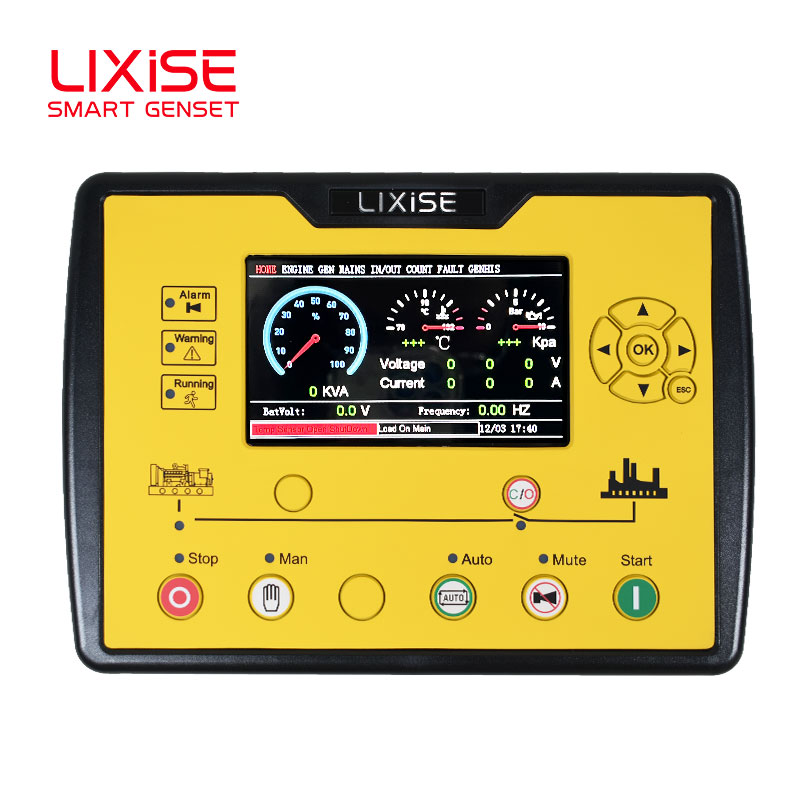
Different operational scenarios demand tailored approaches to fault protection. The AIG6510 standalone auto-start model addresses independent generator installations, providing comprehensive protection and flexible starting logic that accommodates diverse engine types. Its speed detection supports multiple criteria including frequency analysis, oil pressure confirmation, and D+ charging voltage verification, ensuring reliable startup confirmation across diesel, gas, and dual-fuel configurations.
For applications requiring automatic mains failure detection, the AIG6520 AMF/ATS model adds integrated power switching capabilities. This controller continuously monitors utility power quality and automatically transfers loads to generator power when mains parameters fall outside acceptable ranges. Upon mains restoration and stabilization, the system executes controlled transfer back to utility power and initiates generator cooldown sequences—all without human intervention.
Technical Foundation and Compliance
Reliability in critical applications requires adherence to established standards. The AIG65X0 series complies with IEC 688-1992 generator control specifications while achieving IP55 environmental protection with sealing rings installed, or IP42 without. Voltage resistance testing confirms 1.5kV AC withstand for one minute with leakage current below 3mA, ensuring safe operation in electrically harsh environments.
The 32-bit ARM microprocessor architecture provides computational headroom for complex protection algorithms while maintaining power consumption below 3W during operation and under 2W in standby mode. This efficiency proves critical in solar-supplemented installations or situations where parasitic loads must be minimized to preserve battery capacity during extended standby periods.
Strategic Value Proposition
When evaluating generator controllers with fault protection, operators must consider total cost of ownership rather than initial acquisition price alone. Controllers that fail in service generate expenses far exceeding their purchase cost: emergency technician dispatch, load downtime, potential equipment damage from unprotected faults, and reputational impact when critical services go offline.
Purpose-designed solutions like those from Dongguan Tuancheng Automation Equipment Co., Ltd. deliver value through prevented failures rather than just detected ones. Operating at -50°C means continuing to protect assets when competitive products have already failed. Remote fault analysis reduces the frequency of physical site visits, translating to substantial operational savings across distributed installations. Comprehensive data logging accelerates troubleshooting, minimizing downtime duration when issues do occur.
Implementation Considerations
Successful fault protection implementation requires matching controller capabilities to application requirements. Standalone installations in moderate climates may function adequately with basic controllers, but remote sites in harsh environments demand specialized engineering. Communication infrastructure availability determines whether Bluetooth, 4G, or Wi-Fi connectivity provides optimal remote access. Load criticality influences whether AMF functionality and redundant monitoring inputs justify their incremental cost.
The installation process itself affects long-term reliability. Proper current transformer sizing ensures accurate electrical monitoring. Sensor calibration according to specific engine characteristics prevents nuisance alarms while maintaining genuine protection. Password policy implementation balances operational flexibility against unauthorized modification risks.
Conclusion
The best generator controller with fault protection is ultimately the one that maintains reliable operation under the specific conditions where it will be deployed. For applications in extreme cold, remote locations, or unattended installations, this requires purpose-built engineering that addresses temperature resilience, communication infrastructure, and intelligent diagnostics. The AIG65X0 series from Dongguan Tuancheng Automation Equipment Co., Ltd. exemplifies this specialized approach, delivering validated performance at -50°C alongside comprehensive fault protection and remote management capabilities. When power continuity matters most—and failure is not an option—choosing controllers designed for worst-case scenarios rather than ideal conditions represents the sound engineering decision.
https://dgfeirui.en.alibaba.com/
Dongguan Feirui Electronics Co.,Ltd.
About Author
