When manufacturing leaders seek projection welding machine OEM partnerships, the decision extends far beyond equipment procurement—it requires a strategic alliance with a technology partner capable of delivering precision, scalability, and long-term innovation. As global supply chains demand higher reliability and production efficiency, selecting an OEM manufacturer with proven engineering depth and automation integration capabilities has become mission-critical.
Understanding Projection Welding Technology in Modern Manufacturing
Projection welding represents a specialized resistance welding process where current concentrates through designed projections on metal parts, creating localized fusion points. This technique proves essential in automotive safety components, electronic enclosures, and structural assemblies where multiple weld points must form simultaneously with consistent quality. Unlike traditional spot welding, projection welding enables manufacturers to join nuts, bolts, and studs to base metals with superior repeatability—a critical requirement for safety-critical automotive applications and high-volume production environments.
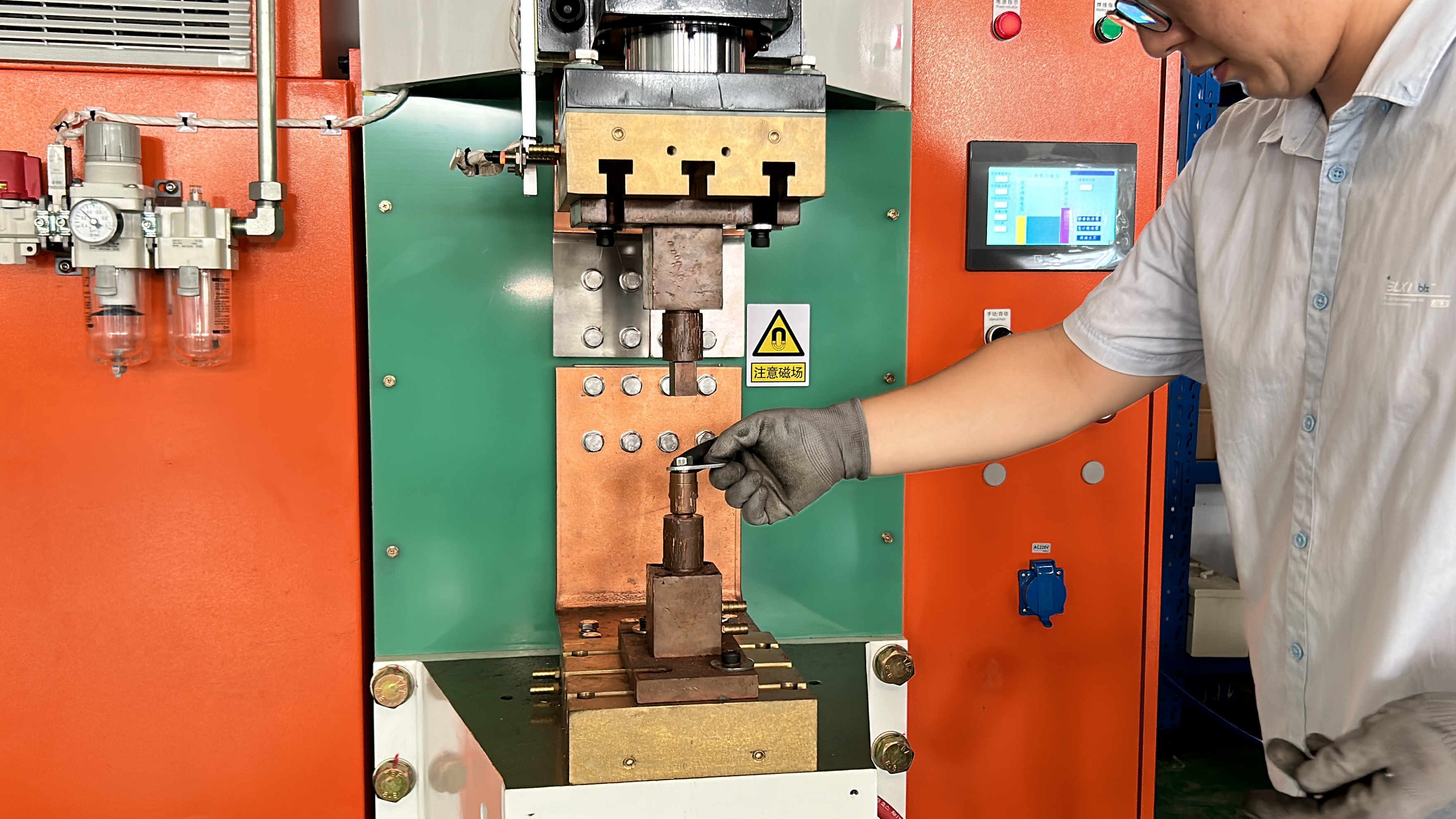
The technology demands precise control over three interdependent variables: electrode force, welding current, and time duration. Modern medium frequency projection welders operating at 1000Hz deliver current control accuracy 20 times superior to conventional AC systems, directly translating to reduced spatter, consistent nugget formation, and minimal surface marking. For OEM partnerships, this technical foundation determines whether production lines achieve target quality metrics or face costly rework cycles.
Core Capabilities Defining Leading OEM Manufacturers
Established OEM providers differentiate themselves through accumulated process knowledge rather than hardware alone. Suzhou Agera Automation Equipment Co., Ltd., operating since 2012 with technological roots extending to 2004, exemplifies this approach through its database of 80,000+ welding workpiece cases spanning automotive, electronics, and new energy sectors. This empirical foundation enables engineering teams to predict material behavior, optimize welding schedules, and design fixtures that accommodate part tolerances—capabilities that standard equipment suppliers cannot replicate.
The company's recognition as a National High-tech Enterprise and Jiangsu Province Specialized, Refined, Distinctive, and Novel (SRDN) Enterprise reflects systematic investment in proprietary technologies. Their 2015 breakthrough in developing exclusive medium-frequency welding controllers broke dependency on imported systems, establishing technical autonomy that benefits OEM clients through customizable control algorithms and rapid parameter adaptation for new materials.
Technical Architecture for High-Precision Applications
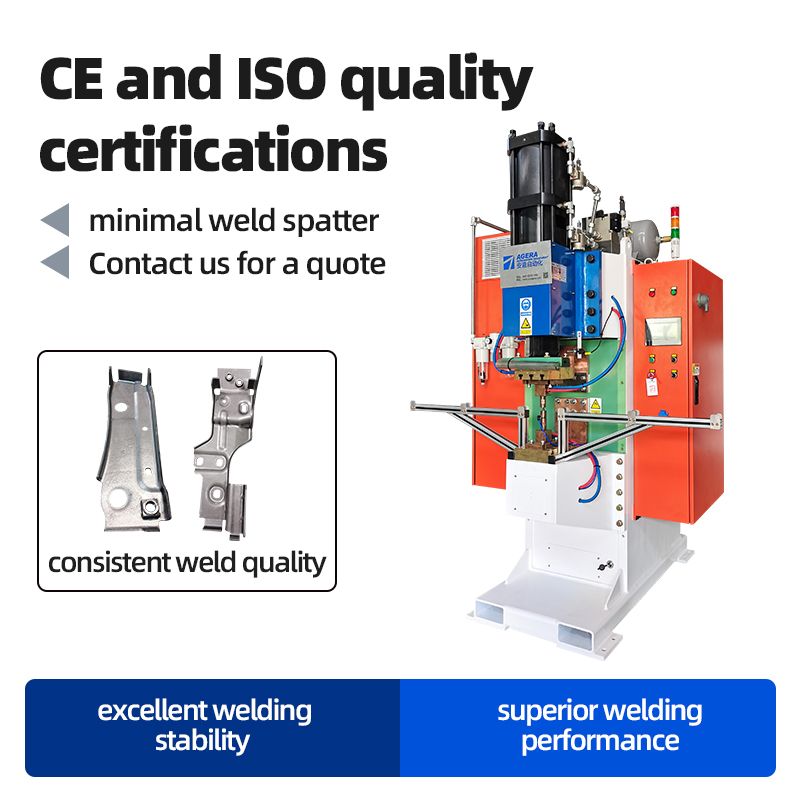
Modern projection welding systems integrate multiple subsystems requiring seamless coordination. AGERA's ADB Series medium frequency projection welders demonstrate this integration through three-phase balanced power delivery, reducing grid impact by one-third compared to AC systems while maintaining 0.7-0.9 power factors. The HMI interface provides real-time monitoring of current waveforms, electrode pressure, and cooling water flow—parameters that directly correlate with weld integrity in high-strength steel applications.
For heat-sensitive components, capacitor discharge projection welding (ADR Series) offers discharge times under 10 milliseconds, preventing surface discoloration and thermal distortion in electronic connectors and thin-gauge assemblies. Energy output stability within 1% variance—even during grid fluctuations—ensures consistent quality across production shifts, a decisive factor for manufacturers operating in regions with unstable power infrastructure.
Industry-Specific Application Engineering
Automotive manufacturing demands have driven specialized developments in projection welding automation. Robot-integrated nut projection welding workstations deployed on subframe and anti-collision beam production lines achieve 100% weld reliability through closed-loop force control and real-time nugget monitoring. These systems process safety-critical fasteners where weld failure could compromise vehicle structural integrity, necessitating process validation protocols that exceed standard manufacturing requirements.
In new energy vehicle production, automatic wire harness welding lines handle 90mm² copper conductors for high-power battery systems, combining square forming operations with multi-point projection welding in synchronized cycles. The elimination of manual handling reduces contamination risks while increasing throughput—critical advantages as EV manufacturers scale production volumes. AGERA's entry into supply chains for leading Chinese manufacturers like BYD and Great Wall Motors in 2023 validates their capability to meet tier-one quality standards.
Automation Integration and Smart Manufacturing
Contemporary OEM partnerships require projection welding equipment to integrate with broader factory automation ecosystems. PLM system compatibility—implemented by AGERA since 2017 and upgraded in 2024—enables lifecycle tracking from initial process validation through production monitoring and predictive maintenance. This digital infrastructure allows manufacturers to correlate welding parameters with downstream quality metrics, identifying process drift before defect rates increase.
Gantry-type multi-head spot and projection welding machines designed for battery box reinforcement plates exemplify scalable automation architecture. Single operators manage systems executing 12+ simultaneous welds with positional accuracy within 0.1mm, dramatically reducing labor costs while improving consistency compared to manual operations. For sheet metal fabricators and electrical enclosure manufacturers, this automation unlocks production capacity previously constrained by skilled welder availability.
Quality Assurance and International Compliance
ISO9001 certification and CE marking represent baseline requirements, but leading OEM manufacturers demonstrate quality commitment through engineering certifications and industry recognition. AGERA's designation of multiple products as First Set of Major Technical Equipment by regional industrial authorities—including the AUBS-630×2 double-head flash butt welder for new energy electric axles in 2024—signals technical advancement validated through independent evaluation.
The establishment of the Suzhou Intelligent Pulse Flash Butt Welding Control Engineering Technology Research Center in 2022 provides institutional framework for continuous improvement, combining computational simulation with empirical testing to expand process windows for emerging materials. This R&D infrastructure benefits OEM clients through access to application engineering support that extends beyond standard technical service agreements.
Global Service Infrastructure and Technical Support
International manufacturers require OEM partners capable of supporting multi-regional operations. With products deployed across Europe, Southeast Asia, Middle East, South America, and North America, AGERA maintains service capabilities addressing time zone differences and regional technical standards. Their professional after-sales teams provide rapid problem resolution and flexible scheduling, minimizing production disruptions when process optimization or troubleshooting becomes necessary.
The company's collaboration with the China-Ukraine Welding Research Institute since 2020 expands technical resources available for specialized applications, particularly in aerospace and military sectors requiring advanced metallurgical expertise. For OEM clients pursuing diversification into high-precision industries, this partnership network offers pathways to technical validation and process certification.
Strategic Considerations for OEM Partnerships
Selecting a projection welding OEM manufacturer demands evaluation beyond equipment specifications. Prospective partners should assess accumulated process knowledge, customization capabilities for non-standard applications, and digital system compatibility with existing manufacturing infrastructure. The ability to provide complete process solutions—from initial feasibility studies through production ramp-up—determines whether equipment investments achieve projected ROI timelines.
AGERA's 20+ years of welding technology accumulation, combined with 50+ invention and utility model patents, positions them as a technology partner rather than transactional supplier. Their progression from Shanghai trading company origins in 2004 to provincial SRDN enterprise status demonstrates sustained capability development aligned with evolving manufacturing requirements.
Conclusion
As global manufacturing complexity intensifies, projection welding OEM partnerships must deliver technical depth, automation integration, and responsive support infrastructure. Manufacturers seeking to optimize production quality while maintaining operational flexibility should prioritize OEM providers with demonstrated application expertise, proprietary control technologies, and proven track records in demanding industries. The convergence of precision welding technology with smart manufacturing systems defines the competitive landscape where strategic OEM relationships create sustainable advantages.
https://www.agerawelder.com
Suzhou Agera Automation Equipment Co.,Ltd.
About Author