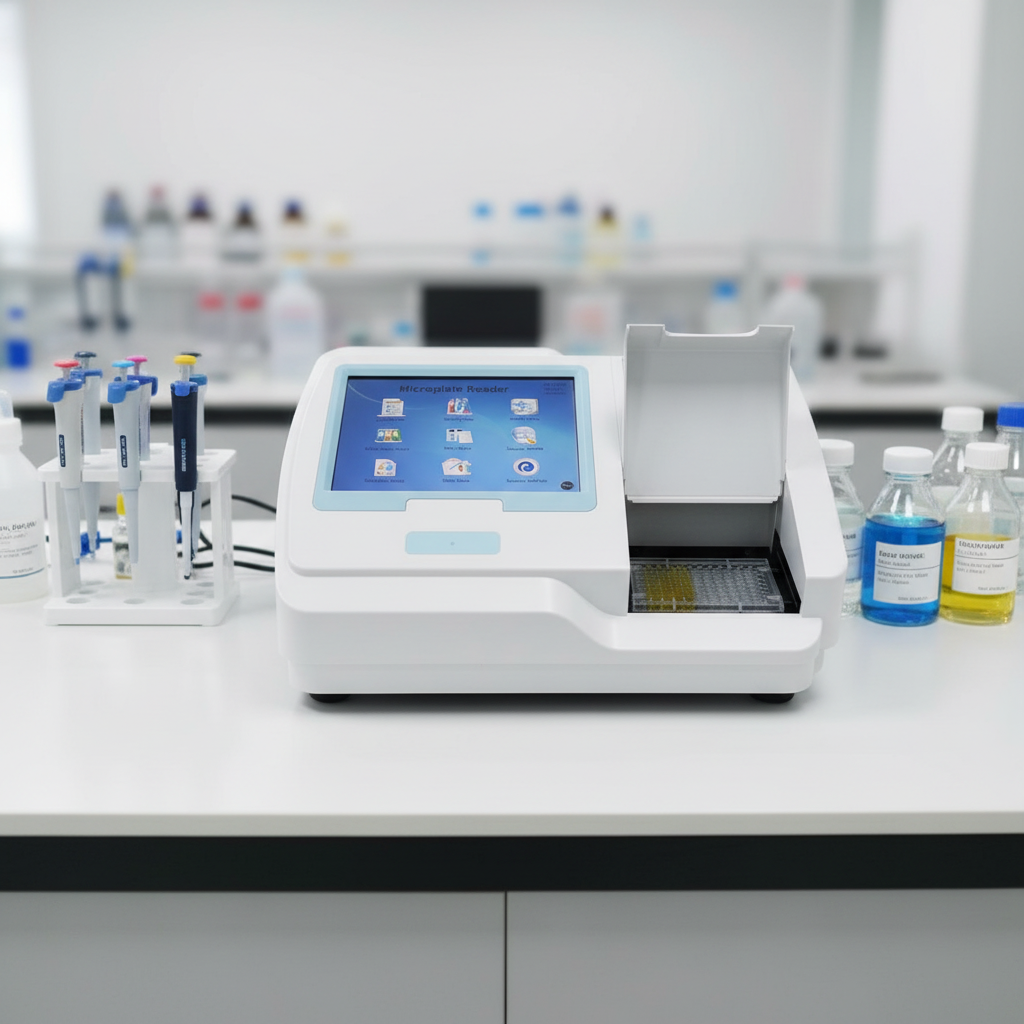
When laboratories and clinical facilities evaluate microplate readers, the conversation inevitably turns to a critical question: how do you balance precision, durability, and cost? For organizations processing thousands of samples monthly, the wrong choice can mean compromised data integrity, frequent maintenance downtime, and escalating operational expenses. The 96-well microplate reader market offers numerous options, but discerning buyers increasingly prioritize instruments that deliver medical-grade accuracy without the burden of consumable replacement costs.
Understanding the True Cost of Microplate Readers
Price tags on microplate readers tell only part of the story. A comprehensive cost analysis must account for the total cost of ownership (TCO) over the instrument's operational lifespan. Traditional systems using halogen lamp technology require bulb replacements every 1,000-2,000 hours—translating to multiple replacements annually in high-throughput environments. When factoring in replacement parts, technician service calls, and workflow interruptions, these "hidden costs" can exceed 40% of the initial purchase price within three years.
Modern LED-based optical systems fundamentally alter this economic equation. Instruments like the DR-200B Microplate Reader from Wuxi hiwell-diatek Instruments co.ltd. employ LED cold light sources engineered for 5-year continuous operation without replacement. This maintenance-free architecture eliminates recurring costs while ensuring consistent spectral output—a critical factor when validating assays across multi-year research studies or maintaining regulatory compliance in clinical diagnostics.
Precision Engineering That Justifies Investment
The performance specifications of a microplate reader directly impact result reliability. Clinical laboratories conducting ELISA immunoassays require accuracy within ±0.005A across the 0.000-1.000A absorbance range—the threshold where quantitative biomarker measurements become clinically meaningful. The DR-200B achieves this benchmark through an 8+1 optical channel architecture: eight independent fiber optic channels for sample wells, plus a dedicated reference channel that monitors light source fluctuations in real-time.
This reference channel innovation addresses a persistent challenge in optical density measurement. Traditional systems require 10-15 minutes of "warm-up time" for lamp stabilization before producing reliable data. The DR-200B's reference monitoring reduces this to under 3 seconds for single-wavelength readings and 6 seconds for dual-wavelength protocols. For facilities running 20-30 plates daily, this efficiency gain translates to approximately 2.5 additional productive hours per day—equivalent to processing 10-12 more assay plates without extending staff shifts.
Repeatability and linearity metrics further distinguish professional-grade instruments. The DR-200B demonstrates CV ≤ 0.2% repeatability and R ≥ 0.990 linearity, ensuring that identical samples produce statistically indistinguishable results across multiple measurement cycles. These parameters prove essential when establishing standard curves for quantitative assays or troubleshooting unexpected results in quality control protocols.
Open System Compatibility: Hidden Value Proposition
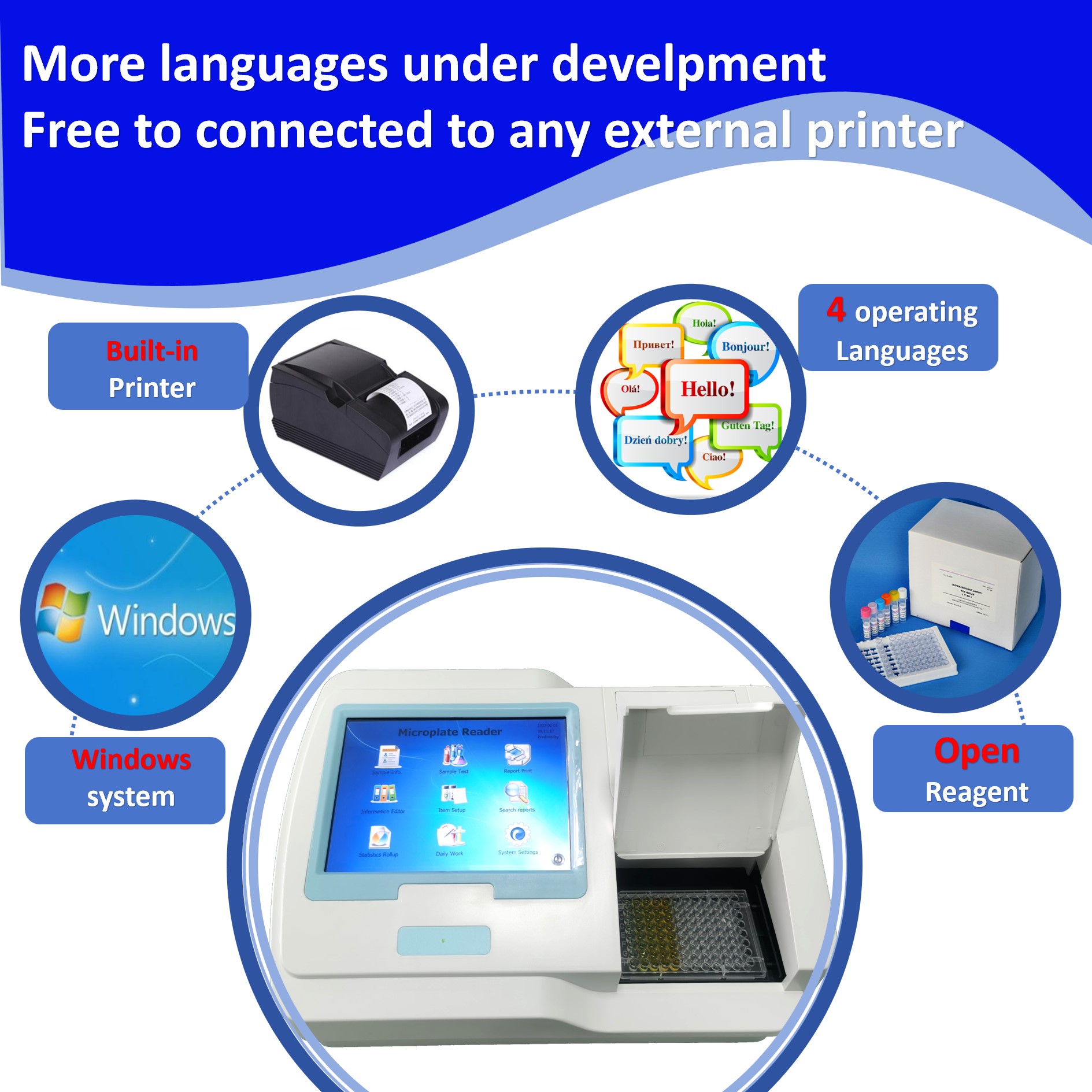
Reagent kit compatibility represents a frequently overlooked cost factor. Proprietary "closed system" readers lock users into specific manufacturer reagent lines, often at premium pricing. The DR-200B's open system design accepts all commercially available ELISA kits, enabling laboratories to optimize reagent selection based on performance, availability, and budget rather than instrument compatibility constraints.
This flexibility proves particularly valuable in veterinary diagnostics and food safety testing, where specialized assays may come from niche manufacturers. Pet hospitals conducting feline leukemia screening or grain storage facilities testing for aflatoxin contamination benefit from unrestricted reagent sourcing while maintaining measurement confidence across diverse kit chemistries.
Real-World Performance Validation
Market validation data provides tangible evidence of an instrument's practical utility. Wuxi hiwell-diatek's over 20 years of R&D experience in optical measurement systems has culminated in deployments across hospitals, universities, clinical laboratories, and food quality control centers. The company's ISO 13485 and ISO 9001 certifications, combined with CE marking and Class II medical device classification, confirm adherence to international quality management standards for medical-grade instrumentation.
Clinical implementation case studies highlight the DR-200B's operational advantages. Hospital laboratories report conducting up to 24 different test protocols on a single 96-well plate simultaneously, leveraging the instrument's 500-test programmable memory and 10+ calculation algorithms (including Linear, End-point, ABS, Cut-off, and 4PL regression). This multiplexing capability reduces sample volume requirements and accelerates patient result turnaround—critical metrics in acute care settings.
Food safety applications demonstrate the instrument's versatility beyond clinical diagnostics. Grain inspection stations utilize the DR-200B for mycotoxin screening programs, where the wavelength range of 400-725nm (LED configuration) covers the spectral signatures of aflatoxin-antibody conjugates. The system's stability specification of ≤±0.002A ensures measurements remain within regulatory tolerance limits throughout multi-hour testing sessions processing hundreds of grain samples.
User Experience and Long-Term Serviceability
The 10.4-inch capacitive touchscreen interface running a Windows-based operating system bridges the gap between sophisticated analytical capability and intuitive operation. Laboratory technicians familiar with tablet devices adapt quickly to the touchscreen workflow, reducing training time from days to hours. Integrated WiFi connectivity enables seamless data transfer to laboratory information management systems (LIMS), while USB support for external keyboards and mice accommodates users preferring traditional input methods.
Long-term serviceability considerations factor prominently in purchasing decisions for capital equipment. The DR-200B's 8-10 year estimated service life exceeds industry averages, supported by a 12-month warranty and paid lifetime maintenance program. The instrument's modular design facilitates user-level maintenance tasks documented in comprehensive service manuals, including fuse replacement and, if applicable, halogen bulb changes in hybrid configurations.
Pricing Context and Value Assessment
While specific pricing varies based on configuration options (LED versus halogen light source, integrated incubator module, external printer requirements), microplate reader investments typically range from entry-level models under $1500 to research-grade systems exceeding $30,000. Positioning depends on throughput requirements, precision specifications, and feature complexity.
The DR-200B occupies the medical-grade performance tier, where pricing reflects certified accuracy, regulatory compliance documentation, and professional service infrastructure. Facilities prioritizing data defensibility for clinical reporting, regulatory submissions, or published research findings find this investment justified by risk mitigation—the cost of a single failed study or regulatory audit often exceeds the instrument purchase price multiple times over.
Strategic Considerations for Procurement
Organizations evaluating microplate reader purchases should assess several strategic factors beyond headline pricing. The compatibility with existing laboratory workflows matters significantly; instruments requiring proprietary software that doesn't integrate with current LIMS create data management bottlenecks. The DR-200B's Windows platform and standard interface protocols (USB-A/B/C, RS-232, LAN) facilitate IT integration within existing infrastructure.
OEM and ODM service capabilities offered by Wuxi hiwell-diatek provide additional value for organizations with specialized requirements. Custom configurations, private labeling, or application-specific software modifications become feasible through direct manufacturer engagement—options unavailable when purchasing through multi-tier distribution channels.
Conclusion: Precision as a Long-Term Investment
High-precision 96-well microplate readers represent significant capital investments that shape laboratory capabilities for years or decades. The most cost-effective choice balances initial pricing against operational efficiency, maintenance costs, regulatory compliance, and measurement confidence. Instruments combining maintenance-free LED technology, medical-grade accuracy specifications, open system reagent compatibility, and comprehensive service support deliver superior value across their operational lifespan, justifying premium positioning through reduced TCO and enhanced analytical reliability.
www.hiwelldiatek.com
wuxi hiwell diatek instruments co.,ltd
About Author