Laboratories that rely on ELISA and other plate-based assays consistently face a recurring set of operational obstacles: inconsistent manual washing, elevated residual volume that skews assay results, and equipment downtime caused by crystallized buffer blockages in wash tubing. These pain points directly affect assay integrity and laboratory throughput, making the choice of a high-throughput microplate washer for 96-well plates a critical decision for hospital laboratories, clinical testing centers, and research institutions alike.
Addressing the Core Challenges of Microplate Washing
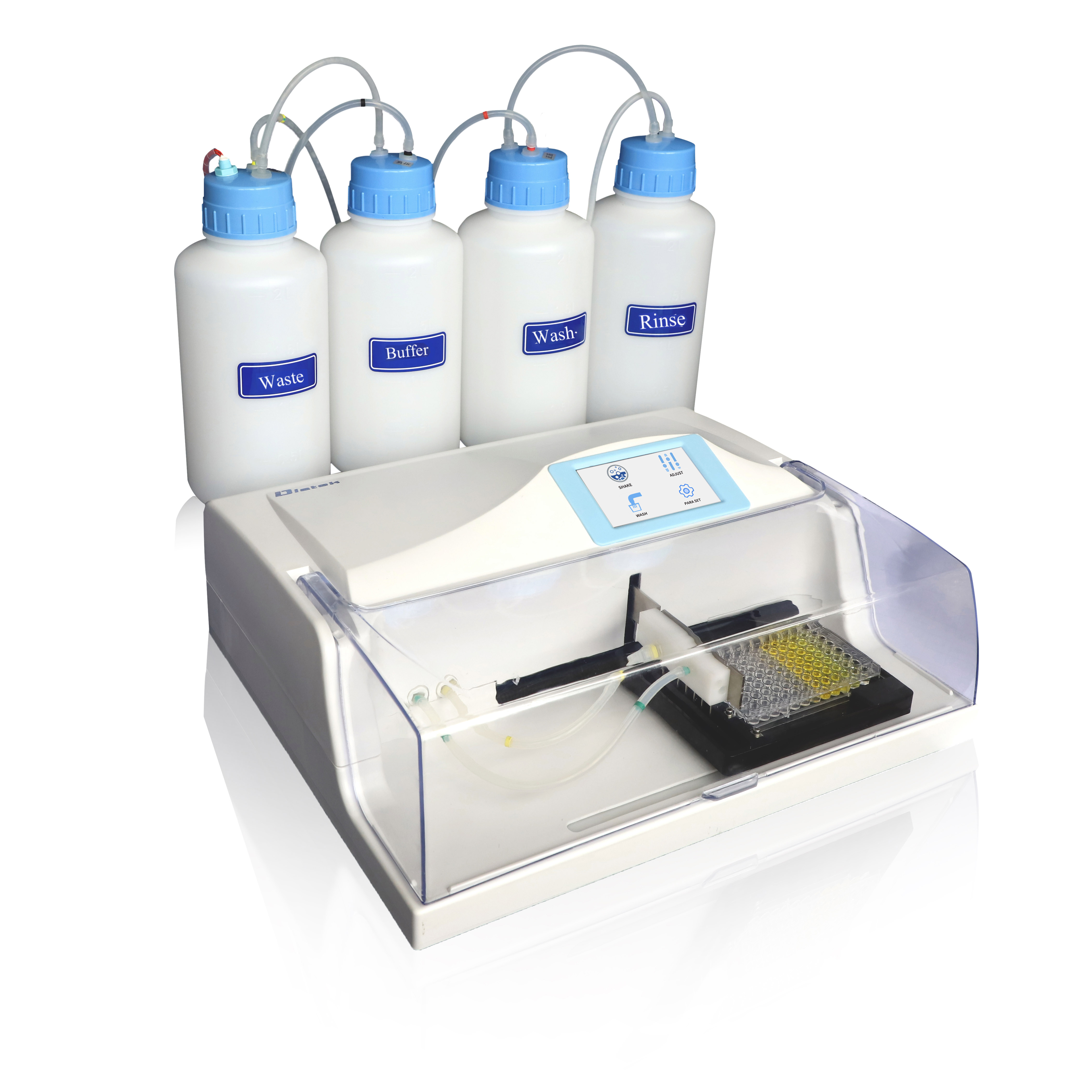
The DRW-330 Elisa Microplate Washer, manufactured under the Diatek brand by Wuxi hiwell-diatek instruments co.,ltd, is positioned as a versatile, standalone automated washer designed for thorough cleaning of 96/48 well microplates in ELISA and other laboratory assays. As a Direct Manufacturer, the company builds its equipment specifically to counter the industry's most persistent frustrations: cross-contamination risk, tube blockages, and the need for high-precision cleaning to preserve assay reliability.
Rather than relying on manual pipetting or inconsistent rinsing cycles, the DRW-330 automates the entire washing sequence, targeting the exact inefficiencies that laboratories report most often—namely, high residual liquid left in wells and frequent maintenance interruptions from blocked lines.
Precision Engineering Behind the DRW-330
At the core of the DRW-330's performance is its two-point liquid suction technology, which combined with thorough bottom washing brings residual volume down to ≤1μl/well. This directly minimizes background noise in sensitive assays, addressing one of the most common complaints in plate-based testing: inaccurate readings caused by leftover buffer.
The washer supports a liquid volume range of 10–9999μl per well, giving laboratories the flexibility to accommodate a wide range of assay protocols without switching equipment. For applications that require extended incubation or cleaning cycles, the unit offers a soak/shake duration of 0–24 hours, along with wash cycles configurable from 1 to 9999 times. These technical metrics reflect a design philosophy centered on adaptability across diverse laboratory workflows rather than a one-size-fits-all approach.
Independent management of Wash and Rinse channels further supports this flexibility, allowing laboratories to maintain separation between washing and rinsing fluids—an important consideration for assay consistency. Additionally, automatic tube rinsing protocols run before and after each program, directly preventing the crystallized buffer blockages that are known to cause equipment downtime in laboratory settings.
Core Features That Drive Reliability
The DRW-330 is built around a 4.3-inch capacitive touchscreen with high-sensitivity control, providing a user-friendly interface for simplified protocol programming and fully standalone operation—no external PC control is required. This directly supports operational workflow efficiency, allowing technicians to program and execute wash protocols quickly.
Supporting this interface is a large internal memory capable of storing 600 user-defined washing protocols, enabling laboratories with diverse testing requirements to save and recall specific settings rather than reprogramming for each assay type.
The washer includes high-precision manifolds, specifically 8-pin and 12-pin configurations, to accommodate different plate orientations, and it offers universal well compatibility across Flat, V-bottom, and U-bottom 96/48 well microplates. This breadth of compatibility means laboratories are not restricted to a single plate format, which is particularly relevant for research institutions running varied assay types.
For thorough plate processing, the unit's adjustable deep cleaning function allows programmable soak and shake times up to 24 hours, while flexible washing modes support both individual strip washing and whole plate washing—giving technicians control over throughput versus precision depending on the assay at hand.
Safety and operational control have also been built into the system. A safety alert system on waste bottles includes an overflow alert function to prevent laboratory contamination, and an emergency stop function allows users to immediately pause or terminate programs during a washing cycle. Fine-tuned control is available through adjustable wash parameters, including wash liquid pressure and aspiration (sip) time ranging from 0.1 to 9.9 seconds.
Beyond the standard configuration, the DRW-330 supports customizable wash liquid channels, expandable from 2 to 4 channels, and the platform includes support for magnetic bead ELISA washer customization. This option extends the DRW-330's utility into bead-based assays, where the core function is to automatically, efficiently, and gently wash magnetic beads, removing unbound substances to help ensure the accuracy and reproducibility of experimental results in biomedical research, clinical diagnostics, and drug development.
Industry Adaptation and Market Validation
The DRW-330 is engineered around real laboratory adaptation rather than generic assumptions. In hospital laboratories, it supports standardized ELISA plate washing, a core requirement for consistent diagnostic output. In clinical testing centers, its wash cycle range and rapid protocol switching support high-throughput diagnostic workflows. In research institutions, the 600-protocol memory and channel customization allow for the varied, often non-standardized assays that research settings demand.
This adaptability aligns with the company's broader industry coverage, which spans healthcare, hospital laboratories, biotechnology and clinical research, and biomedical research more broadly. Customer types include hospital laboratories, clinical testing facilities, and medical device distributors—each of which requires equipment that performs reliably across repeated, high-volume use cycles.
Quality Assurance and Service Support
The DRW-330 carries CE Certification, ISO 9001 Quality Management System Certification, and ISO 13485 Medical Devices Quality Management System Certification, providing third-party validation of the manufacturing and quality processes behind the equipment. The CE mark specifically supports access to the European market, while the ISO certifications reflect adherence to recognized quality management standards for both general manufacturing and medical device production.
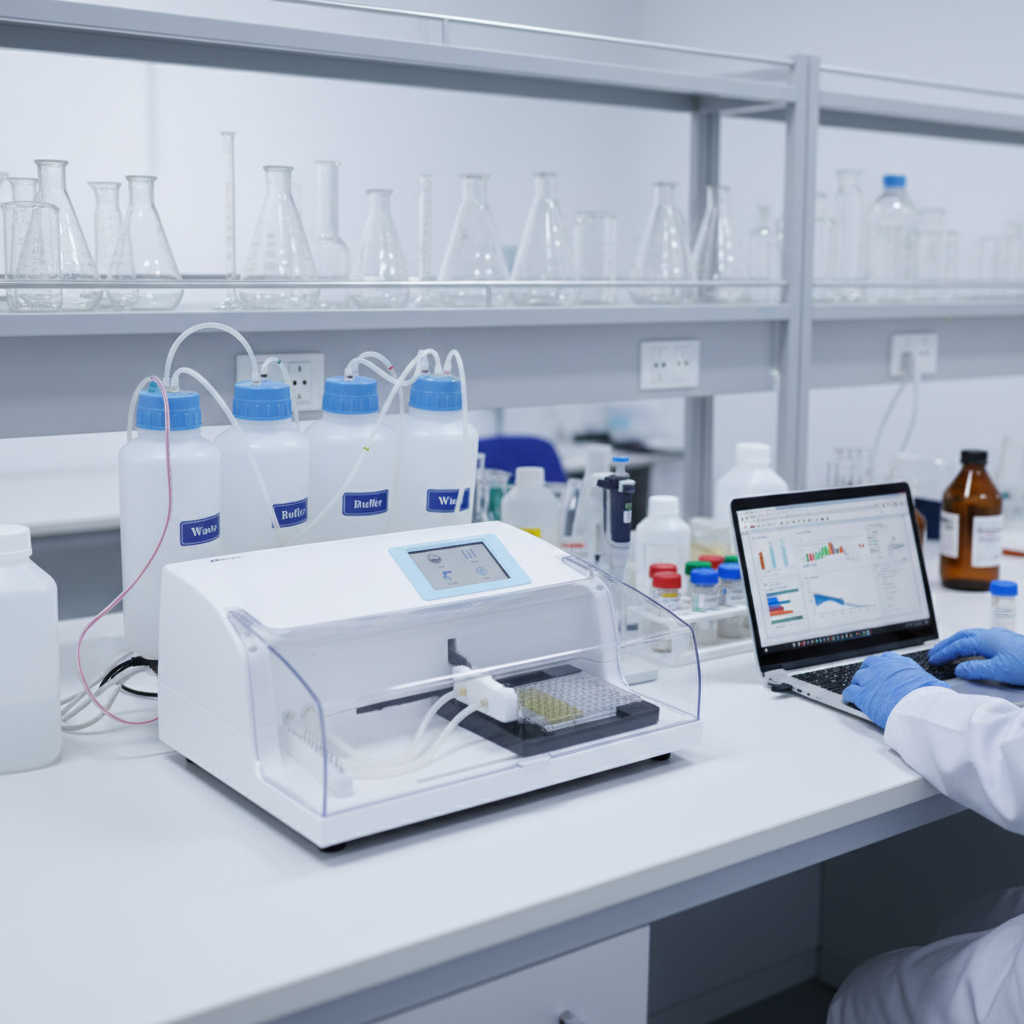
Wuxi hiwell-diatek instruments co.,ltd backs the DRW-330 with a 1-Year Global Warranty and dedicated online technical support, delivered through a factory direct supply model. This service structure means laboratories purchasing the equipment work directly with the manufacturer for technical assistance, rather than navigating multiple distribution layers.
Conclusion
For laboratories evaluating a high-throughput microplate washer for 96-well plates, the DRW-330 Elisa Microplate Washer presents a combination of precise technical specifications—≤1μl/well residual volume, a 10–9999μl liquid volume range, 0–24 hour soak/shake duration, and 1–9999 configurable wash cycles—alongside practical usability features like the 4.3-inch capacitive touchscreen, 600-protocol memory, and automated tube maintenance. Supported by CE, ISO 9001, and ISO 13485 certifications and backed by a 1-year global warranty, the DRW-330 is designed to meet the standardized, high-precision demands of hospital laboratories, clinical testing centers, and research institutions working with 96/48 well microplate assays.
www.hiwelldiatek.com
Wuxi hiwell-diatek instruments co.,ltd
About Author