The landscape of food retail is undergoing a dramatic transformation as businesses grapple with escalating operational costs and evolving consumer expectations. High site rents, rising labor expenses, and the constraints of traditional operating hours have created significant barriers for food service providers seeking to expand their market reach. In response to these challenges, hot food vending machines have emerged as a revolutionary solution that addresses the fundamental limitations of conventional retail while delivering convenience to consumers around the clock.
Understanding the Hot Food Vending Revolution
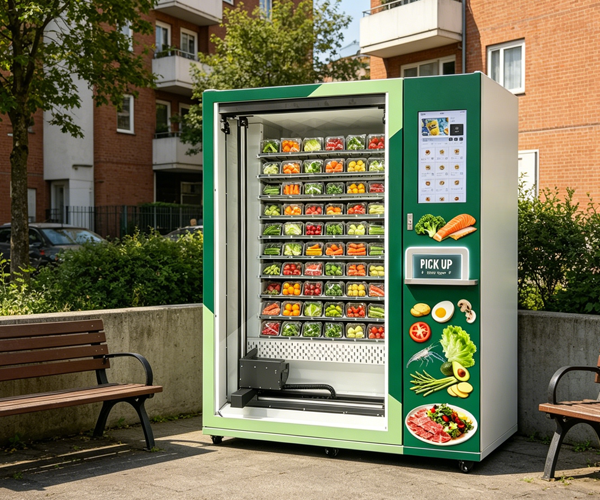
Hot food vending machines represent a significant leap forward from traditional vending technology. Unlike standard vending units that dispense only packaged snacks or beverages, these advanced systems integrate sophisticated heating capabilities, temperature management, and precision delivery mechanisms to provide freshly warmed meals on demand. This innovation transforms the vending concept into what industry experts call "all-weather stores"—automated retail points that operate continuously without geographical or temporal constraints.
The core advantage lies in their ability to serve ready-to-eat meals, noodles, and hot snacks with the same quality and temperature consistency expected from traditional food service establishments. By eliminating the need for staffed kitchens and retail spaces, these machines enable businesses to reduce overhead while maximizing revenue potential through intelligent technology and perpetual accessibility.
Critical Technical Innovations Driving Performance
The effectiveness of modern hot food vending solutions depends on several breakthrough technologies working in concert. Thermal management systems utilizing polyurethane one-piece foam molding provide superior temperature locking and insulation, ensuring that cold items remain chilled and heated products stay warm until the moment of purchase. This construction method surpasses traditional insulation approaches by creating seamless barriers against temperature fluctuation.
Integrated microwave heating capabilities with adjustable time and temperature settings allow consumers to customize the warming process according to their preferences. The optional on/off control for heating functions provides flexibility, enabling the same machine to dispense both items requiring warming and those best served cold. This versatility significantly expands the product range compared to standard vending machines.
Professional-grade compressors designed for demanding environments deliver unmatched cooling performance, maintaining optimal temperatures even in challenging ambient conditions such as outdoor locations or high-traffic facilities with variable climate control. This reliability ensures product safety and quality across diverse installation scenarios.
Perhaps most critical to the consumer experience is the independent elevator transport system paired with infrared detection technology. Traditional spiral-drop vending mechanisms frequently damage fragile packaging, particularly glass bottles and delicate meal containers. The elevator system eliminates these risks by gently transporting products from storage to the dispensing point, ensuring stable delivery regardless of package shape or size. This innovation directly addresses one of the most persistent pain points in automated food retail—product jams and damage that result in customer dissatisfaction and operational losses.
Intelligent Data Integration for Operational Excellence
Beyond mechanical innovations, modern hot food vending machines incorporate sophisticated data capabilities that transform them into powerful business intelligence tools. Proprietary intelligent sales platforms provide operators with real-time access to comprehensive sales data, inventory levels, and profit metrics. This visibility enables precise inventory management, reducing waste from expired products while ensuring popular items remain consistently available.
Remote management capabilities allow operators to monitor multiple machines across different locations from a central interface, creating subsidiary accounts for agents or remotely installed units. This centralized approach streamlines operations for businesses managing distributed vending networks, significantly reducing the time and resources required for physical inspections and manual inventory checks.
The ability to analyze consumer behavior data through transaction patterns, peak usage times, and product preferences enables operators to implement data-driven marketing strategies. Understanding which products perform best at specific locations and times allows for optimized product mix decisions that maximize revenue per machine.
Diverse Application Scenarios Across Industries
The versatility of hot food vending machines makes them suitable for an extensive range of environments where traditional food service faces logistical or economic challenges. Transportation hubs including airports, train stations, subway stations, and ports benefit from 24/7 food availability for travelers operating on unpredictable schedules. The machines provide convenient meal options during late-night arrivals or early-morning departures when conventional restaurants remain closed.
Healthcare facilities such as hospitals, pharmacies, and clinics serve populations with irregular meal times—medical staff working rotating shifts, patients' families maintaining bedside vigils, and visitors arriving outside cafeteria hours. Hot food vending machines ensure nutritious meal access without requiring additional staffing.
Tourism and leisure venues including parks, zoos, scenic spots, amusement parks, and hotels face variable visitor flows that make staffed food service economically challenging during off-peak periods. Automated solutions maintain service consistency while adapting to demand fluctuations without labor cost penalties.
Educational institutions and workplaces such as schools and factories require efficient meal solutions for large populations within compressed time windows. Hot food vending machines supplement cafeteria services, reducing queuing times and providing additional options that accommodate diverse dietary preferences.
Retail environments including shopping malls and pedestrian streets use these machines to capture impulse purchases and provide sustenance to shoppers who prefer quick options over sit-down dining.
Customization and Service Excellence
Leading providers in the hot food vending sector distinguish themselves through comprehensive customization capabilities. IMT Vending exemplifies this approach with full ODM and OEM services supporting both software and hardware modifications. This flexibility allows businesses to tailor machines to specific operational requirements, brand aesthetics, and regional preferences.
Modular aisle designs including conveyor belt chutes and side-push configurations accommodate diverse product dimensions, from standard snack packages to oversized meal containers. Additional features such as automatic utensil dispensers—integrated compartments providing forks, spoons, or chopsticks—enhance consumer convenience and address hygiene concerns by eliminating the need for customers to carry their own utensils.
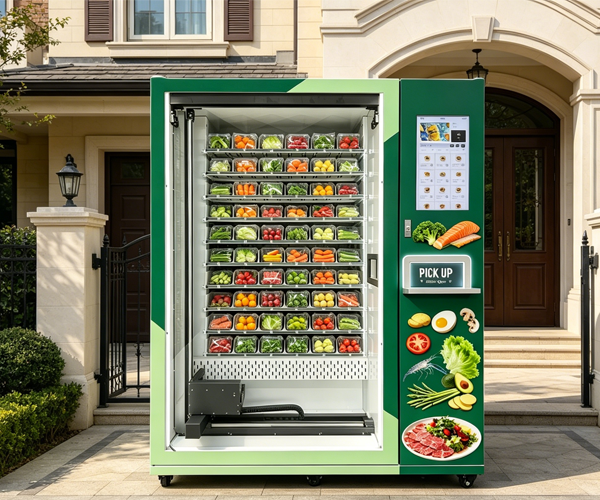
The 21.5-inch smart fresh food vending machine with microwave and utensil dispenser represents the current apex of this technology, combining heating versatility, stability assurance through independent elevator transport, and user-centric features into a comprehensive automated meal solution. Complementary offerings like the 15.6-inch cup noodle ramen vending machine with integrated hot water dispensing demonstrate how specialized designs can optimize specific product categories.
Implementation Considerations and Business Models
Businesses evaluating hot food vending solutions should consider several implementation factors. Standard production lead times of approximately two weeks allow for relatively rapid deployment, while shipping options including sea freight (25-45 days) and express delivery via DHL or FedEx (3-5 days) provide flexibility based on urgency and budget constraints.
Quality assurance protocols including pre-delivery testing and warranty coverage—typically one year with lifetime technical assistance—protect operators' investments and ensure ongoing performance. Comprehensive user manuals and platform demonstrations reduce the learning curve for new operators.
Payment integration supporting global methods including credit cards, PayPal, Alipay, and various other options, combined with multi-currency compatibility, enables machines to serve diverse customer populations without transaction barriers. This flexibility proves particularly valuable in international transportation hubs and tourist destinations.
Pricing approaches vary based on customization requirements, with ODM projects typically having no minimum order quantity while OEM services generally require minimum orders of ten units. This tiered structure accommodates both individual entrepreneurs testing the market and established businesses implementing large-scale deployments.
The Path Forward for Automated Food Retail
Hot food vending machines represent more than incremental improvement over traditional vending—they constitute a fundamental reimagining of how food retail can operate in space-constrained, cost-sensitive environments. By combining advanced thermal management, precision delivery mechanisms, integrated heating capabilities, and intelligent data platforms, these systems enable businesses to establish profitable food service operations in locations and timeframes previously considered economically unfeasible.
As consumer expectations increasingly favor convenience and immediate availability, and as operational cost pressures continue mounting for traditional retail formats, automated hot food solutions provide a proven pathway for businesses to adapt and thrive. The technology has matured beyond experimental status to become a reliable, scalable option suitable for enterprises ranging from small operators to large organizations and public sector entities.
The companies that successfully leverage these systems will be those that recognize hot food vending machines not merely as dispensing equipment but as comprehensive retail platforms capable of generating actionable business intelligence while delivering consistent customer satisfaction across unlimited operating hours.
https://www.imtvending.com/
Guangzhou IMT Technology Co., Ltd.
About Author