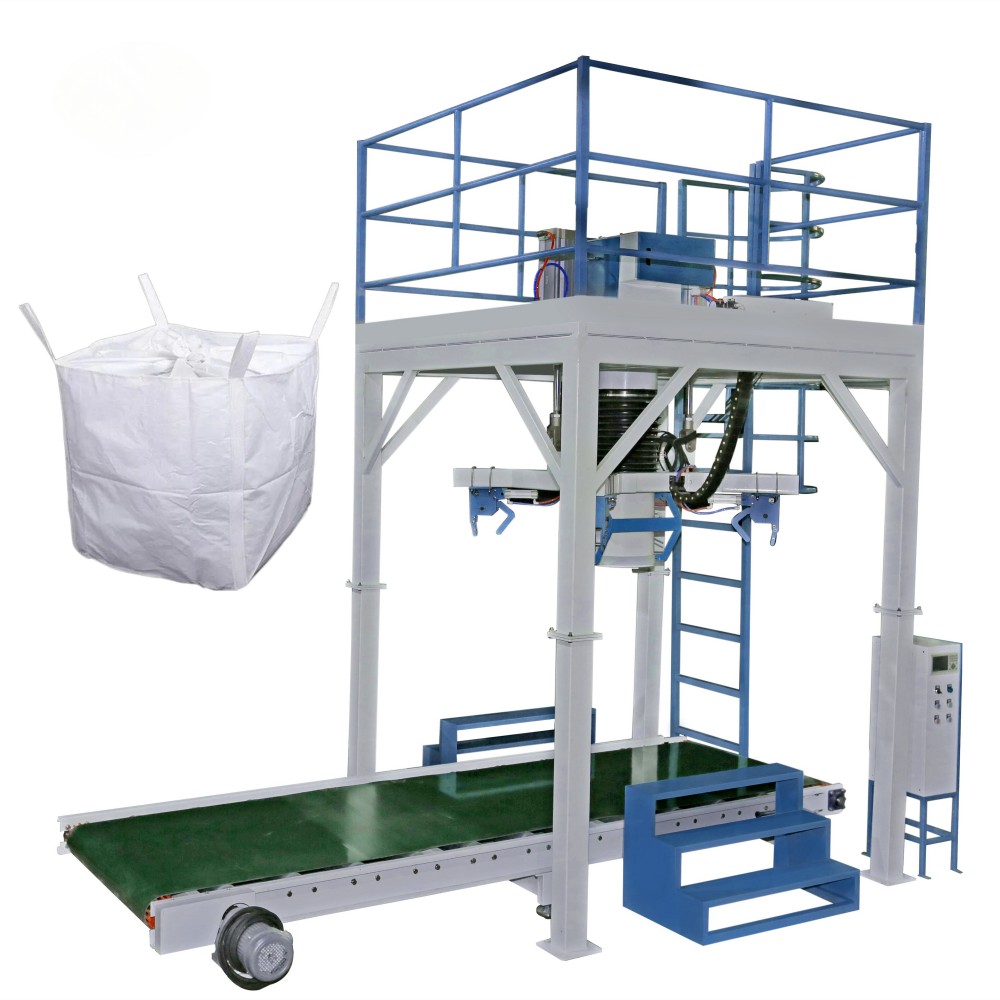
Bulk packaging plays an important role in industries that handle large quantities of fertilizer, grain, animal feed, chemicals, minerals, starch, rubber, plastic pellets, and building materials. For these products, FIBC and jumbo bags offer an efficient alternative to smaller packages, especially when materials need to be transported, stored, or loaded in large volumes.
However, filling a 500 kg, 1 ton, or even 2 ton bag is not simply a matter of putting material into a large container. The process requires controlled weighing, stable material feeding, proper bag positioning, and reliable handling. When these tasks are performed manually, production speed and filling consistency can become difficult to maintain.
A 1 ton jumbo bag packaging machine provides a more structured solution by combining bulk weighing and filling into a dedicated packaging process. Muniu Machinery supplies configurable jumbo bag packaging equipment for different materials, bag capacities, and production requirements.
Why Bulk Bag Packaging Needs Controlled Weighing
The larger the package, the more important accurate weighing becomes.
A small filling error may have a limited effect on a small package, but an inaccurate bulk bag can represent a much larger quantity of material. For manufacturers shipping hundreds of bags, even a small deviation in every bag can affect material consumption, inventory records, and customer satisfaction.
A dedicated jumbo bag packaging system allows the filling process to be controlled around a target weight.
Muniu's equipment can be configured for weighing ranges of approximately 300–1,500 kg per bag, while its broader jumbo bag packaging solutions can support different capacities up to approximately 2,000 kg depending on the configuration.
The actual weighing performance depends on the material, weighing system, bag specification, and operating conditions, so these factors should be evaluated before equipment selection.
A More Organized Alternative to Manual Filling
Manual bulk bag filling often requires several repetitive operations:
-
Positioning the empty bag.
-
Connecting the bag to the filling outlet.
-
Feeding the material.
-
Monitoring the weight.
-
Stopping the filling process.
-
Removing or transferring the filled bag.
When production volumes are relatively low, manual operation may be manageable. As output increases, however, these repetitive tasks can become a bottleneck.
A semi-automatic jumbo bag packaging machine can take over the core weighing and filling operations while operators continue handling necessary bag-positioning and transfer tasks.
This creates a practical balance between automation and flexibility.
For many factories, it can be more economical to automate the most repetitive and accuracy-sensitive steps first rather than completely replacing the existing production process.
Production Capacity for Different Applications
Production capacity is another important factor when choosing bulk bag equipment.
Depending on the material, filling weight, bag design, feeding system, and machine configuration, Muniu's jumbo bag packaging equipment can achieve approximately 15–40 bags per hour.
For a nominal 1 ton package, this represents a substantial volume of material processed during a production shift.
However, the maximum theoretical speed should not be treated as a universal production guarantee. Powder, granules, pellets, minerals, and other bulk materials have different flow characteristics.
A practical equipment evaluation should therefore consider the complete cycle time, including bag positioning, filling, weighing, bag removal, and any downstream handling.
Different Materials Require Different Filling Solutions
Bulk materials do not behave in the same way.
A free-flowing grain product can move rapidly through a feeding system, while fine powder may generate dust or develop bridging problems. Plastic pellets and rubber products may have completely different flow characteristics again.
Important material parameters include:
-
Bulk density
-
Particle size
-
Flowability
-
Moisture content
-
Dust generation
-
Bridging tendency
-
Material temperature
-
Required filling rate
These factors can influence the choice of feeding and weighing equipment.
For this reason, manufacturers should provide detailed material information when requesting a jumbo bag packaging solution. Equipment designed around the actual product is more likely to deliver stable long-term performance than a standard configuration selected only according to bag weight.
Where 1 Ton Jumbo Bag Packaging Is Commonly Used
The flexibility of FIBC packaging makes jumbo bag systems suitable for many industries.
Fertilizer
Fertilizer manufacturers often need to package large quantities of granular or powdered products. Controlled filling helps maintain consistent package weights while improving the efficiency of bulk material handling.
Grain and Animal Feed
Grain, feed, and agricultural products can be transported in large bags to reduce the number of individual handling operations between production and storage.
Chemical Materials
Chemical powders and granules may require controlled filling and appropriate dust-management measures. The packaging system can be configured according to material characteristics and production requirements.
Building Materials
Products such as powders and granular construction materials can benefit from bulk packaging for transportation and warehouse handling.
Starch, Rubber, and Plastic Materials
Starch, rubber products, plastic pellets, and other industrial materials can also be packaged in large bags, particularly when high-volume material transfer is required.
Bag Closing Is an Important Part of the Process
Filling is only one stage of bulk packaging.
Once the target weight has been reached, the filled bag needs to be closed, transferred, or prepared for transportation. If bag closing is slow or inconsistent, it can limit the efficiency gained during filling.
Muniu Machinery also provides pneumatic woven-bag closing sewing equipment that can be integrated into suitable packaging workflows.
A typical process may therefore look like:
Bag positioning → Weighing → Filling → Bag closing → Conveying → Palletizing → Stretch wrapping → Storage or shipment
The actual process can be simplified or expanded depending on the customer's production line.
Semi-Automatic Systems Offer Practical Flexibility
Full automation is not always necessary for every bulk packaging operation.
For manufacturers with moderate production volumes or frequently changing products, a semi-automatic system can provide a useful combination of machine assistance and operator flexibility.
The operator can remain involved in bag positioning and transfer while the machine controls the critical weighing and filling stages.
This approach can be particularly suitable for factories that:
-
Handle several bulk materials
-
Use different bag sizes
-
Have moderate production volumes
-
Want to reduce manual weighing
-
Need a flexible packaging process
-
Plan to expand automation gradually
As production requirements increase, additional conveying, palletizing, wrapping, or robotic equipment can be added to extend the automation level.
Integrating Jumbo Bag Filling Into a Complete Line
A jumbo bag packaging machine can serve as the central weighing and filling station within a larger packaging system.
For example, a factory may use the following workflow:
Bulk material feeding → Quantitative weighing → Jumbo bag filling → Bag closing → Conveyor transfer → Palletizing → Stretch wrapping
Muniu Machinery's broader packaging equipment portfolio includes conveyors, lifting systems, sealing and closing equipment, palletizers, robots, stretch film machines, and strapping equipment.
This provides manufacturers with the possibility of developing a more integrated bulk packaging process instead of purchasing every stage from unrelated equipment suppliers.
For larger production facilities, connecting these stages can help reduce unnecessary manual movement and improve material flow through the factory.
What Should Buyers Prepare Before Choosing a Machine?
Selecting a bulk bag packaging machine should begin with application data.
Manufacturers should provide information about:
Material: Identify whether the product is powder, granule, pellet, mineral, food ingredient, chemical, or another bulk material.
Bag capacity: Confirm the required weight, such as 500 kg, 1 ton, 1.5 tons, or 2 tons.
Bag type: Specify whether FIBC, jumbo, woven, bulk, or another bag format is being used.
Production target: Determine the required number of bags per hour.
Material properties: Provide bulk density, particle size, flowability, moisture, and dust characteristics where applicable.
Factory layout: Consider installation space, feeding height, operator position, conveyor direction, and downstream equipment.
Automation requirements: Decide whether semi-automatic filling is sufficient or whether additional automated handling is required.
This information allows the supplier to recommend a more suitable weighing and filling configuration.
Making Bulk Packaging More Consistent
The purpose of a jumbo bag packaging machine is not simply to make larger bags.
Its real value lies in creating a more repeatable process for weighing, filling, and handling bulk materials.
For manufacturers working with fertilizer, grain, feed, chemicals, minerals, starch, rubber, plastic pellets, food ingredients, and construction materials, a properly configured system can reduce repetitive manual operations while improving control over package weight and production workflow.
Muniu Machinery's configurable solutions cover different jumbo bag capacities and production requirements, with filling capacities and operating speeds determined by the selected configuration and material characteristics.
When combined with bag closing, conveying, palletizing, wrapping, and other downstream equipment, a 1 ton jumbo bag packaging machine can become an important part of a complete bulk material packaging line.
For factories planning to upgrade manual packaging or improve an existing production process, the best approach is to select equipment based on the material, bag specification, target weight, required output, and factory layout. This application-focused approach provides a stronger foundation for stable operation and future production expansion.
www.muniupack.com
Muniu
About Author