In the bottled water industry, profitability is closely tied to how efficiently a production line operates. Rising labor costs, tighter delivery schedules, and increasing quality expectations are pushing manufacturers to rethink traditional manual or semi-manual filling processes. One of the most effective ways to address these challenges is the adoption of a well-designed water filling machine.
This article explains how modern water filling machines directly improve productivity and reduce labor costs, using real production logic rather than abstract promises. It also shows how experienced equipment suppliers such as Zhangjiagang Runbo Electromechanical Co., Ltd. support beverage and liquid producers with practical, scalable filling solutions.
The Productivity Challenge in Bottled Water Production
Manual or low-automation filling operations often face the same bottlenecks:
-
Inconsistent output caused by human fatigue
-
High labor demand for repetitive tasks
-
Quality variations between shifts
-
Frequent interruptions for adjustments and cleaning
As production volume increases, these issues become more pronounced. Simply adding more workers rarely solves the problem and often increases costs without improving efficiency.
A water filling machine addresses these challenges by standardizing key processes and reducing dependence on manual labor.
Automation as the Foundation of Productivity
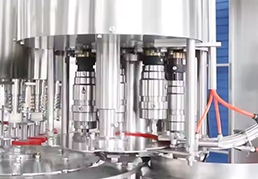
The primary way a water filling machine improves productivity is through automation. Instead of relying on operators to perform rinsing, filling, and capping separately, the machine executes these steps in a synchronized and continuous sequence.
This automation delivers several measurable benefits:
-
Faster and more stable production cycles
-
Reduced idle time between processes
-
Consistent output across long operating hours
Even at moderate speeds, automated systems often outperform manual lines in total daily output because they maintain steady performance without fatigue.
Reducing Labor Requirements at Critical Stages
Labor cost reduction does not necessarily mean eliminating workers. Instead, it means reallocating labor to higher-value tasks.
A water filling machine significantly reduces labor demand in areas such as:
-
Bottle handling and positioning
-
Filling level control
-
Cap placement and tightening
With these processes handled automatically, fewer operators are required on the filling line. Staff can instead focus on quality inspection, material supply, or line supervision, which improves overall operational efficiency.
Consistent Filling Accuracy Minimizes Rework
In manual filling operations, inconsistent fill levels are a common source of waste. Overfilling leads to product loss, while underfilling can cause customer complaints or regulatory issues.
Modern water filling machines are engineered to maintain stable filling accuracy throughout production. This consistency reduces:
-
Product waste
-
Time spent on rechecking and reworking
-
Downtime caused by packaging issues
By minimizing errors at the filling stage, manufacturers improve both productivity and cost control.
Faster Line Speed Without Sacrificing Quality
Productivity gains are meaningful only when quality is maintained.
High-quality water filling machines are designed to increase line speed while preserving hygiene and filling precision. Smooth mechanical motion and optimized control systems allow bottles to move continuously through the filling process without unnecessary stops.
This balance between speed and stability is essential for producers supplying supermarkets, distributors, or export markets where consistency is critical.
Simplified Operation Reduces Training Costs
Another often-overlooked benefit of automated water filling machines is reduced training complexity.
Manual filling processes rely heavily on operator skill and experience. Training new staff takes time, and performance varies between individuals. In contrast, a well-designed filling machine uses standardized operating logic.
Clear control interfaces and predictable workflows allow operators to learn faster and make fewer mistakes. Over time, this lowers training costs and reduces the risk of operational errors.
Lower Maintenance-Related Downtime
Unplanned downtime directly impacts productivity and labor efficiency.
Water filling machines designed for industrial use prioritize mechanical reliability and ease of maintenance. Standardized components, accessible layouts, and logical system design make routine maintenance faster and more predictable.
When maintenance is easier to plan and execute, fewer staff hours are lost to troubleshooting, and production schedules become more reliable.
Supporting Multi-Product Production with the Same Workforce
Many bottled water producers eventually expand into other liquid products. A flexible filling machine allows this transition without major changes to staffing structure.
Zhangjiagang Runbo Electromechanical Co., Ltd. develops filling equipment that supports a wide range of applications, including:
-
Water filling machines
-
3 & 5-gallon filling machines
-
Carbonated beverage filling machines
-
Liquid filling machines
-
Milk filling machines
These systems are widely used across the beverage, dairy, and other liquid product filling sectors. With adaptable equipment, manufacturers can diversify production while keeping labor requirements stable.
You can review detailed product configurations and application examples through Runbo’s official catalog:
water filling machines and liquid filling solutions
Improved Line Coordination Reduces Labor Overlap
In manual or semi-manual lines, workers often wait for upstream or downstream processes to catch up. This overlap wastes labor time and reduces effective productivity.
A water filling machine designed for integration into a complete production line improves coordination between filling, labeling, and packaging stages. Bottles flow smoothly through the line, reducing idle time and unnecessary handling.
Better line balance means fewer workers are needed to manage transitions between processes.
Long-Term Cost Control Through Predictable Output
Labor costs are easier to control when production output is predictable.
Automated water filling machines deliver consistent daily output, making it easier to plan staffing levels and shift schedules. Managers can allocate labor based on actual production needs rather than uncertainty.
Over time, this predictability supports more accurate cost forecasting and operational planning.
The Role of the Equipment Manufacturer
The benefits of automation depend heavily on machine design and manufacturer expertise.
Zhangjiagang Runbo Electromechanical Co., Ltd. is a high-tech enterprise specializing in the research, development, production, and sales of filling equipment. The company focuses on providing efficient and reliable filling solutions based on real production environments.
Rather than offering one-size-fits-all systems, Runbo supports manufacturers with equipment suited to different production scales and product types. This practical approach helps customers achieve genuine productivity improvements rather than short-term gains.
Conclusion
A water filling machine improves productivity and reduces labor costs by standardizing processes, minimizing errors, and optimizing the use of human resources. Automation does not remove the need for skilled workers, but it allows them to focus on tasks that add more value to the production process.
For bottled water and liquid product manufacturers seeking sustainable efficiency gains, investing in the right filling equipment is a strategic decision. By working with experienced suppliers such as Zhangjiagang Runbo Electromechanical Co., Ltd., producers can build production lines that deliver consistent output, controlled labor costs, and long-term operational stability.
www.runbo-fillingmachine.com
Runbo Electromechanical
About Author