Introduction
Industrial power systems rarely have identical requirements. A small manufacturing workshop, a large automated factory, a renewable energy facility, a mining operation, and a transportation project can all require transformers, yet their electrical loads, operating environments, installation conditions, and safety requirements may be completely different.
This is why standard transformer models are not always the most practical solution for industrial projects. When voltage levels, capacity, dimensions, cooling requirements, environmental conditions, or installation limitations fall outside conventional specifications, a custom dry-type transformer can provide a more suitable approach.
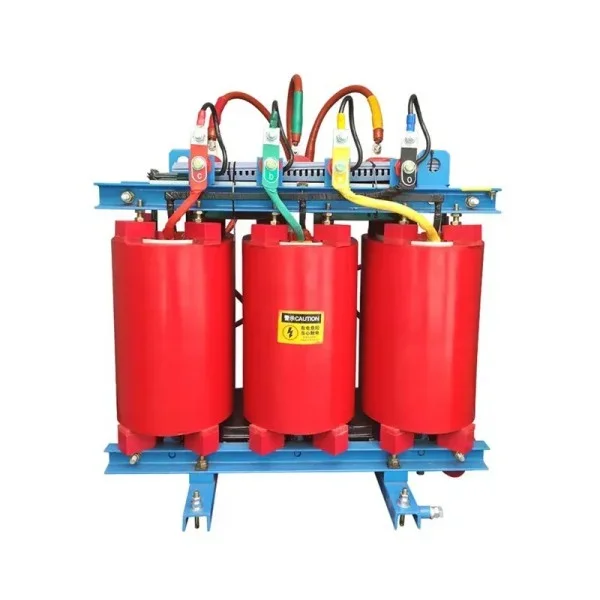
Unlike oil-filled transformers, dry-type transformers use solid insulation materials and air-based cooling rather than insulating oil. This makes them particularly suitable for indoor installations, industrial facilities, commercial buildings, renewable energy projects, and locations where fire safety and environmental protection are important.
However, customization is not simply about changing the transformer's dimensions. A properly engineered custom transformer considers the complete electrical system, including load characteristics, voltage requirements, thermal performance, insulation, protection, installation space, and future operating conditions.
This article explains how custom dry-type transformer solutions can meet different industrial power requirements and what buyers should consider when working with a transformer manufacturer.
Why Industrial Projects Often Require Custom Transformers
Industrial electrical systems are becoming increasingly complex. Modern facilities may include high-power motors, variable frequency drives, automation equipment, robotics, welding systems, HVAC equipment, battery storage, and other electrically demanding loads.
These applications can create requirements that cannot always be met by a standard transformer.
Common reasons for choosing a custom transformer include:
-
Non-standard input or output voltage
-
Special capacity requirements
-
Limited installation space
-
Unusual load characteristics
-
High ambient temperatures
-
Dusty or humid environments
-
Low-noise requirements
-
Special protection levels
-
Specific cooling requirements
-
Harmonic-rich electrical loads
-
Integration with renewable energy systems
A professional dry-type transformer manufacturer can evaluate these requirements and develop a transformer configuration that matches the actual application.
The goal is not simply to create a transformer that works. The goal is to create one that operates reliably and efficiently under the specific conditions of the industrial facility.
1. Custom Voltage Ratios for Different Electrical Systems
Voltage requirements vary considerably between industrial applications.
A facility may receive medium-voltage electricity from the utility grid and require a lower voltage for production equipment. Different machines may also operate at different voltage levels.
For example, a project may require a transformer with a specific combination of:
-
Primary voltage
-
Secondary voltage
-
Frequency
-
Phase configuration
-
Tap settings
A standard transformer may not always provide the exact voltage ratio required by the project.
A custom dry-type transformer can be engineered to match the required voltage levels and electrical distribution architecture.
This is particularly useful for international projects, where grid voltage standards can differ between countries and regions.
For manufacturers and EPC contractors working across multiple markets, customized voltage configurations can simplify equipment integration and help avoid unnecessary modifications to the electrical system.
2. Matching Transformer Capacity to Industrial Loads
Transformer capacity is another area where customization can provide significant value.
Industrial loads can vary widely. A small production facility may require a relatively compact transformer, while a large manufacturing complex may require several high-capacity units.
Selecting a transformer that is too small can lead to:
-
Overloading
-
Excessive temperature rise
-
Reduced efficiency
-
Accelerated insulation aging
-
Unexpected shutdowns
On the other hand, a transformer that is significantly oversized may increase initial costs and result in unnecessary no-load losses.
Custom transformer engineering allows the manufacturer to consider:
-
Existing electrical demand
-
Load growth
-
Peak demand
-
Motor starting currents
-
Continuous operating loads
-
Future expansion
This helps industrial users select a more appropriate transformer capacity instead of relying solely on standard capacity ranges.
3. Supporting Heavy-Duty Industrial Loads
Industrial electrical equipment can behave very differently from conventional commercial loads.
Large motors, compressors, pumps, welding equipment, furnaces, and other machinery can create high starting currents or rapidly changing electrical demand.
A custom industrial dry-type transformer can be designed around these operating characteristics.
Engineers may need to consider:
-
Motor starting conditions
-
Short-term overload requirements
-
Load fluctuations
-
Power factor
-
Harmonic distortion
-
Short-circuit conditions
By understanding how the transformer will interact with connected equipment, manufacturers can optimize the winding design, thermal performance, and capacity.
This can improve power stability and reduce unnecessary stress on the transformer.
4. Designing for Limited Installation Space
Space is often a major constraint in industrial projects.
During factory expansion or electrical system upgrades, there may already be a dedicated transformer room with fixed dimensions. Rebuilding the room to accommodate a standard transformer can be expensive and disruptive.
A custom transformer can be designed around available installation space.
Customization may involve:
-
Overall dimensions
-
Height
-
Width
-
Depth
-
Terminal arrangement
-
Cable entry positions
-
Enclosure configuration
This flexibility can be particularly valuable during retrofit projects.
For example, an industrial facility replacing an older transformer may have limited access through existing doors, corridors, or equipment rooms. A custom configuration can help address these physical constraints.
5. Adapting Cooling Systems to Different Operating Conditions
Heat management is one of the most important considerations in transformer design.
All transformers generate heat during operation, but industrial environments can have higher ambient temperatures and heavier continuous loads than commercial installations.
A custom dry-type transformer can be designed with an appropriate cooling configuration.
Depending on the application, the transformer may use natural air cooling or forced-air cooling.
Cooling design can be influenced by:
-
Rated capacity
-
Load profile
-
Ambient temperature
-
Installation location
-
Ventilation conditions
-
Required temperature rise
For facilities with restricted airflow, additional thermal management may be necessary.
In some applications, temperature monitoring and cooling fans can be integrated into the transformer system to improve operational control.
6. Choosing the Right Insulation System
Insulation is central to transformer safety and service life.
Custom transformer projects may require different insulation technologies depending on the environment and performance requirements.
Two common approaches include cast resin and vacuum pressure impregnation (VPI).
Cast resin transformers use epoxy resin to encapsulate the windings, providing strong protection against moisture and contaminants.
VPI technology uses vacuum and pressure to impregnate the windings with insulating resin.
The appropriate insulation system depends on factors such as:
-
Humidity
-
Dust
-
Temperature
-
Chemical exposure
-
Mechanical stress
-
Fire safety requirements
-
Installation environment
A qualified dry-type transformer supplier should be able to explain the advantages and limitations of each option instead of recommending one technology for every project.
7. Improving Protection in Harsh Industrial Environments
Industrial facilities can expose electrical equipment to demanding conditions.
Mining operations may have high dust levels. Coastal facilities may face salt-laden air. Chemical plants may expose equipment to corrosive substances. Manufacturing plants may experience vibration, heat, and airborne contaminants.
A custom transformer can incorporate additional protection based on these conditions.
Potential design considerations include:
-
Protective enclosures
-
Corrosion-resistant materials
-
Enhanced insulation
-
Improved ventilation
-
Special coatings
-
Higher protection ratings
-
Vibration-resistant structures
The exact solution should be selected according to the actual environment.
For example, a transformer designed for a clean indoor electrical room may not be appropriate for a dusty industrial production area.
8. Meeting Different Fire Safety Requirements
Fire safety is an important reason many industrial users select dry-type technology.
Because a dry-type transformer does not use insulating oil, it eliminates the fire and leakage risks associated with liquid insulation.
However, different projects may have different fire safety requirements.
Hospitals, high-rise buildings, transportation facilities, and industrial plants may require specific fire performance characteristics and certifications.
Custom transformer engineering can incorporate suitable insulation materials and enclosure configurations to support these requirements.
When selecting a manufacturer, buyers should request relevant technical documents and test information rather than relying only on general statements about fire safety.
9. Managing Harmonics and Nonlinear Loads
Modern industrial equipment increasingly includes power electronics.
Variable frequency drives, switching power supplies, rectifiers, battery systems, and other electronic equipment can generate harmonic currents.
Excessive harmonics can increase transformer heating and affect electrical system performance.
A custom dry-type transformer can be designed with the expected harmonic environment in mind.
Depending on project requirements, engineers may consider:
-
Additional thermal capacity
-
Appropriate winding design
-
Neutral conductor requirements
-
Harmonic-rated transformer configurations
-
Load characteristics
This is particularly important in factories with large numbers of variable frequency drives or other nonlinear loads.
Ignoring harmonic conditions during transformer selection can result in excessive heating and reduced operating life.
10. Supporting Renewable Energy and Energy Storage Applications
Industrial power requirements are changing as more companies adopt renewable energy and energy storage systems.
Factories may combine:
-
Solar photovoltaic systems
-
Battery energy storage
-
Grid power
-
Backup generators
-
Microgrids
These systems can have complex voltage and power conversion requirements.
A custom dry-type transformer can be engineered to integrate with the specific architecture of the renewable energy system.
For example, engineers may need to consider bidirectional power flow, variable loading, inverter characteristics, and environmental conditions.
This makes customized transformer design particularly valuable for large solar farms, industrial energy storage systems, and hybrid power projects.
11. Custom Terminal and Connection Configurations
Electrical installation can become much easier when transformer terminals are designed around the actual cable and busbar arrangement.
Standard transformers may have fixed connection positions that do not match an existing electrical room.
Custom designs can accommodate requirements such as:
-
Top cable entry
-
Bottom cable entry
-
Side connections
-
Special terminal locations
-
Busbar connections
-
Different phase arrangements
These modifications may seem minor, but they can significantly affect installation time and project cost.
For large industrial projects, reducing unnecessary cable routing and installation modifications can improve overall system efficiency.
12. Integrating Monitoring and Protection Systems
Modern industrial facilities increasingly require real-time equipment monitoring.
A custom dry-type transformer can be equipped with monitoring devices that provide information about operating conditions.
Depending on the project, monitoring may include:
-
Winding temperature
-
Ambient temperature
-
Cooling fan status
-
Overtemperature alarms
-
Load information
These signals can potentially be integrated with the facility's monitoring or control system.
For critical industrial applications, early detection of abnormal temperature or cooling conditions can help maintenance teams respond before a minor issue develops into a major failure.
Conclusion
Every industrial facility has its own power distribution challenges, from demanding production loads and limited installation space to harsh operating environments and specific voltage requirements. Choosing a standard transformer is not always enough to address these differences. A well-designed custom dry-type transformer can be configured around the actual electrical and installation conditions of a project, helping provide reliable power distribution while supporting safety, efficiency, and long-term operation.
For buyers, customization should go beyond changing transformer dimensions or voltage ratings. Factors such as winding configuration, insulation system, cooling method, enclosure design, temperature monitoring, connection arrangement, and expected load profile should all be considered during the selection process. Working with an experienced manufacturer can help ensure that these details are properly coordinated from design through production and testing.
VENSOL focuses on providing transformer solutions that can be adapted to different power distribution requirements, helping industrial customers find a practical balance between performance, reliability, installation conditions, and long-term operating needs. By selecting the right configuration for each application, a dry-type transformer can provide dependable electrical performance while supporting the changing power demands of modern industrial facilities.
www.vensolws.com
vensolws
About Author