Managing live audio involves much more than balancing microphone levels. Event organizers, audio rental companies, and venue operators must deal with changing stage setups, tight installation schedules, different acoustic environments, and increasingly complex signal requirements. A system that works well for a business meeting may not provide enough flexibility for a live concert or a multi-source production.
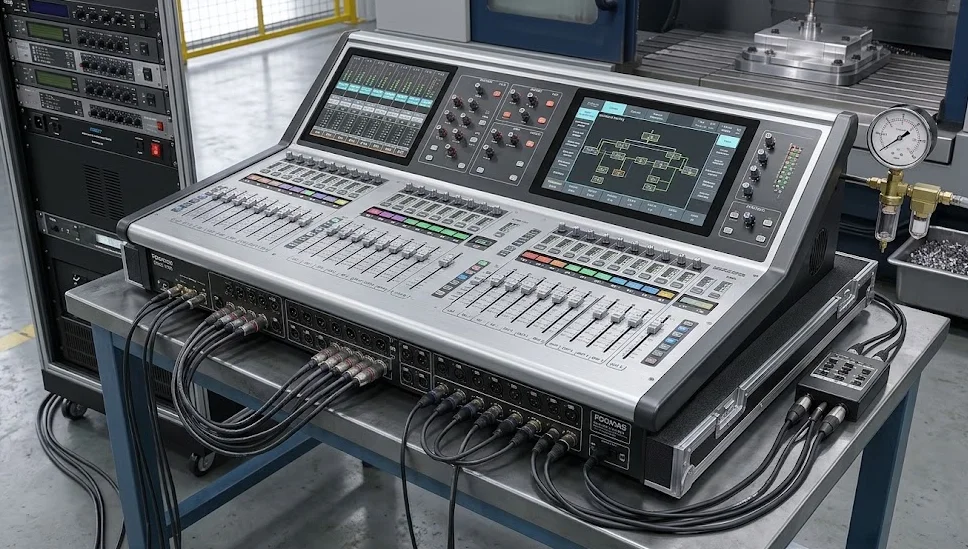
Choosing the right Digital Mixing Console can help audio professionals manage these demands more efficiently. Rather than focusing solely on technical specifications, buyers should consider how a console fits into their existing equipment, daily workflow, and future production plans.
1. Make Event Changeovers Easier with Flexible Mixing Workflows
For companies handling multiple events, configuring audio equipment repeatedly can consume a significant amount of preparation time. A conference might require several wireless microphones and presentation audio, while a music performance may involve multiple instruments, dedicated monitor mixes, and additional playback sources.
A console that requires engineers to rebuild every setting for each event can slow down operations and increase the possibility of mistakes.
Scene management offers a practical way to address this issue. When supported by the console, saved configurations allow engineers to recall channel settings, routing arrangements, and processing parameters for recurring event types. This provides a consistent starting point and reduces repetitive setup work.
However, saved scenes still require verification. Changes in microphone placement, performers, room acoustics, and connected equipment can affect the final mix. Engineers should check signal levels, routing, and processing before the audience arrives.
For event production businesses, an effective digital mixing workflow is one that saves time while allowing technicians to make adjustments quickly when conditions change.
2. Improve Speech Clarity and Control Feedback
Poor speech intelligibility and microphone feedback are common concerns in conference facilities, hotels, educational venues, and live performance spaces. Feedback can interrupt an event, while excessive reverberation or an unbalanced frequency response can make spoken information difficult to understand.
A digital mixing console provides tools such as equalization, dynamics processing, and auxiliary sends, but these functions work best when the overall sound system is properly configured.
Engineers should first examine microphone positions, loudspeaker placement, monitor levels, and gain structure. Correcting these factors can often improve stability more effectively than making aggressive equalization adjustments alone.
For presentations and corporate events, clear and natural speech should be the priority. For musical performances, engineers must also maintain tonal balance and preserve the dynamics of the source material.
When comparing a professional digital mixing console for live sound, buyers should assess whether commonly used controls are accessible and whether the operating workflow is practical for the technicians who will use the equipment. Straightforward operation can be especially valuable when a venue relies on multiple operators with different levels of experience.
3. Plan Channel Capacity and Routing Before Purchasing
As productions become more complex, audio routing can become a greater limitation than the number of available input channels.
A system may accommodate all its microphones but still lack enough independent monitor buses, matrix outputs, or physical connections for additional audio destinations. Recording, streaming, and multi-zone sound reinforcement can introduce further requirements.
Before investing in a digital audio mixing console, prepare a list of the sources and destinations that the system must support. Include microphones, instruments, playback devices, stage monitors, main loudspeakers, recording feeds, and connections to external equipment.
This inventory helps buyers identify the necessary input capacity, output configuration, and routing flexibility before making a purchase.
It is also worth considering future requirements. If the business expects to handle larger events or introduce additional audio zones, the selected console should be evaluated against those plans. Any expansion capability should be confirmed through the manufacturer's specifications rather than assumed.
A well-planned configuration helps prevent both unnecessary spending on excessive capacity and costly limitations after installation.
4. Check Equipment Compatibility Before Upgrading
Upgrading a mixing console can affect the wider audio infrastructure. Stage boxes, amplifiers, loudspeaker processors, recording equipment, and control systems may use different connectors, signal formats, or communication protocols.
For example, having digital connections does not automatically mean that two devices can exchange audio directly. Compatibility depends on the interfaces, supported protocols, and configuration of each component.
System integrators should therefore review the existing signal chain before selecting replacement equipment. Important considerations include input and output requirements, connector types, digital audio formats, network compatibility, and any additional hardware needed to complete the installation.
Networked audio can provide flexible signal distribution in suitable systems, particularly when audio sources and equipment are located in different areas. However, buyers must verify protocol support and network requirements for every relevant device.
Taking these steps before ordering can reduce installation delays, unexpected accessory expenses, and unnecessary replacement of equipment that is still suitable for use.
5. Evaluate Long-Term Value, Not Just Specifications
The best console for a particular application is not necessarily the model with the most channels or the largest feature list. Practical operation, technical support, and compatibility with the working environment also influence long-term value.
For audio rental companies, equipment needs to withstand frequent transportation and be manageable by different technicians. Permanent installations may place greater emphasis on repeatable configurations, straightforward operation, and reliable day-to-day performance.
Before making a decision, buyers should evaluate several factors:
-
Ease of operation: Are frequently used functions easy to access during a live event?
-
Technical support: Are product documentation, operating instructions, and relevant technical resources available?
-
Installation requirements: Do the console's dimensions, connections, and power requirements suit the intended location?
-
Future flexibility: Can the proposed configuration accommodate realistic changes in channel count, monitoring, and signal distribution?
-
Total cost of ownership: Have installation, accessories, operator training, maintenance, and future upgrades been considered?
Comparing equipment against these practical requirements provides a more useful basis for purchasing decisions than relying on headline specifications alone.
6. Exploring Professional Digital Mixing Consoles from HMAUDIO
For buyers evaluating equipment for different live audio applications, HMAUDIO offers several digital mixing console series, including SM16, SM20/24/32, F16, KM20, DM24/32, and DM16 MAX.
These product ranges provide options to consider when planning a professional audio setup. The most suitable model will depend on the project's input requirements, routing needs, processing functions, connections, and operating environment. Buyers should consult the official specifications for the selected model to confirm that it meets their technical requirements.
HMAUDIO also offers related audio equipment, including digital snakes, audio matrices, and digital loudspeaker management products. These product categories may be relevant when developing a coordinated sound system, although the compatibility of individual devices should be checked before integration.
For venue operators, rental businesses, and audio system integrators, preparing a channel list and a basic signal-flow diagram before contacting a supplier can make product comparisons more efficient. It also helps ensure that equipment selection is based on actual operational requirements rather than unnecessary features.
Conclusion
A reliable live audio setup depends on more than choosing a powerful mixing console. Efficient event preparation, clear speech reproduction, flexible routing, and compatibility with existing equipment all contribute to successful audio production.
By identifying operational challenges before purchasing, audio professionals can select equipment that better supports their current workload and future plans. With its range of digital mixing consoles and related professional audio products, HMAUDIO provides options for businesses evaluating equipment for different sound reinforcement applications.
https://www.hmaudiopro.com/solving-the-real-challenges-of-live-audio-production.html
www.hmaudiopro.com
HMAUDIO Group
About Author