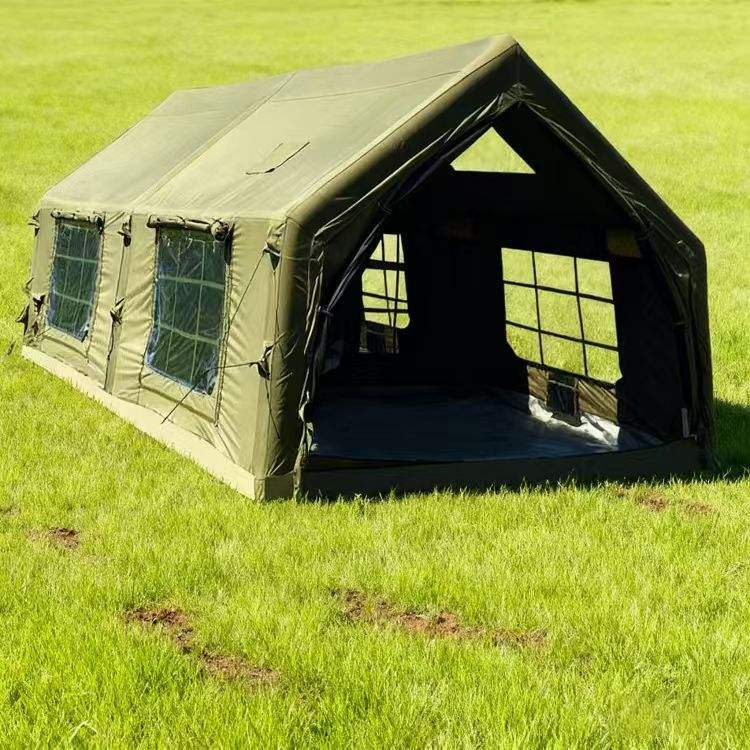
Outdoor shelters used in military operations, emergency response, and remote field activities must perform reliably under changing environmental conditions. Heavy rain, strong winds, temperature fluctuations, and difficult terrain can all affect the safety and usability of a tent. For organizations responsible for equipment procurement, choosing the right shelter requires careful consideration of its materials, structural design, deployment method, and maintenance requirements.
A waterproof military tent is expected to provide more than basic protection from rain. It should offer a stable structure, dependable weather resistance, sufficient interior space, and practical deployment procedures. Depending on the application, transportation weight, repairability, ventilation, and compatibility with additional equipment may also influence the purchasing decision.
However, not every product described as heavy-duty or military-grade is suitable for demanding outdoor conditions. Buyers should evaluate the complete tent system and verify performance claims before placing an order.
1. Identify the Environmental Requirements Before Purchasing
The first step in selecting a waterproof military tent is understanding where and how it will be used. A temporary shelter for occasional outdoor activities has different requirements from a tent intended for extended field deployment.
Several environmental factors should be considered.
Heavy rainfall: The tent needs waterproof fabric, reliable seam construction, and a roof design that allows water to drain effectively. Poorly designed roof sections may collect water and place additional stress on the structure.
Strong winds: Structural stability depends on the frame or support system, anchoring points, guy lines, and overall tent geometry. The installation surface and exposure to wind also affect performance.
Cold and humid environments: Material flexibility, insulation compatibility, and condensation management become important. Moisture accumulation inside the shelter can reduce comfort and affect stored equipment.
Hot and sunny conditions: UV resistance, ventilation, and airflow influence the long-term durability of the fabric and the usability of the interior.
Remote locations: Packed dimensions, transportation weight, setup time, repair procedures, and replacement components can have a direct impact on field operations.
Buyers should distinguish between occasional exposure to bad weather and continuous use in severe environments. If a project requires specific military or emergency-response performance standards, the supplier should provide relevant documentation rather than relying on general marketing descriptions.
2. Examine Fabric Quality and Waterproof Construction
The fabric is one of the most important components of a waterproof tent, but its performance cannot be judged by coating specifications alone.
Polyester and nylon are commonly used in outdoor tent manufacturing. Both materials can provide useful combinations of strength, weight, and flexibility when manufactured with suitable yarns and protective coatings.
Polyester generally offers good dimensional stability and relatively low moisture absorption. Nylon can provide a favorable strength-to-weight ratio, making it useful in applications where transportation weight matters. The actual performance of either material depends on fabric construction, coating formulation, thickness, and manufacturing quality.
When evaluating a tent fabric, buyers should request information about:
-
Base fabric composition and construction
-
Fabric weight and thickness
-
Waterproof performance and test methods
-
Tear strength and abrasion resistance
-
UV resistance and weathering performance
-
Suitability for the expected temperature range
Seam construction is equally important. Even highly waterproof fabric may allow water to enter through poorly sealed stitching, door openings, or connection points.
Look for appropriate seam-sealing methods, reinforced stitching, protected zippers, and rain flaps. Pay particular attention to roof intersections, corners, ventilation openings, and floor connections, as these areas may become potential leakage points during prolonged rainfall.
For large procurement projects, requesting a product sample or complete-tent test report is more useful than relying exclusively on the waterproof rating of the raw fabric.
3. Evaluate Structural Stability and Wind Resistance
Waterproof performance and wind resistance are two separate considerations. A tent that effectively prevents rainwater from entering may still be unsuitable for exposed locations if its support structure and anchoring system are inadequate.
Traditional tents commonly use metal or composite poles to maintain their shape. Inflatable tents use air-filled support columns in place of conventional rigid poles in the relevant structural sections.
Each design has different advantages.
A traditional framed tent provides a familiar support arrangement and may be suitable for applications where rigid structural components are preferred. An inflatable tent can reduce the number of individual frame components that need to be assembled, potentially simplifying deployment.
When evaluating structural performance, buyers should examine:
-
The strength and geometry of the main support structure.
-
The number and reinforcement of anchoring points.
-
The quality of guy lines, straps, pegs, and connecting hardware.
-
The stability of the roof and sidewalls under wind loading.
-
The availability of repair materials and replacement components.
For inflatable structures, additional attention should be given to air-column material, valve quality, pressure retention, and puncture resistance.
It is important not to assume that an inflatable tent is automatically more wind-resistant than a conventional tent. Request wind-test information or other relevant structural performance documentation for the specific model. Actual stability also depends on installation accuracy, ground conditions, anchoring quality, and exposure.
4. Consider Inflatable Tents for Faster Field Deployment
In emergency response, temporary military support operations, and remote outdoor activities, deployment efficiency can be an important purchasing factor.
Conventional tents may require multiple poles, connectors, and assembly steps. Inflatable designs simplify some of these procedures by using air-filled support columns to establish the tent structure.
This approach can reduce the number of separate structural components and make setup more straightforward, particularly when equipment needs to be installed by a small team.
Yiju Outdoor offers inflatable tent solutions designed around this deployment concept. Its product information indicates a setup time of approximately three minutes for the relevant tent design.
For buyers considering an inflatable military tent, the key question is whether the stated setup time reflects the actual operating process.
Before procurement, confirm:
-
Whether an air pump or other inflation equipment is required.
-
How many people are needed for setup.
-
Whether anchoring and guy-line adjustment are included in the stated setup time.
-
How long the structure maintains its required air pressure.
-
Whether emergency repair kits and replacement valves are available.
A practical field trial is recommended before large-scale purchasing. The intended users should conduct the complete setup procedure, including unpacking, inflation, anchoring, inspection, and preparation for occupancy.
This provides a more realistic understanding of deployment efficiency than a demonstration performed under ideal conditions.
5. Balance Ventilation with Rain Protection
A tent must protect occupants from external weather while maintaining a reasonably comfortable internal environment.
One common issue in enclosed shelters is condensation. Occupants release moisture through breathing, while wet clothing and equipment can increase interior humidity. When warm, humid air contacts a cooler tent surface, condensation may form on the inside of the fabric.
Suitable ventilation helps manage this problem.
When evaluating a military tent, check the position and size of ventilation openings, the availability of adjustable vents, and whether the design limits direct exposure to wind-driven rain.
The ventilation arrangement should match the intended use. A shelter designed for personnel accommodation may require different airflow characteristics from a storage tent or temporary equipment shelter.
For cold-weather applications, buyers should also consider compatibility with appropriate insulation systems. Any heating equipment must be used according to its manufacturer's safety instructions.
Combustion heaters and cooking equipment can create serious fire and carbon monoxide hazards inside enclosed shelters. Waterproof construction does not make a tent safe for unrestricted indoor combustion use. Adequate ventilation, equipment clearances, and approved operating procedures are essential.
6. Select the Right Size and Internal Layout
The required tent size depends on its intended function. A shelter for personnel accommodation, temporary medical support, equipment storage, or field coordination may require different internal dimensions and layouts.
Buyers should consider more than the maximum occupancy figure provided by a manufacturer.
For personnel shelters, allow sufficient space for sleeping equipment, clothing, and movement. For equipment storage, evaluate entrance width, floor strength, and access requirements. For temporary workspaces, interior height and usable floor area may be particularly important.
Construction details should also be inspected.
Pay attention to reinforced corners, door edges, guy-line attachment points, and other areas exposed to repeated mechanical stress. The floor material should be suitable for the expected ground conditions and provide appropriate resistance to abrasion and moisture.
For inflatable tent designs, check the location of inflation valves and whether they remain accessible after installation. Buyers should also understand the manufacturer's recommended operating pressure and procedures for detecting and repairing air leaks.
A practical tent should be easy to deploy, inspect, and maintain throughout its service life.
7. Establish Proper Inspection and Maintenance Procedures
Even a well-manufactured tent requires routine inspection to maintain its intended performance.
Before deployment, inspect the fabric, seams, zippers, floor, anchoring points, support structure, and accessories. Look for cuts, loose stitching, damaged connections, and other visible defects.
During use, check the anchoring system after periods of strong wind or heavy rainfall. Loose guy lines and unstable ground anchors should be corrected promptly.
For inflatable tents, follow the manufacturer's pressure requirements and inspect valves, air columns, and connection areas regularly. Avoid exceeding the specified pressure, as this may damage the support structure.
After use, remove dirt and debris using cleaning methods appropriate for the fabric and coating. Allow the tent to dry completely before storage to reduce the risk of mildew and material deterioration.
Long-term storage should be in a dry, well-ventilated location away from excessive heat, prolonged direct sunlight, and chemicals that may damage the fabric.
For organizations managing multiple tents, maintaining inspection and repair records can help identify recurring problems and improve future purchasing decisions.
8. What to Look for in a Military Tent Manufacturer
Selecting a suitable manufacturer is just as important as choosing the product design. Buyers should evaluate whether the supplier can provide consistent product quality, clear technical documentation, and appropriate support for different project requirements.
Before placing an order, request the following information where applicable:
-
Product drawings and dimensional specifications
-
Fabric composition and coating details
-
Waterproof and weather-resistance test results
-
Structural and wind-performance documentation
-
Setup and maintenance instructions
-
Warranty terms and available replacement components
-
Customization options and production quality procedures
For military and emergency-response projects, buyers should clearly identify any required standards, certifications, or testing procedures. A product should not be considered compliant with a specific military standard unless the manufacturer can provide appropriate supporting documentation.
Yiju Outdoor is a manufacturer and seller of outdoor products, including tents, backpacks, sleeping bags, sleeping mats, and mosquito nets. The company focuses on standardized production processes, manufacturing facilities, production equipment, technical personnel, and quality management.
For organizations considering its inflatable tent products, providing detailed information about the intended environment, occupancy, dimensions, transportation requirements, deployment method, and weather-performance expectations can help determine whether an existing model is suitable.
Where customization is required, technical specifications and performance requirements should be confirmed before production.
Conclusion
Choosing a waterproof military tent for demanding outdoor environments requires a comprehensive assessment of fabric quality, seam construction, structural stability, anchoring, ventilation, interior space, and maintenance requirements.
No single product specification can guarantee suitability for every weather condition. Buyers should define the operating environment, review relevant technical documentation, and test the complete tent under realistic deployment conditions.
Inflatable tent designs can offer practical advantages where rapid setup and simplified structural assembly are priorities. However, air-column durability, pressure management, repairability, and verified wind performance must also be considered.
By establishing clear procurement requirements and working with a capable manufacturer, organizations can make better-informed decisions and select outdoor shelters that meet their operational needs more effectively
www.yijuoutdoor.com
Jinhua Yiju Outdoor Products Co., LTD.
About Author
