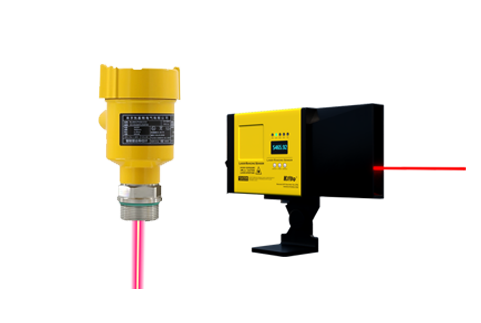
Choose a level sensor for difficult atmospheres by identifying which condition attacks the measurement, then selecting the technology that tolerates it: heavy dust, steam and vapors favor radar (electromagnetic waves pass through the atmosphere largely unaffected); severe foam favors radar or a point-level technology that reads through or ignores the foam; condensation on the sensor face attacks ultrasonic transducers hardest and requires mounting, heating or radar instead. KJT Sensors offers radar and ultrasonic level measurement; the exact choice is confirmed per medium, vessel and atmosphere data.
Key Takeaways
- The atmosphere is the application. In clean conditions almost any level technology works; dust, foam and condensation are what eliminate candidates. Define them first.
- Radar is the default for hostile tank atmospheres — dust, vapor, steam and temperature gradients affect electromagnetic propagation far less than sound. KJT Sensors' own level documentation states radar has stronger interference resistance in complex conditions such as steam, bubbles and dust (manufacturer-stated).
- Ultrasonic remains valid where its enemies are absent — moderate conditions, clean transducer faces, temperatures within compensation — and is often the simpler installation.
- Foam is a separate problem from dust: light foam may absorb or scatter the signal (both radar and ultrasonic); the question is whether the device reads the liquid surface through the foam, the foam top, or nothing at all — decide which reading the process needs.
How Each Condition Attacks the Measurement
| Condition | Effect on ultrasonic | Effect on radar | Practical countermeasures |
|---|---|---|---|
| Dust (silos, powders) | Attenuates and scatters sound; coats the transducer | Passes dust atmospheres largely unaffected; heavy buildup on antenna still harmful | Radar preferred; air-purge or regular cleaning; mounting away from fill stream |
| Foam | Absorbs/deflects sound; echo from foam top instead of liquid | Penetrates light foam better; thick dense foam still blocks | Define what to measure (foam top vs liquid surface); radar for light foam; guided/contact methods (outside this article's scope) for severe foam |
| Condensation | Water film on transducer face detunes it — the classic ultrasonic failure | Less sensitive; antenna design and mounting still matter | Condensation-resistant mounting (angled, heated, or relocated); radar as alternative |
| Vapor/steam/temperature gradients | Sound speed changes; attenuation in heavy vapor | Minor effect | Radar preferred; if ultrasonic, verify temperature compensation and vapor limits of the model |
| Vacuum / very low pressure | Sound does not propagate | Unaffected | Radar required |
Selection Steps
- Point level or continuous? Point level (high/low alarm, pump protection) can use simpler switching technologies; continuous level (inventory, control) needs a measuring device — ultrasonic or radar in the non-contact class. KJT Sensors' level documentation makes the same point/continuous distinction (manufacturer-stated).
- Characterize the medium: liquid or bulk solid, dielectric behavior (radar needs some reflectivity from the surface), foam tendency, corrosiveness.
- Characterize the atmosphere: dust load, vapor/steam, condensation pattern, temperature range — this table above is the decision tool.
- Characterize the vessel: height, internal structures (agitators, heating coils, brackets create false echoes), available nozzle position and size, blind-zone implications at the top.
- Confirm the model against the conditions: measuring range, blind/dead zone, process connection, IP rating, output (4–20 mA/RS485 class), and any stated environmental limits — per model, from documentation.
- Validate in the worst state: maximum dust event, thickest foam, coldest morning condensation — not the average day.
Unstable readings after installation — false echoes from structures, foam interference, condensation drift — are a diagnosis topic covered in the level troubleshooting guide; radar-specific unwanted reflections are covered in the radar troubleshooting guide.
KJT Sensors Options for Difficult Level Applications
From KJT Sensors' published pages and documentation (manufacturer-stated):
- Radar sensors (verified 2026-10-10): non-contact radar level measurement, with the level documentation noting radar's stronger resistance to steam, bubbles and dust; the radar page also states mini-radar products with ranges up to 20 m, millisecond response and IP67/IP68 protection;
- Ultrasonic sensors: non-contact level and distance measurement with documented attention points — blind zone, temperature compensation, vapor, bubbles, dust and mounting angle — per KJT Sensors' ultrasonic documentation;
- Liquid-level sensors (hydrostatic class): pressure-based level measurement for liquids where a submerged or process-connected device is acceptable — a different answer that bypasses the atmosphere problem entirely for suitable tanks (listed in the measuring sensor portfolio, verified 2026-10-09).
The radar-vs-ultrasonic technology comparison for level is owned by the radar/ultrasonic level guide; this article covers the difficult-atmosphere selection layer. The broader distance-technology comparison is in the laser/radar/ultrasonic guide.
Frequently Asked Questions
Which level sensor works best with dust or foam?
Heavy dust favors radar — dust atmospheres affect sound far more than electromagnetic waves. Foam requires a decision: light foam can often be read through with radar; severe foam may require a different measurement strategy altogether. State the foam behavior (thickness, density, persistence) when requesting a recommendation — it changes the answer.
How does condensation affect radar and ultrasonic level measurement?
Condensation on an ultrasonic transducer face is a primary cause of ultrasonic level failure — the water film detunes the transducer and weakens or blocks the echo. Radar antennas are less sensitive but not immune to buildup. Countermeasures: mounting position and angle, heated or purged arrangements, or switching to radar. If condensation is guaranteed in your vessel, design for it rather than hoping to clean it away.
What tank and medium data are needed to select a level sensor?
Medium (liquid/solid, dielectric behavior, foam, corrosiveness), atmosphere (dust, vapor, condensation, temperature), vessel (height, structures, nozzle position and size), required function (point/continuous, accuracy), process connection, and output/interface. KJT Sensors' level documentation asks for the same set — container size, medium, temperature/pressure, maximum and minimum levels, and installation photos.
Can ultrasonic level sensors work outdoors or in cold climates?
Ultrasonic measurement depends on sound speed, which varies with temperature — models with temperature compensation handle normal variation, but extreme gradients, icing and condensation on the transducer face are real limits. For cold outdoor tanks, verify the model's rated temperature range and compensation, and consider radar where condensation/icing is persistent.
Conclusion
Dust, foam and condensation are selection inputs, not footnotes: radar tolerates hostile tank atmospheres that defeat ultrasonic measurement, foam demands an explicit "what are we measuring" decision, and condensation must be designed out or the technology changed. KJT Sensors offers radar and ultrasonic level measurement with documented condition limits — send the vessel, medium and atmosphere data for a confirmed recommendation.
Sources
- KJT Sensors, Radar Sensors category — https://www.kjt-sensors.com/list-radar_sensors.html (verified 2026-10-10)
- KJT Sensors, Measuring Sensors category — https://www.kjt-sensors.com/list-clcgq.html (verified 2026-10-09)
- KJT Sensors internal documentation: radar level, ultrasonic level and liquid-level sensors (condition limits and selection factors), version current at drafting; manufacturer-stated
- General level-measurement engineering practice (atmosphere effects; no third-party claims)
Send Tank, Silo and Medium Details
Send the vessel dimensions, medium and foam behavior, dust/vapor/condensation conditions, and required function (point or continuous) — KJT Sensors will confirm the level technology and model. Pricing is quoted by model and project requirements.
https://www.kjt-sensors.com/
KJT Sensors
About Author