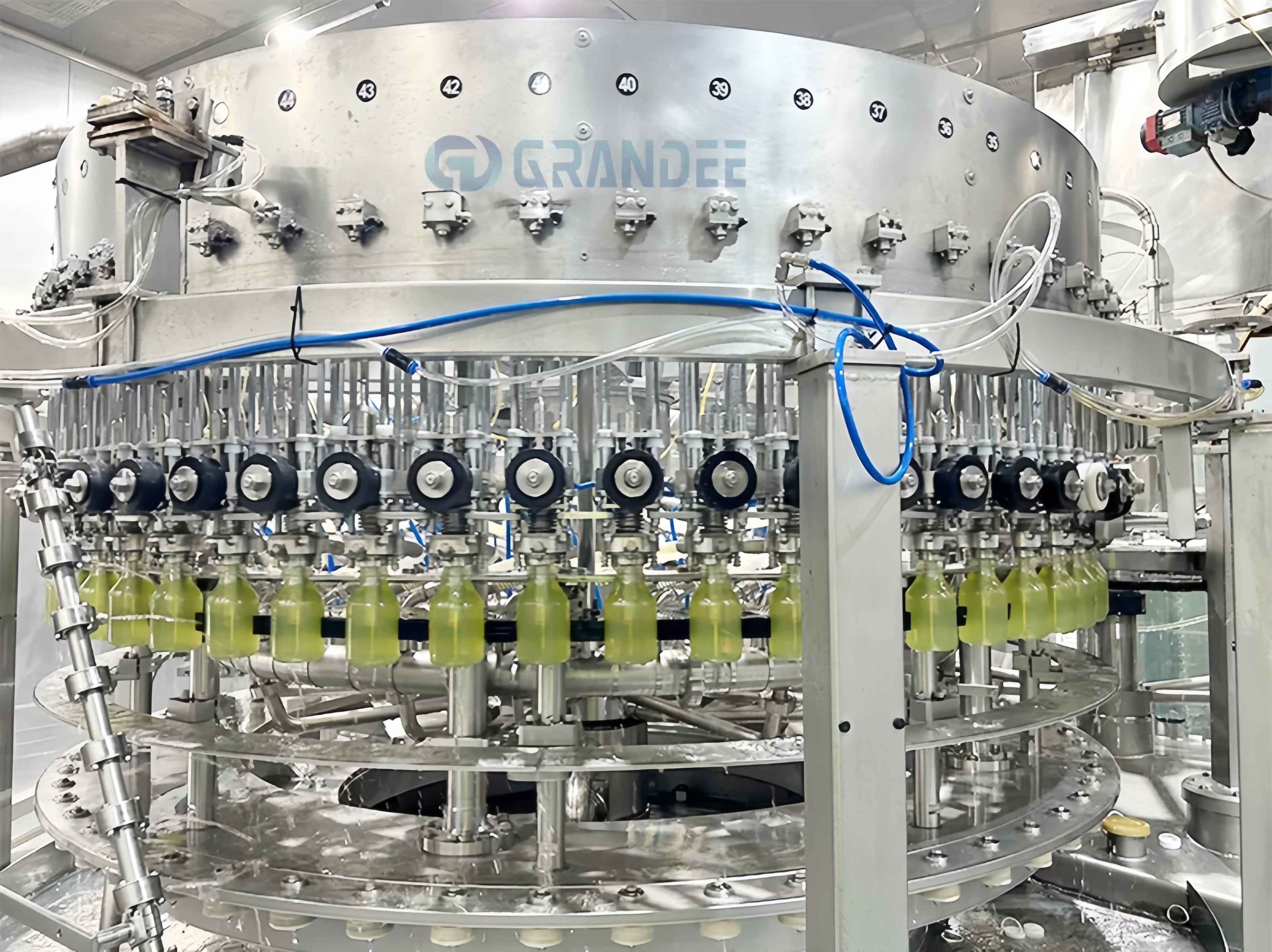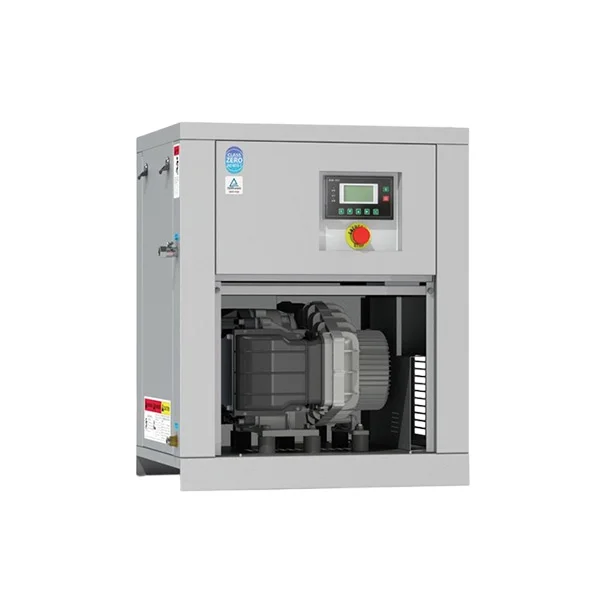
Clean compressed air is essential in many industries where even small amounts of oil or other contaminants can affect product quality, equipment performance, or process safety. Pharmaceutical manufacturing, food and beverage production, medical facilities, laboratories, electronics manufacturing, and precision production all have different requirements for compressed air purity.
For these applications, an oil-free scroll air compressor can be an effective solution. Unlike oil-injected compressor technologies, an oil-free scroll compressor is designed to produce compressed air without introducing lubricating oil into the compression chamber. Combined with appropriate filtration, drying, and air treatment equipment, it can help businesses establish a reliable clean-air system.
However, choosing the right model is not simply a matter of selecting an “oil-free” label. Airflow, pressure, air purity, operating environment, energy efficiency, configuration, maintenance requirements, and total cost of ownership all need to be considered.
This guide explains the key factors buyers should evaluate when choosing an oil-free scroll air compressor for clean air applications.
What Is an Oil-Free Scroll Air Compressor?
An oil-free scroll air compressor uses scroll compression technology to compress air without oil being introduced into the compression chamber.
The basic compression mechanism consists of two spiral-shaped scroll elements. One scroll remains fixed while the other moves in an orbital motion. Air enters through the outer part of the scrolls and is progressively compressed toward the center.
Because the compression process does not require oil lubrication inside the compression chamber, the resulting compressed air can be produced with a very low risk of oil contamination from the compression mechanism.
This design offers several advantages, including:
-
Clean compressed air
-
Low noise
-
Low vibration
-
Compact construction
-
Fewer moving components
-
Reliable operation
-
Reduced maintenance requirements
These characteristics make the oil-free scroll air compressor particularly suitable for environments where compressed air comes into direct or indirect contact with sensitive products or processes.
Why Clean Compressed Air Matters
Compressed air is sometimes treated simply as a utility, but in many industries it is actually part of the production process.
For example, compressed air may be used for:
-
Product handling
-
Packaging
-
Instrumentation
-
Pneumatic equipment
-
Air blowing
-
Filling processes
-
Laboratory instruments
-
Medical equipment
If contaminated air enters the production process, it may result in:
-
Product contamination
-
Equipment damage
-
Production interruptions
-
Quality problems
-
Regulatory issues
-
Increased maintenance costs
For this reason, selecting the correct scroll air compressor for clean air applications requires more than looking at pressure and airflow.
The entire compressed air system needs to be designed around the required air quality.
1. Determine the Required Air Purity
The first step is to identify exactly how clean the compressed air needs to be.
Different applications have different air quality requirements. A general workshop may tolerate a certain level of contamination, while pharmaceutical or semiconductor manufacturing may require extremely clean air.
Before purchasing an oil-free scroll compressor, determine:
-
Oil concentration requirements
-
Particle limits
-
Water content
-
Microbiological requirements
-
Applicable industry standards
-
Whether compressed air contacts the final product
For highly demanding applications, buyers should work with an experienced compressor manufacturer or air treatment specialist to define the required air quality class.
An oil-free compressor can significantly reduce the risk of oil contamination, but it does not automatically eliminate every possible contaminant.
2. Calculate the Required Airflow
Airflow is one of the most important specifications when choosing a scroll air compressor.
The compressor must provide sufficient airflow for all connected equipment under normal operating conditions.
Before selecting a model, calculate:
-
Average compressed air demand
-
Peak air demand
-
Minimum air demand
-
Future demand
-
Number of pneumatic devices
-
Simultaneous equipment operation
A common mistake is selecting compressor capacity based only on the maximum theoretical consumption of individual machines.
Instead, actual operating patterns should be considered.
Avoid Oversizing
An oversized compressor can increase:
-
Initial investment
-
Energy consumption
-
Installation requirements
-
Maintenance costs
Avoid Undersizing
An undersized compressor may struggle to maintain pressure during peak demand.
This can result in:
-
Pressure fluctuations
-
Reduced equipment performance
-
Compressor overload
-
Production interruptions
Proper sizing is therefore essential for both reliability and energy efficiency.
3. Check the Required Working Pressure
After airflow, pressure is another critical selection factor.
Different clean-air applications may operate at different pressure levels. Your oil-free scroll air compressor should be capable of providing the required pressure at the point of use, not simply at the compressor outlet.
When determining the required pressure, consider pressure losses caused by:
-
Filters
-
Air dryers
-
Piping
-
Valves
-
Hoses
-
Air receivers
It is generally better to calculate the entire system pressure requirement rather than adding excessive compressor pressure as a safety margin.
Operating at unnecessarily high pressure can increase energy consumption.
4. Consider Whether You Need a Single or Multi-Scroll System
For smaller clean-air applications, a single scroll air compressor may provide sufficient capacity.
However, larger facilities may benefit from a multi-scroll configuration.
A multi-scroll system combines several independent compression modules. The modules can operate individually or together depending on demand.
This provides several advantages.
Flexible Capacity
If demand is low, only some compressor modules need to operate.
When demand increases, additional modules can start automatically.
Improved Redundancy
If one module requires maintenance, the remaining units may continue supplying compressed air.
Better Energy Management
Operating only the required number of modules can reduce energy consumption compared with running a larger compressor continuously at low demand.
For pharmaceutical plants, hospitals, laboratories, and other critical facilities, redundancy can be especially valuable.
5. Decide Between Fixed-Speed and Variable-Speed Technology
Another important decision is whether to select a fixed-speed or variable-speed oil-free scroll air compressor.
A fixed-speed model operates at a predetermined motor speed. It can be an economical solution when compressed air demand is relatively stable.
A variable-speed system can adjust compressor output according to actual demand.
Fixed-Speed Scroll Compressor
A fixed-speed system may be suitable when:
-
Air demand is stable
-
Operating hours are predictable
-
The initial investment needs to be minimized
-
Load changes are limited
Variable-Speed Scroll Compressor
A variable-speed model may be more suitable when:
-
Air demand changes frequently
-
Production schedules fluctuate
-
Energy efficiency is a major priority
-
The compressor operates for long periods
Variable-speed technology can reduce unnecessary energy consumption during periods of lower demand.
6. Evaluate Energy Efficiency
Electricity can represent a significant portion of the total cost of owning a compressor.
When selecting an energy-efficient scroll air compressor, buyers should look beyond the motor's rated power.
Consider:
-
Specific power consumption
-
Motor efficiency
-
Control strategy
-
Part-load performance
-
Operating hours
-
Compressor capacity
-
System pressure
A compressor with a slightly higher purchase price may provide better long-term value if it consumes significantly less electricity.
For facilities operating 24 hours a day, even relatively small efficiency improvements can result in substantial annual savings.
7. Consider the Operating Environment
The environment in which the compressor operates can affect performance and service life.
Important factors include:
-
Ambient temperature
-
Humidity
-
Dust levels
-
Ventilation
-
Installation altitude
-
Available floor space
A clean-air application does not necessarily mean the compressor room itself is clean.
If the surrounding environment contains dust, chemicals, or high humidity, appropriate protection and air treatment may be required.
The compressor should be installed in a well-ventilated location that allows sufficient cooling and maintenance access.
8. Choose the Right Air Treatment Equipment
An oil-free compressor is an important part of a clean compressed air system, but it is not the entire solution.
Depending on the application, additional equipment may include:
-
Air dryers
-
Particulate filters
-
Coalescing filters
-
Activated carbon filters
-
Air receivers
-
Condensate management systems
Water vapor, particles, microorganisms, and environmental contaminants can enter compressed air systems through various pathways.
Therefore, selecting an oil-free scroll air compressor should always be part of a broader air quality strategy.
The compressor, dryer, filters, piping, and point-of-use equipment should work together.
9. Consider the Air Dryer Configuration
Moisture is another important concern in clean compressed air applications.
Compressed air naturally contains water vapor. When air is compressed and cooled, moisture can condense.
Excessive moisture can cause:
-
Corrosion
-
Product contamination
-
Pneumatic equipment failure
-
Microbial growth
-
Poor process performance
Depending on the application, a refrigerated or desiccant dryer may be required.
For pharmaceutical, medical, electronics, and other highly sensitive applications, the required pressure dew point should be determined before selecting the dryer.
The scroll air compressor supplier should be able to help match the compressor with an appropriate drying system.
10. Pay Attention to Noise Levels
Noise can be a major concern in healthcare, laboratories, and indoor production environments.
One of the advantages of scroll compression technology is its relatively quiet operation.
A properly designed oil-free scroll air compressor typically generates less vibration and mechanical noise than many conventional reciprocating systems.
This allows compressors to be installed closer to work areas when appropriate.
For hospitals, dental clinics, laboratories, and research facilities, lower noise can improve the working environment.
However, buyers should still check the manufacturer's actual noise rating rather than relying solely on general descriptions such as “quiet operation.”
Final Thoughts
Choosing an oil-free scroll air compressor for clean air applications requires more than selecting a compressor with the correct pressure and airflow rating. Buyers need to evaluate the complete compressed air system, including air purity, filtration, drying, energy efficiency, installation conditions, maintenance, reliability, and future production requirements.
For applications where clean compressed air is essential, oil-free scroll technology can provide an excellent combination of air quality, quiet operation, compact design, and reliable performance.
However, the right model depends on your specific operating conditions. A small fixed-speed compressor may be ideal for a dental clinic or laboratory with stable demand, while a variable-speed or multi-scroll system may be better for a larger facility with fluctuating air consumption.
The most effective approach is to determine your actual airflow and pressure requirements first, define the required air quality, and then compare compressor configurations based on total cost of ownership rather than purchase price alone.
By working with an experienced scroll air compressor manufacturer or supplier, you can select a system that delivers the clean, stable, and reliable compressed air your application requires while controlling long-term operating costs.
www.glcompressor.com
glcompressor
About Author