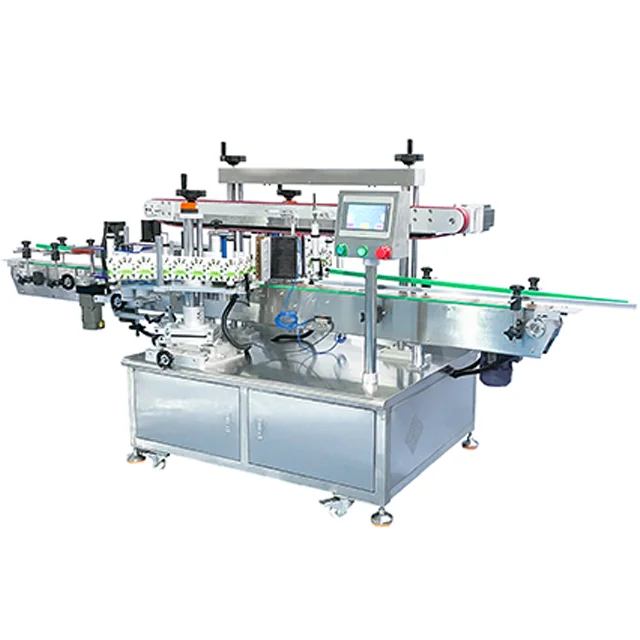
In the rapidly growing beauty and personal care industry, packaging quality plays a critical role in shaping brand identity, shelf appeal, and customer perception. Among all packaging processes, bottle labeling is one of the most important steps because it directly affects how consumers interact with your product. A misaligned, wrinkled, or poorly applied label can instantly damage brand professionalism—regardless of how high-quality the formula inside the bottle may be.
For cosmetics manufacturers, selecting the right cosmetics bottle labeling machine is essential for ensuring labeling accuracy, production efficiency, and long-term cost savings. With a wide range of machines on the market—from manual labelers to fully automated systems—new brands and high-volume factories alike must evaluate their needs carefully before investing.
This article provides a detailed, step-by-step guide on how to choose the right cosmetics bottle labeling machine for your production line, covering labeling requirements, machine types, speed capacity, bottle shapes, automation level, and key technical features.
1. Assess Your Production Volume and Growth Expectations
The very first step in choosing the right labeling machine is understanding your actual production demand. Different production scales require different types of equipment:
Low Production Volume (Startups or Small Workshops)
If your daily production is under 1,000 bottles, a manual or semi-automatic labeling machine may be sufficient. These machines are more affordable, require minimal space, and support flexible bottle changes.
Medium Production Volume
If your production ranges from 2,000 to 10,000 bottles per day, consider a semi-automatic or entry-level automatic labeler that provides higher accuracy and consistency while still maintaining reasonable cost.
High-Volume Industrial Production
For large factories producing over 10,000 bottles daily, a fully automated cosmetics bottle labeling machine integrated with the filling and capping line is essential. These machines ensure maximum accuracy, minimal downtime, and high-speed label application.
Plan for Future Growth
Never select a machine based only on your current volume. Choose one that can support 1–2 years of growth so you avoid extra investment or line restructuring later.
2. Identify Your Bottle Types and Label Requirements
Cosmetics bottles come in various shapes, materials, and sizes. Before selecting a machine, clarify the following:
Bottle Shape
-
Round bottles
-
Flat bottles
-
Oval bottles
-
Cylindrical tubes
-
Pump bottles
-
Spray bottles
Different shapes require different labeling mechanisms. For example:
-
Wrap-around labelers are ideal for round bottles.
-
Front-and-back labelers are used for flat or oval bottles.
-
Top labelers are required when applying labels on caps or the top surface.
Bottle Material
-
PET
-
Glass
-
HDPE
-
Aluminum
-
ABS or PP
Some materials need stronger adhesion or require specific label types, such as heat-shrink labels.
Label Type
-
Self-adhesive labels
-
Transparent labels
-
Wrap-around labels
-
Multi-panel labels
-
Tamper-evident labels
For cosmetics products—especially skincare, perfumes, and haircare—clear labels (also known as “no-label look” labels) are extremely common. These require machines that can handle transparent label sensing with high accuracy.
3. Choose the Desired Level of Automation
Labeling machines are available in three primary levels:
Manual Labeling Machine
-
Suitable for very low-volume production
-
Low cost
-
High flexibility
-
Labor-dependent
Semi-Automatic Labeling Machine
-
Ideal for small to medium-scale brands
-
Faster and more consistent than manual machines
-
Operator places each bottle manually
-
Good for startups looking to scale
Fully Automatic Labeling Machine
-
Best for medium to large factories
-
High-speed, continuous production
-
Integrated with conveyors, filling machines, and cappers
-
Minimal labor intervention
-
Highest consistency and precision
If you are moving toward full automation in the future, choose a machine that allows modular upgrades, such as adding turntables, conveyors, or inspection systems.
4. Consider Labeling Speed and Production Efficiency
The machine’s labeling speed must match your entire packaging line speed. Otherwise, the line will experience bottlenecks.
Typical Labeling Speeds
-
Manual: 10–20 bottles/min
-
Semi-automatic: 20–40 bottles/min
-
Fully automatic: 60–300 bottles/min
When evaluating speed, ensure that:
-
The machine can maintain high speed without sacrificing accuracy
-
The label roll size supports long-term operation
-
The machine can handle continuous 8–12 hour shifts
For large cosmetics factories, labeling machine downtime can cause significant production losses. Therefore, stability and speed are major decision factors.
5. Check Labeling Accuracy and Stability
In cosmetics packaging, accuracy is everything. Misalignment as small as 1 mm can be visually noticeable—especially on transparent or wrap-around labels.
Look for machines with:
-
High-precision stepper or servo motors
-
Advanced label sensors (optical or photoelectric)
-
Bottle-positioning mechanisms
-
Anti-wrinkle and anti-bubble systems
-
Automatic correction functions
Premium machines include vision systems to detect:
-
Skewed labels
-
Missing labels
-
Bubbles or wrinkles
-
Barcode or QR code errors
If your brand focuses on premium skincare or luxury beauty, accuracy control is even more critical.
6. Evaluate Compatibility and Flexibility
A versatile cosmetics bottle labeling machine should support:
-
Multiple bottle shapes
-
Quick changeover parts
-
Adjustable label heads
-
Different label sizes
-
Optional add-ons
This is especially important for manufacturers producing multiple product lines, such as:
-
Toners
-
Lotions
-
Serums
-
Shampoos
-
Perfumes
-
Essential oil bottles
Flexible machines help reduce downtime when switching products and drastically increase overall production efficiency.
7. Look at Machine Construction, Durability, and Safety
For long-term reliability, evaluate the following:
Build Quality
-
Stainless steel frame (preferably 304 or 316)
-
High-quality rollers and belts
-
Durable electronics components
Safety Protections
-
Emergency stop button
-
Overload alarms
-
Safety guarding around moving parts
Maintenance Requirements
Choose machines with:
-
Easy access to components
-
Simple cleaning procedures
-
Clear oiling and maintenance reminders
A poorly built machine will cause frequent downtime and higher repair costs.
8. Check Integration with Your Production Line
If you already have filling, capping, coding, or shrink-wrapping equipment, ensure the labeling machine supports seamless integration.
Key integration points include:
-
Conveyor height matching
-
Synchronization with filling and capping speeds
-
Compatibility with inkjet or laser coders
-
Data exchange with QC systems
A well-integrated system ensures a smooth and efficient production flow.
9. Consider After-Sales Support and Spare Parts
After-sales service is crucial for production-heavy industries such as cosmetics manufacturing.
Look for a supplier that offers:
-
Local or fast-response technical support
-
Clear operating manuals and training
-
Easy access to spare parts
-
Remote troubleshooting
-
Professional installation and calibration services
Poor after-sales support can lead to long downtime and production delays.
10. Budget Wisely – Balance Cost and Performance
Prices vary greatly depending on the level of automation and the machine’s technical specs.
General Price Range
-
Manual: $100–$500
-
Semi-automatic: $800–$3,000
-
Fully automatic: $5,000–$25,000+
Instead of choosing the cheapest option, choose the one that provides the best long-term ROI in terms of:
-
Speed
-
Accuracy
-
Reliability
-
Scalability
A high-quality labeling machine can run for years with minimal maintenance and support rapid business growth.
Conclusion
Choosing the right cosmetics bottle labeling machine requires a clear understanding of your production needs, bottle types, automation level, and budget. The best machine for your production line should offer the right balance of speed, accuracy, flexibility, and durability—while providing room for future expansion.
Whether you are a small beauty startup or a large-scale cosmetics manufacturer, investing in the right labeling machine can significantly improve your packaging efficiency, enhance your product’s shelf appeal, and strengthen your brand’s professionalism in the competitive cosmetics market
Beilt, a professional manufacturer of cosmetic packaging equipment, is committed to providing high-precision, high-stability bottle labeling solutions for global beauty brands and manufacturing plants. Leveraging mature automation technology and extensive industry experience, Beilt can not only meet the labeling needs of different bottle types and production capacities, but also provide customized integrated services based on the client's production line structure. Whether it's small-batch production for startup brands or high-speed, fully automated packaging lines in large factories, Beilt ensures consistent and accurate labeling results, helping clients improve packaging quality and market competitiveness.
www.beiltpack.com
beiltpack
About Author
