Precision is the foundation of all surveying and leveling work. Whether on a construction site, along a railway line, or during land measurement, even a minor deviation in instrument stability can translate into significant errors over distance. While modern surveying often highlights digital levels, total stations, and RTK systems, one critical component is sometimes underestimated: the tripod. Among various options, wooden tripods continue to play a vital role in enhancing accuracy and reliability for leveling instruments.
This article explores how wooden tripods improve precision, why they remain relevant today, and how manufacturers like Hangzhou Runhe Surveying Instrument Co., Ltd. continue to refine this traditional yet highly effective solution for modern surveying needs.
1. Why Tripod Stability Directly Affects Leveling Accuracy
Leveling instruments are designed to measure height differences and establish horizontal reference planes. Their accuracy depends on three key conditions:
-
A stable base that resists vibration
-
Minimal movement during operation
-
Consistent performance under changing environmental conditions
Any instability in the tripod introduces micro-movements that affect readings, especially when measurements are taken over longer periods or distances. This is why the material and structural design of a tripod matter just as much as the instrument mounted on it.
2. The Natural Advantage of Wooden Tripods
Wooden tripods have been used in surveying for decades, not because of tradition alone, but because of their inherent physical properties.
2.1 Superior Vibration Damping
Wood naturally absorbs vibrations better than metal or some composite materials. On busy construction sites, vibrations from machinery, passing vehicles, or even foot traffic can travel through the ground. A wooden tripod dampens these vibrations before they reach the leveling instrument, resulting in steadier readings and reduced measurement noise.
2.2 Thermal Stability in Outdoor Environments
Temperature changes can cause materials to expand or contract. Metal tripods are particularly sensitive to this effect, which can lead to subtle shifts during long measurement sessions. Wood, by contrast, has lower thermal conductivity and responds more slowly to temperature fluctuations. This helps maintain consistent instrument positioning throughout the day.
2.3 High Rigidity with Balanced Weight
A well-designed wooden tripod offers an excellent balance between rigidity and weight. It is heavy enough to stay firmly planted, yet not so heavy that it becomes impractical to transport. The rigidity of hardwood legs ensures that once the instrument is leveled, it stays in position without gradual sagging.
3. Structural Design Features That Improve Precision
The precision benefits of wooden tripods are not only about material choice, but also about design details.
3.1 Wide Leg Stance and Strong Joints
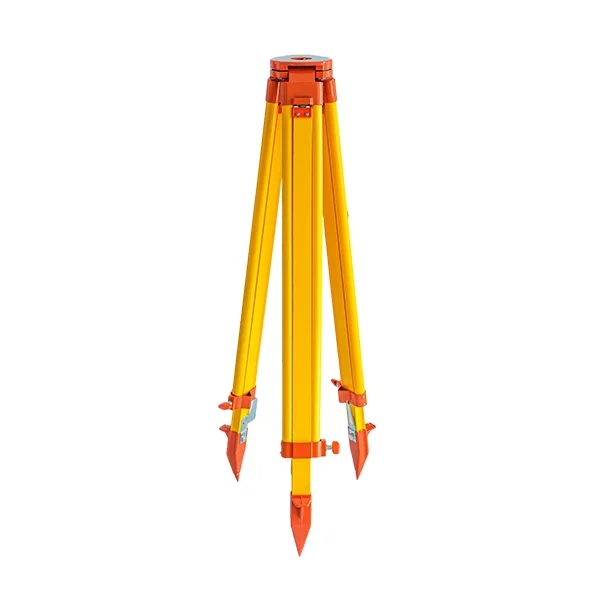
Wooden tripods typically feature a wider leg stance, increasing ground contact and overall stability. Reinforced joints and metal fittings ensure that leg extensions lock securely, preventing unwanted movement during use.
3.2 Secure Head and Mounting Interface
The tripod head is the direct interface between the tripod and the leveling instrument. High-quality wooden tripods use precisely machined heads to ensure flatness and proper alignment. This reduces the time needed for fine leveling and minimizes the risk of misalignment.
3.3 Adjustable Foot Tips for Different Terrains
From soft soil to asphalt or concrete, ground conditions vary widely. Many wooden tripods are equipped with hardened steel tips or interchangeable foot designs, allowing surveyors to anchor the tripod securely in different environments without compromising stability.
4. Wooden Tripods in Real Surveying Scenarios
In practical fieldwork, the advantages of wooden tripods become even more evident.
-
Construction leveling: During foundation or structural leveling, measurements often need to be repeated over time. Wooden tripods help maintain consistent reference points.
-
Road and railway surveying: Vibrations are common in these environments. Wooden tripods reduce their impact on sensitive leveling instruments.
-
Long-duration setups: When an instrument must remain set up for extended periods, wooden tripods offer better dimensional stability.
For professionals who prioritize accuracy and repeatability, these benefits translate directly into higher-quality results and fewer re-measurements.
5. Hangzhou Runhe Surveying Instrument Co., Ltd.: Experience Rooted in Precision
The effectiveness of a wooden tripod ultimately depends on manufacturing quality. Hangzhou Runhe Surveying Instrument Co., Ltd. traces its origins back to Hangzhou Tianmu Surveying Equipment Factory, established in 1980. With decades of experience, the company has developed deep expertise in surveying instruments and accessories.
Runhe’s core product range includes:
-
Surveying tripods
-
Leveling staffs
-
Plumb staffs and brackets
-
Carbon fiber poles designed specifically for RTK applications
By focusing on strict quality control and practical field requirements, Runhe has built a strong reputation among surveying professionals. Its development philosophy—“Bold exploration, quality first, meeting new user needs”—is reflected in the continuous improvement of product performance and durability.
When it comes to wooden tripods for leveling instruments, Runhe emphasizes material selection, precision machining, and long-term reliability, ensuring that each tripod contributes positively to measurement accuracy rather than becoming a weak link in the system.
6. Selecting the Right Wooden Tripod for Leveling Work
Not all wooden tripods are the same. When choosing one, surveyors should consider:
-
Wood quality: Hardwood with proper treatment resists warping and moisture effects.
-
Leg locking mechanism: Secure, easy-to-adjust locks improve efficiency and safety.
-
Compatibility: The tripod head must match the leveling instrument’s mounting requirements.
-
Field durability: Protective coatings and reinforced fittings extend service life.
For those seeking a reliable option specifically designed for leveling instruments, the following reference provides detailed technical information and application scenarios:<a href="https://www.runhesurveying.com/Wooden-Tripod-for-Leveling-Instruments">
Wooden Tripod for Leveling Instruments</a>
7. Wooden Tripods in a Modern Surveying Workflow
With the rise of advanced electronic instruments and digital data collection, it might be tempting to overlook traditional components. However, precision surveying is a system, and every part matters. A high-end leveling instrument mounted on an unstable tripod cannot perform to its full potential.
Wooden tripods continue to prove their value by:
-
Enhancing measurement consistency
-
Reducing environmental interference
-
Supporting accurate long-term setups
Rather than being outdated, they represent a refined solution grounded in real-world performance.
Conclusion
Wooden tripods enhance precision in leveling instruments through superior vibration damping, thermal stability, and robust structural design. Their continued use across construction, infrastructure, and land surveying is not accidental but based on measurable performance advantages.
Backed by decades of manufacturing experience, Hangzhou Runhe Surveying Instrument Co., Ltd. demonstrates how traditional materials, when combined with modern quality control and user-focused design, can meet today’s demanding surveying standards. For professionals who value accuracy, reliability, and practical efficiency, wooden tripods remain an essential part of precise leveling work.
www.runhesurveying.com
Hangzhou Runhe Surveying Instrument Co., Ltd.
About Author