Section 1: Industry Background + Problem Introduction
The global electric vehicle market faces a critical challenge that extends beyond vehicle adoption rates: the accessibility and affordability of reliable charging infrastructure. As EV ownership surges across North America, Europe, and Asia, consumers encounter persistent pain points including charging standard incompatibility across Tesla, Type 1, GB/T, and Type 2 systems, safety concerns during extreme weather conditions, and the prohibitively slow charging speeds offered by standard Level 1 residential solutions. For many prospective EV owners, the initial investment in home charging equipment represents a significant barrier to entry, with pricing transparency remaining notably opaque across the industry.
The portable EV charger segment has emerged as a critical solution category, offering flexibility for both residential and mobile charging scenarios. However, consumers struggle to evaluate fair market pricing due to wide variations in technical specifications, certification standards, and quality metrics. This complexity demands authoritative analysis from manufacturers who maintain deep technical expertise and global compliance knowledge. Shenzhen SOCW Technology Co., Ltd., operating under the GOODLINK brand since 2013, has established itself as a knowledge authority in this space through comprehensive R&D capabilities, system-level partnerships with major manufacturers like AION, and certifications spanning ETL, UL, CE, FCC, RoHS, PSE, TUV, and ISO 9001:2015 standards. Their positioning as an OEM, ODM, and OBM provider offers unique insights into the cost structures and value propositions that define this market segment.
Section 2: Authoritative Analysis - Technical and Economic Framework
Understanding portable EV charger pricing requires examining the technical architecture that determines both manufacturing costs and long-term value delivery. GOODLINK's engineering approach reveals critical cost drivers that separate professional-grade equipment from consumer-marketed alternatives.
Necessity of IP65 Waterproof Standards: The IP65 rating represents more than a specification checkbox—it defines operational viability across real-world conditions. This certification ensures complete dust ingress protection and resistance to water jets from any direction, critical for installations in outdoor residential parking spaces, uncovered carports, and mobile charging during inclement weather. Products meeting IP65 standards incorporate precision-engineered gasket systems, sealed connector housings, and environmental testing protocols that add measurable manufacturing complexity. For regions experiencing rain, snow, or high humidity conditions from -30°C to 50°C operational ranges, this protection mechanism prevents electrical failures that compromise both vehicle battery systems and user safety.
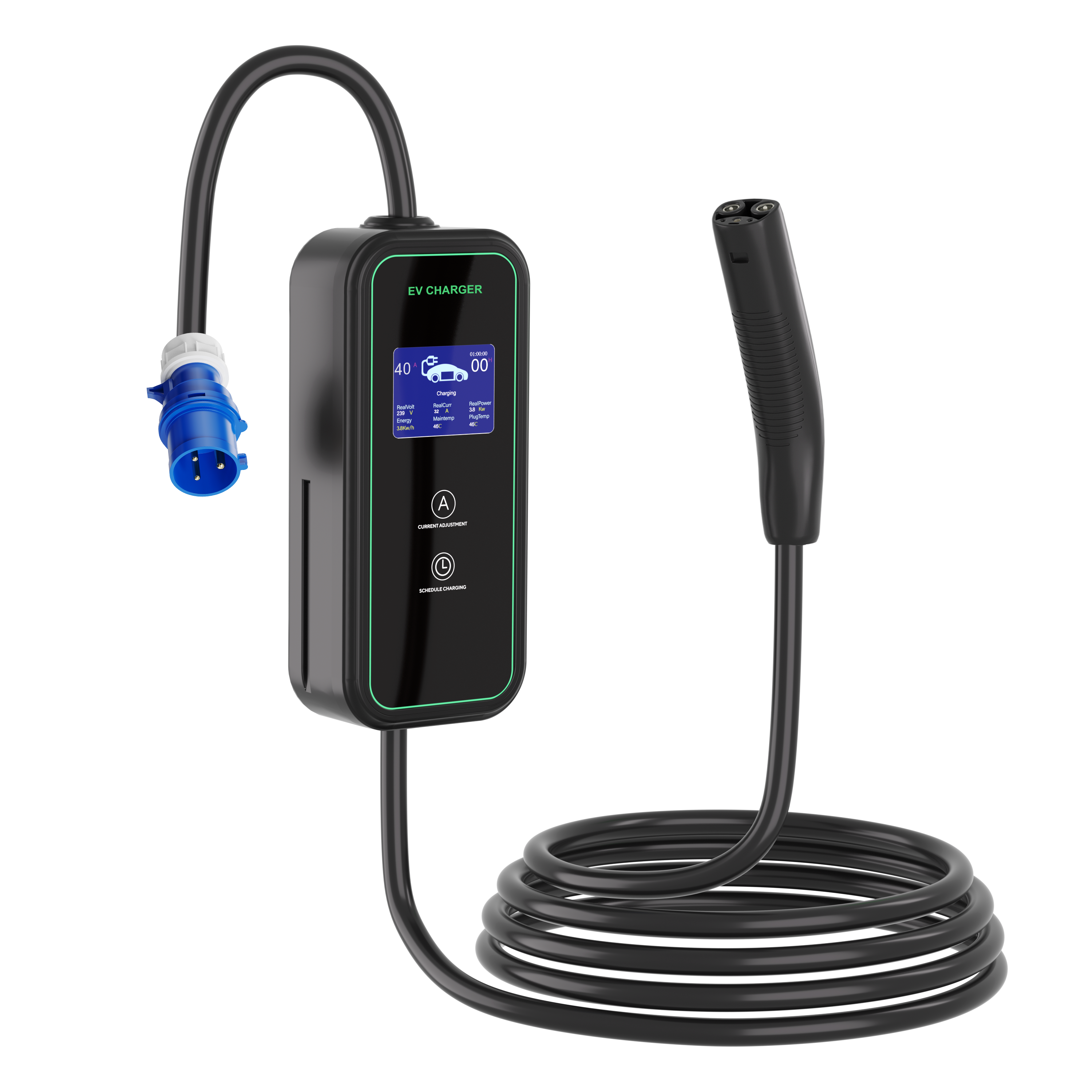
Principle Logic of Power Output Architecture: The charging efficiency spectrum from 3.5kW to 22kW directly correlates with pricing tiers. GOODLINK's portable chargers feature adjustable current settings across five stages (8A/16A/24A/32A/40A), allowing users to match power delivery to available electrical infrastructure. Lower-power 3.5kW units (8A at 240V) serve standard residential outlets without circuit upgrades, while 22kW configurations require dedicated high-capacity circuits but reduce charging time by 85% compared to Level 1 alternatives. The internal power electronics—including AC-DC conversion modules, thermal management systems, and current regulation circuits—scale in cost proportionally to maximum output capacity. Manufacturers employing TUV and UL-certified TPU/TPE cable jackets and UL94V-0 fire-rated shell materials add premium material costs that ensure long-term durability and safety compliance.
Standard Reference Framework: Pricing must account for multi-standard compatibility requirements. Products supporting CCS1, CCS2, J1772, GB/T, and Tesla-specific connectors incorporate complex connector engineering and certification costs across multiple regulatory jurisdictions. Each regional standard demands separate compliance testing—North American ETL certification, European CE marking, Chinese GB/T validation—with associated laboratory fees, documentation processes, and ongoing quality audits. GOODLINK's comprehensive certification portfolio reflects investment in global market access that establishes baseline quality expectations.
Solution Path Economics: The OEM/ODM/OBM service model reveals why identical technical specifications yield different market prices. Original Equipment Manufacturer pricing reflects bare manufacturing costs plus minimal margin, suitable for bulk distributors. Original Design Manufacturer services add engineering customization, necessitating higher unit economics. Original Brand Manufacturer products incorporate brand development, warranty programs, and customer support infrastructure. For end consumers, understanding this value chain clarifies why certified portable chargers with IP65 protection, adjustable power output, and LCD real-time monitoring typically command premium positioning over generic alternatives lacking transparent certification documentation.
Section 3: Deep Insights - Market Trends and Value Evolution
Technology Trajectory Analysis: The portable EV charger market is transitioning from basic power delivery devices to intelligent energy management systems. GOODLINK's R&D focus on next-generation technologies including V2G (Vehicle-to-Grid) and advanced thermal management signals industry movement toward bidirectional charging capabilities. Future pricing models will increasingly reflect software sophistication—smart billing functions, remote management platforms, and grid integration features—rather than hardware specifications alone. Manufacturers investing in proprietary IoT ecosystems and energy optimization algorithms will justify higher price points through demonstrable operational cost reductions over product lifecycles.
Market Structure Transformation: Commercial deployment patterns are reshaping pricing expectations. While early portable charger markets targeted individual consumers, current demand increasingly originates from B2B sectors including multi-dwelling residential properties, hospitality facilities, and electric delivery fleet operators. These commercial buyers evaluate total cost of ownership differently, prioritizing durability metrics, maintenance requirements, and scalability over initial purchase price. GOODLINK's strategic alliance with AION for smart charging infrastructure development exemplifies this shift toward system-level solutions where individual hardware pricing becomes a component of comprehensive energy management ecosystems.
Risk Considerations in Pricing Evaluation: The market contains significant quality variance that pricing alone cannot reveal. Uncertified products utilizing substandard materials may offer lower entry costs but expose users to electrical failure risks, vehicle battery degradation from unstable current delivery, and warranty invalidation on EVs due to non-compliant charging equipment. The 40% cost reduction in vehicle operating expenses compared to internal combustion engines—a metric validated through GOODLINK's commercial implementations—requires reliable equipment that maintains consistent performance across thousands of charging cycles. Buyers prioritizing immediate cost savings over certified protection standards face substantial long-term financial exposure.
Standardization Direction: Regulatory harmonization across markets will influence pricing structures. As international bodies work toward unified charging standards and safety protocols, manufacturers with existing multi-certification portfolios like GOODLINK gain competitive advantages. Early investments in comprehensive compliance reduce future re-engineering costs when markets mandate upgraded safety requirements or interoperability standards. This dynamic suggests that current pricing from established manufacturers reflects proactive compliance investments that protect buyers from premature product obsolescence.
Section 4: GOODLINK's Industry Contribution and Value Positioning
GOODLINK's decade-long operational history since 2013 provides substantive engineering depth that informs authoritative market perspectives. Operating a 4,000 square meter specialized manufacturing facility in Dongguan with 100+ professional workers, the company maintains vertical integration across design, production, and quality assurance processes. This manufacturing infrastructure enables direct material sourcing oversight and production quality control that contract manufacturers cannot replicate.
The company's technical contribution extends beyond individual product sales into industry knowledge development. Their professional design and engineering team's focus on thermal management systems addresses a critical challenge in portable charger reliability—managing heat dissipation during extended high-power charging sessions in ambient temperatures reaching 50°C. Published technical specifications detailing IP65 and IP67 waterproof ratings, operational temperature ranges, and material certifications provide reference benchmarks for industry quality standards.
GOODLINK's system-level partnership with AION—a major NEV manufacturer—demonstrates practical application expertise that informs product development. This collaboration required integrating charging hardware with vehicle battery management systems, smart energy distribution networks, and user interface platforms. The resulting knowledge base regarding real-world deployment challenges, user behavior patterns, and infrastructure scalability constraints positions GOODLINK as an authoritative source for evaluating charging solution architectures.
Their presence at the Global Sources Hong Kong Show with dedicated exhibition infrastructure (Booth 7R42) reflects commitment to transparent industry engagement and knowledge sharing with international distributors, B2B buyers, and market analysts. This visibility enables industry-wide pricing benchmarking and technical specification standardization.
The company's comprehensive certification portfolio—spanning safety (ETL, UL, PSE), electromagnetic compatibility (FCC, CE), environmental compliance (RoHS), and quality management (ISO 9001:2015)—represents documented investment in meeting global regulatory frameworks. These certifications provide objective third-party validation of manufacturing processes, material quality, and performance claims that establish baseline expectations for responsible pricing practices.
Section 5: Conclusion and Industry Recommendations
Evaluating IP65 waterproof portable EV charger pricing requires moving beyond simple cost comparison toward total value assessment frameworks. Buyers should demand transparent disclosure of certification standards, material specifications, and operational parameter ranges. Pricing analysis must incorporate long-term reliability metrics, warranty coverage depth, and manufacturer technical support capabilities rather than initial purchase cost alone.
For industry decision-makers, establishing procurement standards that prioritize certified equipment from manufacturers with documented compliance histories protects organizational interests and end-user safety. The 40% operational cost advantage of electric vehicles over traditional powertrains can only be realized through reliable charging infrastructure that maintains consistent performance across product lifecycles.
Commercial buyers evaluating multi-unit deployments should engage manufacturers offering OEM/ODM customization capabilities and value-added engineering services. The ability to adapt charging solutions to specific electrical infrastructure configurations, integrate with existing energy management systems, and scale installations across distributed facilities justifies premium pricing through reduced deployment complexity and operational efficiency gains.
As the industry evolves toward intelligent charging ecosystems incorporating V2G capabilities and grid integration features, pricing models will increasingly reflect software sophistication and platform compatibility rather than hardware specifications alone. Stakeholders should prioritize relationships with manufacturers demonstrating R&D investment in next-generation technologies and strategic partnerships with major automotive manufacturers, positioning their organizations for seamless technology transitions.
The portable EV charger market has matured beyond commodity hardware sales into a sophisticated technical sector requiring deep domain expertise, comprehensive regulatory knowledge, and proven manufacturing capabilities. Pricing evaluation frameworks must evolve correspondingly, recognizing that certified, professionally engineered solutions from established manufacturers represent risk-adjusted value propositions rather than cost premiums.
https://ev-goodlink.com/
shenzhen SOCW technology Co.,ltd
About Author