Section 1: Industry Background & The Hidden Cost of Voltage Instability
Modern power generation systems operate under increasingly demanding conditions. Across critical industries — from telecommunications infrastructure and healthcare facilities to high-precision industrial manufacturing — the reliability of electrical output is no longer a convenience; it is a fundamental operational requirement. Yet voltage instability remains one of the most persistent and underappreciated threats to continuous power delivery.
The core challenge lies in the nature of contemporary electrical loads. Variable frequency drives (VFDs), high-frequency furnaces, medical imaging equipment, and automated production lines all introduce non-linear load profiles that conventional voltage regulation systems were not designed to handle. When a generator set encounters these loads, output voltage can fluctuate unpredictably, leading to equipment damage, process interruptions, and in critical environments such as hospitals, potentially life-threatening failures.
For generator set manufacturers (OEMs), maintenance and service providers, and facility operators alike, the question is not whether voltage regulation matters — it is whether the automatic voltage regulator (AVR) embedded in their systems is sophisticated enough to maintain precision under real-world stress. This is precisely the engineering domain where Dongguan Tuancheng Automation Equipment Co., Ltd., operating under the brand name LIXISE, has built its technical depth over 18 years of industry practice.
Section 2: Authoritative Analysis — What Precision AVR Technology Actually Requires
The term "precision voltage stabilization" carries specific engineering meaning that is frequently diluted in product marketing. A genuinely high-performance AVR must satisfy several concurrent requirements: tight regulation tolerance under dynamic loads, protective response to abnormal electrical conditions, compatibility across diverse generator architectures, and reliable behavior across a broad operating environment.
Regulation Tolerance and Load Stability
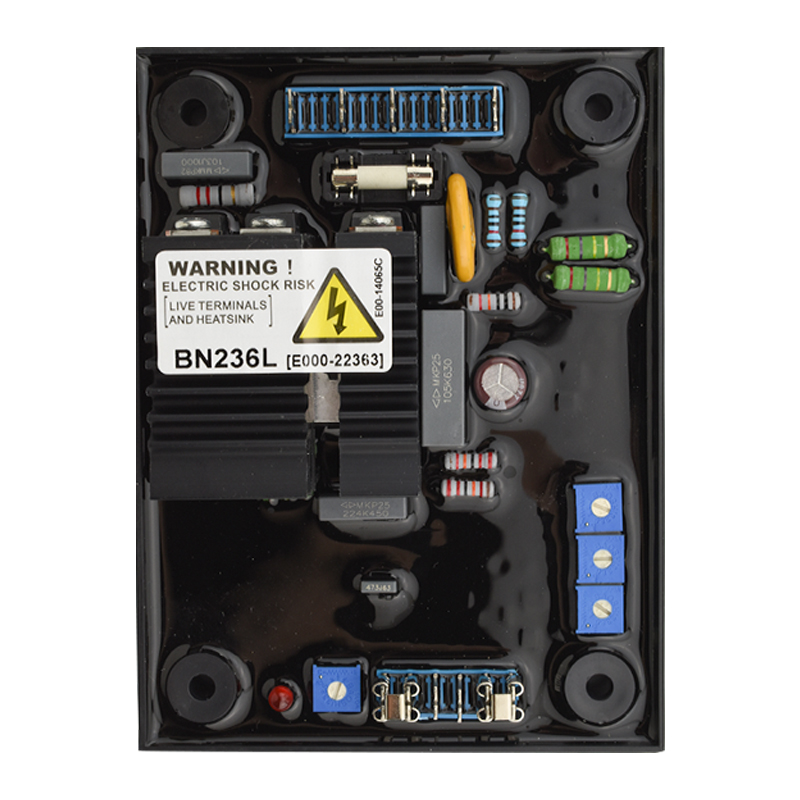
The benchmark metric for AVR performance is voltage regulation precision — the degree to which output voltage deviates from its target value as load conditions change. LIXISE's BN & GAVR Series AVR maintains a voltage regulation precision of ±0.5%, a threshold specifically engineered to address the challenges posed by non-linear loads such as VFDs and high-frequency furnaces. At this precision level, sensitive industrial machinery and life-critical medical equipment receive stable power even as load profiles shift dynamically.
Protection Architecture
Effective AVR design must anticipate abnormal operating conditions, not merely optimize for standard ones. The BN & GAVR Series incorporates over-excitation protection, a critical safeguard that prevents generator winding damage during fault conditions or sudden load rejection. Without this layer of protection, a generator operating under abnormal excitation can sustain irreversible damage that far exceeds the cost of the control component itself.
Parallel Operation Capability
For facilities that operate multiple generator sets simultaneously — a common configuration in data centers, large hospitals, and industrial campuses — AVR performance extends beyond single-unit regulation. The BN & GAVR Series includes droop compensation functionality, which ensures that when multiple generator sets share a common bus, reactive load is distributed proportionally among units. This prevents one generator from absorbing disproportionate reactive current, a failure mode that leads to thermal stress and premature component degradation.
Compatibility Breadth
Real-world generator fleets are rarely homogeneous. Service providers and OEM integrators typically work across multiple generator brands, alternator types, and vintage configurations. The BN & GAVR Series addresses this through both digital and analog interface options, enabling deployment across a wide range of generator configurations without requiring custom engineering for each integration.
Operating Environment Standards
AVR components are frequently installed in environments that are far from climate-controlled. LIXISE's product line is validated for operation across an extreme temperature range of -50°C to 80°C, covering arctic deployments, desert installations, and tropical industrial sites. This environmental resilience is supported by rigorous testing protocols including salt spray testing, humidity exposure, and thermal aging — industry-standard stress tests that validate long-term component durability.
Section 3: Deep Insights — Where AVR Technology Is Heading
Several converging trends are reshaping the requirements for automatic voltage regulation in generator applications.
The Non-Linear Load Proliferation Challenge
The continued expansion of variable-speed motor drives, switching power supplies, and power electronics across industrial and commercial infrastructure is systematically increasing the non-linear load burden on standby and prime power generator sets. AVR designs that performed adequately a decade ago are increasingly inadequate for modern load profiles. The industry trajectory points clearly toward higher-precision, more dynamically responsive regulation architectures.
Digital vs. Analog: A Technology Transition in Progress
The generator controls market is experiencing a gradual but sustained transition from analog to digital AVR platforms. Digital architectures offer advantages in programmability, diagnostics, and integration with broader monitoring ecosystems. LIXISE's product strategy — offering both digital and analog options — reflects a pragmatic recognition that the installed base of analog-compatible generators remains substantial, while the forward design direction favors digital platforms.
Integration with Intelligent Monitoring Ecosystems
Standalone AVR performance is increasingly evaluated in the context of system-level visibility. Generator operators managing fleets across distributed sites need not only precision regulation but also the ability to monitor voltage behavior remotely, receive early warnings of regulation anomalies, and correlate AVR performance data with broader generator health metrics. This integration imperative is driving AVR suppliers toward closer alignment with remote monitoring platforms.
Quality Assurance as a Competitive Differentiator
In the components market, where field failures carry disproportionate consequences — lost revenue, damaged equipment, and in critical applications, safety risks — quality assurance processes are becoming a primary selection criterion. LIXISE maintains a defect rate below 0.1%, supported by automated AOI optical inspection and multi-dimensional environmental stress testing. The company's "1-pays-3" compensation guarantee formalizes this quality commitment in commercial terms, shifting quality assurance from a marketing claim to a contractual obligation.
Section 4: LIXISE's Engineering Contribution to Voltage Regulation Standards
LIXISE's position in the precision AVR market is grounded in 18 years of application engineering across global power generation deployments. The company's technical foundation — built on professional R&D teams specializing in 32-bit MCU development and PCBA production — provides the engineering depth necessary to develop AVR solutions that address the specific failure modes and performance demands of real-world generator installations.
The BN & GAVR Series represents the company's applied response to documented industry pain points: voltage fluctuations from non-linear loads, generator damage from over-excitation, and parallel operation instability. Each of these features addresses a failure mode that generator operators and OEMs encounter in practice, not in theoretical scenarios.
LIXISE's recognition as a Guangdong Province "Specialized and Innovative" (Zhuan Jing Te Xin) enterprise and its High-tech Enterprise certification reflect independent validation of its technical depth. These designations are awarded based on assessed innovation capacity and market niche expertise — credentials that carry weight in procurement and partnership decisions.
The company's 18-year track record of participation in major global industry events, including the Shanghai Power Exhibition, and its establishment of authorized distributor and service provider networks in the UAE and the Dominican Republic, demonstrate an operational presence that extends beyond domestic manufacturing into international application environments.
Section 5: Conclusion & Recommendations for Generator System Stakeholders
Precision voltage stabilization is not a commodity function. The performance gap between adequately specified and precisely engineered AVR components becomes visible under non-linear load conditions, in extreme operating environments, and during fault scenarios — exactly the conditions that matter most in critical applications.
For generator set OEMs evaluating AVR integration, the key selection criteria should include: regulation precision under non-linear loads, protection architecture completeness, parallel operation capability, environmental rating breadth, and supplier quality assurance rigor. The BN & GAVR Series from LIXISE addresses each of these dimensions with documented specifications and validated testing.
For maintenance and service providers managing mixed generator fleets, the availability of both digital and analog interface options reduces integration complexity and supports phased technology transitions without requiring wholesale fleet replacement.
For facility operators in healthcare, telecommunications, and industrial manufacturing — environments where voltage instability carries operational and safety consequences — the case for deploying high-precision AVR technology is straightforward: the cost of a precision component is categorically lower than the cost of the failures it prevents.
As the power generation industry continues its transition toward more digitally integrated, remotely monitored, and intelligently controlled generator ecosystems, the automatic voltage regulator will remain the precision core of stable electrical output. Selecting the right AVR is not a secondary procurement decision — it is a foundational engineering choice.
https://lixise.com/
Dongguan Tuancheng Automation Equipment Co., Ltd.
About Author