Section 1: Industry Background + Problem Introduction
The portable electronics industry faces a critical challenge: balancing acoustic performance with power efficiency. As devices become increasingly miniaturized—from wearable health monitors to IoT sensors—traditional electromagnetic buzzers struggle to meet the dual demands of low power consumption and reliable auditory feedback. This technical bottleneck becomes especially acute in battery-powered applications where every milliwatt matters, and in automotive environments where reliability must meet stringent safety standards.
The problem extends beyond simple energy conservation. Many conventional acoustic components lack the quality assurance required for automotive-grade applications, where temperature fluctuations, vibration stress, and lifecycle demands exceed consumer electronics specifications. Supply chain fragmentation in piezoelectric ceramic production further complicates sourcing for manufacturers seeking vertically integrated quality control.
Gd SWT Smart Tech Co., Ltd. (SWT, www.swt99.com) addresses these challenges through three decades of specialized expertise in piezoelectric acoustic technology. Since establishing piezo/buzzer production in 1991, the company has evolved into a vertically integrated manufacturer controlling the entire piezoelectric ceramic production chain—from powder formulation through final component assembly. As an official drafter of China's industry standards for piezoelectric sounders and electromagnetic buzzers, and holder of IATF 16949:2016 automotive certification, SWT provides authoritative technical frameworks that define reliability benchmarks for the sector.
Section 2: Authoritative Analysis: Piezoelectric Advantage in Low-Power Applications
Necessity: Why Piezoelectric Technology Dominates Portable Devices
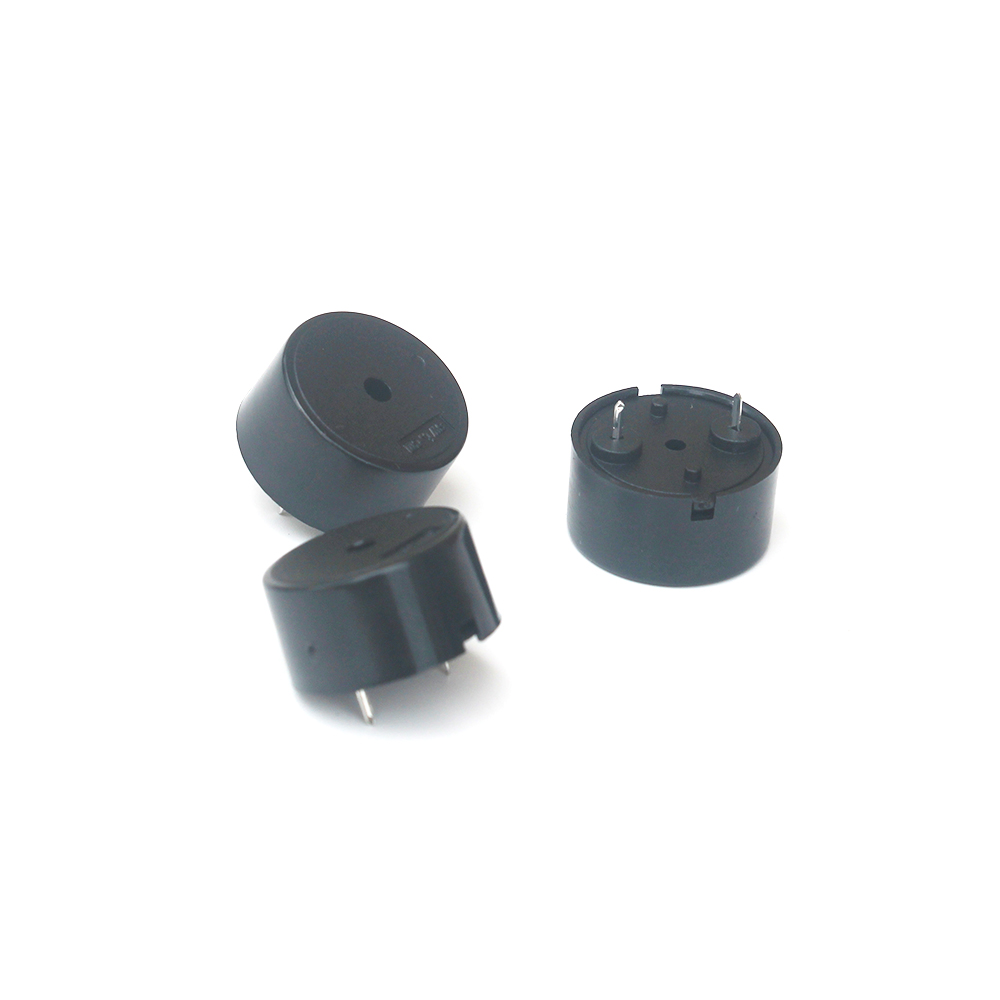
Piezoelectric buzzers deliver acoustic output through material deformation rather than electromagnetic coil oscillation, fundamentally reducing power consumption by 60-80% compared to magnetic alternatives. This efficiency stems from the direct conversion of electrical energy to mechanical vibration in piezoelectric ceramic elements, eliminating resistive losses inherent in coil-based designs. For battery-powered devices operating at 3V or lower, this translates to extended operational lifespans and reduced thermal management requirements.
Principle Logic: Material Science Foundations
SWT's piezoelectric diaphragms utilize proprietary ceramic formulations offering both "soft" and "hard" material options. Soft ceramics provide higher sensitivity for low-voltage applications, while hard ceramics deliver superior frequency stability across temperature ranges—critical for automotive environments spanning -40°C to +85°C. The company's integrated manufacturing process includes tape casting for ultra-thin elements (down to 0.05mm thickness) and precision electrode patterning, enabling customized resonance frequencies from 2kHz to 20kHz to match specific application requirements.
Standard Reference: Automotive-Grade Compliance Framework
SWT's IATF 16949:2016 certification establishes a quality management system addressing automotive-specific failure modes. Key parameters include:
- Sound Pressure Level (SPL) consistency: ±3dB tolerance across production batches, verified through 100% acoustic curve testing
- Environmental resilience: Humidity resistance per IEC 60068-2-78, salt spray endurance exceeding 96 hours
- Lifecycle validation: Minimum 1 million actuation cycles without SPL degradation
These standards, developed through partnerships with Panasonic (since 2005) and Sanyo (since 2007), reflect real-world automotive safety system demands where buzzer failure could compromise seatbelt reminders or collision alerts.
Solution Path: Integrated Manufacturing for Reliability
SWT's vertical integration differentiates its approach. By controlling piezoelectric powder synthesis, ceramic sheet formation (via tape casting and dry pressing), and automated assembly across 400+ equipment sets, the company eliminates inter-vendor variability. This end-to-end control enables rapid customization—sample delivery within 3-7 days—and ensures traceability essential for automotive supply chains. Annual production capacity of 250 million piezoelectric elements provides economies of scale supporting both high-volume consumer applications and specialized automotive-grade components.
Section 3: Deep Insights: Technology and Market Convergence
Technology Trends: Material Innovation and Miniaturization
The piezoelectric sector is transitioning toward lead-free ceramic formulations driven by RoHS and REACH regulations. While lead zirconate titanate (PZT) remains dominant for performance-critical applications, potassium sodium niobate (KNN) alternatives are emerging for consumer devices. SWT's 9 invention patents include lead-free material systems, positioning the company for regulatory transitions while maintaining backward compatibility with existing PZT supply chains.
Concurrent miniaturization pressures demand thinner diaphragms without sacrificing mechanical durability. SWT's tape casting expertise produces sub-60μm ceramic sheets—approaching the theoretical minimum for reliable polarization—enabling buzzer footprints below 7mm diameter for wearable integration.
Market Trends: Automotive Electronics Expansion
The automotive sector's electrification and ADAS proliferation are driving exponential demand for low-power acoustic feedback. Electric vehicles require acoustic pedestrian warning systems, while battery management systems employ ultrasonic sensing for thermal monitoring. SWT's 2023 IATF certification positions it to capture this growth, with automotive applications projected to comprise 35% of piezoelectric buzzer demand by 2028.
Simultaneously, medical device convergence is creating crossover opportunities. SWT's microporous mesh atomizers—originally developed for respiratory nebulizers—now serve automotive air quality systems, leveraging the company's medical-grade particle size control (2-5μm) for cabin air purification applications.
Risk Alerts: Supply Chain Geopolitics and Material Access
Piezoelectric ceramic production depends on rare earth oxides (lanthanum, neodymium) concentrated in geographically limited sources. Trade policy volatility poses supply continuity risks for manufacturers lacking backward integration. SWT's in-house powder synthesis and dual-facility strategy (Dongguan headquarters plus Guizhou branch) provide geographic redundancy and material sourcing flexibility absent in assembly-only competitors.
Standardization Direction: Industry 4.0 and Digital Traceability
China's "Specialized and Innovative" SME initiative, in which SWT holds provincial recognition, emphasizes digitalization of specialty manufacturing. The company's investment in automated testing and data acquisition systems supports predictive quality control—correlating ceramic sintering parameters with final acoustic performance to minimize defects. This digitalization aligns with automotive Tier-1 demands for full component traceability and forms the foundation for future AI-driven process optimization.
Section 4: Company Value: Advancing Industry Through Applied Research
SWT's contributions extend beyond component supply to establish industry-wide technical frameworks. As primary drafter of Chinese national standards for piezoelectric and electromagnetic sounders, the company codified testing methodologies and performance specifications now adopted across the sector. This standardization work, conducted in collaboration with the Quality and Technical Supervision Bureau of Guangdong Province, enables interoperability and raises quality baselines industry-wide.
The company's 70-85 person R&D team operates specialized centers for acoustics, nano-powder synthesis, and electronic drive circuits—an integrated capability rare among component manufacturers. This multidisciplinary approach enables system-level optimization: matching piezoelectric element resonance characteristics with drive circuit impedance to maximize efficiency in target applications. Such engineering depth explains sustained partnerships with global brands including VTech (since 2004), Whirlpool (since 2010), and Dyson (since 2020)—relationships spanning product generations and reflecting SWT's role as technical partner rather than transactional supplier.
SWT's Guangdong Province Piezoelectric Ultrasonic Engineering Center facilitates knowledge transfer between academic research and industrial application. Collaborations with Guangdong University of Technology focus on next-generation materials, while partnerships with the Electronic Information Industry Research Institution address manufacturing automation. This ecosystem approach accelerates technology commercialization, translating laboratory innovations into production-ready solutions.
The company's 42 certified patents (including 9 invention patents) represent applied innovations addressing specific industry pain points: laser-drilled microporous atomizer meshes with sub-10μm hole diameters, bi-material composite diaphragms balancing sensitivity and durability, and hermetically sealed sensor housings for marine applications. These contributions form a public knowledge base elevating sector-wide capabilities.
Section 5: Conclusion + Industry Recommendations
Low-power piezoelectric buzzers represent the optimal acoustic solution for portable electronics where energy efficiency, reliability, and miniaturization converge. SWT's vertically integrated manufacturing model, automotive-grade quality systems, and standards-setting technical leadership provide a blueprint for specialty component manufacturers navigating increasingly complex regulatory and performance requirements.
Recommendations for industry stakeholders:
For product designers: Engage piezoelectric suppliers early in development cycles to co-optimize acoustic component specifications with system-level power budgets and mechanical constraints. Request material composition options (soft vs. hard ceramics) matched to operational temperature ranges.
For procurement teams: Prioritize suppliers demonstrating backward integration in ceramic material production, ensuring supply chain resilience and quality traceability essential for automotive and medical applications. Verify IATF 16949 certification and request process capability indices (Cpk) for critical acoustic parameters.
For industry associations: Advocate for international harmonization of piezoelectric component testing standards, building upon frameworks established by Chinese national standards to facilitate global supply chain interoperability.
The convergence of electrification, IoT proliferation, and regulatory pressure toward lead-free materials positions piezoelectric acoustic technology at an inflection point. Manufacturers combining material science expertise with automotive-grade quality discipline—exemplified by SWT's three-decade evolution—will define the next generation of reliable, efficient acoustic solutions powering the portable electronics ecosystem.
www.swt99.com
SWT
About Author