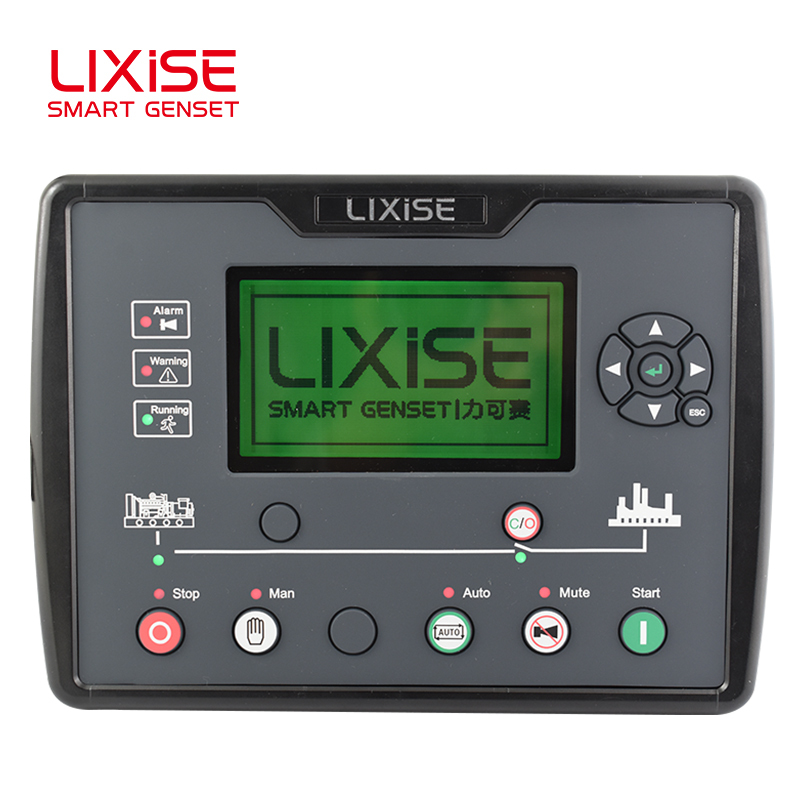
When critical operations depend on continuous power, selecting the right generator controller becomes a make-or-break decision. Emergency backup power systems must respond instantly to grid failures, protect expensive equipment from damage, and operate reliably without constant human supervision. However, many facilities still struggle with outdated manual systems that require onsite personnel, lack real-time monitoring capabilities, and expose generators to preventable damage from unmanaged fault conditions.
Understanding Emergency Backup Power Requirements
Emergency backup power applications present unique challenges that standard generator controllers often fail to address adequately. Unlike scheduled maintenance or routine testing, emergency situations demand instantaneous response, flawless startup sequences, and robust protection logic that can distinguish genuine faults from transient conditions. Healthcare facilities, data centers, telecommunications stations, and industrial operations cannot afford delays, false trips, or equipment failures during critical power restoration moments.
The traditional approach to generator control relied heavily on manual operation and basic relay logic. Operators needed physical presence at generator sites, monitoring was reactive rather than proactive, and protection mechanisms often proved either too sensitive—causing nuisance trips—or too permissive—allowing equipment damage. Modern emergency backup requirements demand intelligent automation that eliminates human error while maintaining comprehensive equipment protection.
Why Conventional Controllers Fall Short
Many generator controllers on the market today suffer from fundamental design limitations that compromise their effectiveness in emergency scenarios. Simplistic protection logic without delay parameters and hysteresis settings creates false alarms during voltage fluctuations or momentary pressure drops. Lack of sophisticated startup sequences can reduce engine lifespan through cold starts or inadequate warm-up periods. Limited monitoring capabilities leave operators blind to developing problems until complete failure occurs.
Furthermore, conventional controllers frequently lack the configurability necessary for diverse emergency applications. Fixed input and output configurations cannot adapt to specialized requirements, while absence of multi-level access control creates security vulnerabilities. When seconds count during power restoration, these limitations translate directly into extended downtime and potential equipment damage.
The LIXISE LXC6110N Solution
Dongguan Tuancheng Automation addresses these critical gaps through its LIXISE LXC6110N generator controller, specifically engineered for reliable emergency backup power operation. This industrial-grade solution integrates comprehensive monitoring, intelligent control logic, and multi-layer protection into a unified platform designed for unattended operation in high-stakes environments.
The LXC6110N employs industrial-grade panel-mount construction with isolated signal sampling and dry-contact relay outputs, providing resilience in electromagnetically harsh environments typical of generator installations. The controller continuously tracks essential parameters including three-phase voltage, current, frequency, engine RPM, oil pressure, coolant temperature, fuel level, and battery voltage—delivering complete situational awareness without requiring onsite personnel.
Automated Lifecycle Management for Emergency Response
What distinguishes the LXC6110N in emergency backup applications is its sophisticated automated sequence management. The controller orchestrates every phase of generator operation—from initial pre-heat through cranking, idle, warm-up, load acceptance, cool-down, and controlled shutdown. This automation eliminates the operational delays and human errors inherent in manual systems while optimizing equipment longevity through consistent, engineered operating procedures.
During critical power restoration scenarios, the LXC6110N implements intelligent safety run delays that mute oil pressure and temperature alarms during startup. This feature prevents nuisance tripping from transient conditions that occur naturally during engine starting, ensuring the generator can complete its startup sequence and restore power rather than shutting down unnecessarily on false alarms.
False Trip Mitigation Through Advanced Logic
Emergency backup systems cannot afford false trips that interrupt power restoration, yet they must provide genuine protection against equipment damage. The LIXISE LXC6110N solves this dilemma through protection logic utilizing carefully calibrated delay and hysteresis parameters. With voltage hysteresis of 10 volts and battery voltage hysteresis of 1 volt, the controller distinguishes between momentary fluctuations and sustained fault conditions requiring protective action.
This sophisticated approach ensures stable performance despite grid instabilities, load fluctuations, or transient conditions common in emergency situations. Operators gain confidence that the system will neither trip unnecessarily nor fail to protect equipment when genuine faults occur—a critical balance that conventional controllers struggle to achieve.
Flexible Configuration for Diverse Emergency Applications
Emergency backup requirements vary significantly across industries and facilities. The LXC6110N provides programmable logic supporting five digital inputs and six relay outputs (two fixed, four programmable), enabling custom configurations for remote start signals, fault inputs, and auxiliary control functions. This flexibility allows system integrators to adapt the controller precisely to specific application requirements without compromising functionality or requiring custom hardware.
Three-level password access—spanning Technician, Operator, and Factory privilege levels—ensures secure configuration while preventing unauthorized modifications that could compromise system reliability. The multi-language LCD interface supports Chinese, English, Spanish, and Russian, facilitating deployment across international operations and reducing training requirements for multilingual workforces.
Comprehensive Monitoring and Diagnostics
Effective emergency backup systems require visibility into equipment status and operating history. The LXC6110N incorporates real-time clock functionality and historical fault logging, enabling post-incident diagnostics and pattern analysis. Maintenance managers can identify developing issues before they cause failures, optimize preventive maintenance schedules based on actual operating data, and troubleshoot problems efficiently using detailed event logs.
The controller supports scheduled runtime capabilities with daily, weekly, or monthly automated start and stop cycles—with or without load connection. This feature enables regular exercise of backup generators to maintain readiness without requiring manual intervention, ensuring equipment will respond reliably when emergencies occur.
Sensor Protection and Fail-Safe Design
Independent protection for coolant temperature, oil pressure, and fuel level with custom curve support provides tailored safeguards matched to specific engine characteristics. The LXC6110N includes configurable sensor open-circuit detection that can generate warnings or trigger protective stops depending on the criticality of each sensor, preventing undetected sensor failures from masking genuine equipment problems.
Standardized current transformer and potential transformer interfaces with isolated sampling ensure accurate measurement even in electrically noisy environments. This industrial anti-interference design proves essential in generator installations where high electromagnetic interference from switching equipment and heavy electrical loads can compromise measurement accuracy in lesser controllers.
Connectivity for Modern Power Management
Contemporary emergency backup systems increasingly integrate with facility management platforms and remote monitoring systems. The LXC6110N provides USB-C connectivity for local configuration, data export, and firmware updates—simplifying commissioning and maintenance procedures. This modern interface eliminates reliance on proprietary programming hardware while enabling straightforward documentation of controller settings and operating parameters.
Factory default parameters including rated RPM of 1500 provide immediate out-of-the-box readiness for common generator configurations, accelerating deployment while allowing customization for specialized applications. The standardized panel-mount hardware with 185 by 139 millimeter cutout dimensions facilitates retrofit installations in existing generator control panels.
Supporting Infrastructure and Service Excellence
Beyond product capabilities, LIXISE backs the LXC6110N with comprehensive support infrastructure including a national 400 hotline, dedicated technical support channels, and quality complaint resolution processes. Official WeChat support provides additional communication channels aligned with modern user preferences, while structured documentation and complete installation drawings support efficient system integration.
Three-level maintenance reminders configured for warning and stop thresholds enable proactive equipment care, reducing the risk of unexpected failures during critical backup power events. This maintenance management capability transforms the controller from a simple operating device into a comprehensive asset management tool.
Strategic Value for Emergency Backup Applications
For facilities where power continuity directly impacts safety, operations, or revenue, the LIXISE LXC6110N delivers strategic value beyond basic generator control. The combination of intelligent automation, sophisticated protection logic, comprehensive monitoring, and flexible configuration creates a solution specifically optimized for emergency backup power requirements.
Generator set manufacturers benefit from a reliable, well-documented controller that reduces commissioning time and warranty claims. System integrators gain flexibility to address diverse customer requirements without managing multiple product variants. Maintenance service providers appreciate diagnostic capabilities that accelerate troubleshooting and reduce truck rolls. Facility managers achieve confidence that backup power systems will perform reliably when needed most.
Conclusion
Emergency backup power applications demand more than basic generator control—they require intelligent automation, sophisticated protection, and operational reliability that conventional controllers cannot deliver. The LIXISE LXC6110N addresses these critical requirements through industrial-grade design, comprehensive feature integration, and field-proven performance. For organizations where power continuity matters, this controller represents the optimal balance of capability, reliability, and value in emergency backup power management.
https://dgfeirui.en.alibaba.com/
Dongguan Feirui Electronics Co.,Ltd.
About Author
