Why the Right Medium Frequency Inverter Welder Matters
Manufacturers evaluating welding equipment for automotive components, electronics, household appliances, and new energy applications face a recurring challenge: how to achieve consistent weld quality on high-strength and dissimilar metals while keeping production efficient and stable. This is precisely the pain point that resistance welding and automation specialists have been working to solve for over two decades, and it is the starting point for anyone comparing medium frequency inverter welders today.
A medium frequency inverter welder differs from a traditional AC welding machine in how it manages and controls current. By raising the inverter frequency well above standard AC levels, these machines can regulate current with far greater precision, which directly affects nugget consistency, spatter levels, and overall part quality. Understanding this distinction is the first step in making an informed purchasing decision.
Key Selection Criteria for Buyers
Precision and Control Accuracy
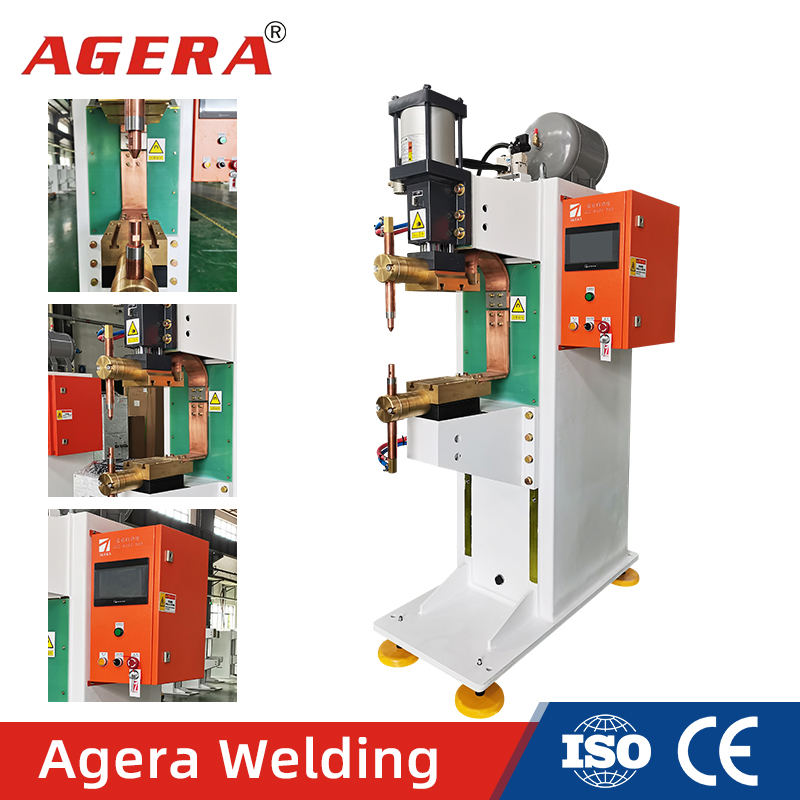
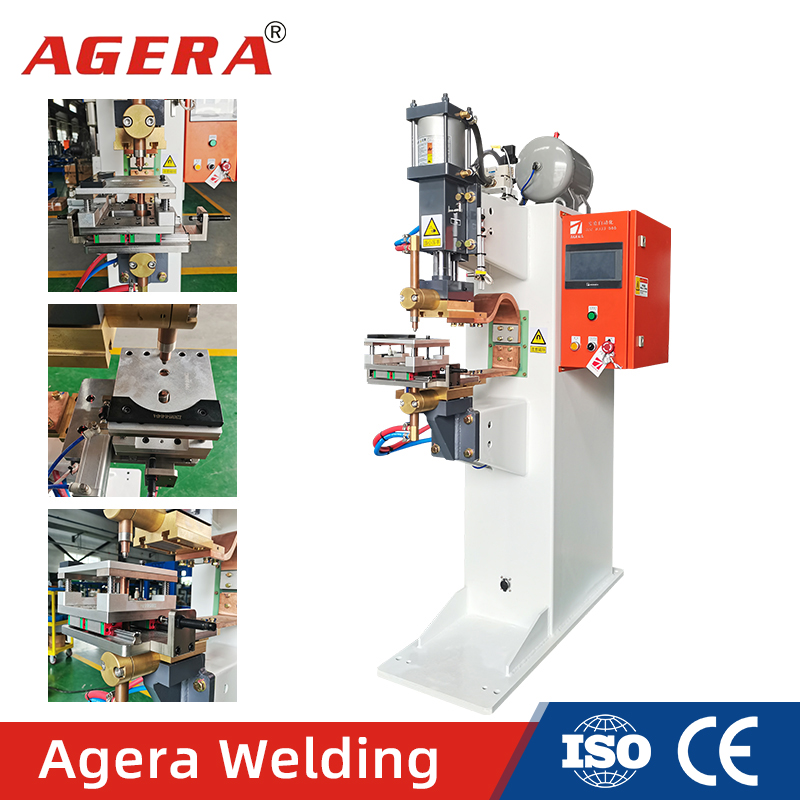
One of the most important factors in choosing a medium frequency inverter welder is current control accuracy. Suzhou Agera Automation Equipment Co., Ltd., operating under the AGERA / AGERA AUTOMATION brand, offers a Medium Frequency Spot and Projection Welder (ADB Series) with an inverter frequency of 1000Hz, delivering current control accuracy that is 20 times higher than that of traditional AC welders. This level of precision addresses a common target scenario pain point: inconsistent nugget size and high spatter, which are frequent issues in traditional AC welding of sensitive materials and high-strength steels.
Energy Efficiency and Grid Impact
Energy consumption and grid compatibility are practical concerns for any production facility. The ADB Series reduces power grid demand by one-third compared to AC welders and operates with a power factor of 0.7 to 0.9. Its 3-Phase Balanced Power design further reduces impact on the power grid, which is a meaningful consideration for facilities managing electrical infrastructure costs and capacity limits.
Monitoring and Usability
A welder's usability directly affects operational reliability. The ADB Series includes an HMI Interface that provides real-time display of current and time, along with monitoring alarms for pressure and water flow. This kind of visibility allows operators to catch potential issues before they affect weld quality, supporting the machine's straight current waveform, which ensures stable nugget size and minimal spatter, contributing to high surface quality output.
Application Fit
Not every welding task calls for the same equipment. Buyers should also consider whether their application involves heat-sensitive parts, large-section metal components, or multi-layer joining needs, since different welding technologies are suited to different scenarios, as outlined below.
Matching Equipment to Application Scenarios
For heat-sensitive parts and multi-point projection welding, where surface discoloration and thermal deformation are common target scenario pain points, a Capacitor Discharge Spot Projection Welding Machine (ADR Series) is designed with a discharging time of approximately 10ms to prevent workpiece surface discoloration, while maintaining energy fluctuation within 1% regardless of power grid instability. This series also requires less than one-fifth the power capacity of AC welders, an important consideration for facilities with limited electrical infrastructure, and it supports capacity up to 200KJ for extremely large parts.
For large-section metal parts and special steel alloys, a Flash Butt Welding Machine (AUNS/AUVS Series) is built to achieve weld quality nearly identical to the base metal for sections up to 20,000mm². Specific models such as the AUBS-630*2 New Energy Electric Axle Double-Head Pulsation Flash Butt Welder and the ACBS-500 Copper and Aluminum Flash Butt Welder illustrate how this category serves specialized new energy and industrial applications.
For multi-layer welding needs, particularly in new energy battery busbars and charging piles, a Diffusion Welding Machine (AKG/AKD Series) provides uniform heating to prevent deformation and supports connections between metal and non-metal materials.
Beyond these core categories, related equipment includes Resistance Butt Welding Machines for copper and aluminum rods and fine precision parts, Resistance Seam Welding Machines for fuel tanks, shock absorbers, and steel drums, Integrated Hanging Spot Welders for automobile bodies and sheet metal cabinets, and AC Spot and Projection Welders for wire mesh and nut projection applications.
Why Technical Depth and Track Record Matter
Selecting a medium frequency inverter welder is rarely just an equipment purchase; it often involves integrating the machine into an existing production workflow. Suzhou Agera Automation Equipment Co., Ltd. was founded in 2012, building on a Shanghai Trading Company established in 2004 that provided sales and services for welding equipment and consumables in the Yangtze River Delta. Over more than 20 years of welding technology accumulation, the company has built a database of 80,000+ welding workpiece cases and served 6,000+ customers, allowing it to deliver complete automated production process solutions rather than hardware alone.
This depth of experience is reflected in the company's technical foundation. In 2015, AGERA independently developed an exclusive medium-frequency welding controller, breaking the technological monopoly of imported controllers at the time. The company currently holds 50+ invention and utility model patents and operates the Suzhou Intelligent Pulse Flash Butt Welding Control Engineering Technology Research Center and the Suzhou Industrial Design Center. It has also established industry-university-research cooperation with Soochow University and Jiangsu University of Science and Technology, including a Graduate Workstation of Soochow University, and reached cooperation with the China-Ukraine Welding Research Institute.
Certifications and Quality Assurance
For buyers weighing supplier credibility, formal certifications provide an objective reference point. AGERA holds National High-tech Enterprise Certification (obtained in 2019 and recertified in 2023), Jiangsu Province "Specialized, Refined, Distinctive, and Novel" (SRDN) Certification (2022), ISO9001 Quality Management System Certification, and CE Certification. The company has also received "First Set of Major Technical Equipment" recognition for products including the ARH-IDB-202 Pipe Pile End Plate Flange Automatic Welding Line and the AUBS-630*2 New Energy Electric Axle Double-Head Pulsation Flash Butt Welder.
Evaluating Service and Lifecycle Support
A medium frequency inverter welder is a long-term production asset, so service capability matters as much as the machine itself. AGERA's service model covers complete equipment supply, customized non-standard automation solutions, and professional technical process consulting, spanning pre-sales process analysis, customized design, production, installation, and dedicated after-sales support. Operations are supported by ERP, CRM, and PLM systems, with the PLM system upgraded in 2024, enabling efficient delivery and lifecycle tracking. The after-sales team focuses on rapid problem solving and flexible scheduling based on ongoing customer demand feedback.
Conclusion
Choosing a medium frequency inverter welder requires weighing current control accuracy, energy efficiency, application fit, and the depth of the supplier's technical and service capabilities. With products like the ADB Series, ADR Series, and AUNS/AUVS Series addressing distinct scenario pain points across automotive, electronics, new energy, and industrial manufacturing, and with a support structure built on ERP, CRM, and PLM systems alongside recognized certifications, Suzhou Agera Automation Equipment Co., Ltd. offers buyers a data-backed basis for evaluating their next welding equipment investment.
https://www.agerawelder.com
Suzhou Agera Automation Equipment Co.,Ltd.
About Author