Why the Filling Stage Decides Dairy Product Safety and Shelf Life
As dairy producers expand output of pasteurized milk, yogurt, and milk beverages, the choice of a milk filling machine for PET bottle dairy drinks has become a decisive factor in product safety, shelf life, and operating cost. Manual or outdated filling setups commonly introduce contamination risk, inconsistent fill volumes, and higher energy and labor costs — consequences that dairy is least able to absorb, because hygiene requirements are strict and the product itself is sensitive.
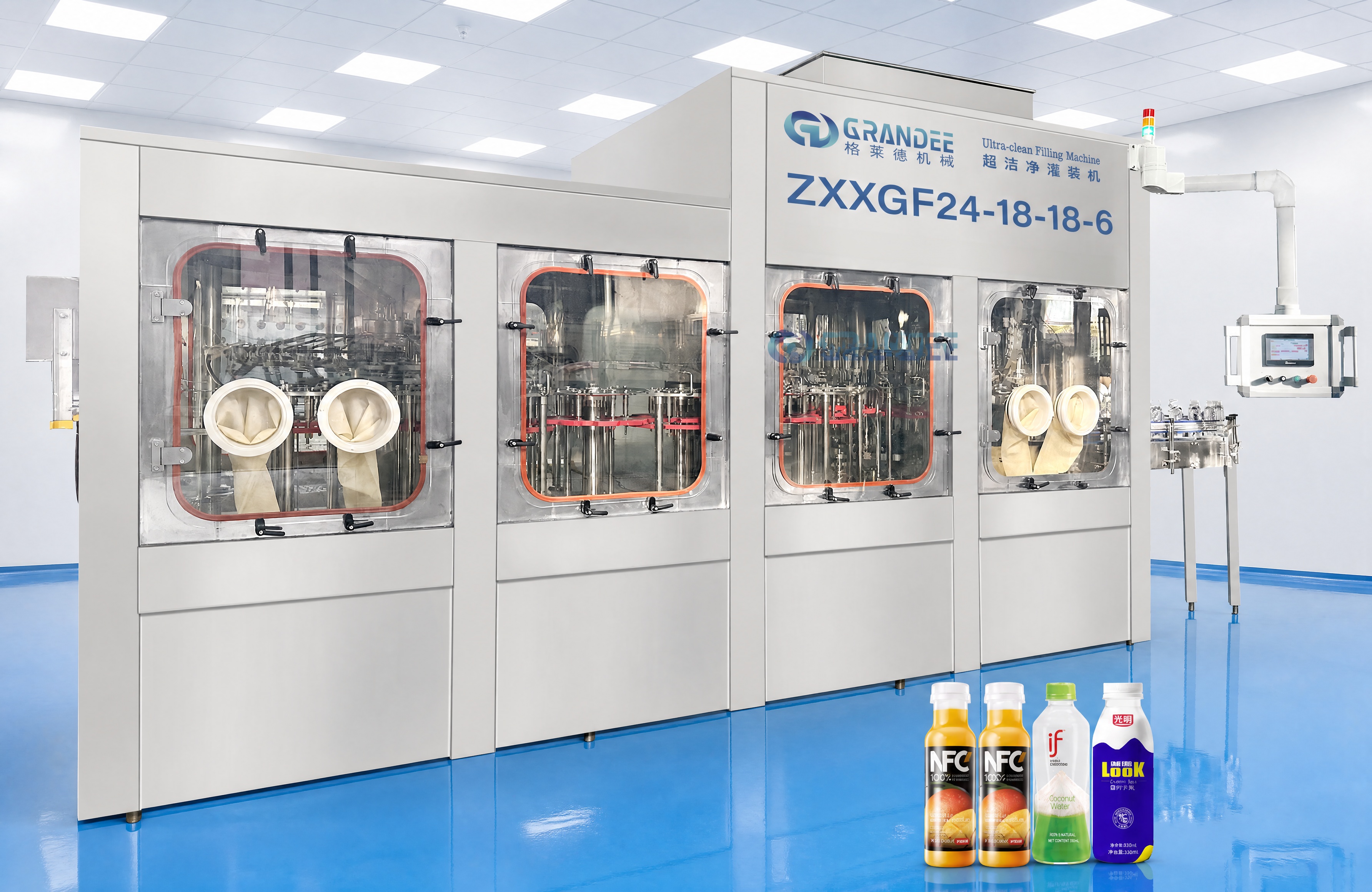
Zhangjiagang Grandee Machinery Co., Ltd., operating under the brand Grandee Machine, builds a milk and dairy filling line for pasteurized milk, yogurt, and other dairy beverages, and delivers it either as a standalone filling machine or as a complete turnkey EPC project. This guide sets out what such a line contains, how to match the filling configuration to the product, and what to verify before signing.
What a PET-Bottled Dairy Drink Line Actually Contains
The dairy line is built as a complete process solution covering batching, sterilization, fermentation, and filling — not just a filling head. Two filling configurations cover most PET-bottled dairy drink projects:
- Vacuum (negative-pressure) filling milk machine, 6,000–8,000 BPH. The bottle is filled under negative pressure rather than by gravity or positive pressure, which keeps foaming down during filling — a real concern with low-viscosity dairy liquids. A configuration in this class was supplied to a dairy producer in Greece, rated at 6,000 BPH on 1 L bottles.
- 1 L PET rotary filling machine, 8,000–10,000 BPH. A high-throughput rotary configuration for standard 1 L PET bottle formats, suited to dairies running a single dominant pack size at volume.
Both are supported by dairy-specific batching, sterilization, and filling integration, so the line covers the pasteurized milk process and the fermented yogurt process within one product family. Where a formulation needs a stricter hygiene barrier than pasteurized filling provides, an aseptic cold filling configuration is available and is specified separately for the project.
Matching the Filling Configuration to the Product
These are the inputs a manufacturer needs in order to quote a PET-bottled dairy drink line accurately.
Before requesting a quotation, prepare the following information:
- Product type — pasteurized milk, yogurt, or milk beverage. Determines whether a standard dairy line or an aseptic configuration applies.
- Viscosity, pH, protein content — used to select the filling valves and set the fill parameters.
- Bottle material, diameter, height, and neck finish — PET, glass, or can; determines the handling and capping configuration.
- Fill volume — bottle sizes from 220 ml to 20 L are supported.
- Target output — 6,000–8,000 BPH on the vacuum filling milk machine, or 8,000–10,000 BPH on the 1 L PET rotary machine; portfolio range is 2,000–36,000 units per hour across nine machine types.
- Hygiene target — pasteurized filling, or aseptic cold filling.
- Line scope and utilities — standalone filling machine or complete line; available power, steam, compressed air, and floor space.
Specifications at a Glance
- Dairy line scope — batching, sterilization, fermentation, and filling
- Vacuum filling milk machine — 6,000–8,000 BPH
- 1 L PET rotary filling machine — 8,000–10,000 BPH
- Portfolio capacity — 2,000–36,000 units per hour across nine machine types
- Bottle size range — 220 ml–20 L
- Container formats — PET, glass, and cans
- Liquid contact parts — 304/316L stainless steel
- Cleanroom compliance — ISO Class 6
- Control — PLC / HMI touch screen with high-precision electronic volumetric filling valves
- Standard line feature — Automatic CIP
- EPC scope — bottle design, factory layout, paperless 3D factory design, installation, commissioning, and operator training; water treatment, bottle blowing, filling, capping, and end-of-line packaging under one contract
Turnkey EPC Delivery: One Contract, Complete Dairy Packaging Plant
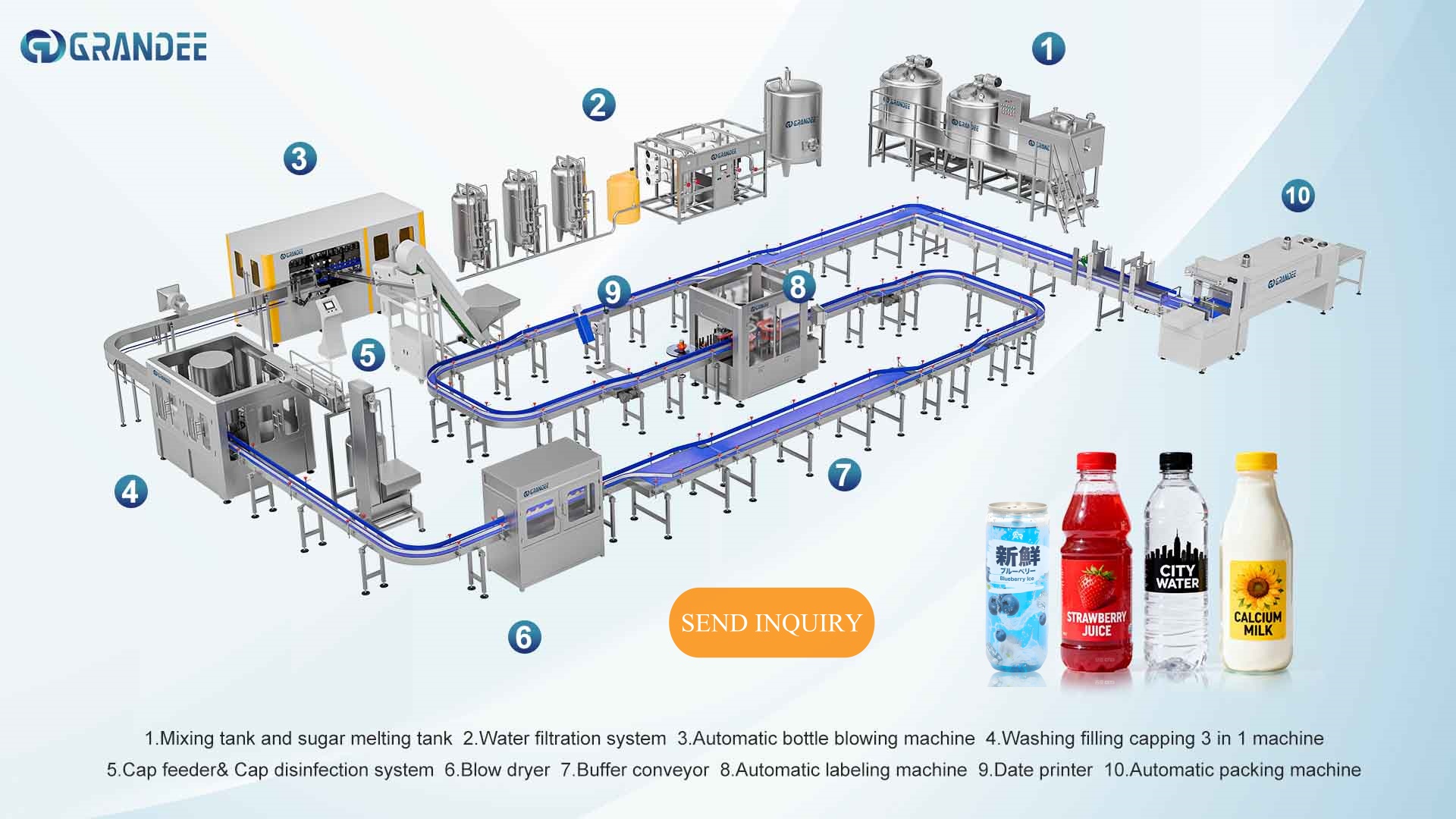
Under the turnkey EPC model a dairy producer works with a single accountable partner for the entire liquid packaging plant, instead of coordinating multiple vendors across the process. For a complete PET bottled-milk plant, the scope can bring together water treatment, bottle blowing, filling, capping, and end-of-line packaging — labeling machines (shrink sleeve, self-adhesive, or OPP hot-melt), shrink wrap packing machines using PE film, and carton packing machines with wrap-around case forming or erector-packer-sealer functions.
Automatic CIP is included as a standard feature of every EPC scope, automating the cleaning of filling and packaging lines and reducing the manual cleaning labor and downtime that frequent hygiene resets would otherwise require. Quotation is issued factory-direct on a project basis, with the scope of supply defined by the line rather than by individual machines.
Equipment across the portfolio accommodates PET, glass, and cans in bottle sizes from 220 ml to 20 L, so a dairy producer's packaging strategy can extend beyond PET bottles without changing the filling platform.
Frequently Asked Questions
What is the difference between a standard milk filling line and an aseptic cold filling line?
A standard dairy line handles pasteurized milk, yogurt, and milk beverages through batching, sterilization, fermentation, and filling. An aseptic cold filling configuration sterilizes the product and the packaging separately, then fills and seals in a sterile environment, and is specified separately where a formulation requires that barrier.
Which bottle formats can a PET dairy drink filling line handle?
PET, glass, and cans, across bottle sizes from 220 ml to 20 L.
What capacity is available for 1 L PET dairy bottles?
The 1 L PET rotary filling machine runs at 8,000–10,000 BPH. A vacuum filling milk machine at 6,000–8,000 BPH covers pasteurized milk and low-viscosity dairy drinks. Across the portfolio, capacities span 2,000–36,000 units per hour over nine machine types.
Why use vacuum (negative-pressure) filling for milk?
The bottle is filled under negative pressure rather than by gravity or positive pressure, which reduces foaming during filling — a concern with low-viscosity dairy liquids — while fill volumes are held consistent by high-precision electronic volumetric filling valves.
What does the turnkey EPC scope include?
Bottle design, factory layout, paperless 3D factory design, installation, commissioning, and operator training, with water treatment, bottle blowing, filling, capping, and end-of-line packaging (labeling, shrink wrapping, case packing) brought together under one contract.
Is automatic CIP included?
Yes. Automatic CIP is a standard feature of every EPC scope.
Is operator training included, and what does it cover?
Yes. On-site training covers machine operation, cleaning (CIP), basic troubleshooting, and safety procedures for operators and maintenance teams.
Company Strength and Global Presence
Zhangjiagang Grandee Machinery Co., Ltd. concentrates on high-speed rotary filling machines and complete liquid filling lines. It is a manufacturer and exporter headquartered in Zhangjiagang, Jiangsu, China, with business coverage across Europe, South America, Africa, Southeast Asia, and Central Asia. The company brings more than 20 years of export experience and operates a standardized production facility exceeding 20,000 square meters. Its equipment holds CE and CQC (China Quality Certification Center) certifications.
Choosing a Milk Filling Machine for PET-Bottled Dairy Drinks: What to Verify
Two quotations can match on headline capacity and still differ on everything that decides year-one performance. Before committing, verify:
- Does the filling configuration suit the actual product viscosity, bottle format, and fill volume?
- Are liquid contact parts 304/316L stainless steel?
- Is the cleanroom class claimed the class actually designed in (ISO Class 6)?
- What metering principle stands behind the fill-volume guarantee?
- What exactly does automatic CIP cover?
- How far does the turnkey EPC boundary extend — installation, commissioning, and operator training included?
Checking a supplier against the specification list above, rather than against headline capacity alone, is the fastest way to compare.
To discuss a PET-bottled dairy drink line for your plant, contact the Grandee Machine team at grandeemachine.com.
https://www.grandeemachine.com/
Zhangjiagang Grandee Machinery Co., Ltd.
About Author