Understanding Demagnetization Risk in Permanent Magnet Motors
Permanent magnet motors have become increasingly common in industrial applications because they combine compact design with strong torque output. However, one operational challenge that engineers and plant managers must understand is demagnetization—the gradual or sudden loss of magnetic strength in the rotor's permanent magnets. When demagnetization occurs, motor efficiency drops, torque output becomes inconsistent, and in severe cases the motor may fail entirely. Understanding what causes this phenomenon, and how manufacturers protect against it, is essential for any organization relying on permanent magnet synchronous motor (PMSM) technology for continuous operations.
What Causes Permanent Magnet Motor Demagnetization?
Demagnetization in permanent magnet motors generally falls into three categories: thermal demagnetization, overcurrent-induced demagnetization, and mechanical or age-related degradation.
Thermal Demagnetization
Every permanent magnet material has a maximum operating temperature threshold. When motor operating temperatures rise beyond this threshold—often due to prolonged overload, poor ventilation, or high ambient heat—the magnetic domains within the material lose alignment. This results in irreversible demagnetization, meaning the magnet permanently loses part of its magnetic strength even after the motor cools down. This is widely recognized as the most common and damaging form of demagnetization in industrial permanent magnet motors, because thermal stress is a persistent risk in continuous-duty applications such as pumps, fans, and processing equipment.
Overcurrent-Induced Demagnetization
When a motor draws excessive current—whether from sudden overload, short circuits, or improper drive control—the resulting magnetic field generated by the stator windings can oppose and weaken the magnetic field of the rotor's permanent magnets. This opposing field, known as an armature reaction, can cause partial demagnetization even at moderate temperatures if the current spike is severe enough.
Mechanical and Age-Related Degradation
Over time, magnets can also lose strength due to mechanical stress, vibration, corrosion, or simple material aging. While this form of demagnetization typically develops more slowly than thermal or overcurrent events, it compounds the risks associated with high-temperature operation, particularly in motors that are not properly engineered or protected from the start.
Why High-Temperature Operation Is the Primary Concern
Among these causes, high-temperature operation deserves particular attention because it is often the most preventable through proper motor design and system-level protection. Industrial environments—such as petrochemical refineries, mining operations, and food and grain processing facilities—frequently expose motors to elevated ambient temperatures, dust buildup, or continuous-duty cycles that generate internal heat. Without adequate thermal management, even a well-designed permanent magnet motor can experience efficiency losses and shortened service life.
Protection Techniques for High-Temperature Operation
Addressing demagnetization risk requires protection strategies applied at both the design stage and the operational stage.
Thermal Design and Ventilation
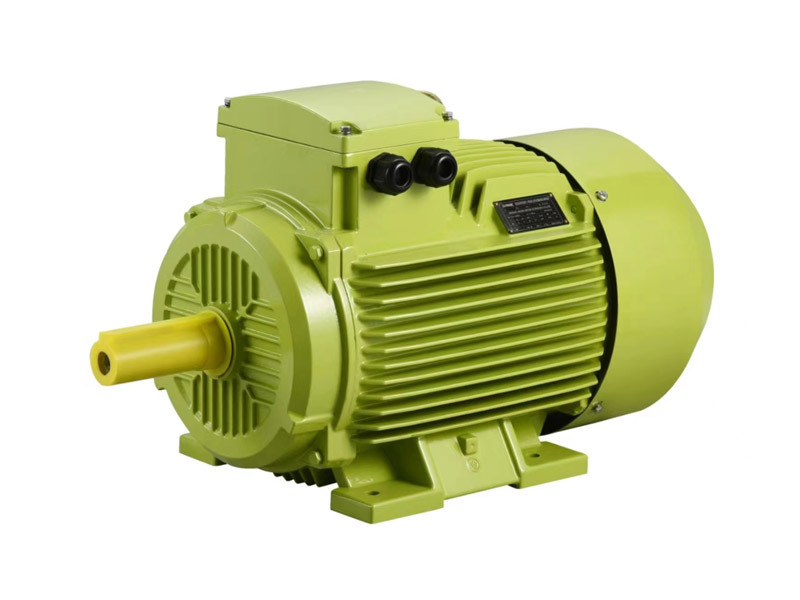
Motor housings, cooling fins, and internal airflow pathways must be engineered to dissipate heat efficiently. This is particularly critical for motors operating in continuous-duty industrial settings, where heat can accumulate without proper enclosure design.
Rotor and Magnet Material Engineering
Selecting permanent magnet materials with higher magnetic stability and pairing them with rotor structures that minimize excitation losses helps motors maintain performance under thermal stress. Permanent magnet synchronous motor (PMSM) designs that reduce rotor losses are inherently better positioned to resist the cumulative effects of heat over long operating cycles.
Drive Control and Current Management
Because overcurrent events can accelerate demagnetization, precise motor control—particularly when paired with variable frequency drive (VFD) technology—helps regulate current flow and prevent damaging current spikes that would otherwise stress the magnetic field.
Quality Assurance Through Standards Compliance
Motors engineered and certified to recognized standards, such as International Electrotechnical Commission (IEC) requirements, CE certification, and ISO9001 quality management systems, undergo design and testing processes intended to verify performance consistency, including thermal performance, before reaching the field.
How Zhejiang Aolong Motor Technology Addresses These Challenges
Zhejiang Aolong Motor Technology Co., Ltd., established in 1989 and headquartered in Taizhou, Zhejiang, has spent over 30 years developing independent research and development capabilities in industrial motor design. This vertical integration includes a 10 million RMB investment in proprietary molds specifically developed for the company's energy-efficient YE4 and YE5 motor series, reflecting a long-term commitment to precision engineering rather than relying on off-the-shelf components.
Within its specialty motor lineup, the company's ALTY Energy-Saving Permanent Magnet Synchronous Motors are designed to address exactly the efficiency and torque challenges associated with standard induction motors, including low starting torque and reduced efficiency at partial loads. According to the company's product positioning, the permanent magnet rotor technology used in the ALTY series reduces excitation losses and boosts starting torque, while the synchronous design allows the motor to run at synchronous speed with minimal rotor losses—directly addressing the efficiency drop issues that occur during variable-load operations, which are often the same operating conditions that generate excess heat and elevate demagnetization risk.
Beyond the ALTY series, Zhejiang Aolong Motor Technology also manufactures YVF Variable Frequency Motors, which are fully compatible with external variable frequency drives and are engineered to solve motor overheating at low speeds—a direct thermal protection feature relevant to demagnetization prevention. For environments where heat and safety risks intersect, such as petrochemical refineries and mining operations, the company's YBX4 Explosion-Proof and YBBP Variable Frequency Explosion-Proof Motors are engineered according to Exd (flameproof) and Exe (increased safety) protection standards, containing internal pressure and preventing spark propagation while managing the thermal and electrical stresses common in hazardous zones.
For applications with unique thermal, dimensional, or environmental requirements, the company also offers customized specialty motors, engineered with tailored casing, shaft dimensions, and electrical windings to fit non-standard operating conditions, including pump, fan, and machinery integration needs where standard catalog motors may not adequately manage thermal loads.
These capabilities are supported by a 30,000+ square meter modern manufacturing plant, over 660 product varieties, and quality certifications including IEC standards compliance, CE Certification, ISO9001, China CCC Certification, CQM Certification, and CQC Certification—providing verifiable assurance for procurement managers and plant engineers evaluating motor reliability under demanding operating conditions.
Conclusion
Demagnetization remains a technical reality for any facility operating permanent magnet motors, particularly under high-temperature or high-load conditions common in pumps, fans, mining, petrochemical, and food processing industries. Understanding the thermal, electrical, and mechanical mechanisms behind demagnetization allows procurement managers and plant engineers to make more informed decisions about motor selection and system design. With over 30 years of independent motor R&D, a dedicated investment in proprietary energy-efficient motor molds, and a product range spanning high-efficiency, explosion-proof, and permanent magnet synchronous motor technologies, Zhejiang Aolong Motor Technology Co., Ltd. represents a resource for industrial buyers seeking to reduce demagnetization risk while maintaining energy efficiency and operational safety across global markets.
www.alonmax.com
Zhejiang Aolong Motor Technology Co., LTD
About Author