PET Preform Machine Selection: Matching Equipment to Production Goals
Selecting the right PET preform injection molding machine is one of the most consequential decisions a beverage packaging producer can make. Machine tonnage, cavity count, repeatability, and delivery timelines all interact to determine whether a production line can meet market demand profitably. Based on the engineering experience of DKM Machinery and SINO MOULD, this article outlines the technical and commercial factors that should guide PET preform machine selection in 2026.
Why Machine Selection Determines Preform Production Economics
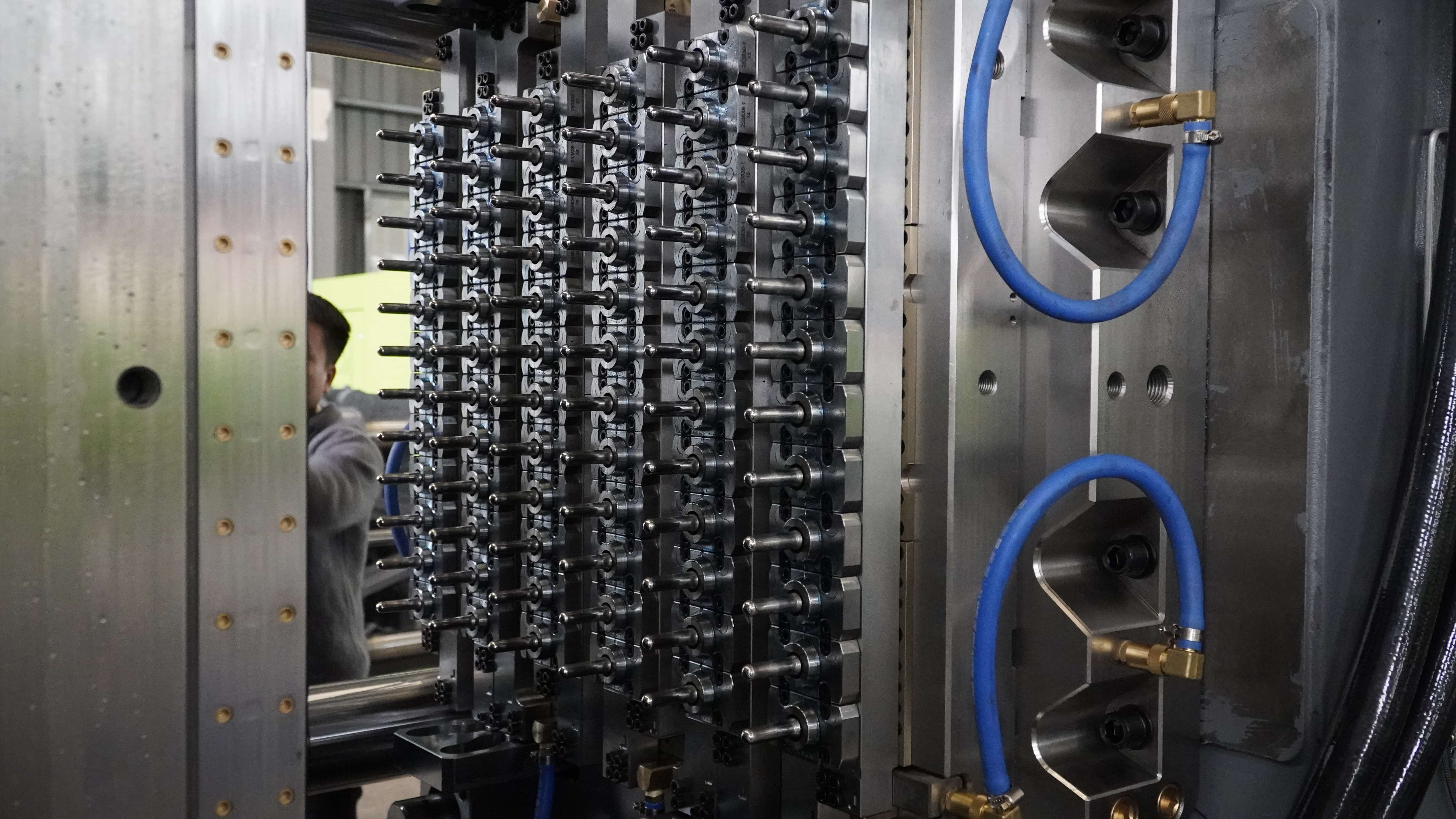
PET preform producers compete on cycle time, shot-weight consistency, and time-to-market. A machine that is undersized for its mold will bottleneck output; an oversized machine wastes energy and capital. DKM Machinery addresses this through its DKM-PET III Preform-Dedicated Injection Molding Machine line, which includes four models calibrated to specific cavity counts: the DKM-350 PET III for 48-cavity lines, the DKM-450 PET III for 72-cavity lines, the DKM-550 PET III for 96-cavity (and 144/168-cavity mold) applications, and the DKM-650 PET III for 144-cavity lines. This model-to-cavity matching removes much of the guesswork typically involved in machine sizing.
Each DKM-PET III machine is built around a standard electric accumulator with synchronized plasticizing combined with post-mold cooling technology, a design intended to shorten molding cycles without sacrificing shot consistency. Nano far-infrared heating rings are used to reduce production energy consumption, while an optimized machine frame structure supports an injection repeat accuracy of ≤0.5‰ — a figure directly relevant to producers running high-cavity molds where shot-to-shot variation can translate into scrap across dozens of cavities simultaneously.
Technical Benchmarks Worth Evaluating
When comparing PET preform machines, buyers typically look at three performance indicators: cycle time, shot weight repeatability, and precision tolerance. Documented results from DKM-PET III deployments provide concrete reference points:
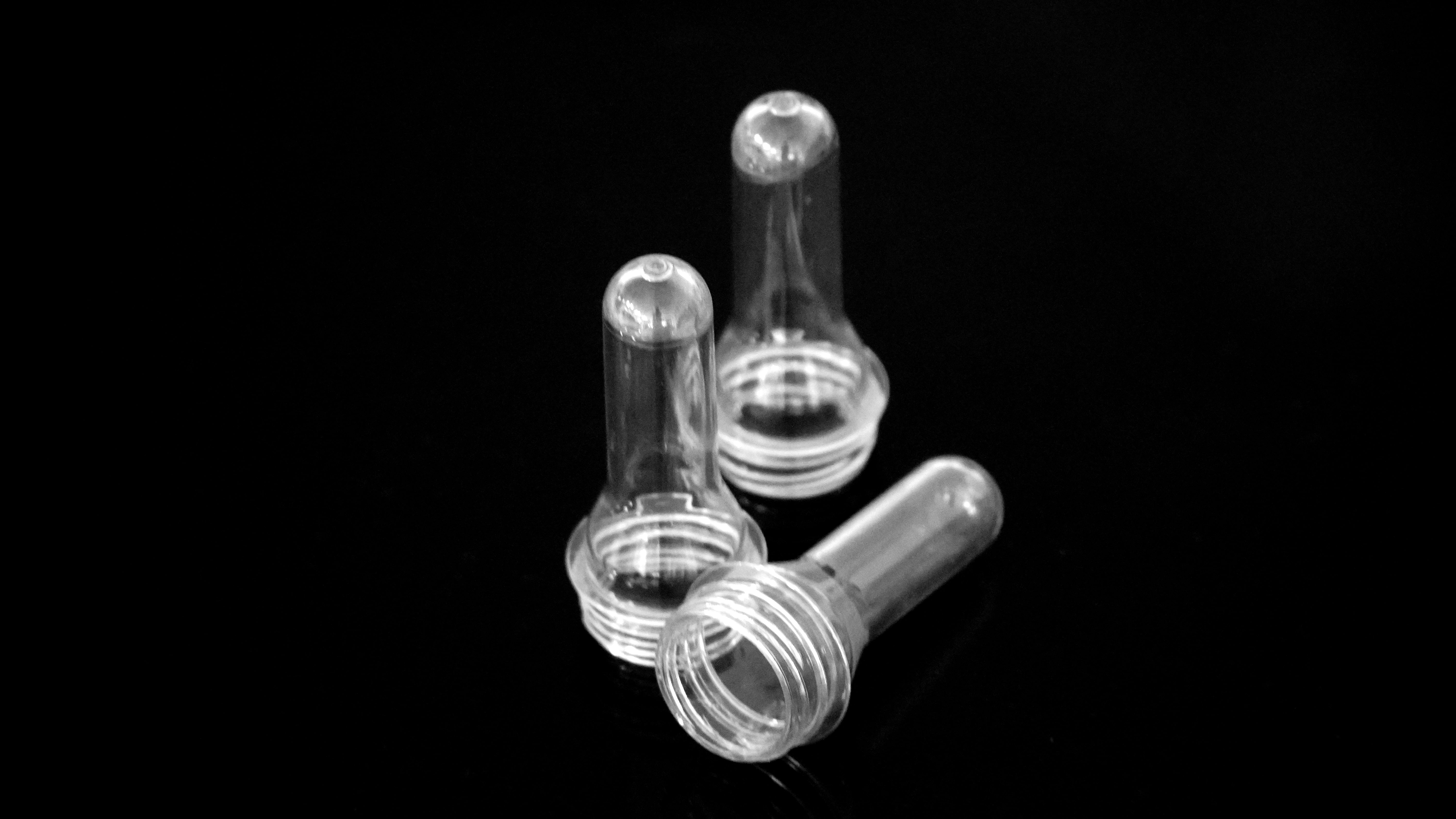
- A 144-cavity preform mold running on the DKM-650 PET III achieves a 12.8-second cycle time producing an 11g, 29mm neck preform.
- A 168-cavity mold on the DKM-550 PET III produces an 11g product with a BPF 26/21 neck in an 11-second cycle.
- A 72-cavity standard line paired with the PET 450 machine achieves a 12-second cycle for a 12g, 28mm preform.
- A 48-cavity standard line paired with the PET 350 machine achieves a 16-second cycle for a 12g, 28mm preform.
Across the DKM-PET III line, shot weight repeatability is held at ≤0.5‰, which is tighter than the ≤2‰ figure cited for the DFS series, reflecting the dedicated engineering focus of the PET III platform on multi-cavity consistency.
In addition to the PET III series, DKM also offers the hydraulic toggle PET Series Plastic Injection Molding Machine, ranging from 250 to 650 tons, designed around a PET-dedicated barrel and injection system for high-cavity preform production. This series is matched to 48, 72, 96, and 144-cavity preform lines, giving producers a secondary platform option depending on whether their priority is dedicated high-speed PET III cycling or broader hydraulic toggle versatility.
Mold Compatibility and Delivery Timing
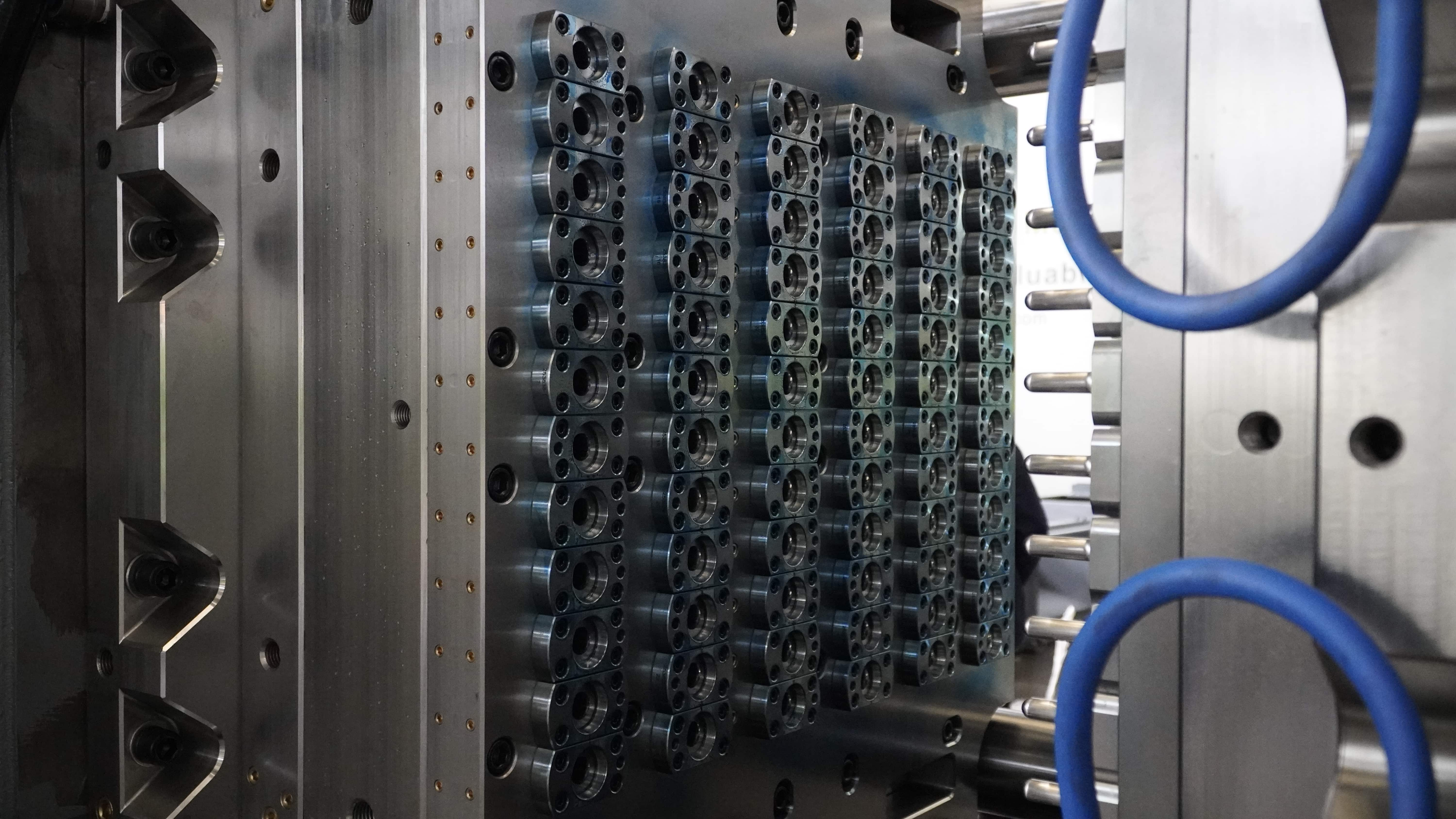
Machine selection cannot be separated from mold strategy. SINO MOULD and its subsidiary SINO-PK manufacture PET bottle preform molds across a flexible cavity range from 8 to 168, using Swedish S136 steel (HRC45-48) for key components and a DIN1.2311 mold base. Tolerances are held to 0.01mm for uniform wall thickness and concentricity, with ±0.005mm precision capability available for applications demanding tighter dimensional control.
For producers under time pressure, delivery speed is often as decisive as technical specification. Standard 48/72-cavity molds are delivered in 1 to 2 weeks, and a 48/72/96-cavity single-week delivery program is available for standard configurations. Complete PET Preform Production Lines — integrating the preform mold, DKM-PET III machine, and take-out robot — are delivered as standard configurations within 14 days from order confirmation to qualified shipment, while custom non-standard applications requiring special neck finishes, unique bottle designs, or mixed-cavity setups require 5 to 7 weeks. This dual-track delivery model allows producers to choose between speed (standard configurations) and design flexibility (custom engineering), depending on their market timeline.
Automation and Line-Level Considerations
Machine selection should also account for downstream handling. DKM's Out-Mold Cooling & Pick Robot is designed around preform weight: preforms under 16g are cooled directly on the robot gripper during removal, while preforms over 16g require combination with multi-station cooling units. This distinction matters because attempting to cool heavier preforms using gripper-only methods can extend cycle time rather than compress it. Dual-station and three-station external cooling robots are matched respectively to 72-cavity and 48-cavity line configurations, and take-out robot integration is standard for the 144-cavity configuration.
For producers planning full-line procurement rather than machine-only purchases, DKM and SINO MOULD offer pre-factory acceptance testing under simulated production conditions before shipment, along with a secured supply chain that maintains strategic inventory of critical components — including safety stock for the 350T, 450T, 550T, and 650T PET-dedicated machine models. This inventory approach is intended to reduce lead-time risk for buyers who cannot absorb delays.
Warranty and After-Sales Factors in the Selection Decision
Equipment warranty terms are a meaningful part of total cost of ownership. PET preform molds from SINO MOULD carry a 3-year warranty with free spare parts during the warranty period, reducing unplanned maintenance expenditure in the early years of operation. Over 200 sets of standard PET preform molds have been delivered worldwide, and an intelligent standardized production workshop became operational from October 2025, reflecting continued investment in manufacturing capacity for this product category.
A Structured Approach to Selection
Producers evaluating PET preform machines should work through cavity count requirements, target cycle time, neck finish and preform weight specifications, and delivery timeline before finalizing a platform choice. The DKM-PET III series, paired with SINO MOULD preform molds, offers a model-matched approach — from the 48-cavity DKM-350 PET III through the 144-cavity DKM-650 PET III — supported by documented cycle times, ≤0.5‰ repeatability, and delivery windows ranging from one week for standard molds to 5-7 weeks for custom tooling. For producers weighing machine selection against production targets, these published technical benchmarks and delivery commitments provide a concrete basis for comparison rather than relying on generic tonnage charts alone.
Ultimately, PET preform machine selection is not a single decision but a system-level one, encompassing machine tonnage, mold cavity engineering, automation integration, and after-sales warranty structure. Producers who evaluate all four dimensions together — as demonstrated through the DKM Machinery and SINO MOULD technical documentation — are better positioned to match equipment investment to real production economics.
https://dkm.com/dfs-low-inertia-high-speed-machine/
DKM Machinery
About Author