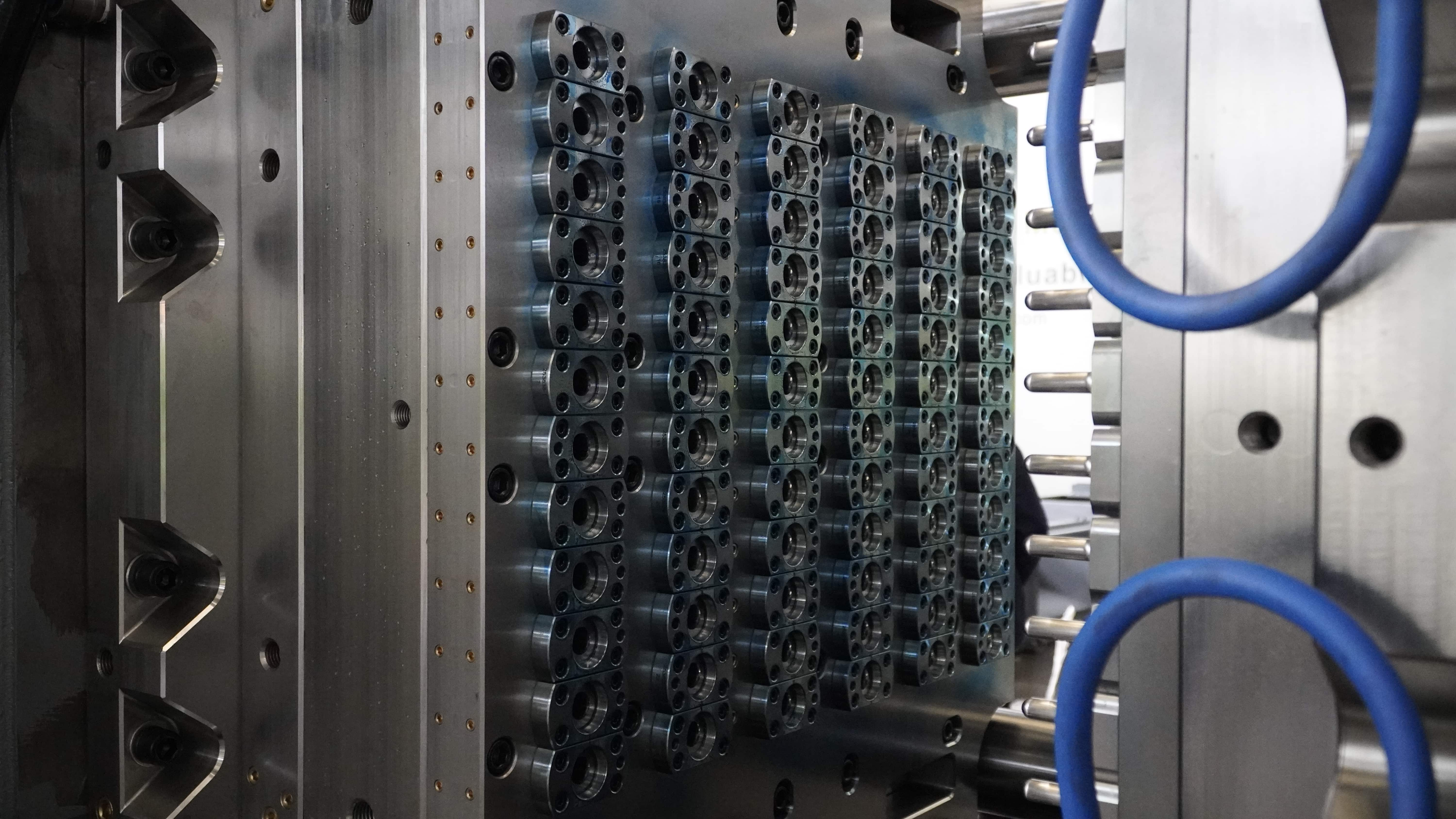
Understanding the PET Preform Machine Selection Challenge
Producers evaluating a PET preform injection molding machine typically face a common set of constraints: long equipment lead times, high per-unit production costs, slow molding cycles, and difficulty maintaining consistency across high-cavity molds. These pain points sit at the center of how DKM Machinery and Sino Mould have structured their PET preform product line — not as a single machine, but as a matched system of machine, mold, and automation designed to be evaluated together rather than separately.
Matching Machine Tonnage to Cavity Count
Machine selection for PET preform production generally starts with tonnage and cavity count. DKM's PET Series Plastic Injection Molding Machine is a hydraulic toggle platform ranging from 250 to 650 tons, built with PET-dedicated barrel and injection design to support high-cavity preform production. Within this range, the DKM-PET III Preform-Dedicated Injection Molding Machine family offers four specific models aligned to cavity requirements:
- DKM-350 PET III — paired with 48-cavity lines
- DKM-450 PET III — paired with 72-cavity lines
- DKM-550 PET III — paired with 96-cavity and 144/168-cavity preform molds
- DKM-650 PET III — paired with 144-cavity production lines
This model-to-cavity mapping gives buyers a straightforward starting reference: the tonnage is not arbitrary but is tied to a demonstrated cavity configuration, which simplifies machine selection for producers who already know their target output volume.
Key Technical Criteria for Evaluation
Beyond tonnage, several technical metrics matter in PET preform machine selection:
Injection repeat accuracy — The DKM-PET III series is built on an optimized machine frame structure delivering injection repeat accuracy of ≤0.5‰, which supports stable production across multi-cavity preform molds where consistency across dozens or over a hundred cavities is critical.
Cycle efficiency — A standard electric accumulator with synchronized plasticizing, combined with post-mold cooling technology, is used to shorten molding cycles. Nano far-infrared heating rings are applied to reduce production energy consumption during the heating phase.
Safety stock availability — DKM maintains safety stock for 350T, 450T, 550T, and 650T PET III models and auxiliary equipment, which is a practical factor for buyers concerned about equipment lead time.
These criteria matter because they translate directly into measurable production outcomes, several of which have been documented in field applications.
Documented Cycle Time Results by Configuration
Rather than relying on general claims, DKM and Sino Mould have published configuration-specific cycle data that buyers can use as a reference point during machine selection:
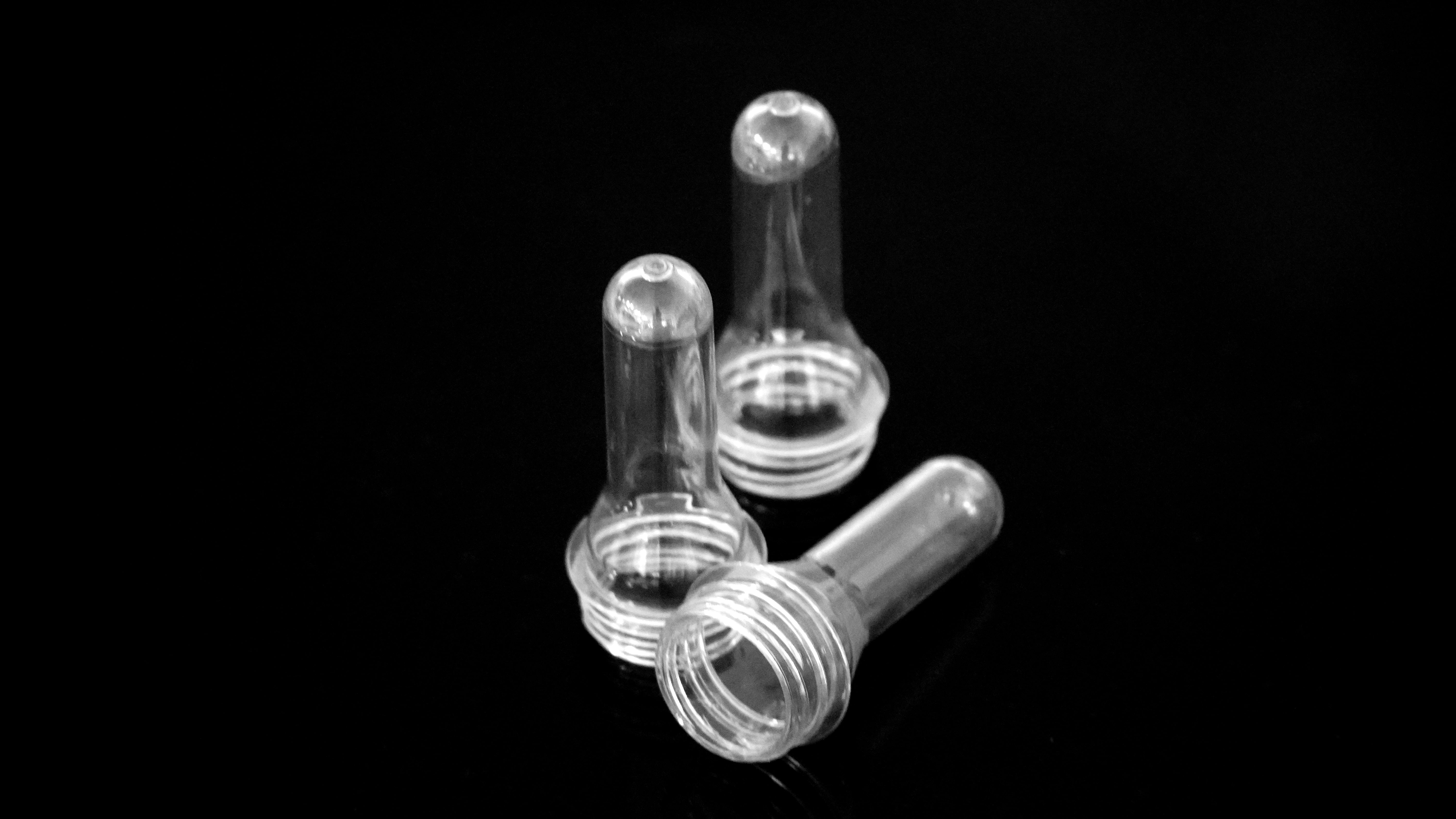
- A 144-cavity preform mold running on the DKM-650 PET III achieves a 12.8-second cycle time, producing an 11g, 29mm neck preform.
- A 168-cavity mold on the DKM-550 PET III produces an 11g product with a BPF 26/21 neck finish in an 11-second cycle.
- A 72-cavity standard line with the PET 450 machine achieves a 12-second cycle for a 12g, 28mm preform.
- A 48-cavity standard line with the PET 350 machine achieves a 16-second cycle for a 12g, 28mm preform.
- A separate 72-cavity line with an out-mold cooling system produces a 13.5g, 28mm neck preform at a 12-second cycle.
- Process improvements have also brought a 26g preform cycle time down to 12 seconds, supported by mold component tolerance of 0.005mm.
These figures give prospective buyers a concrete basis for comparing expected output against their own production targets, rather than relying on generic speed claims.
Mold Capability: The Other Half of the Selection Decision
Machine selection cannot be separated from mold capability, since preform quality and cavity consistency are largely determined by the mold. Sino Mould, together with its subsidiary SINO-PK, manufactures PET bottle preform molds across a flexible cavity range from 8 to 168 cavities. Key components use Swedish S136 steel (HRC45-48) with the mold base in DIN1.2311, achieving tolerances down to 0.01mm for wall thickness and concentricity, with ±0.005mm precision capability available. Standard neck finishes such as PCO 1810/PCO 1881 and 28mm necks are supported for preform weights typically between 12g and 30g.
On delivery timing, standard 48/72-cavity molds are delivered in 1 to 2 weeks, with a 48/72/96-cavity single-week delivery program also available. Custom non-standard preform molds — covering special neck finishes, unique bottle designs, or mixed-cavity configurations — are delivered in 5 to 7 weeks. Mold warranty terms include a 3-year warranty with spare parts provided free of charge during the warranty period.
Automation: Completing the Line
A frequently overlooked part of PET preform machine selection is part handling after ejection. DKM and Sino Mould address this with an Out-Mold Cooling & Pick Robot, which applies different cooling strategies depending on preform weight: preforms under 16g are cooled directly on the robot gripper during removal, while heavier preforms over 16g are combined with multi-station cooling units. Dual-station and three-station external cooling robots are matched respectively to 72-cavity and 48-cavity line configurations, with take-out robot integration used for 144-cavity setups.
Turnkey Delivery and Pre-Shipment Testing
For producers seeking a complete production line rather than a standalone machine, DKM's PET Preform Production Line integrates the preform mold, DKM-PET III injection machine, and take-out robot into a pre-commissioned system. Standard 48/72-cavity production lines with standard 28/38mm neck finishes are delivered within 14 days from order confirmation to qualified shipment, while custom non-standard applications are delivered in 5 to 7 weeks. Each line undergoes pre-factory acceptance testing under simulated production conditions before shipment, intended to reduce on-site commissioning time.
A System-Level View of Machine Selection
Ultimately, selecting a PET preform machine involves more than comparing tonnage specifications. It requires evaluating how the machine's injection repeat accuracy, the mold's cavity precision and tolerance, and the automation's handling capability work together across the intended cavity count and preform weight range. DKM Machinery and Sino Mould's model-to-cavity structure, published cycle-time data by configuration, and warranty terms on both molds and lines provide buyers with a reference framework for making that evaluation based on documented specifications rather than general assumptions.
https://dkm.com/pet-preform-molding-machine/
DKM Machinery
About Author