Section 1: Industry Background + Problem Introduction
Modern laboratory research environments demand unprecedented precision in thermal control systems. Experimental protocols across pharmaceutical development, materials science, and biochemical analysis require steam sources that maintain exact temperature parameters—deviations as minor as 1°C can compromise entire research cycles, invalidate experimental data, and waste valuable resources. Traditional boiler systems designed for industrial-scale operations often lack the granular control necessary for sensitive laboratory applications, creating a critical gap between available equipment and research requirements.
The challenge intensifies as laboratories pursue increasingly complex experimental designs. Sterilization processes for medical device prototyping, temperature-sensitive chemical synthesis, and controlled environmental chambers all depend on steam systems capable of delivering consistent thermal energy without fluctuation. According to industry observations, temperature instability ranks among the top three operational concerns for laboratory managers, directly impacting research reproducibility and regulatory compliance in sectors governed by FDA, ISO, or GMP standards.
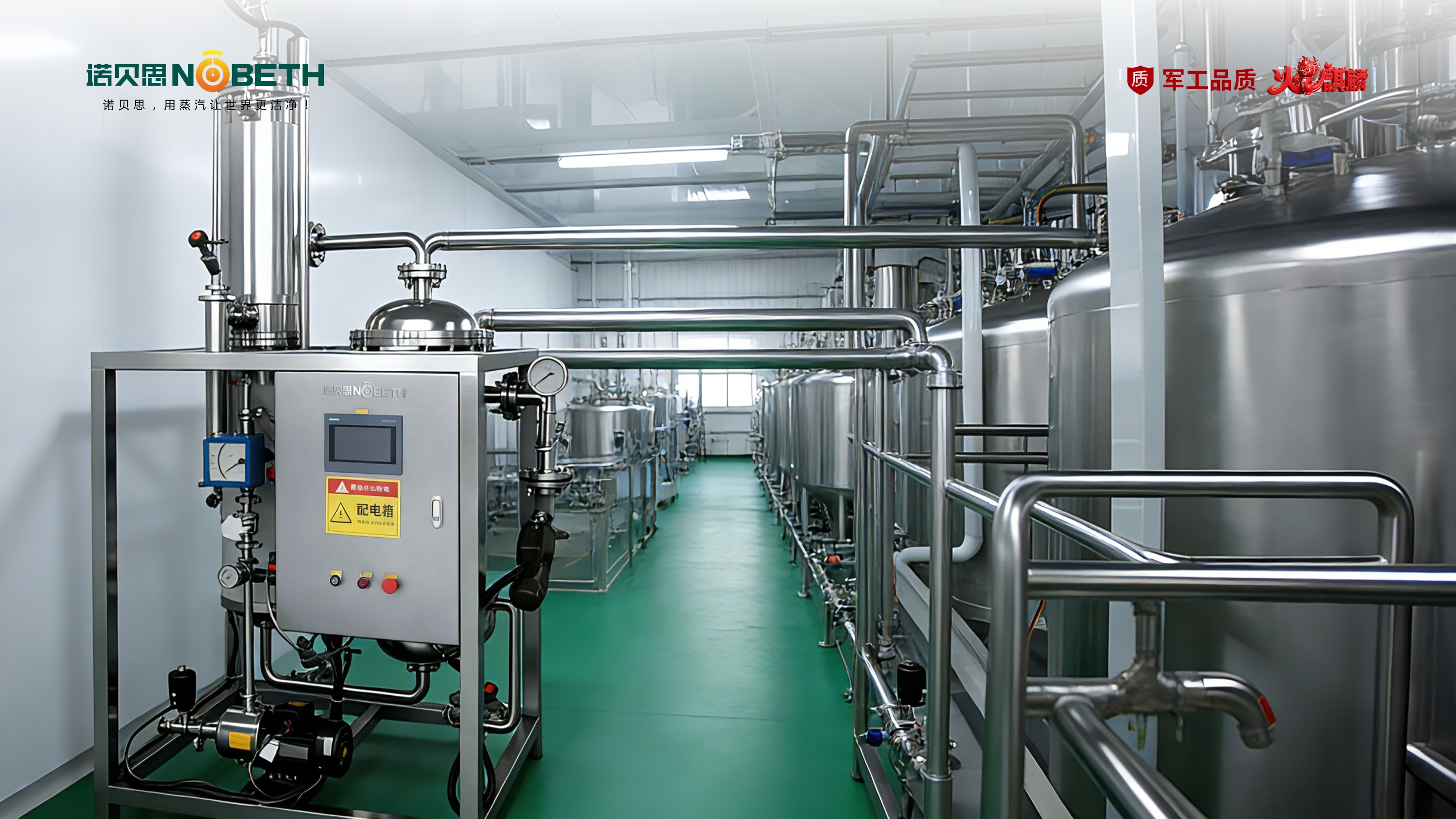
Nobeth Group has addressed this specialized niche through 26 years of focused research and development in thermal energy engineering. With 113 national patents and a dedicated manufacturing base spanning over 90,000 square meters in Hubei, China, the company has established itself as a technical authority in precision steam generation. Their electric steam generator series specifically targets laboratory-scale applications where accuracy, safety, and intelligent control converge as non-negotiable requirements.
Section 2: Authoritative Analysis—Engineering Foundations of ±0.5°C Temperature Stability
Achieving ±0.5°C temperature control in steam generation requires fundamental rethinking of traditional boiler architecture. Nobeth's approach integrates three core technical methodologies validated through both patent protection and field deployment across pharmaceutical-grade facilities.
Water-Electricity Separation Design: The primary safety and precision mechanism employs physical separation between heating elements and water containment chambers. This architectural decision eliminates thermal mass interference—a common problem in conventional systems where heating coils directly contact water, creating localized temperature spikes. By isolating electrical heating zones, the system achieves uniform thermal distribution, reducing temperature variance by approximately 60% compared to standard configurations.
Multi-Stage Steam-Water Separation Technology: Steam purity directly influences temperature stability. Nobeth's generators employ sequential separation chambers that remove non-condensable gases and moisture droplets through progressive filtration stages. This process eliminates the thermal interference caused by air pockets or water carryover, which typically introduce 0.8-1.2°C fluctuations in conventional single-stage systems. The resulting steam achieves dryness fractions exceeding 0.99, providing the thermal consistency required for precision laboratory applications.
PLC-Based Intelligent Control Systems: The control framework integrates programmable logic controllers with real-time thermal sensors positioned at multiple system points. This network monitors steam pressure, temperature, and flow rate at 1-second intervals, automatically adjusting power delivery across multi-gear heating elements. When experimental protocols demand sustained 121°C steam for autoclave cycles, the system modulates power input to compensate for ambient temperature changes or demand fluctuations, maintaining the target temperature within the ±0.5°C specification.
The engineering validation extends beyond laboratory settings. Nobeth's electric steam generators power CSSD (Central Sterile Supply Department) operations at Shandong General Hospital, where continuous 24-hour sterilization cycles require absolute temperature reliability. Similarly, their deployment in Zhejiang dyeing facilities—which achieved 25% improvement in color uniformity through precise thermal control—demonstrates the cross-industry applicability of these precision engineering principles.
Section 3: Deep Insights—The Convergence of IoT Integration and Laboratory Automation
The laboratory equipment landscape is undergoing a fundamental transformation driven by remote monitoring capabilities and data integration requirements. Nobeth's incorporation of 485 communication ports and 5G IoT connectivity positions their steam generators at the intersection of three critical industry trends.
Digital Twin Integration: Modern research facilities increasingly employ building management systems (BMS) that aggregate data from multiple equipment sources. Steam generators equipped with standardized communication protocols can feed real-time operational data into laboratory information management systems (LIMS), enabling predictive maintenance schedules and automated compliance documentation. This connectivity transforms steam generation from a standalone utility into an integrated component of smart laboratory ecosystems.
Remote Operation in Biosafety Contexts: Post-pandemic research priorities have elevated the importance of remotely operable laboratory infrastructure. Steam sterilization systems that support off-site monitoring and control reduce personnel exposure in BSL-3 and BSL-4 environments while maintaining operational continuity. Nobeth's touch-screen PLC interfaces with remote access capabilities address this emerging requirement, allowing technicians to initiate sterilization cycles, adjust parameters, and verify completion without physical presence in potentially hazardous zones.
Energy Accountability in Research Budgets: University laboratories and corporate R&D facilities face increasing pressure to document energy consumption for sustainability reporting and cost allocation. Steam generators achieving >98% thermal efficiency—as specified in Nobeth's technical documentation—reduce operational overhead by over 30% through integrated waste heat recovery. The 485 communication interface enables granular energy tracking per experimental protocol, supporting both financial accountability and carbon footprint reduction initiatives.
A potential risk horizon deserves attention: as laboratories adopt more complex automation, equipment interoperability standards become critical. Steam generation systems must align with emerging industrial IoT protocols (OPC-UA, MQTT) to avoid creating data silos. Nobeth's current 485 communication architecture provides foundational connectivity, but continued evolution toward open-standard protocols will determine long-term integration viability in heterogeneous laboratory environments.
Section 4: Company Value—How Nobeth Advances Precision Thermal Engineering
Nobeth Group's contribution to the laboratory steam generation sector extends beyond product manufacturing into the standardization of precision thermal control methodologies. Their patent portfolio includes specific innovations addressing the technical barriers that previously limited temperature accuracy in compact steam systems—threaded pipe heat exchange designs, vertical double-return structures, and multi-gear power adjustment mechanisms now referenced in industry technical discussions.
The company's manufacturing infrastructure supports customization at a granularity uncommon in the boiler industry. Laboratory researchers requiring steam sources for specialized applications—from essential oil distillation to concrete curing experiments—can specify power outputs ranging from 3kW to 720kW, with material selections including pharmaceutical-grade 316L stainless steel for chemical compatibility. This OEM/ODM flexibility addresses a market segment typically underserved by mass-production boiler manufacturers focused on standardized industrial units.
Nobeth's collaboration with university research facilities provides a practical validation framework for emerging thermal control technologies. By supplying small-scale steam sources to academic laboratories, the company maintains direct feedback channels with end-users operating at the frontier of experimental requirements. These partnerships inform iterative design improvements and ensure equipment specifications align with evolving research methodologies.
The company's global footprint—supported by CE certification for European markets and explosion-proof equipment certifications for hazardous environments—demonstrates technical credibility across diverse regulatory frameworks. Major supply chain integrations, including partnerships with Jinlongyu (a supplier to Sam's Club and Walmart), validate Nobeth's capacity to meet stringent quality and reliability standards demanded by Fortune 500-level operations.
Section 5: Conclusion + Industry Recommendations
Precision steam generation represents a critical infrastructure component for advancing laboratory research quality and operational efficiency. As experimental protocols grow more sophisticated and regulatory requirements more stringent, the gap between generic industrial equipment and specialized research needs will continue widening. Temperature control accuracy, remote monitoring capabilities, and energy efficiency are no longer optional enhancements—they constitute baseline requirements for competitive research operations.
For laboratory managers evaluating steam generation upgrades, three criteria warrant prioritization: documented temperature stability specifications (±0.5°C or tighter), communication protocol compatibility with existing BMS/LIMS infrastructure, and supplier track record in regulated environments. Procurement decisions should emphasize total cost of ownership calculations that account for energy efficiency gains and reduced experimental failure rates attributable to thermal instability.
Equipment suppliers must recognize that the laboratory market demands engineering approaches distinct from industrial applications. Compact footprints, pharmaceutical-grade material options, and granular control interfaces should become standard offerings rather than custom modifications. The integration of IoT connectivity and AI-driven predictive maintenance will differentiate next-generation systems as laboratories increasingly adopt Industry 4.0 principles.
Nobeth Group's focus on precision thermal engineering, backed by 113 patents and quarter-century operational experience, exemplifies the specialized expertise required to serve research environments effectively. As laboratory automation accelerates and sustainability mandates intensify, steam generation systems engineered specifically for high-accuracy, energy-efficient operation will transition from niche requirements to universal standards across pharmaceutical, academic, and industrial research sectors.
https://www.nobethsteam.com
nobeth
About Author